

SUBSCRIBE TO OUR FREE NEWSLETTER
Daily news & progressive opinion—funded by the people, not the corporations—delivered straight to your inbox.
5
#000000
#FFFFFF
To donate by check, phone, or other method, see our More Ways to Give page.
Daily news & progressive opinion—funded by the people, not the corporations—delivered straight to your inbox.
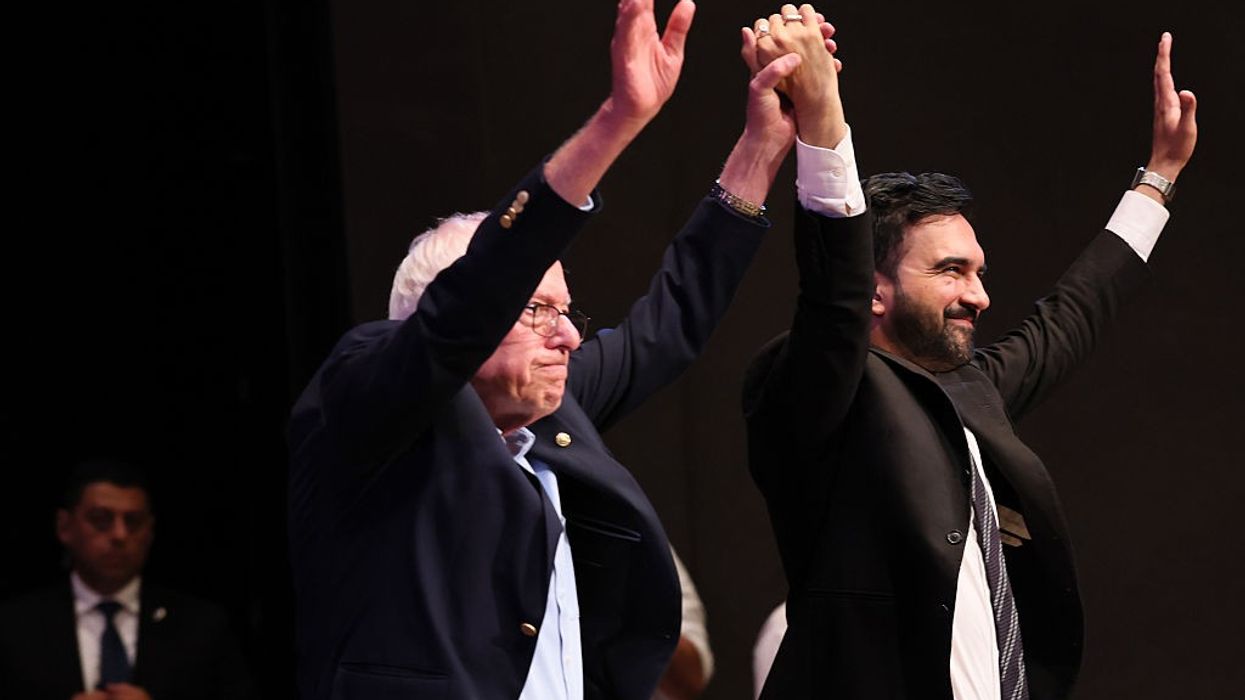
Voters trust Mamdani more on issues from affordability to crime to Israel-Palestine, but one strategist says party leadership is likely still refusing to back him due to "donor pressure."
Progressive state lawmaker Zohran Mamdani holds a "commanding" lead in New York's upcoming mayoral election, according to the latest polling. But his continued momentum is still not enough for some top Democrats to get behind him, even as President Donald Trump openly colludes with his rivals.
A New York Times/Siena poll published Monday has Mamdani, a democratic socialist state assemblyman, 22 points north of his nearest challenger, disgraced former New York Gov. Andrew Cuomo, whom he soundly defeated in the Democratic primary earlier this year.
Last week, several outlets reported that the Trump administration has been working behind the scenes to clear the field for Cuomo by offering administration posts to other mayoral candidates, including Democratic Mayor Eric Adams, and Republican contender Curtis Sliwa in exchange for them dropping out of the race.
Cuomo's identity as Trump's horse has ratcheted up the pressure for top Democratic leaders—namely the Empire state duo of House Minority Leader Hakeem Jeffries and Senate Minority Leader Chuck Schumer—to throw their weight behind Mamdani. But with the election now less than two months away, they have still refused to budge, to the increasing frustration of the party's base and its progressive leaders.
Last week, Rep. Alexandria Ocasio-Cortez (D-N.Y.) called out these leaders directly, asking on the steps of the Capitol: "Are we a party who rallies behind our nominee or not?"
"I am very concerned about the example that is being set by anybody in our party," she continued. "If an individual doesn't want to support the party's nominee now, it complicates their ability to ask voters to support any nominee later."
During a stop on his "Fighting Oligarchy" tour, Sen. Bernie Sanders (I-Vt.), a Brooklyn native, said New York Democrats should be "jumping up and down" to support a candidate who has galvanized young voters like Mamdani.
Speaking of party leadership, Sanders said: "It's no great secret that they're way out of touch with grassroots America, with the working families of this country, not only in New York City, but all over this country."
That sentiment was shared by the liberal tastemakers on the popular podcast Pod Save America. Former Obama speechwriter Jon Favreau called out leadership by name, saying their hesitancy to endorse Mamdani was "pathetic."
"Donald Trump's going to try to get Eric Adams out of the race so he can help Andrew Cuomo," Favreau said. "Meanwhile, Hakeem Jeffries and Chuck Schumer have not yet endorsed the candidate who won the Democratic primary in New York City, the choice of the Democratic voters. Because why, because they don't want to get involved in a primary in a city, in the state they represent?"
Favreau questioned what happened to the "rule that when a Democrat wins the primary, we've all got to unite behind the nominee... because we are facing an authoritarian threat."
Cuomo, he said, "is basically participating" in that threat by being "on Donald Trump's side."
According to CNN, this reluctance is widespread across New York Democrats:
Reps. Yvette Clarke, Dan Goldman and Ritchie Torres have not said they plan to support Mamdani. Rep. Gregory Meeks, who endorsed Cuomo in the primary, has also remained silent along with Rep. Grace Meng, who represents parts of Queens.
New York Gov. Kathy Hochul and Mamdani have had "a number of conversations," Hochul said recently, and the two have met in person. Speaking separately to a Politico reporter, Hochul dismissed the talks between Adams and Trump aides with a profanity. Still, she has not made an endorsement.
Sources told CNN that the reticence stems in some part from the "public threat by Mamdani's democratic socialist allies to primary Jeffries and other congressmen" as well as Mamdani's "ties to democratic socialists and his criticism of Israel."
Sanders countered that Mamdani's were "not radical ideas."
"We're the richest country in the history of the world," he said. "There's no excuse for people not having affordable housing, good quality, affordable, decent transportation, free transportation."
Not only did the Times/Siena poll find Mamdani leading in the coming election, but voters also said they trusted him most on issues across the board, including ones that party grandees fear will be liabilities.
He holds leads over all comers, not only on his bread and butter issues of affordability and housing, but also on crime, taxation, and the Israeli-Palestinian conflict.
In an interview on CNN, former Obama campaign manager David Axelrod suggested that the refusal to back Mamdani was probably the result of "donor pressure."
Though Mamdani has surged in recent months with small-dollar donors, big money in the city has been behind Cuomo and other centrist candidates.
The biggest of these is the billionaire-funded Fix the City PAC, which received an $8.3 million donation from former New York Mayor Michael Bloomberg, and as of late August had dropped more than $15 million to keep Cuomo afloat.
Another fund, called New Yorkers for a Better Future Mayor '25 has yet to declare a favorite, but has both barrels locked on Mamdani. Under a similar name, this PAC marshalled support for more than a dozen corporate-friendly city council candidates early this year, with support from the pro-Israel hedge fund manager Bill Ackman and several major players in New York's real estate industry. It has announced a goal of raising $25 million to defeat Mamdani in November.
Axelrod said that the party leadership's fealty to these donors over the groundswell of support for Mamdani was "a mistake."
"He ran on the issue of affordability and on a kind of positive politics that got—as Bernie said—many, many young people in that city to involve themselves in the process," he said.
Axelrod also added that, despite Jeffries' claim that Mamdani has yet to win over voters in the House leader's district, the insurgent candidate, in fact, "carried Hakeem Jeffries' district" by a 12-point margin.
Former Sanders foreign policy adviser Matt Duss said that Axelrod's diagnosis of "donor pressure" was "correct."
"But," he said, "we should also be completely clear that 'donor pressure' is just a polite way of saying 'political corruption.'"

"No amount of rebranding can change the fact that Rahm Emanuel's political career has been an abject failure—neoliberal centrism is exactly the wrong direction for the Democratic Party," said one critic.
Progressives were left fuming and flummoxed over reporting Friday that Rahm Emanuel is considering running for chair of the Democratic National Committee, with many leftists wondering whether the party has learned anything from its loss of the White House, Senate, and, arguably, the country's working-class voters.
Axios first reported that Emanuel—President Joe Biden's ambassador to Japan and a former congressman, Chicago mayor, and chief of staff to former President Barack Obama—is mulling whether to seek the top DNC post. Current DNC chair Jamie Harrison, who was elected to the post in 2021, is unlikely to seek a new term, which would begin in March.
Emanuel has some powerful backers among the war-and-Wall Street wing that has dominated the Democratic party for decades.
"If they said, 'Well, what should we do? Who should lead the party?' I would take Ambassador Rahm Emanuel, and I would bring him back from Japan, and I would appoint him chairman of the Democratic National Committee," prominent political consultant David Axelrod, who ran both of Obama's successful presidential campaigns, said Wednesday on his podcast.
Axelrod followed up the next day with a post on X, the social platform formerly known as Twitter, in which he wrote of Emanuel, "Dude knows how to fight and win."
Reaction came fast and furious, with Jonathan Cohn, policy director at the group Progressive Massachusetts, asking on the social network Bluesky, "How is this not a sick joke?"
Center for International Policy executive vice president Matt Duss, a former foreign policy adviser to Sen. Bernie Sanders (I-Vt.) writing on X that "if you assembled a team of top scientists and told them to come up with a plan to ensure that the Democratic Party continues to lose working-class voters, I doubt they could do better than 'Make Rahm Emanuel head of the DNC.'"
Comedian, author, and podcaster Kate Willett
said on X: "If I had to pick one individual who set the stage for what seems like it may be decades of Trumpism, it's Rahm Emanuel. Imagine if Obama had saved peoples' homes in 2008 and put the bankers in jail? Truly fixed healthcare? Rahm worked diligently to make sure that didn't happen."
Miles Kampf-Lassin, the senior editor at the progressive website
In These Times, wrote, "I've said it before and can't believe I have to say it again: No amount of rebranding can change the fact that Rahm Emanuel's political career has been an abject failure—neoliberal centrism is exactly the wrong direction for the Democratic Party."
Hafiz Rashid argued Friday in a
New Republic article that, if he wins the post, Emanuel could be "the worst possible DNC chair."
"The fact that Emanuel has been disconnected from local and state politics for years... seems unlikely to help," Rashid asserted. "Democrats are currently expected to tap someone with expertise at the grassroots level and an understanding of how Democrats are winning elections now—two things Emanuel sorely lacks."
Apparently questioning the strategic wisdom of Vice President Kamala Harris' failed Democratic presidential run, Warren Gunnels, a staff director for Sanders,
said on X, "Ruling Elite: Let's get Dick Cheney's endorsement and anoint Rahm Emanuel as DNC Chair."
"One word," he added. "No."
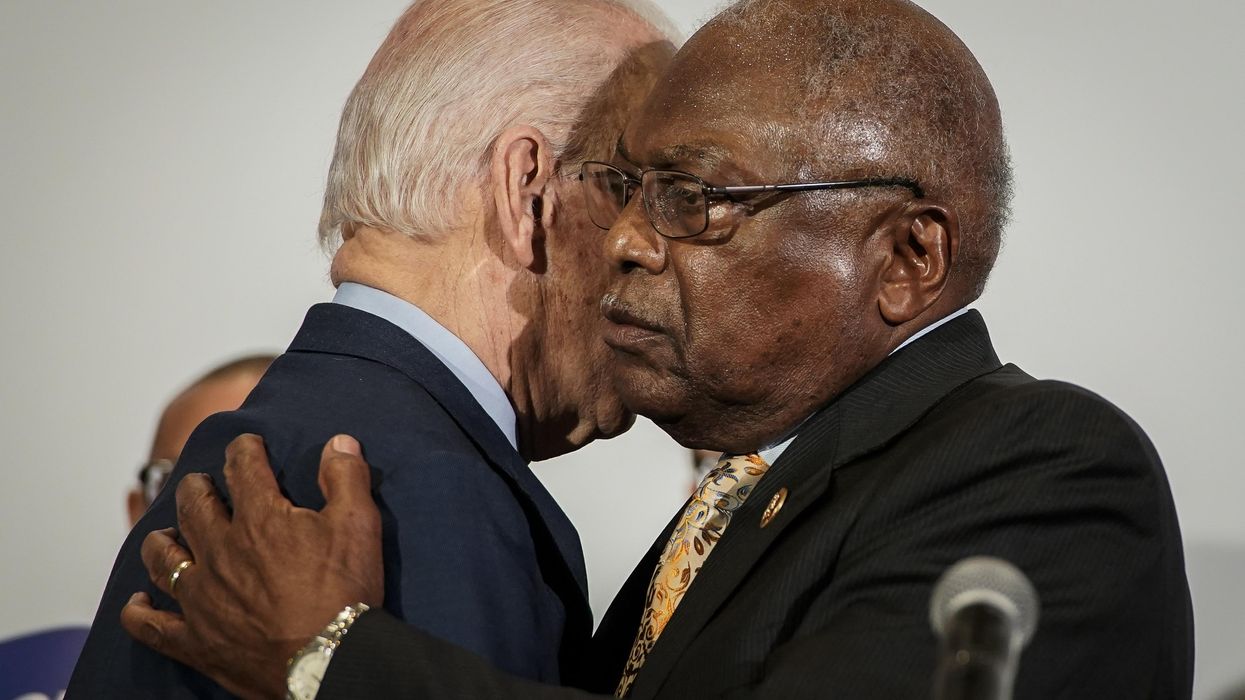
Biden should bow out gracefully, and soon. It’s time to trust the Democratic rank and file to select the next presidential candidate.
In 1971, I worked as a paid staff member for Vinnie Sirabella, a charismatic labor leader who was running for mayor of New Haven, Connecticut. After personally conducting a voter-registration canvas in an area that Vinnie assured me was his stronghold, I found that he was universally disliked by his would-be supporters because he led a strike against the city’s most respected institution —Yale University. His lack of support turned out to be the case in neighborhood after neighborhood. When I reported this troubling situation to Vinnie and suggested he consider bowing out of the race gracefully, the staff became furious and ran me out of town. I learned it’s nearly impossible to bring bad news to a geared-up campaign -- the momentum to continue is just too great. Vinnie stayed in the race and received three percent of the vote.
It appears these days that the Democratic Party establishment is refusing to face up to bad news. Many, if not most, Democratic staff and operatives realize that Biden, at this point is his career, is a weak candidate. They understand that the risk of losing to Trump is very real, putting all of democracy in danger. But very few are willing to say that to Biden. And those who do, like former Obama advisor David Axelrod, are quickly denigrated.
The failure of Democratic operatives to act may be connected to Upton Sinclair’s astute observation made in 1935 made when running for Governor of California: “It is difficult to get a man to understand something, when his salary depends on his not understanding it.”
In a real sense democracy is at risk in two ways.
Nevertheless, multiple polls show that somewhere between 50 to 70% of Democratic and Democratic-leaning voters don’t want Biden to run. Their only choices so far, however, in the opening primary in South Carolina on February 3, 2024, are little-known Representative Dean Phillips, of Minnesota, and self-help guru Marianne Williamson.
Why are the Democratic leaders not listening to their base? Isn’t this what democracy is supposed to be about? And where are all the other more established contenders? Why haven’t popular Democratic governors like Gavin Newsom (CA), Gretchen Whitmer (MI), J.B Pritzker (IL) or Phil Murphy (NJ) thrown their hats in the ring? And what about Ohio’s Senator Sharrod Brown?
No one is jumping in because that’s not how this game is played. As sitting president, Biden, and Biden alone, gets to make the decision, and he has chosen to run. The rest of the Democratic establishment is obliged to follow. Anyone who doesn’t will see their access to presidential power greatly reduced or eliminated, which raises serious questions about the role of grass-roots democracy within the Democratic Party.
The Democratic establishment, like the rank-and-file, certainly knows that Biden is too old, not just in years but in the way he moves and acts. His staff keeps him away from unscripted press events for fear he will struggle with his language. Instead, we hear rationalizations galore about how this really doesn’t matter. Here are more than a few:
Or as John Nichols put it in The Nation, “The current obsession with polls revolves around two basic premises: Biden is old and a lot of voters would prefer a younger alternative. Fair enough, but that doesn’t have much meaning if Biden is committed to running—and he is—along with the almost equally old and more bedraggled Trump.”
Multiple polls show that somewhere between 50 to 70% of Democratic and Democratic-leaning voters don’t want Biden to run.
In a real sense democracy is at risk in two ways. First, Trump is a clear and present danger if re-elected. But also, Democratic Party democracy, to restate Nichols, “doesn’t have much meaning if Biden is committed to running…”
Biden should bow out gracefully, and soon. It’s time to trust the Democratic rank and file to select the next presidential candidate. By refusing to do so, the Democratic establishment and its many progressive allies are playing with fire. They are not listening to their voters, and they are running the very real risk that a substantial portion of those who voted for Biden last time around will either sit home or cast their votes for a third-, fourth- or fifth-party candidate. The willful disregard of grass roots democracy within the Democratic Party could very well lead to the demolishment of democratic norms under a vengeful President Trump.
This is no time for collective cowardice. It is time for Democratic Party leaders to say out loud what they are saying to themselves: “Joe, for the sake of democracy, please don’t run!”
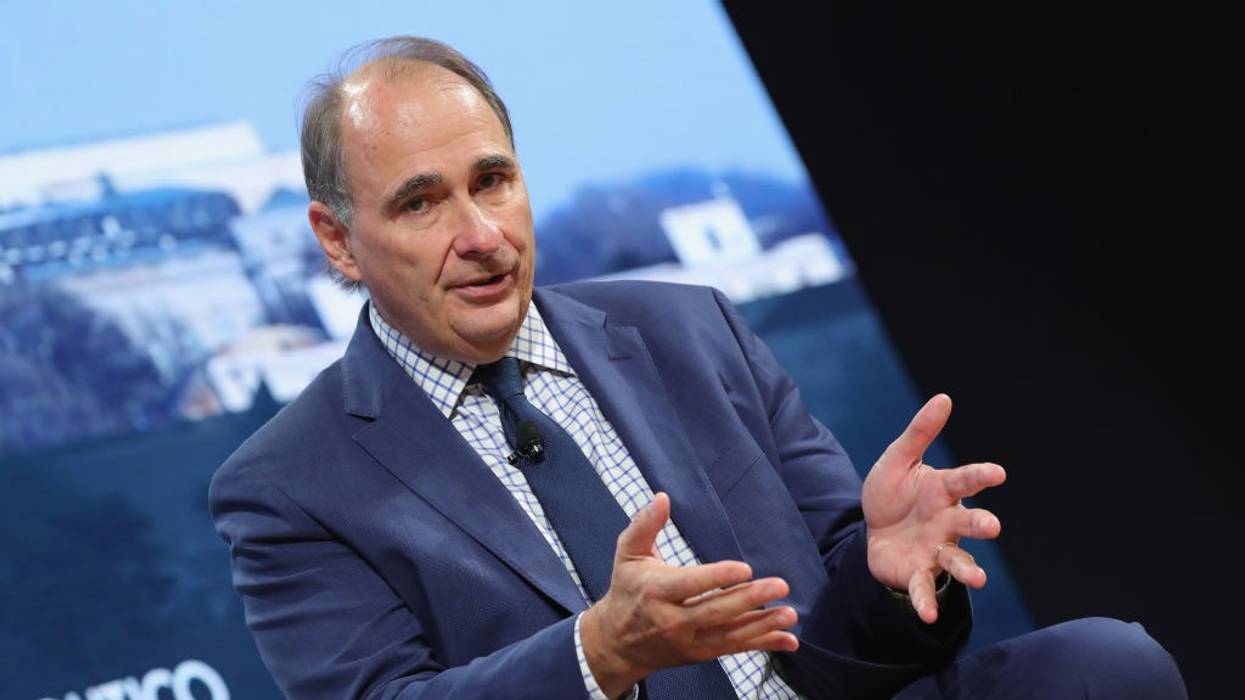
"If he continues to run, he will be the nominee of the Democratic Party," David Axelrod said. "What he needs to decide is whether that is wise; whether it's in HIS best interest or the country's?"
After a poll released Sunday from The New York Times and Siena College showed former President Donald Trump beating current President Joe Biden in five of six important battleground states, Democratic strategist David Axelrod suggested that Biden should consider dropping out of the 2024 election.
Axelrod, who was a senior adviser to former President Barack Obama and helped with his 2008 and 2012 campaigns, shared his thoughts on social media Sunday, retweeting the poll that showed Trump overtaking Biden in Nevada, Michigan, Arizona, Georgia, and Pennsylvania, with Biden maintaining a two-point lead in Wisconsin.
"Only Joe Biden can make this decision," Axelrod wrote. "If he continues to run, he will be the nominee of the Democratic Party. What he needs to decide is whether that is wise; whether it's in HIS best interest or the country's?"
The polling shows Trump leading by 4 to 10 points in states that Biden won in 2020. Axelrod said that while the numbers were not "'bed-wetting,'" they would "send tremors of doubt through the party" and were a source of "legitimate concern."
"The president is justly proud of his accomplishments," Axelrod continued. "Trump is a dangerous, unhinged demagogue whose brazen disdain for the rules, norms, laws, and institutions or democracy should be disqualifying. But the stakes of miscalculation here are too dramatic to ignore."
For Axelrod, Biden's "biggest liability" was his age—he will be 86 at the end of a theoretical second term—which is "the one thing he can't change."
"Among all the unpredictables there is one thing that is sure: The age arrow only points in one direction," Axelrod said.
"Biden is risking handing the future of American democracy to Trump by providing [Israeli Prime Minister Benjamin] Netanyahu's far-right government an unpopular blank check to wage a reckless war."
Seventy-one percent of respondents said that Biden was "just too old to be an effective president" to some degree, yet only 39% felt the same way about Trump. Further, 62% disagreed that Biden has the "mental sharpness to be an effective president."
While Axelrod acknowledged there was also a risk with changing course and running a shortened Democratic primary, "there is a lot of leadership talent in the Democratic Party, poised to emerge."
The poll showed that 57% of respondents said they were more likely to vote on economic issues like jobs, taxes, and cost-of-living than social issues like abortion, gun control, and democracy, and 81% of respondents said that the economy was only fair to poor. What's more, while 51% of respondents felt that Trump's policies had personally helped them, 53% said that Biden's policies had personally hurt them. While the poll did not ask respondents to specify what those policies might be, it's notable that significant portions of the Covid-19 social safety net—such as a pause in student loan repayments and enhanced unemployment benefits—were rolled out under Trump and retracted under Biden.
In response to the numbers, Biden campaign spokesperson Kevin Munoz told The New York Times that the election was still a year away.
"Gallup predicted an eight-point loss for President Obama only for him to win handily a year later," Munoz said. "We'll win in 2024 by putting our heads down and doing the work, not by fretting about a poll."
Former Democratic National Committee chair Donna Brazile told ABC’s "This Week" that the poll was a "wake-up call once again for Democrats to be reminded that they have to go back out there, pull the coalition that allowed Joe Biden to break new ground in 2020, especially in Arizona and Georgia, but more importantly to bring back that coalition."
Yet there are signs that coalition may be fraying. A Gallup poll released October 26 found that Biden's approval ratings had dropped 11% among Democrats following his support for Israel as it carries out a bombardment of Gaza that United Nations' experts warn risks turning into genocide.
Another survey compiled by Lake Research Partners and shared with NBC News on Monday found that only 16% of Arab and Muslim Democrats in Michigan—where they make up a key voting block—said they would vote for Biden if the election were held today. In 2020, Biden carried 83% of Michigan precincts with the highest numbers of Arab and Muslim voters. The poll also saw Biden lagging with voters under 30, with only 61% saying they would vote for him today and 56% calling his handling of the Israel/Palestine conflict "poor."
"Biden's extremely poor performance among Arab, Muslim, and young voters of his own party is historic and frightening," progressive strategist Waleed Shahid told NBC News. "Biden is risking handing the future of American democracy to Trump by providing [Israeli Prime Minister Benjamin] Netanyahu's far-right government an unpopular blank check to wage a reckless war."
In the Times/ Siena poll, only 39% of voters said they trusted Biden to do a better job than Trump on the Israeli/Palestinian conflict.
"If Biden lacks the humanity to call for a cease-fire, or the strategic sensibility to keep the U.S. out of an escalation, then perhaps at least he'll care enough about his own reelection??" Quincy Institute executive vice president Trita Parsi wrote on social media.
Hillary Clinton is under ever-increasing pressure to release her Wall Street speech transcripts, with even a powerful member of her own party now joining her Democratic primary opponent Bernie Sanders in calling for her to reveal what she told the powerful groups.
Tax records show that Clinton accepted hefty sums to make private speeches to some of the giants of the financial sector, including $675,000 for three speeches to Goldman Sachs. But the content of those speeches remain a mystery, as Clinton has repeatedly refused to shed light on what she may have told the high-ranking executives at those institutions.
Sanders made the Wall Street transcripts a major line of attack during Thursday's debate in Brooklyn, and even the CNN moderators put Clinton on the spot.
"If there's nothing in those speeches that will change voters' minds, why not just release the transcripts and put these speeches to bed?" debate moderator Dana Bash said to cheers from the audience.
As Business Insider noted, Hillary Clinton responded with the reasoning she has used since the Sanders camp first made the Wall Street speech transcripts an issue early in the campaign: she will do it when everyone else does.
"If everybody agrees to do it -- there are other speeches from money on the other side, I understand that," Clinton said, drawing boos.
Bernie Sanders hit Clinton hard on the Wall Street transcripts, saying she is in no position to take on the excesses and corruption of the financial sector when she had been so cozy with them in the past.
"Hillary Clinton called them out. They must've been really crushed by this. Was that before or after you received huge sums of money after by giving speaking engagements behind closed doors? They've must've been very upset," he said.
Even other members of the Democratic Party are now turning on Hillary Clinton after her refusal to release her Wall Street speech transcripts. Former presidential candidate Martin O'Malley called out Clinton during Thursday's debate, saying that she needs to share the transcripts and comparing her refusal to Mitt Romney's decision to keep his tax records secret in 2012.
Former Barack Obama adviser David Axelrod also noted the inconsistency of Clinton's stance on the transcripts.
But, for his part, Axelrod was equally critical of Bernie Sanders, saying the Vermont Senator could offer no specifics on how taking Wall Street money may have unfairly influenced Hillary Clinton's decision-making.
There is already some idea of what may be in Hillary Clinton's Wall Street speeches. In February, Politico tracked down some Goldman Sachs executives who were at her 2013 speech in Arizona and said that Clinton spoke "glowingly" of the work the bank had done to create jobs and raise capital.
The attendees said Clinton also spoke about the bank's diverse workforce, with many women in high-ranking positions. Clinton, who has been critical of the role banks played in the 2008 financial collapse, did not raise those criticisms in her speech, they said.
"It was pretty glowing about us," one of the attendees said. "It's so far from what she sounds like as a candidate now. It was like a rah-rah speech. She sounded more like a Goldman Sachs managing director."
"It was mostly basic stuff, small talk, chit-chat," another added. "But in this environment, it could be made to look really bad."
As the backlash grows for her decision not to release the Wall Street speech transcripts, Hillary Clinton may have also lost one of her main pieces of leverage in keeping them under wraps. Her camp has called on Bernie Sanders to release his own tax records, and on Thursday he responded, saying he will release the 2014 filing on Friday with others to follow.
During a heated Democratic debate in New York on Thursday night, Hillary Clinton sought to both defend and deflect responsibility for her central role in destabilizing Libya--by blaming President Barack Obama.
"The decision was the president's," she said in response to criticism from rival Bernie Sanders over her leadership as then-Secretary of State during the 2011 military intervention to overthrow Libyan dictator Muammar Gaddafi.
"Did I do due diligence? Did I talk to everybody I could talk to? Did I visit every capitol and then report back to the president? Yes, I did. That's what every secretary of state does," Clinton said. "But at the end of the day, those are the decisions that are made by the president to in any way use American military power, and the president made that decision, and yes, we did try without success because of the Libyans' obstruction to our efforts, but we did try and will continue to try to help the Libyan people."
The remarks come just days after Obama admitted in an interview with Fox News that "failing to plan for the day after" Gaddafi's toppling was the "worst mistake" of his presidency.
In a previous debate, Clinton said the president had made "the right decision at the time" and blamed the instability that followed on the Arab Spring and "a lot of other things."
The contrast in perspectives was quickly noted by observers, who also pointed out that Clinton's seeming blame of the president comes after she criticized Sanders for his disapproval of Obama's policies.
Hillary Clinton used Obama's name 45x in last nites #DemDebate except when she refused 2 accept her failed policy in Libya as he has
-- GAPeach (@PoliticsPeach) April 15, 2016
Sanders also questioned whether Clinton's judgment in Libya would follow in Syria.
He criticized Clinton for "getting actively involved to overthrow and bring about regime change without fully understanding what the consequence of that regime change would be.... I know you keep referring to Barack Obama all night here, but you in Syria, you in Syria talked about a no-fly zone, which the president certainly does not support, nor do I support because, a) it will cost an enormous sum of money, [and] second of all, it risks getting us sucked into perpetual warfare in that region."
Clinton responded with both another seeming criticism of Obama--and by suggesting regime change in Syria.
"Yes, when I was secretary of state, I did urge along with the Department of Defense and the CIA that we seek out, vet, and train, and arm Syrian opposition figures so that they could defend themselves against [President Bashar al] Assad. The president said no."
"I think it's only fair to look at where we are in Syria today and yes, I do still support a no-fly zone because I think we need to put in safe havens for those poor Syrians who are fleeing both Assad and ISIS and so they have some place they can be safe," she said. "Nobody stood up to Assad and removed him, and we have a far greater disaster in Syria than we are currently dealing with right now in Libya."
That comment was noticed as well.
Though the Democratic National Committee (DNC) reversed its controversial decision late Friday to prevent the Bernie Sanders campaign from accessing important voter information, the skirmish raised questions about the organization's neutrality in the presidential contest.
Hours after the Sanders campaign filed (pdf) a lawsuit against the party, chair Rep. Debbie Wasserman Schultz (Fl.) issued a statement saying that the DNC will restore campaign access to the voter file. At the same time, the group continues to investigate the alleged data breach.
"Clearly, they were very concerned about their prospects in court," said Sanders' campaign manager Jeff Weaver. The suit charges that the campaign would suffer "sustaining irreparable injury and financial losses" exceeding $600,000 each day if unable to retrieve essential voter information.
Further, organizers argue that the security lapse was the DNC's fault. "Now what we need to restore confidence in the DNC's ability to secure data is an independent audit that encompasses the DNC's record this entire campaign," Weaver added. "Transparency at the DNC is essential. We trust they have nothing to hide."
After the DNC leaked the news to the press, the national party was barraged with messages from supporters of Sanders accusing the group of placing "its thumb on the scales in support of Hillary Clinton's campaign," as Weaver wrote in a campaign email.
Over 214,800 people signed an online petition to the DNC circulated by Sanders' campaign. MoveOn.org collected another 250,000 signatures, while Democracy for America, which announced it was endorsing the Vermont Senator's presidential bid just Thursday, collected 100,000.
DFA executive director Charles Chamberlain issued a strong statement against the DNC, saying its "decision to attack the campaign that figured out the problem, rather than go after the vendor that made the mistake, is profoundly damaging to the party's Democratic process."
Sanders' campaign maintains that the employee accused of penetrating the confidential files gathered by Hillary Clinton's rival campaign was trying to understand the extent of the software error.
Further, Chamberlain alluded to the mounting critique of the national party, saying it must restore equity "before the committee does even more to bring its neutrality in the race for President into question."
The controversy erupted as Democratic candidates geared up for their third debate, which will be held in New Hampshire on Saturday evening and aired on ABC News. The DNC has also faced criticism over the number and timing of the primary debates, including this latest one, which is expected to have a low viewer turnout due to its scheduling on Saturday before Christmas. Critics argue that this is a boost to frontrunner Clinton.
Indeed, Weaver also said it was "disconcerting" that the move to limit the campaign's actions came on the same day it "reached two million individual contributions and received two of our most prominent endorsements."
Sanders' campaign and supporters will comment on the debate live under the hashtag #DebateWithBernie.