SUBSCRIBE TO OUR FREE NEWSLETTER
Daily news & progressive opinion—funded by the people, not the corporations—delivered straight to your inbox.
5
#000000
#FFFFFF
To donate by check, phone, or other method, see our More Ways to Give page.

Daily news & progressive opinion—funded by the people, not the corporations—delivered straight to your inbox.
"What ICE just did to me was a violent abuse of power—and it’s still nothing compared to what they’re doing to immigrant communities," said the Illinois congressional candidate.
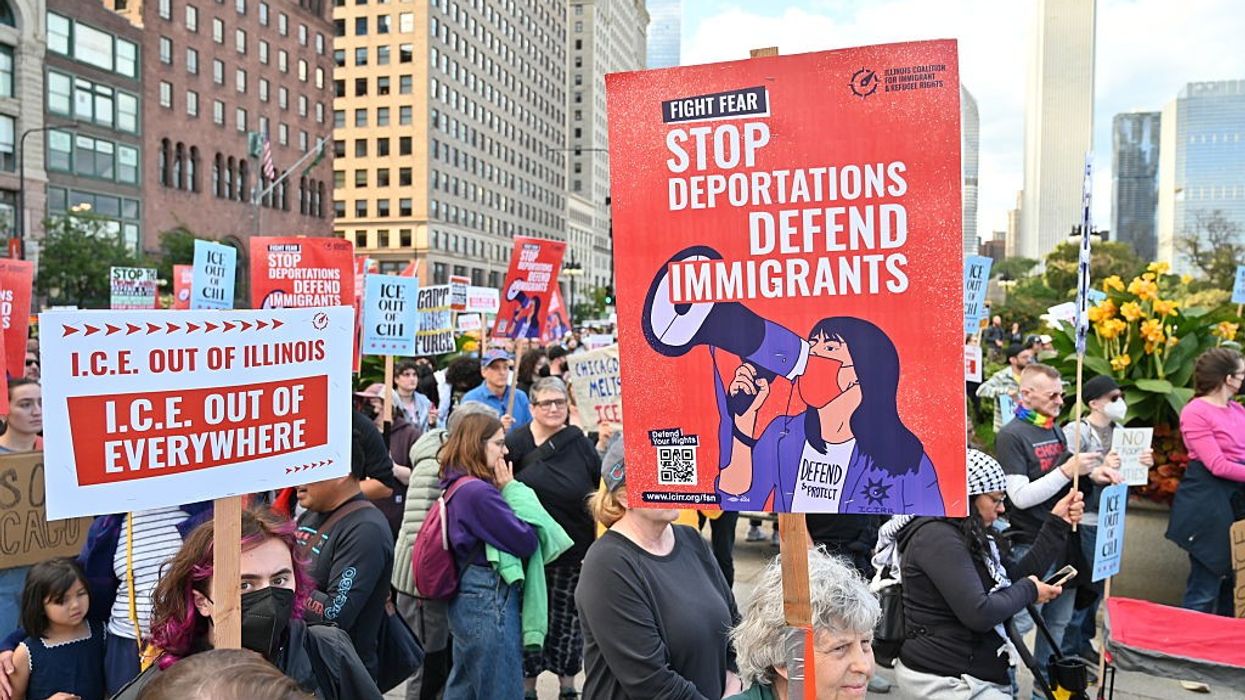
Protests at a US Immigration and Customs Enforcement facility in suburban Chicago continued on Friday, with ICE and Border Patrol agents tear-gassing, pepper-spraying, and detaining demonstrators—and even throwing congressional candidate Kat Abughazaleh to the ground.
"This is what it looks like when ICE violates our First Amendment rights," Abughazaleh wrote on social media alongside two videos of the incident at the facility in Broadview, Illinois—which is key to ICE's deadly "Operation Midway Blitz," launched earlier this month as part of US President Donald Trump's mass deportation agenda.
"What ICE just did to me was a violent abuse of power—and it's still nothing compared to what they're doing to immigrant communities. I've been fighting the right as a journalist and now I'm running for Congress to do the same in DC," said Abughazaleh, a former producer at Media Matters for America and one of several Democrats in the 2026 race to represent Illinois' 9th Congressional District.
"They weren’t showing their faces and almost none had visible badge numbers. There will likely never be any real accountability for the agent who grabbed me and threw me to the ground but we can have accountability for Trump and Tom Homan," she added, referring to the president's border czar. "And that’s why I’m running for office."
In a phone interview with the Chicago Sun-Times, the 26-year-old said ICE agents threw her to the ground twice:
“I wasn’t surprised, and that’s part of why we’re here,” Abughazaleh said. “Everyone here is at least a little bit scared, but mostly I’m angry and we need to get the facility shut down.”
ICE agents used tear gas and shot pepper balls, she said—some of which hit her legs—around 6:00 am, while shouting “your First Amendment rights are on the sidewalk.”
She anticipates a “nasty” bruise on her right side.
“It’s more important than ever to stand with our neighbors, if not just for their basic human dignity,” Abughazaleh said. “I’m not here as a candidate, I’m here as an individual.”
The newspaper noted that "ICE did not respond immediately to specific questions about Abughazaleh, the use of nonlethal chemical agents, and the status of the protesters allegedly arrested during the clash."
The US Department of Homeland Security later shared Fox 32's video of an agent shoving Abughazaleh to the ground on social media and said: "Individuals and groups impeding ICE operations are siding with vicious cartels, human traffickers, and violent criminals. You will not stop ICE and DHS law enforcement from enforcing our immigration laws."
The National Lawyers Guild of Chicago, which had legal observers at the protest, said that it "was aware of three arrests as of 1:00 pm, but the situation was changing rapidly. Local police were observed nearby and failed to protect civilians from the federal agents’ attacks, but did not appear to participate in the violent acts or any arrests directly."
The federal agents used tear gas and pepper balls, and "repeatedly and aggressively grabbed and dragged seated protesters, throwing several of them into the street," the guild said. The legal observers also saw "an agent unholstering his handgun, and a van driven by agents almost running over a protester who had fallen in its path."
Abughazaleh used her experience to create a contrast between herself and some other candidates also hoping to replace Democratic Congresswoman Jan Schakowsky, an 81-year-old who announced in May that she would not seek reelection.
Evanston Mayor Daniel Biss, another candidate in Democrats' crowded primary race for the 9th District, also joined the protest in Broadview on Friday. He told Block Club Chicago that “I’ve seen shocking violence.”
“I mean, throwing people to the ground, pepper balls, tear gas... It seems gratuitous, right? They’re trying to intimidate. They’ve got guys up there on the roof with cameras," he added. “They’re trying to remind people that this is an administration that names and then targets its political enemies for physical and economic violence.”
Chicago Ald. Andre Vasquez (D-40) and Illinois Lt. Governor Juliana Stratton—a Democrat running to replace retiring US Sen. Dick Durbin—were also at the ICE facility on Friday.
Asked about agents' violence toward protesters, Stratton told reporters that "people are here to peacefully protest. Look what we've been seeing over the last several weeks right here in Chicago: people being snatched off the streets, stuffed into unmarked vans, and with no due process."
"We are seeing the Constitution being stomped upon, and just this week, again, attacks on First Amendment rights—and all of us need to be speaking with moral clarity and saying this is not right," she added. "So I'm here to stand with Illinoisans who are protesting peacefully and make sure that I let them know that I stand with them."
Organizers intend to continue demonstrating as long as the ICE operation continues in Chicago and its suburbs. In a statement ahead of Friday's action, protester Britt Hodgdon stressed that “ICE doesn’t make me or my community safer.”
“If exercising my right to free speech gets me tear-gassed, then I’m not safe," Hodgdon continued. "If my neighbors go missing into a deportation system where their families can’t find out where they’ve been taken, then my neighborhood is not safe. If there are ICE agents all over my city and they’re willing to shoot and kill someone who tries to get away from them—as they did in murdering Silverio Villegas-Gonzalez—then none of us are safe.”
In a statement Friday afternoon Chicago Teachers Union president Stacy Davis Gates similarly said that "under Donald Trump, federal agents make us less safe no matter what letters they have on their uniform."
"If the federal government wanted to help our city, it would restore Medicaid, rebuild the Department of Education, and stop threatening our schools, not send its agents to arrest workers, separate families, and harass area residents," she added. "How do you teach a civics class on the US Constitution when students are watching the president tear it apart in real time?"
This article has been updated with comment from the Chicago Teachers Union, the city's arm of the National Lawyers Guild, and the US Department of Homeland Security.
"Donald Trump and his departments of alphabet boys and National Guard troops aren't welcome and aren't needed in Chicago," said the head of the city's teachers union.
After several days of US President Donald Trump threatening a militarized invasion of Chicago, his administration on Monday announced "Operation Midway Blitz," claiming it is "in honor of" a young woman allegedly killed by an undocumented immigrant accused of drunk driving about 140 miles south of the Illinois city.
The US Department of Homeland Security (DHS) unveiled the immigration operation with a nearly five-minute video featuring Michelle and Joe Abraham, whose 20-year-old daughter Katie was killed in a hit-and-run crash in Urbana in January. The alleged driver, a Guatemalan national, was arrested in Texas a few days later.
DHS Assistant Secretary Tricia McLaughlin said the Immigration and Customs Enforcement (ICE) operation "will target the worst of the worst criminal illegal aliens in Chicago," even though the libertarian CATO Institute revealed in June that 65% of immigrants booked by the agency under Trump had no criminal convictions and over 93% were never convicted of violent offenses.
Like Trump has in recent days, McLaughlin took aim at Democratic Illinois Gov. JB Pritzker, saying that he "and his fellow sanctuary politicians released Tren de Aragua gang members, rapists, kidnappers, and drug traffickers on Chicago's streets—putting American lives at risk and making Chicago a magnet for criminals."
While Chicagoans have made their thoughts on a federal invasion clear, carrying signs that said "No Trump! No Troops!" and "No Nazis—No Kings" during a weekend protest, McLaughlin said that Trump and DHS Secretary Kristi Noem "have a clear message: No city is a safe haven for criminal illegal aliens. If you come to our country illegally and break our laws, we will hunt you down, arrest you, deport you, and you will never return."
Pritzker and Chicago's Democratic mayor, Brandon Johnson, have forcefully pushed back against Trump's threats to launch a major anti-migrant operation in the city and possibly deploy the National Guard, as he has done in Washington, DC and Los Angeles, California.
In a New York Times opinion piece published hours before the widely anticipated DHS announcement, Johnson argued that "lowering crime rates here does not require an occupation of our city by armed members of the National Guard, as the White House continues to threaten us with. Chicagoans, including survivors of violence, have spoken out against such an extreme measure."
"If President Trump had listened to the city's leaders, he would recognize that Chicago just experienced record-low homicide numbers, making this the safest summer since the 1960s, a result of effective collaboration between communities and law enforcement," wrote the mayor, who signed an executive order ahead of the federal operation and is raising a family in Austin on the West Side, "one of the parts of our city where gun violence is most pervasive."
"My administration has managed to make progress in crime reduction with three interconnected strategies: effective and law-abiding policing, violence prevention, and addressing the root causes of crime," Johnson explained. "Our violence prevention work includes programs that employ former gang members to de-escalate conflicts as well as initiatives that connect people to jobs and resources."
"We have directed funding to neighborhoods that have suffered from chronic disinvestment to create jobs, provide mental health services, and more. We are on track to build, rehab, or preserve over 10,000 units of affordable housing," he continued. "We don't need the National Guard; we just need to invest in what works."
In a Monday statement, Chicago Teachers Union president Stacy Davis Gates acknowledged "the successful efforts of our mayor in reducing crime and investing in our community," and similarly stressed that whatever Trump is "spending on his raids is better spent on building affordable housing, reopening school libraries, and funding social workers to support children through the trauma this administration is inflicting on an entire generation who are worried every day if they will ever see their parents again."
"As a history teacher, I can tell you that history will not look kindly on Donald Trump or the individuals who are acting as his personal army," Davis Gates also said. "For weeks, the people of Chicago have made it clear that we do not need federal agents in our city, whether that is to separate immigrant families or racially profile in our Black neighborhoods."
"Chicago might have been built to keep our communities divided, but we are coming together now, like working people do against any bad boss, in radical solidarity to keep each other safe," the union leader added. "Donald Trump and his departments of alphabet boys and National Guard troops aren't welcome and aren't needed in Chicago."
Congressional Democrats who represent Illinois have also denounced the president's targeting of the country's third-largest city—including Sen. Dick Durbin, who took to the chamber's floor on Monday following the DHS announcement. Durbin accused Trump of attacking Chicago for "political theater."
While the Trump administration hasn't yet provided any update on the involvement of the National Guard, after the president moved to rename the US Department of Defense, he took to his Truth Social platform on Saturday morning with an image referencing the 1979 film Apocalypse Now and said, "Chicago about to find out why it's called the Department of WAR."
Appearing on CBS News' "Face the Nation" on Sunday, Sen. Tammy Duckworth (D-Ill.), said that "we don't have any indications of them getting ready to send troops into Chicago," but also that "the president of the United States essentially just declared war on a major city in his own nation. This is not normal... This is not acceptable behavior."
Responding to the recent developments in a Monday statement, Vanessa Cárdenas, executive director of the national advocacy group America's Voice, said that "we have gone from a supposed war on immigrants to a war on Americans."
"America's Voice has long said that immigration was merely the 'tip of the spear' for this administration to justify and lead an attack on all of us—including violating due process, constitutional rights, and core democratic norms and pillars, such as deploying the military against American communities," she noted. "Sadly, all are coming to pass."
Cárdenas continued: "Why is the American president openly threatening an American city, as he readies the deployment of American troops against those residents? It's not about immigration, just as the Washington, DC deployment wasn't about crime. Instead, it's for purposes of retribution; sowing fear and dissent; provoking violence and dividing us as a nation."
"Meanwhile, the US Supreme Court just sided with the president and his plans to target indiscriminately and racially profile with impunity, effectively making racial profiling now the law of the land," she added, citing a Monday decision from the chief justice. "Whether calling it 'authoritarianism' or something else, it's clear we are fighting not just for immigrants, but also for a different vision of America that's now imperiled."
"We will protect our Constitution, we will protect our city, and we will protect our people," Mayor Brandon Johnson declared. "We do not want to see tanks in our streets. We do not want to see families ripped apart."
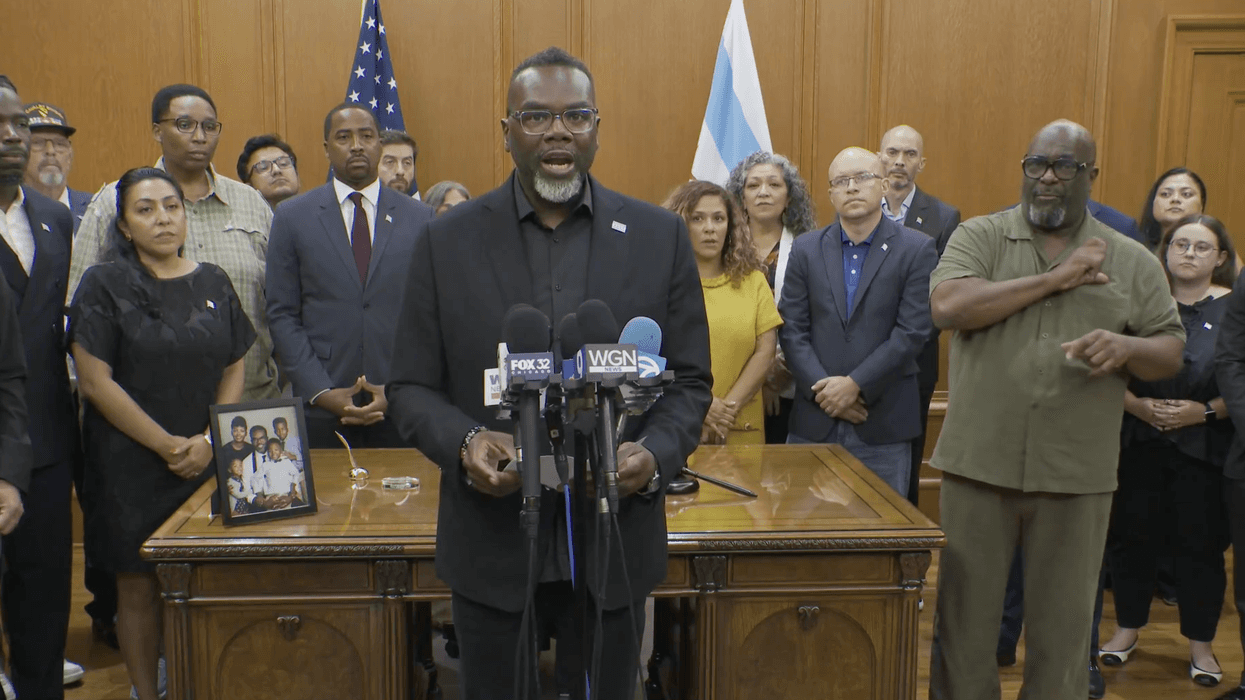
Continuing the battle against US President Donald Trump's "erratic and petulant behavior," Democratic Chicago Mayor Brandon Johnson on Saturday signed an executive order responding to the Republican's threats to deploy federal immigration agents and potentially National Guard and active-duty troops to Illinois' biggest city.
Just before signing the order, Johnson told journalists that he would have preferred to work with City Council to pass legislation, "but unfortunately we do not have the luxury of time," given "credible reports that we have days, not weeks, before our city sees some type of militarized activity by the federal government."
Asked about which specific reports he was referring to, the mayor just said that the deployment could occur as soon as Friday, so he had to take "immediate, drastic action to protect our people from federal overreach."
"We will protect our Constitution, we will protect our city, and we will protect our people," he declared. "We do not want to see tanks in our streets. We do not want to see families ripped apart. We do not want grandmothers thrown into the back of unmarked vans. We don't want to see homeless Chicagoans harassed or disappeared by federal agents. We don't want to see Chicagoans arrested for sitting on their porch. That's not who we are as a city, and that's not who we are as a nation."
A spokesperson for the suburban Naval Station Great Lakes confirmed to Military Times earlier this week that the US Department of Homeland Security (DHS) has contacted the base about possibly using it for immigration enforcement activities.
The Chicago Sun-Times obtained an email in which the station's commanding officer, Navy Cpt. Stephen Yargosz, told his leadership team: "These operations are similar to what occurred in Los Angeles earlier this summer. Same DHS team."
According to the newspaper, Yargosz added in his Monday email that "this morning I received a call that there is the potential also to support National Guard units. Not many details on this right now. Mainly a lot of concerns and questions."
In addition to targeting California's largest city, Trump has recently federalized Washington, DC's police force and deployed the National Guard there—and he has threatened to similarly target other Democrat-led cities, despite their falling crime rates.
As the Sun-Times reported Saturday:
White House officials have distinctly said the operation in Chicago would mirror Los Angeles more than DC, which saw thousands of National Guard troops and hundreds of active-duty Marines—some of whom are stationed there through November—activated to quell protests against immigration raids.
"If these Democrats focused on fixing crime in their own cities instead of doing publicity stunts to criticize the president, their communities would be much safer," wrote White House spokesperson Abigail Jackson. "[Democrats] should listen to fellow Democrat Mayor Muriel Bowser who recently celebrated the Trump administration's success in driving down violent crime in Washington, DC."
Johnson's order against Trump's "tyranny" states that the mayor demands the president "and any agents acting under his authority stand down from any attempts to deploy the US armed forces—including the National Guard—in Chicago."
"The city will pursue all available legal and legislative avenues to counter coordinated efforts from the federal government that violate the rights of the city and its residents, including the constitutional rights to peacefully assemble and protest, and the right to due process," the document warns.
The order also establishes the Protecting Chicago Initiative, which will include making information regarding residents' rights and federal government action available; coordinating efforts to identify and address community needs; and regularly submitting public records requests to DHS, including Immigration and Customs Enforcement as well as Customs and Border Protection.
The document states that the Chicago Police Department "shall remain a locally controlled law enforcement agency" under the authority of the city and the mayor, no CPD personnel shall participate in civil immigration enforcement, and all officers, "when engaged in any law enforcement, crowd management, or public safety operations, will wear department-authorized uniforms."
It further says that "CPD officers are prohibited from intentionally disguising or concealing their identities from the public by wearing any mask, covering, or disguise while performing their official duties," and "all other law enforcement officers, including federal agents, as well as members of the military operating in Chicago, are urged to adhere to these requirements to protect public safety and promote accountability."
Under Trump, federal immigration officials have often donned masks—which has led to people targeted for arrest questioning whether they are encountering real agents, as well as criminals impersonating agents.
During Saturday's signing event, Johnson said that his office has communicated with Illinois Gov. JB Pritzker, Cook County Board President Toni Preckwinkle, and the state's congressional delegation, and "we are in complete alignment."
The mayor's move won praise from the Chicago Teachers Union, which said in a statement that CTU "stands in firm opposition to the president's threat to occupy our city with federal forces and terrorize our communities. As educators working and living in every one of Chicago's 77 neighborhoods, we know that safety does not come from federal forces invading our city. Real safety comes from the types of community investments that Mayor Johnson has made into public health, public education, summer youth jobs, affordable housing, small business development, and mental health care."
Noting Trump's recent attacks on Medicaid and the Supplemental Nutrition Assistance Program, the union said that "if Trump wants to spend a million dollars a day in Chicago, he can send it for crossing guards to help our children move safely across this city, for Safe Passage to make sure that our children have a friendly face to see on their journey back and forth to home, for SNAP benefits to make sure our children have the nutrition they need to thrive and flourish, for special education and dual language supports for our students, and for healthcare so their families can afford the medicine and care they need."
"The CTU applauds Mayor Johnson for taking steps to protect the rights of Chicagoans, and to not be conscripted into Trump's threatened occupation of our city," the union continued. "We stand in solidarity with all of our fellow Chicagoans, as we say no to occupation and demand that our federal tax dollars be used to provide the services our communities actually need: healthcare, SNAP, and fully funded schools to our communities, not to send federal troops to terrorize them."
"This is why we will join tens of thousands of Chicagoans on Monday at 11:00 am, for the Workers Over Billionaires march and rally," the CTU added. "This Labor Day, we will be in the streets of our city, marching peacefully, to say NO to Trump, his occupation, and the billionaire takeover of our country."
"This May Day we are fighting back," said organizer May Day Strong. "We are demanding a country that puts our families over their fortunes."
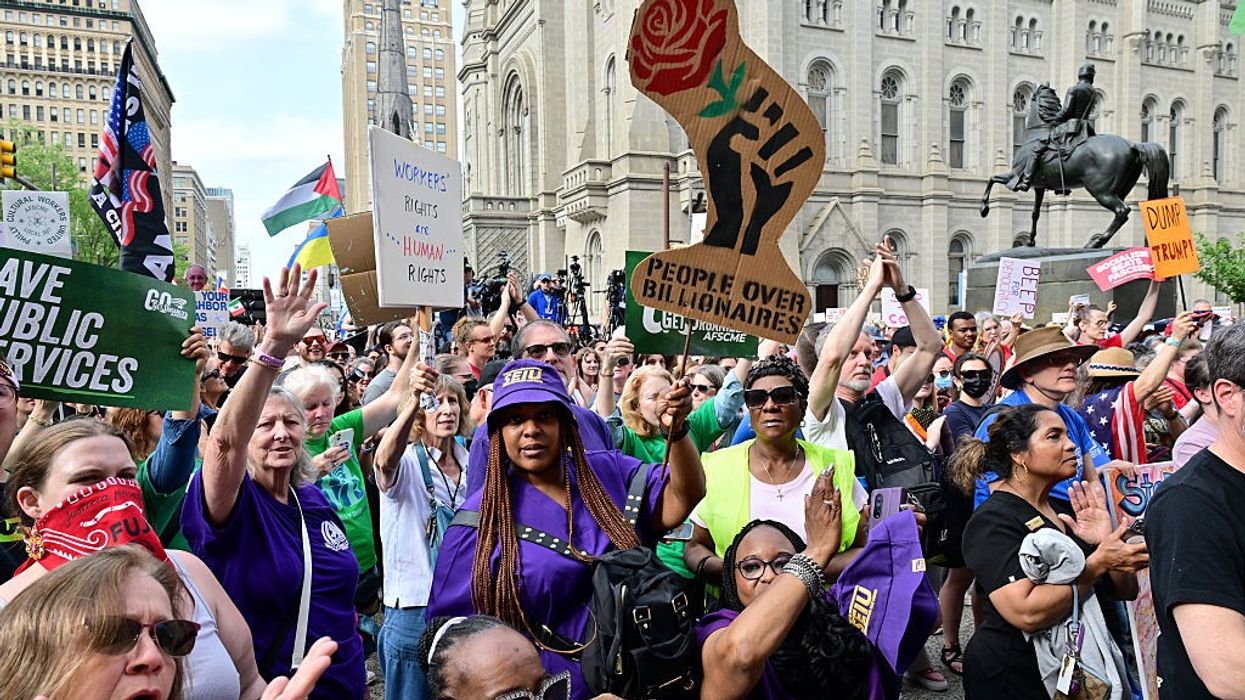
Hundreds of thousands of workers rallied from coast to coast Thursday to mark International Workers' Day with spirited demonstrations supporting labor rights and protesting President Donald Trump's "billionaire agenda" and attacks on the rule of law, unions, immigrants, Palestine defenders, transgender people, and others.
Rallies took place in hundreds of cities and towns across the United States in what the May Day Strong coalition, which led the day of action along with the 50501 movement and others, called "a demand for a country that invests in working families—not billionaire profits."
"Trump and his billionaire profiteers are trying to create a race to the bottom—on wages, on benefits, on dignity itself," the coalition said. "This May Day we are fighting back. We are demanding a country that puts our families over their fortunes—public schools over private profits, healthcare over hedge funds, prosperity over free market politics."
HAPPENING NOW: Hundreds of protesters march through the streets of Washington, D.C. en route to the White House for a May Day rally against Donald Trump (Video: Mariel Carbone)
[image or embed]
— Marco Foster (@marcofoster.bsky.social) May 1, 2025 at 10:06 AM
"Just one day after the 100th day of the Trump administration, families nationwide are already facing cuts to Social Security, Medicaid, Medicare, and education—while billionaires reap massive tax breaks and record profits," May Day Strong added.
In Philadelphia, U.S. Sen. Bernie Sanders (I-Vt.) was among those who addressed a crowd of thousands, many of them union workers.
"Brothers and sisters, what we are celebrating today, May Day, is in a sense a sacred holiday, and all over our country workers are coming out and demanding justice, and all over the world, in dozens of countries, workers are standing up to oligarchy and demanding a world in which all people have a decent standard of living," said Sanders, whose Fighting Oligarchy tour with Rep. Alexandria Ocasio-Cortez (D-N.Y.)w is drawing massive crowds, including in "red" states.
Shafeek Anderson, a hotel worker and member of Unite Here Local 274 who attended the Philadelphia rally, told WCAU that "we're tired of everything that's going on in everyday life. We're tired of our prices going up. We're tired of the unfair treatment."
"We're tired of the inequality in life and everything else," Anderson added. "So rallies like this will absolutely help show that we mean business and we absolutely will stand on business when we need to."
In Chicago, Stacy Davis Gates, president of the Chicago Teachers Union—which recently won what it called a "transformative" new contract—said that "we believe in the power of common good bargaining and together, with SEIU 73 and other labor unions, we have been able to secure sanctuary protections for our students and their families."
"We resist bullies like Trump by creating coalition and leaning into the power of history and the power that Black people's freedom has paved for America in the first general strike during the Civil War," Davis Gates added. "My people believe in reconstruction, and we can do it together in solidarity and create a society that works for everyone."
Boise stands up for workers, for each other, for our humanity, for our democracy...Courage is contagious! May Day Strong!
[image or embed]
— Indivisible Boise Chapter One (@indivisibleboise.bsky.social) May 1, 2025 at 1:18 PM
The detainment and disappearance of students and workers without due process is an attack on every one of us in the streets today, and those of you at home. We won't be ignored. Los Angeles won't back down. #WeMakeAmericaWork #MayDay #InternationalWorkersDay
[image or embed]
— California Fast Food Workers Union (@cafastfoodunion.bsky.social) May 1, 2025 at 9:58 AM
The May Day Strong coalition is demanding:
HAPPENING NOW: A HUGE crowd of protesters march through the streets of Milwaukee, Wisconsin for a May Day protest against Donald Trump
[image or embed]
— Marco Foster (@marcofoster.bsky.social) May 1, 2025 at 10:36 AM
HAPPENING NOW: Thousands of protesters are at the Arizona State Capitol in Phoenix for a May Day rally against Donald Trump (Video: Colton Krolak)
[image or embed]
— Marco Foster (@marcofoster.bsky.social) May 1, 2025 at 10:20 AM
"We won't back down—we will never stop fighting for our families and the rights and freedoms that propel opportunity and a better life for all Americans," the coalition added. "Their time is up."
"If confirmed, Linda McMahon will dismantle public education as we know it to fund tax cuts for billionaires," one union leader warned.
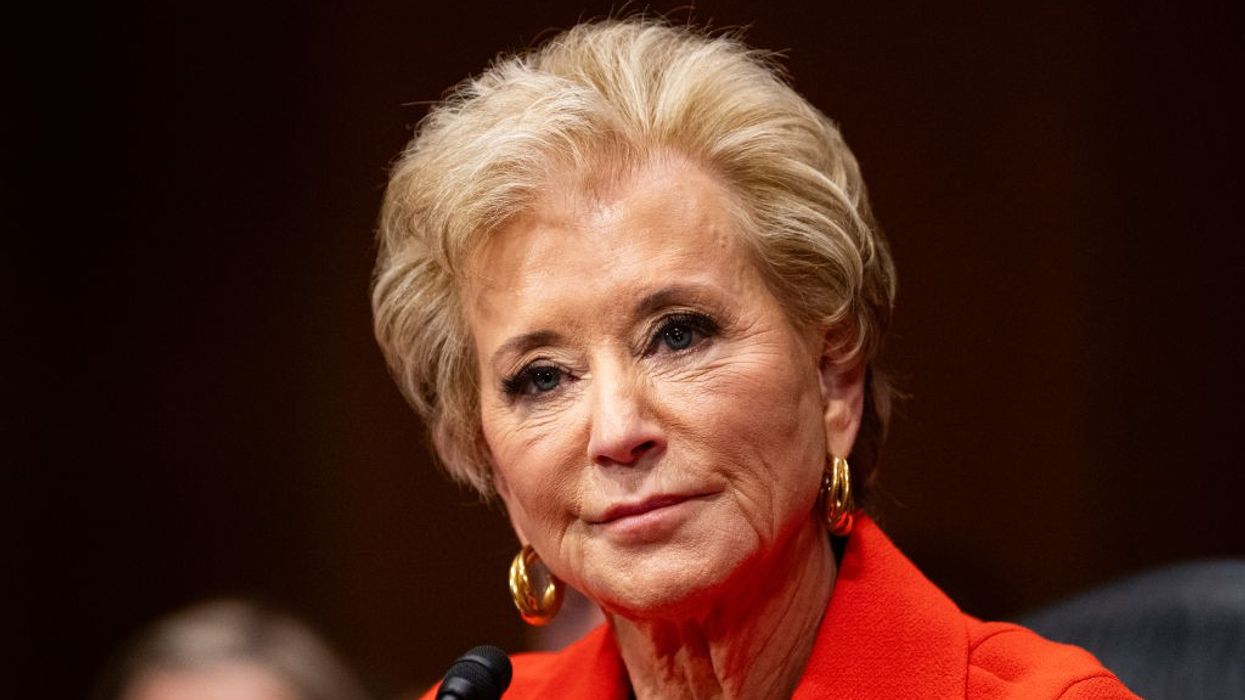
Critics of U.S. President Donald Trump's plans for the Department of Education pointed to billionaire GOP megadonor Linda McMahon's Senate confirmation hearing on Thursday as the latest proof that the Republican administration intends to destroy public schools.
McMahon, accused of "enabling sexual abuse of children" as World Wrestling Entertainment CEO, appeared before the Senate Committee on Health, Education, Labor, and Pensions as the education secretary nominee despite Trump making clear that he wants to shutter the department and billionaire Elon Musk—who is trying to obliterate the federal bureaucracy as chair of the Department of Government Efficiency (DOGE)—claiming last week that "it doesn't exist" anymore.
"Education is meant to be the great equalizer for our children, not a great investment opportunity for the billionaires ransacking our federal government."
"Most of us believe every student deserves the opportunity, resources, and support to reach their full potential no matter where they live, the color of their skin, or how much their family earns," said Becky Pringle, president of the National Education Association, the largest U.S. teachers union. "But we didn't hear any of that today. As I travel around the country, parents and educators tell me their schools need more resources and more opportunities that will help students live into their brilliance. They do not want to gut public education or public schools."
She warned that "if confirmed, Linda McMahon will dismantle public education as we know it to fund tax cuts for billionaires. She will push vouchers that take funding from our public schools, where 90% of all children and 95% of those with disabilities learn and grow. Public funds should stay in our public schools. Our students need an education secretary committed to fully funding the programs that can help them reach their full potential, not siphoning money to send to private schools."
"The Senate must reject Linda McMahon as secretary of education. The agenda is clear and dangerous," Pringle argued. "Whether in Washington, with legal actions and lawsuits, or through grassroots actions in communities across the country, educators will continue to protect our students from this reckless agenda."
While the GOP-controlled Senate seems likely to confirm McMahon—so far, the chamber hasn't blocked any "fundamentally unfit" and "profoundly unqualified" Trump nominees—union and community leaders, educators, parents, and students have still pressured lawmakers to oppose McMahon and battle Trump's assault on public education.
They even braved winter weather at the U.S. Capitol in Washington, D.C. on Wednesday for a related rally. MomsRising executive director and CEO Kristin Rowe-Finkbeiner called McMahon "wholly unqualified" and declared that "President Trump's education plan puts our children at risk and has grave implications for our workforce and our economy."
American Federation of Teachers (AFT) president Randi Weingarten, who was also at the rally, pointed out that "inside the Education Department, the world's richest man and his minions have been rifling through 45 million people's private student loan accounts and feeding the data into artificial intelligence in one of the biggest data hacks in U.S. history."
In response, AFT and unionssued multiple departments and the Office of Personnel Management "for violating the Privacy Act by improperly disclosing the sensitive records of millions of Americans to DOGE staff," Weingarten explained Wednesday. "And tomorrow, we hope Linda McMahon will discuss what she'll do to secure the personal data of veterans who receive benefit payments, current and former federal employees whose confidential employment files reside in OPM's system, and teachers whose pathway to the classroom was reliant on student loans to pay for college tuition. The American people deserve to know what she'll do to kick Elon Musk and DOGE out of the Education Department, out of our schools, and out of our data."
During the Senate hearing, "Democrats repeatedly grilled McMahon on her willingness to follow orders from Trump or Elon Musk even if they run afoul of congressional mandates," The Associated Press reported, noting that the nominee "played down the work" of DOGE and "pledged to uphold the law and show deference to Congress."
McMahon also addressed the administration's push to shut down the department. According to the AP:
"We'd like to make sure that we are presenting a plan that I think our senators could get on board with, and our Congress could get on board with, that would have a better functioning Department of Education," McMahon said. But closing the department "certainly does require congressional action."
McMahon said the president's goal is not to defund key programs, but to have them "operate more efficiently." But she questioned whether some programs should be moved to other agencies. Enforcement of the Individuals with Disabilities Education Act, she suggested, "may very well rest better" in the Department of Health and Human Services, an agency that already has oversight of disability issues. The agency's Office for Civil Rights, she said, could fit better at the Justice Department.
Responding to the hearing in a statement, Aissa Canchola Bañez, policy director of the Student Borrower Protection Center, said that "Linda McMahon's testimony was nothing more than two hours worth of gaslighting. McMahon had the opportunity to state clearly and unequivocally that she will protect students, borrowers, and working families across the nation from the chaos that has already ensued as a result of President Trump and Elon Musk's work to make their Project 2025 agenda the law of the land. She did not."
"When asked whether she would abide by a directive by President Trump that breaks a law, her nonanswer spoke volumes. It is clear that Linda McMahon's blind loyalty to President Trump will guide her decision-making should she be confirmed to serve as the nation's highest education official—and our students and communities will pay the price," she cautioned.
Stacy Davis Gates, president of the Chicago Teachers Union, an AFT affiliate, was a similarly critical, saying that "today's hearing made clear that Donald Trump is not trying to roll the country back to 1950, he is trying to roll us back to 1850. McMahon's dog whistles, her promotion of segregationist school choice policies, and her boss' commitment to converting civil rights protections into tools to police students are all reversals of what formerly enslaved Africans fought for and created during Reconstruction after the Civil War."
"Donald Trump and whoever becomes his secretary should think twice before dismantling the Department of Education," she continued. "As a social studies teacher, it's incumbent on me to provide a brief civics lesson: We have a system of checks and balances that prevents them from doing so. But more importantly, this isn't an obscure federal office. This is a backbone of the government that millions of families with children in our public schools rely on."
"By continuing to come for our public schools, they are further angering the Black families who count on civil rights protections, the families of children with disabilities who rely on federal standards, the families in poverty who rely on federal support, and anyone who is sickened to see queer and transgender students targeted and bullied by the federal government," she added. "Education is meant to be the great equalizer for our children, not a great investment opportunity for the billionaires ransacking our federal government."

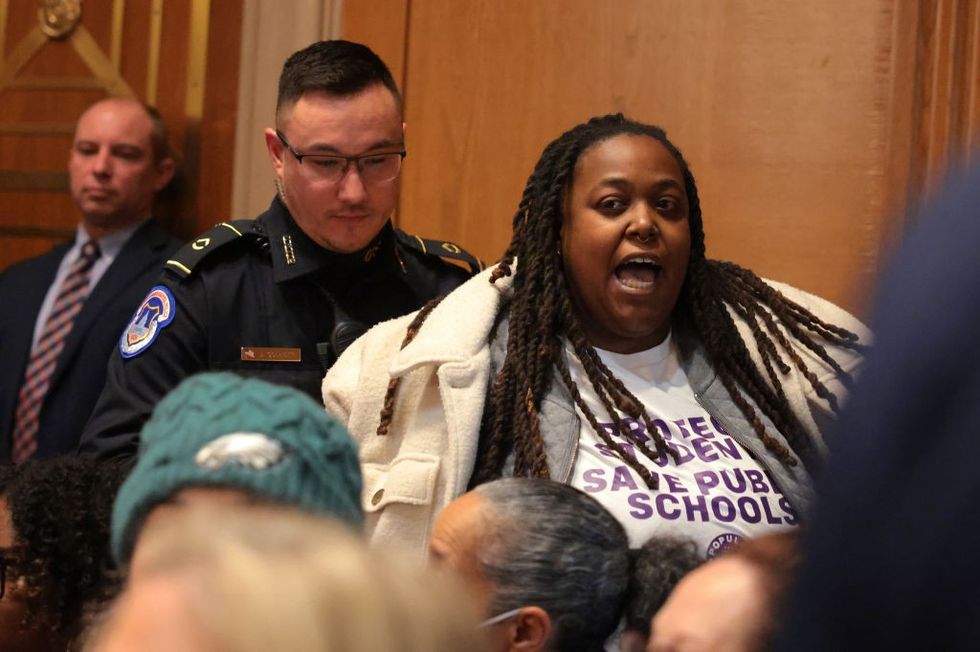
Several protesters interrupted Thursday's hearing, including to express concerns related to the Individual With Disabilities Education Act and the Trump administration's attacks on LGBTQ+ youth.
One lawmaker who took aim at Trump and McMahon during the event—and was publicly thanked by the AFT for doing so—was Sen. Bernie Sanders (I-Vt.), the committee's ranking member.
"In America, we must not allow our educational system to become a two-tier system," Sanders said, calling it "absurd" to provide vouchers for families to send their children to private schools rather than public ones—the focus of a recent Trump executive order.
Sanders also sounded the alarm about using taxpayer money for such vouchers in a four-minute video from his office stressing that "Donald Trump is dead set on destroying public education in this country."
Tony Carrk, executive director of the watchdog group Accountable.US, warned of the long-term consequences, saying after the hearing that "starving cash-strapped states of critical public education resources is a recipe for generational failure."
"The Trump-McMahon-Project 2025 agenda would leave millions of kids behind and further rig the system against low-income communities," he continued. "McMahon would be just the latest to join the Trump administration's billionaire club, which has made no allusions about its plans to let the wealthy cut to the head of the line while working people wait for the scraps."
Carrk also pointed to her time in the wrestling industry, declaring that "Linda McMahon puts on quite a show of confidence, but her alleged actions knowing about and mishandling the sexual abuse of children at her corporation should give no one confidence that she would enforce Title IX sex discrimination protections as education secretary."
Big banks like Chase have repeatedly targeted communities, taxpayers, and even our schools with predatory debt. It's time to fight back.
Chicago’s school year kicked off amid a looming budget crisis that jeopardizes stability for both students and teachers. At the heart of the issue is a silent killer of public education: predatory bank loans, particularly from JPMorgan Chase.
During a bargaining session with the Chicago Teachers Union (CTU), I urged Chicago Public Schools (CPS) to stop allowing big banks to hold Chicago students hostage. Instead of delaying contract negotiations with teachers and risking program cuts that harm students, CPS and state officials should take legal action to recover the funds lost due to these toxic bank deals.
CPS has a deficit projection of over half a billion dollars, perpetuated by the several hundred million dollars in predatory loans from banks like JPMorgan Chase taken out nearly a decade ago. These loans have strangled CPS finances and prevented the district from providing the high-quality education Chicago's children deserve.
Predatory loans are a familiar problem for families in Chicago and around the country. These risky loans are hawked as a short-term solution to fill a gap in finances–with a steep interest rate buried in the fine print that balloons over time.
Chicago Public Schools should hold banks like Chase accountable for the harm they’ve caused Chicago’s schoolchildren.
Chase has repeatedly targeted communities, taxpayers, and even our schools with predatory debt. Chase and its predecessor banks pushed Black and brown Chicagoans into the predatory subprime mortgages that caused the 2008 financial crisis, leading to a tsunami of foreclosures that resulted in a massive loss of household wealth in communities of color.
And nearly 10 years ago, Chase closed a predatory deal with CPS that has haunted our finances ever since.
CPS was already reeling from drastic cuts to special education services in 2016, prompted by the immediate payment of $234 million in termination fees for bad deals they entered into a decade prior. An unfair school funding formula forced 50 schools to shutter three years earlier and continued to destabilize the same South and West side neighborhoods.
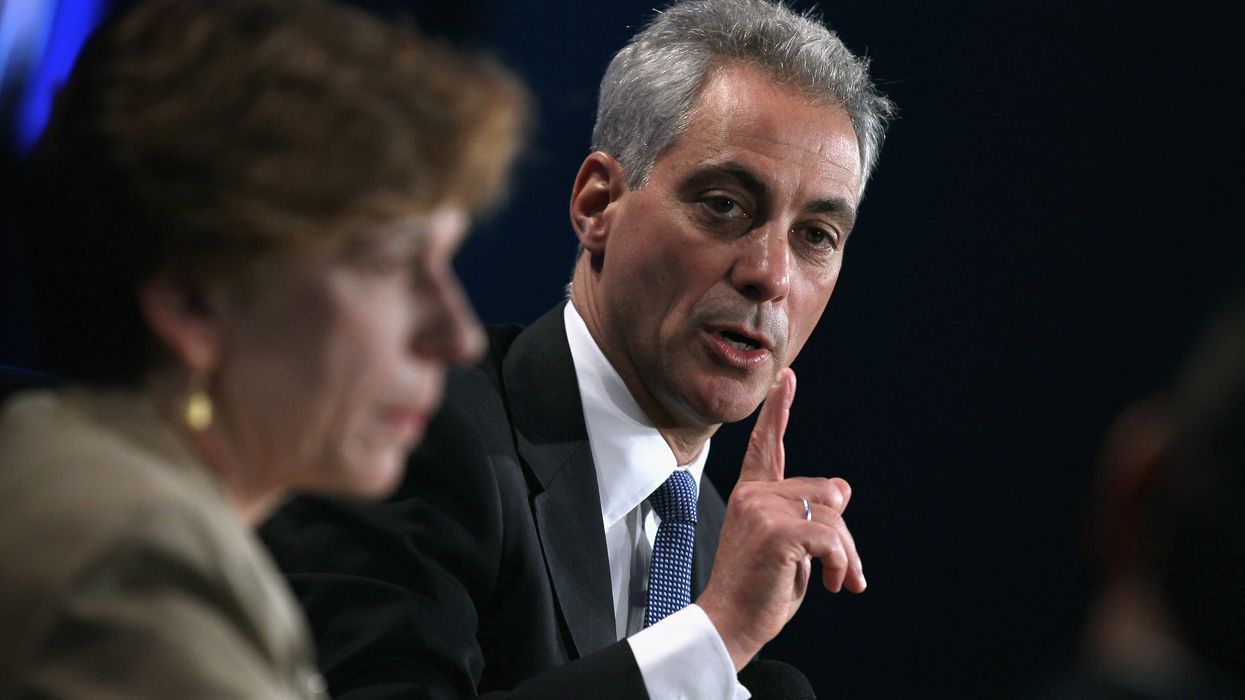
A twin set of threats were on the horizon: a potential takeover of schools by Governor Bruce Rauner, a Republican who was hellbent on making Illinois more like Texas, and a threat by Mayor Rahm Emanuel to lay off 6,000 teachers to close a budget gap caused by structural underfunding.
The school district desperately needed funds to pay for projects like lead abatement. Rather than face a takeover or mass layoffs, they decided to issue bonds in order to pay the termination fee. But because CPS’s credit rating had been downgraded to “junk” just a few months prior, financial giants like Chase and Nuveen exploited the opportunity.
Banks purchased the bonds from CPS at a lowball price but then sold them to other investors just months later for a much higher payoff. Over a span of two months, Chase bank made a 9.5% profit on $150 million in bonds through this arbitrage scheme, an annualized profit of 82%. This calls into question whether Chase met its legal obligation to give CPS a fair price for the bonds. Our schools are still impacted by these bad deals, paying $200 million annually for loans taken out during this moment of crisis.
CPS was also the victim of toxic interest rate swaps deals that cost the district, Chicago, and the state of Illinois hundreds of millions of dollars in the early 2000s. Banks had marketed swaps as a way for cash-strapped governments to save money, but they were laden with hidden risks that materialized as a result of the 2008 financial crisis, causing payments to skyrocket and costing taxpayers a fortune.
As with Chicago’s parking meter and Skyway deals, future generations of taxpayers were stuck holding the bag. From 2012 to 2016, the City of Chicago handed over $145 million to Chase Bank alone to terminate these toxic swaps.
CPS should hold banks like Chase accountable for the harm they’ve caused Chicago’s schoolchildren. There is strong reason to believe the banks that trapped CPS into these predatory deals violated their legal responsibilities to the district. While the district has improved its financial health since 2016, recovering the millions lost to predatory lending would help build on their progress.
Decades of underfunding and predatory banking have swallowed the district’s reserves. Now, faced with a federal reduction that could slash funding by $800 per student, the district has reached an inflection point: Will CPS hold banks accountable and fund the programs, resources, and staff that students deserve—or will they make cuts that set kids back?
"If we're going to take back the Democratic majority," said historian Harvey J. Kaye, "we're going to have to take back the people who literally abandoned the party because they felt abandoned."
On the eve of the Democratic National Convention, progressive organizers, scholars, and policymakers gathered in Chicago to discuss what matters most to working-class people across the United States and how to pressure elected Democrats to embrace and enact bold solutions.
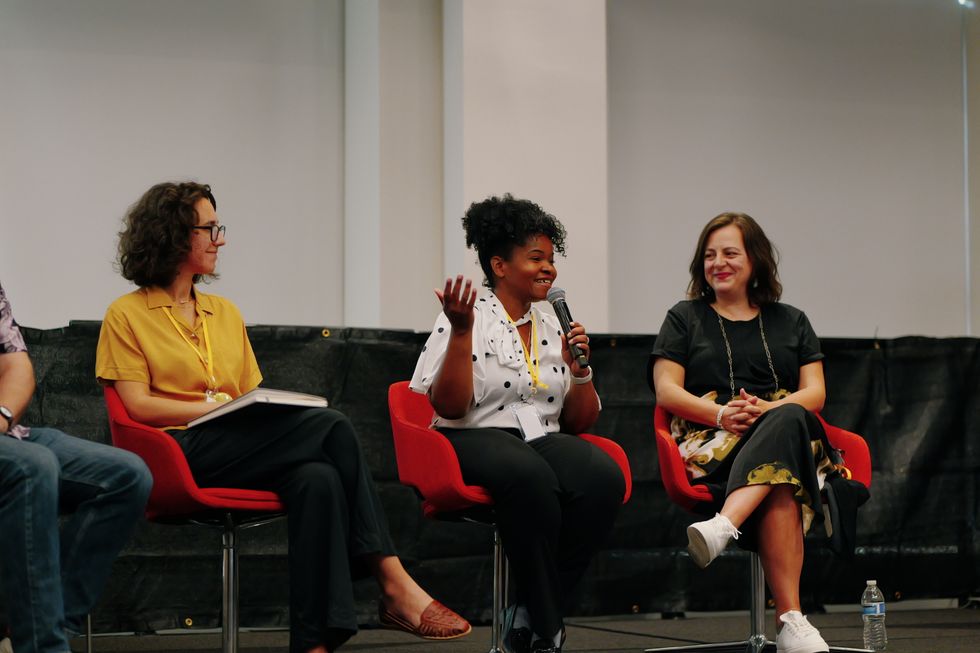
The two-day event—billed as Progressive Central 2024: The Politics Americans Want and organized by Progressive Democrats of America (PDA) in coordination with the Arab-American Institute, The Nation, and Rainbow PUSH Coalition—was held at the Chicago Teachers Union (CTU) building, just blocks away from the United Center, where the DNC is being held this week.
"The Chicago Teachers Union is supposed to be the anchor, the destination place for progressives from across the world," said CTU president Stacy Davis Gates, whose members are months into negotiations for a new contract. "We're doing the best we can to be a beacon. And what we want to do is call the rest of the progressive movement in to say, help protect this, help anchor this, help grow it, help refine it."
The progressive conference is part of a two-decade tradition, going back to the 2004 convention, PDA communications director Mike Hersh told Common Dreams as the event wrapped up Monday, while anti-genocide protesters marched nearby outside the kickoff of the DNC, where speakers included United Auto Workers president Shawn Fain and Congresswoman Alexandria Ocasio-Cortez (D-N.Y.).
"I think lot of the energy that progressives have today is because they feel for the first time in a long time that the party has a chance to move more in lockstep with what we want to see."
"This was vintage Progressive Democrats of America," Hersh said of this year's conference. "We try to mobilize people and that's really what all of these Progressive Central events have been about."
The livestreamed conference featured panels, pre-recorded videos, and speeches on a range of key issues, including: building progressive power, the climate emergency, the crisis of American democracy, an Economic Bill of Rights, immigration reform, Medicare for All, organized labor, reproductive freedom, the Rural New Deal, structural racism, foreign policy—particularly U.S. government support for Israel's assault on the Gaza Strip—and more.
Collin Rees of Oil Change U.S. and Food and Water Action's Michelle Allen stressed the need to phase out fossil fuels and combat false climate solutions, while One Fair Wage president Saru Jayaraman and Sara Nelson from the Association of Flight Attendants-CWA delivered remarks—and a rendition of "Solidarity Forever."
"Using power builds power, and we will use our power," Nelson said. "We are not just about access politics in this room. We are about using power to make our world better for the people."
William Walter, who is part of Young PDA, Our Wisconsin Revolution's leader, and a Democratic candidate for his state Assembly, explained that "our initial approach was, 'What would it look like if we held a progressive national convention akin to the DNC or RNC, but devoted to progressive policies, progressive issues, progressive legislation?'"
Reflecting on her experience attending the event, Beaei Pardo, executive director of Code? Whatever!, told Common Dreams that the event "maps the body of honest ideas, systemic nurturing for self-determination, stories that help us 'get it' about what matters for good life, pragmatic history, theory we can test, and a ready community unafraid to consider the possibilities of our humanity."
The programming offered visions of how the Democratic nominee, Vice President Kamala Harris, and her running mate, Minnesota Gov. Tim Walz—coupled with a Democrat-controlled Congress—could tackle these topics, and how to compel them to do so.
"Right now in the United States, there are four prohibitive costs that you experience across life that block young people entering into the economy from having a successful and comfortable economic life readily available to them," PDA executive director Alan Minksy said just before the event began. They are the costs of having a child, education, healthcare, and housing.
"You're not going to be a successful administration if you don't address these things, and the mainstream of Democratic policy is going to fail to produce the kind of society that Americans want to live in," Minsky warned. "We have to be adamant about how we have the solutions to this stuff... Not just maintenance of our democracy, but actually reinvigoration of our democracy."
He added that "one would have to be naïve to believe that an incoming Democratic administration's ready to go against all the power and money and wealth... on the right wing of the party and by the Republicans, but we have to make them see that that's the way to create the society that Americans want to live in."
Over the past few years, Minsky has joined historian Harvey J. Kaye, professor emeritus at the University of Wisconsin - Green Bay, in arguing that progressive groups and unions should create a grand coalition that will press the Democratic Party to advance a 21st Century Economic Bill of Rights, a focus of one of the Sunday presentations.
As Kaye spoke, a screen above him displayed a clip of a comic that he and Matt "The Letterhack" Strackbein published in Common Dreams, tracing the idea back to former President Franklin D. Roosevelt's State of the Union speech 80 years ago, and the 10 proposed rights:
In terms of actually pursuing policies in line with the Economic Bill of Rights, Kaye told Common Dreams Tuesday, "it's too late for this particular convention, but... it's not too late for a Harris presidency."
The proposal—which polling shows would be popular with the American public—could even motivate voters to support Harris and Walz, who are working to defeat Republican former President Donald Trump and Sen. JD Vance (R-Ohio) in November.
"Just imagine if Tim Walz... just one of them got up and said... 'Our ambition is to redeem the legacy of FDR in favor of an Economic Bill of Rights,'" Kaye said. "You can just lay them out and then start talking about it in policy terms if you wish. In other words, if we're going to take back the Democratic majority, we're going to have to take back the people who literally abandoned the party because they felt abandoned."
While some local and state candidates have in recent years embraced and even run on an Economic Bill of Rights, a starting point for promoting related legislation at the federal level, Kaye noted, is to "get into a couple of congressional folks' minds."
Members of Congress who spoke at Progressive Central included Sen. Bernie Sanders (I-Vt.), who declared Monday—ahead of his Tuesday DNC address—that "the American people want us to take on the greed of the oligarchy."
There were also video messages from a few Democrats as well as appearances by Reps. Danny Davis (D-Ill.), Maxwell Frost (D-Fla.), Jesús "Chuy" García (D-Ill.), Jonathan Jackson (D-Ill.), Pramila Jayapal (D-Wash.), Ro Khanna (D-Calif.), Barbara Lee (D-Calif.), Jim McGovern (D-Mass.), and Delia Ramirez (D-Ill.).
Khanna—who mentioned FDR's Economic Bill of Rights in his 2022 book and was part of the same Sunday session as Kaye—told the audience that "the secrets of America's future are in our history" and "we need ideas that move people."
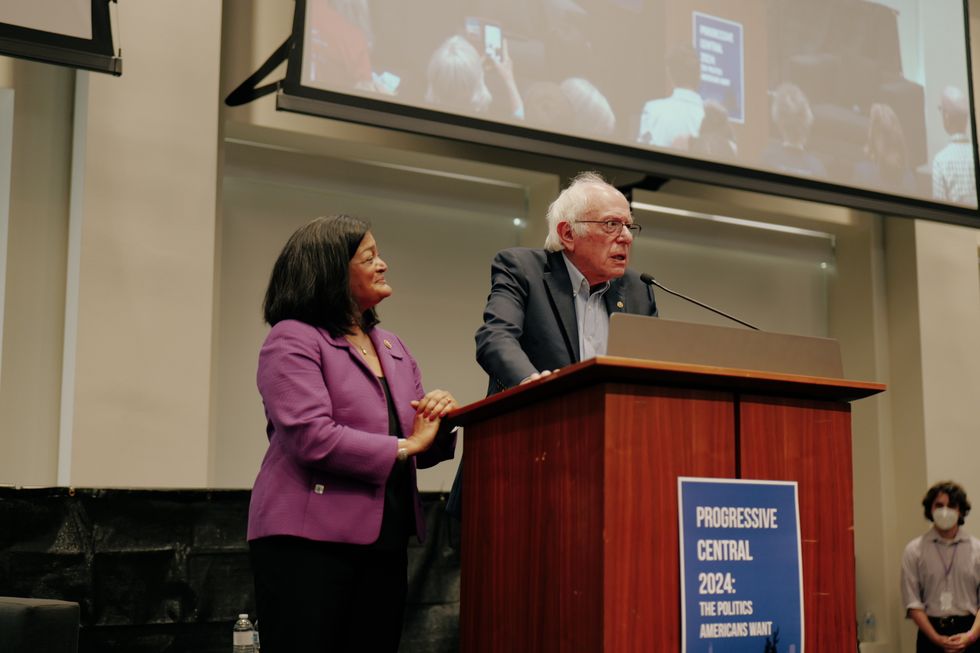
One of those ultra-popular ideas is Medicare for All, which Jayapal discussed during a Sunday panel. The popularity of universal healthcare presents an opportunity for "a great organizing moment," she acknowledged, sharing her hopes to coordinate the reintroduction of the Medicare for All Act with related local and state measures.
While Jayapal and Sanders' bill envisions a full transformation of the U.S. healthcare system, she told Common Dreams that "we're going to try to start to get there by some expansions and modifications to Medicare—so expanding Medicare to include dental, vision, and hearing... That will be a big priority."
"Reducing the Medicare eligibility age to at least 60 will be a big priority," the Congressional Progressive Caucus chair added. "Continuing to expand the number of prescription drugs that are negotiated will be a big priority. And then getting rid of what I call the 'Medicare Disadvantage' plans that are trying to privatize Medicare."
Enacting the healthcare reforms that Jayapal outlined will require expanding the Democratic majority in the Senate and reclaiming the House of Representatives—where progressives who have supported a call to end Israel's assault on Gaza are under sustained attack. This summer, Reps. Jamaal Bowman (D-N.Y.) and Cori Bush (D-Mo.) lost their primaries to Democrats backed by the American Israel Public Affairs Committee (AIPAC) and rich Republican donors.
"We need Bowman in the Congress. We need Bush in the Congress," Nina Turner—who was targeted by dark money during her 2021 Democratic primary run to fill a vacant seat in Ohio—told the crowd. "But we left them on the side of the road."
Turner also challenged Democrats who have spent this election cycle raising the alarm about Project 2025—which includes a sweeping far-right policy agenda written by Trump allies—by urging the party to put forward its vision for transforming the nation in a positive direction. "Where's their Project 2025?" she asked, asserting that the best way to win voters is "by having policies of your own."
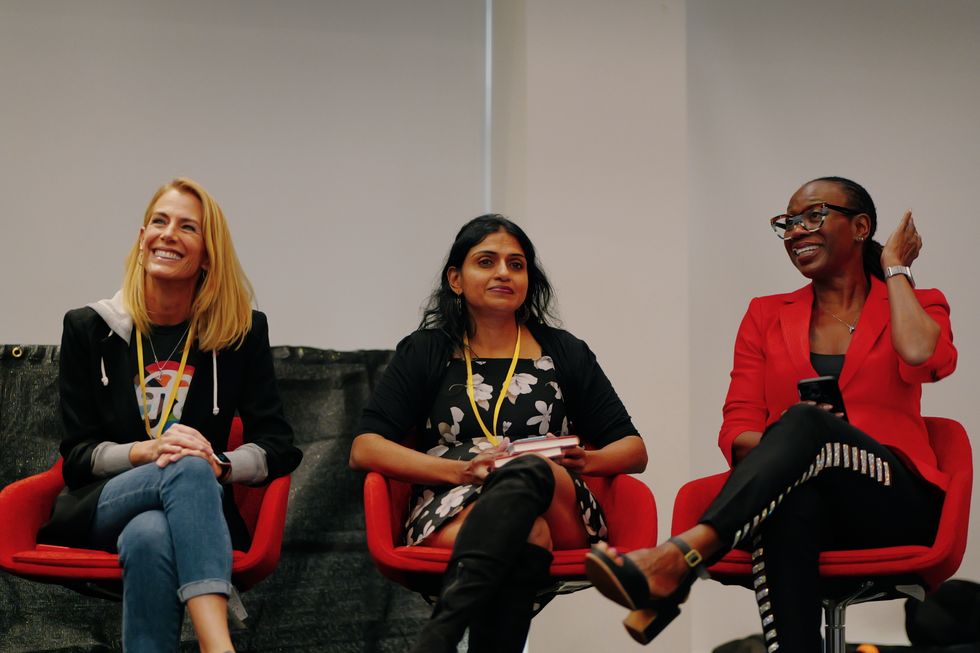
Since taking the torch from President Joe Biden last month, Harris has started sharing a policy message that includes an economic agenda to boost access to affordable housing, lower medical costs, and assist families raising young children.
"The economic framework that the vice president and her running mate have come out with so far is really a good start," Turner told Common Dreams, noting the need for progress on issues including calls for a cease-fire and arms embargo regarding Gaza. "It's obvious that there are components of the progressive movement who are excited about the change from Biden to Harris-Walz, but also don't let that excitement delude Democrats into thinking they're just going to get a free ride."
"We're in a sugar high right now. That's how I'm going to describe it. We could come crashing down if they're not careful," she warned. "They're going to have to do the work, hear the cries or the concerns of the very voters that they're trying to touch, and communicate with those voters in a way that says, 'We hear you and we see your pain.'"
"Just talk to people about healthcare. Just talk to people about the cost of living. They want relief. And I think they will support anybody that legitimately is going to give them that relief," she added, urging Harris and Walz to "shake off neoliberalism, shake off incrementalism, and go full throttle for the working class."
Harris' selection of Walz as her vice presidential candidate has been cheered by progressive political leaders and groups, in part because of the historic legislative progress that Minnesota's Democratic-Farmer-Labor Party made under this leadership last year.
During a Monday panel, speakers from the state pushed back against the framing of it as a "Minnesota Miracle," stressing that the wins on school meals, labor protections, reproductive rights, and more were instead the result of years of organizing—an important lesson going into a potential Harris-Walz administration with a Democratic Congress.
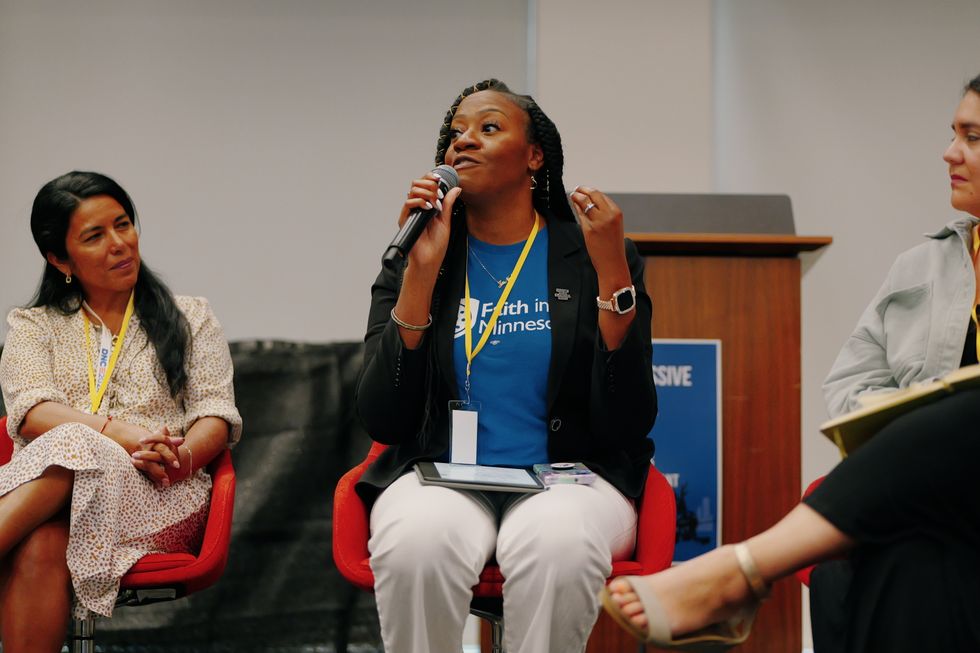
Walter of Young PDA is among those welcoming Walz's rise, telling Common Dreams: "I think the Democratic Party has a tendency to shoot themselves in the foot when decisions are obvious. They overthink or overcomplicate things that really should not be overthought. Take the easy answer. Take the free space on the bingo card. It's right in front of you. You have a very popular governor, a Midwestern state, that has universal appeal that can take your message and present it easily in a way that most people resonate with. Just do it. And for the first time in a long time, the party did it. They just did it."
"I think a lot of the energy that progressives have today is because they feel for the first time in a long time that the party has a chance to move more in lockstep with what we want to see rather than deferring to their big corporate donors," Walter said. "Now, that's not to say they won't in the end because that's our job as organizers and as progressives, to continue to pressure them and to push them left, but I think we see a path forward."
Sam Rosenthal, the political director for RootsAction, similarly told Common Dreams after the conference that progressives across the country must continue to pressure the party.
"I think we're at a precarious moment for the progressive movement," he said. "In a lot of ways, we've achieved major victories in mainstreaming positions that, even five years ago, were considered fringe and too far left. The urgent need for environmental action, the fact that we're being price gouged by pharma companies, organized labor as a bedrock of national prosperity—all these things have become more or less mainstream in the Democratic Party, because of our efforts as progressives."
"At the same time, I fear that we risk losing our unique voice if we don't continue to agitate from the left, in coalition with the grassroots activists who form the base of the progressive movement," he continued. "There's a danger that, as our movement matures and grows, our positions will become harder to distinguish from Democratic Party orthodoxy, and I don't think we should let that happen. We have to continue to play our role in pushing the Democratic Party left, exactly because that strategy has been so successful so far."
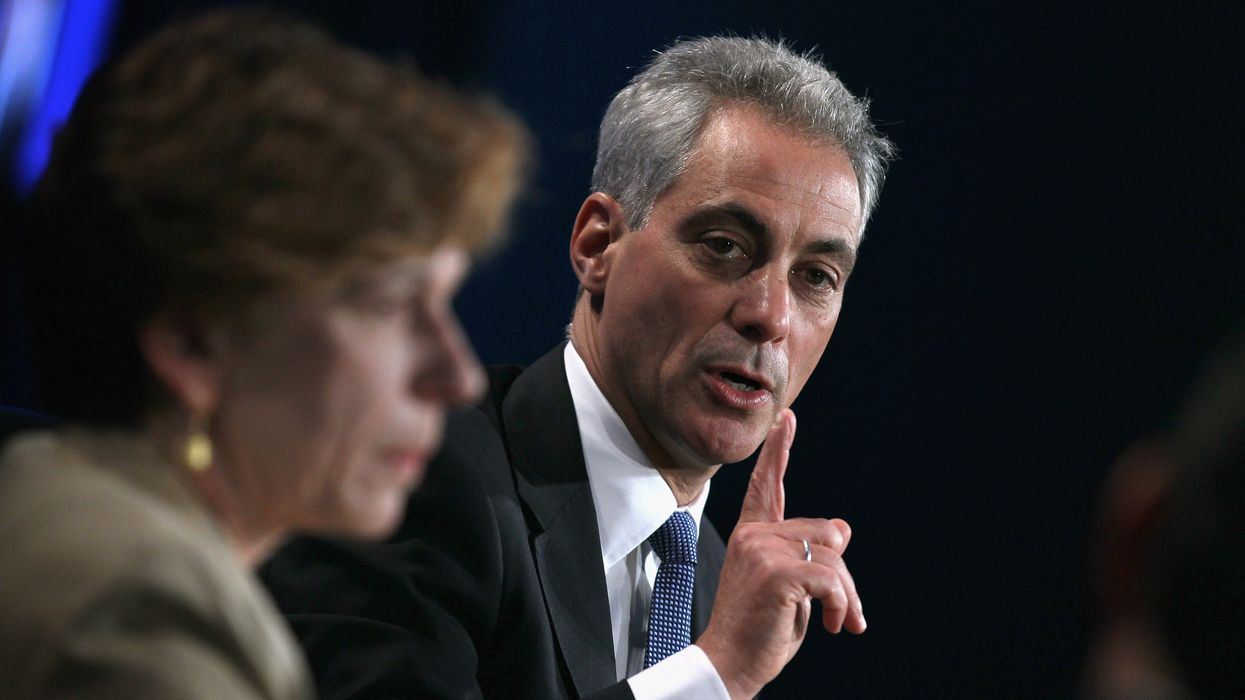
"it is not that Chicago Public Schools does not have the funds. It's that Rahm Emanuel sold the school district to Jamie Dimon, JPMorgan Chase, and other bankers and left it broke on purpose."
The Chicago Teachers Union on Wednesday demanded a state investigation into a series of loan deals made with "predatory" Wall Street banks under ex-Mayor Rahm Emanuel and former Illinois Gov. Bruce Rauner that left the city's school system "broke on purpose."
"For years, banks scammed [Chicago Public Schools] with predatory financial deals, taking money out of our classrooms and shortchanging our students," CTU detailed in an online contract update. "For years, CPS and many other Illinois school districts have been systematically underfunded, burdened by bad bank deals, and forced to do more with less. We will need leadership from every level of government to transform our schools with the resources they deserve."
According to the Chicago Sun-Times: "During the financial crisis, stemming from the budget stalemate under... Rauner, from 2016 to 2018, CPS took out six high-interest loans. Just on these loans, CPS must pay $194 million this year."
CTU's letter to Illinois Attorney General Kwame Raoul requesting a probe says that "the predatory loans CPS took on were at sky-high interest rates unheard of for municipalities and public bodies, especially at a time when interest rates were at record lows."
As the union—now in bargaining talks with the city over a new contract—said in a statement about the request:
In other instances of predatory banking, state and local officials sought remedy through class-action lawsuits and other legal efforts to recoup funds, address the harm, and defend the public. However, in Chicago, the school district is still paying $200 million per year to lending institutions for loans that JPMorgan Chase, among others, sold and earned 9.5% profit or $110 million in the first year alone.
The CTU points to multiple historic examples of public officials upholding their responsibility to defend the public from such practices and is calling on current elected officials to fulfill the same obligation.
CTU Local1 president Stacy Davis Gates stressed Wednesday that "it is not that Chicago Public Schools does not have the funds. It's that Rahm Emanuel sold the school district to Jamie Dimon, JPMorgan Chase, and other bankers and left it broke on purpose."
"Our elected officials have the responsibility to investigate those predatory bank deals, just as they did successfully in the wake of the subprime mortgage crisis, and recoup the hundreds of millions of taxpayer dollars that the banks stole from the public and our children," she asserted.
The union is arguing that Democratic Illinois Gov. JB Pritzker, the Chicago Board of Education, and city officials including Treasurer Melissa Conyears-Ervin and Mayor Brandon Johnson, a former CTU organizer, "must all play a role in helping fund our schools and undoing the damage from the Rahm and Rauner years of predatory bank deals, and the decades of inadequate state funding."
CTU held a Wednesday morning press conference, during which Saqib Bhatti, co-founder and executive director of the Action Center on Race & the Economy, said that "we're here at Chase today because Chase took a bunch of money that belongs to our kids."
"CPS is [in] dire financial straights right now, and one of the big reasons is because banks like JPMorgan Chase and Bank of America systematically ripped off CPS for years and years and years," Bhatti continued, surrounded by people holding signs with messages including "Chase Profits Off Students" and "Bad Bank Deals Cost CPS."
"We know during the subprime crisis that banks were selling predatory loans to Black and brown families, loans that were designed to fail," he explained. "They did the same thing with CPS."
CTU also invited Bhatti to speak during Tuesday's public bargaining session at Morgan Park High School—the third event of its kind since the union began negotiating with CPS in April, before the teachers contract expired on June 30.
The Chicago Board of Education passed a $9.9 billion budget last month. As Chalkbeat noted at the time, it features "cuts to central staff and administrative costs to help close a roughly half-billion-dollar deficit," and doesn't account for increases to teacher salaries, due to ongoing talks. Both Johnson and the union opposed staff layoffs.
CPS claimed during the Tuesday event that the additional cost from just 52 of over 700 CTU contract proposals would increase the district's projected deficit for fiscal year 2026 from $509 million to $2.9 billion, and by fiscal year 2029 it would hit $4 billion.
As the
Sun-Times reported:
The CTU's bargaining presentation for Tuesday's session did not ask the district to take out a loan, but it challenged officials' financial analysis and claims that they lack funding.
The union pointed to revenue initiatives that the city and state could explore, like more heavily taxing millionaires and corporations—which would require changes to state law—or seeking federal funding for school building improvements. The union also suggested efforts that could take years and would not solve the budget problems in the short term, like fighting banks for past "predatory" loans to CPS or seeking money back from past "bad vendor contracts."
"These predatory deals are costing hundreds of millions a year," said Pavlyn Jankov, research manager for the CTU. "The district has to make every effort to claw back those funds."
The newspaper noted that CPS chief financial officer Miroslava Mejia Krug "revealed that the school district is actually a part of some national lawsuits against banks, but it is unclear whether those lawsuits specifically address high-interest loans."
Violence and murder anywhere is the same everywhere. If we are not OK with kids dying in Chicago, in our country and other countries like Ukraine, then we should not be OK with kids dying in Palestine.
If you teach, your absolute worst nightmare is that something tragic happens to your students. Teachers don’t just think about students when they are in front of us; we think about them throughout each day and night. They are a central part of our lives.
When a young person steps into our classroom, the first thing we do is work to connect. That’s the best way students learn. When a student doesn’t live up to their own potential, we take it personally. We obsess about what went wrong.
Caring about students also means deliberately caring about the world we are helping them grow into. It has never been enough to only teach students when they are in the classroom; we have to advocate for them all the time.
For too many of us teachers, we have also had to wrestle with how to respond when something tragic happens to our students. And tragedy strikes at a devastatingly regular pace. Losing one student is unbearable; I’ve lost damn near a classroom over my 17 years, from intra-communal violence, police violence and tragic accidents. Thinking about and seeing the pain their families experience is soul-shattering.
Fundamentally, educators are really only in this profession because we care so deeply about young people and the promise they hold — not in our communities, but across the globe.
Watching what is happening in Gaza has been soul-shattering too. Some 10,000 children have been killed since October 7; many are now without parents; some have been held hostage. Every one of them is someone’s child, someone’s loved one, someone’s student.
I’ve been told directly that teachers need to stick to teaching, that international matters aren’t something we should talk about, and that educators don’t have any clue or right to comment on issues that may seem so far away.
But we know what it is like to lose students, to see young people suffer. Whether that child is in Chicago, Israel, Palestine or anywhere in the world, we don’t want anyone else to experience this pain. My partner encouraged me to finally start therapy because I lost so many students that I was no longer able to cope with seeing the empty desks, the social media eulogies, the funerals.
That’s why, for the first time in the history of the Chicago Teachers Union (CTU), we approved a resolution on November 1 to improve how we support students during world conflicts. That’s why we also approved another resolution, to add our name to a letter with other unions calling for an immediate cease-fire in Israel and Palestine. This decision wasn’t impulsive; our members met and thoroughly considered and discussed the various angles and issues. Our hundreds of delegates, all educators, further discussed and voted democratically. The support was nearly unanimous.
But I also need to note that, even though there was so much support, this decision wasn’t easy. Union leadership is in agreement with the resolution at its core, but it is naturally concerned about potential blowback — blowback we have seen come to so many people and organizations who have called for an end to the violence, blowback that our union has received because many on the Right are upset with what we’ve been able to achieve.
The son of our president, Stacy Davis Gates, has become a target, and her parents’ home is under police supervision because of threats. Jackson Potter, our vice president, who is Jewish, has received antisemitic threats.
There’s also concern about how the CTU might be looked at going forward. Would elected officials stop supporting us in Springfield? Would they no longer endorse legislation we put forward? We had these internal discussions and thought about our values. As Potter said at a rally in Chicago in November, organized in part by Jewish Voice for Peace and IfNotNow: “As a fighting union dedicated to the adherence of human rights, our most important representative body voted overwhelmingly in favor of a cease-fire to stop the senseless bloodshed of innocents and call for the return of all hostages.”
A big part of our motivation is that we know our students are watching the same videos and seeing the same news on TikTok and Instagram as we are. We can’t pretend like the issue is not affecting their lives, and we can’t pretend like youth in the United States don’t overwhelmingly want the violence to end. As always, our students are watching us and seeing if we will teach about what is happening. They know we’re not robots, and they wonder what our values are.
For me, too, it’s personal. My dad is a Vietnam combat veteran who was often emotionally unavailable growing up. Only after the Iraq War started, in 2003, did he meet and work with other veterans who were speaking out against wars; when my own kids were born, he finally started sharing more about his experiences. When my kids played, screamed or were loud, it took him back to a place he does not want to remember.
The killing of children and civilians, the bombing of cities, hospitals and schools, is not honorable. Death no matter where it takes place is unforgivable and destroys generations. A family doesn’t ever really come back from tragically losing a loved one.
We remember that Palestinians expressed solidarity and showed support for Black Americans during various points in the Black Lives Matter Movement, and now we see more historically marginalized groups in America unequivocally standing up for Palestinians.
It’s beyond time our elected officials and President Joe Biden call for a cease-fire and stop military funding to Israel until that cease-fire holds. After the historic United Auto Workers strike, Biden told the union, “I want to thank you for your commitment to the solidarity, for exercising your right to bargain collectively … You made this happen.” But unions are not simply concerned with pay and benefits; we worry about everything that impacts the lives of our members. This includes housing, schools, safety and life. More than a decade ago, the CTU helped inspire unions around the country to bargain for the common good of our communities and humanity. This shift, to bargain for the common good, forced Chicago politicians to not only bargain over our pay and benefits, but to bargain about housing for our students, hiring social workers and nurses, and creating green schools free of lead and asbestos.
It is in this same vein that we look to events that impact students around the world. The labor movement is responding to the violence in Israel and Palestine. The UAW signed onto the same cease-fire letter as the CTU, and we are now collectively using our voices to call for an end to the fighting.
When the violence started, the overall response from labor was modest. Many rank-and-file members were vocally against the violence, but only a smattering of locals and only a couple of nationals — like the United Electrical, Radio and Machine Workers of America and the National Writers Union — came out forcefully against the war. With pressure from the rank-and-file, that chorus has grown louder — and continues to grow.
The American Postal Workers Union joined the call for a cease-fire and a whole host of local organizations — including several teachers unions, like the San Antonio Alliance of Teachers and Support Personnel and the Massachusetts Teachers Association — have joined the call. We’re now finding it critical to put real action behind our words and stand shoulder-to-shoulder with other social and economic justice movements to end the violence.
Many elected officials are listening, though not nearly enough. Biden and members of Congress must listen to unions and the vast majority of the American public and demand a cease-fire.
Our union represents all races, genders, nationalities and ethnicities. We teach Jewish and Palestinian students and have Jewish and Palestinian members. We didn’t just decide to call for a cease-fire and get involved in global events haphazardly. We have long been working with and inspired by parents, community organizations, students and educators to improve our city. We know that, to be there for our city, we need to be there for students everywhere. We are inspired, too, by the youth who push for legislation to help Chicago and our young people, like the Peace Book, Treatment Not Trauma and Bring Chicago Home.
Educators are always inspired by, led by and encouraged by our students, and it is for these reasons that educators who represent the CTU voted nearly unanimously to endorse a letter calling for a cease-fire in Gaza.
Violence and murder anywhere is the same everywhere. If we are not OK with kids dying in Chicago, in our country and other countries like Ukraine, then we should not be OK with kids dying in Palestine.
Cease-fire now. Solidarity forever.
How a former teacher’s union organizer and a slate of progressive city council members are leading the windy city away from the neoliberalism that has dominated its politics for decades.
In The Shock Doctrine: The Rise of Disaster Capitalism, Naomi Klein diagrams the fundamentalist dream, held by right-wing economists, of creating an absolute state of market freedom. In Klein’s account, the true believer who most set this revelation into motion as a practical set of policies was Milton Friedman, who hoped to return society “to a state of pure capitalism, cleansed of all interruptions—government regulations, trade barriers, and entrenched interests.”
Friedman shaped and spread these ideas through the Chicago school of economics, a conservative movement that entered the public sphere in the 1950s as a new class of scholars at The University of Chicago charted a vision of unfettered capitalism where private markets would supersede the state.
By the end of the century, the city of Chicago—where this doctrine emerged—had become a testing ground for many of its central tenets including privatizing assets, cutting taxes on corporations, and slashing budgets for vital public services such as housing, education, and healthcare. But now, the tide appears to be turning.
Despite the coming impediments and obstructions they’ll likely face, the new political leadership is set to embark on a novel pathway for urban governance.
This year’s municipal elections saw a historic number of progressive candidates elected to City Council, while labor organizer Brandon Johnson toppled privatization zealot Paul Vallas in the mayoral race.
These results signal a sharp turn away from the economic orthodoxy that has dominated Chicago politics for decades. And despite the coming impediments and obstructions they’ll likely face, the new political leadership is set to embark on a novel pathway for urban governance hatched through a reinvigorated labor movement and years of community organizing for social justice.
The Chicago school stood in stark contrast to the Keynesian worldview that prevailed in the United States from the early 20th century through the post-World War II period. Proponents of this worldview urged the government to take an active role in setting monetary policy, to provide economic safeguards, and to regulate business. The counter revolutionaries of the Chicago school, meanwhile, focused on carrying out their agenda by cutting corporate taxes, ending regulations and worker protections, and privatizing major aspects of the economy. Following in the footsteps of Austrian economists Friedrich Hayek and Ludwig von Mises, the overall project of the Chicago school became known as neoliberalism, and it sought to stamp out social democracy in place of a system where financial power alone dictates decision making in the realms of politics and the wider economy.
While these neoliberal ideas sat on the fringes of mainstream economics in the early decades following their introduction, by the 1970s a series of economic crises roiling the United States and parts of Europe opened the door to alternatives to Keynesianism, and the free marketers quickly swooped in. Right-wing and conservative politicians served as champions of this agenda in the political sphere.
As Klein wrote, these crises or “shocks” are exactly what neoliberals seize on to implement their designs of a society that favors corporate power brokers and demolishes the social safety net. The Chicago school outsourced their designs around the world and “structural adjustment programs” were imposed on countries in the Global South like Chile, starting in the 1970s, to maximize profits for transnational corporations.
Chicago became “the incubator, test case, and model for the neoliberal urban education agenda.”
The Shock Doctrine also points to the cyclical nature of these kinds of shocks being used to push through market reforms. Crises, even following natural disasters like extreme weather events, are in many ways manufactured by business and political authorities through starving communities of resources. The resulting economic chaos is in turn used as justification to implement policies such as privatization of public goods and lower corporate taxes, which are framed as disaster remedies. Instead, conditions of poverty and dislocation intensify, while private interests capitalize off of the orchestrated distress.
In the 1980s, the administrations of President Ronald Reagan and Prime Minister Margaret Thatcher moved the United States and the United Kingdomsolidly in the direction of market fundamentalism through a suite of policies aimed at centralizing power in the hands of the business class and crushing organized labor. This shift has helped lead to over 40 years of swelling economic inequality marked by a widening wealth gap between the super rich and everyone else that now eclipses that of the Gilded Age.
By the time President Bill Clinton came into office in the early 1990s, the political consensus of both major parties had swung towards the principles of neoliberalism. On a national scale, Clinton implemented policies like welfare reform (which cut public benefits) and paired the deregulation of big banks with plans for “urban renewal” and corporate education reform. These latter programs set the course for many metropolitan areas where big city mayors took them up, including Chicago’s longtime Democratic Mayor Richard M. Daley.
Under Daley (who was first elected in 1989 and served until 2011), Chicago became a poster child for the neoliberal agenda. Public housing was demolished in place of market-rate units, taxpayer-funded subsidies flowed to major corporations, unionized jobs were cut in the public sector and swapped out with contractors, regulations on businesses were eased—or lifted—and everything from city parking meters to janitorial services were privatized. But the area where this agenda was perhaps most visible was the public schools. As scholar Pauline Lipman asserts, Chicago became “the incubator, test case, and model for the neoliberal urban education agenda.”
The experiments taken up included opening charter schools that were largely for-profit and non-union, enshrining standardized testing as the primary indicator of student achievement, and placing the entire school system under mayoral control, with an unelected school board and a chief executive officer who determined education policy for the city. As Lipman said, “[the] mayoral takeover is a case of the use of the coercive power of the state to enforce a neoliberal program.”
Many of these changes were carried out by Paul Vallas, Daley’s budget manager who became the first CEO of Chicago Public Schools (CPS). In that position, Vallas served as an architect of neoliberal policy at the city level, a reputation that earned him the nickname “Chainsaw Paul.” After leaving CPS in 2001 with the system in financial disarray, Vallas moved on to run school districts in Philadelphia, New Orleans, and Bridgeport, where he continued to execute privatization plans that gutted public schools.
In an April report for In These Times, researchers David I. Backer and Jason Wozniak found that: “Vallas’ business-model approach to school districts has produced financial failures and created chaos for school employees, students and community members. The policies Vallas has implemented, along with his governing style, have at times mimicked the tendencies he once praised about Chile. It also appears that Vallas often puts corporate interests ahead of the people he’s supposed to serve.”
Even after Vallas’ departure, Daley continued instituting market based reforms including his now-infamous Renaissance 2010 plan, begun in 2004, that was formulated to close or “turn around” public schools that were deemed to be “underperforming.” According to Pauline Lipman and co-author David Hursh, Renaissance 2010 placed “public schooling under the control of corporate leaders who aim to convert public schools to charter and contract schools, handing over their administration to corporations and breaking the power of unions… Such reforms not only disenfranchise the poor, people of color, students, parents, and educators, but also create an economically and spatially separate city.”
Daley was succeeded by Mayor Rahm Emanuel in 2011, and he continued his predecessor’s mold of carrying out fiscal austerity, implementing regressive fines and fees, and further privatizing city assets and services at an alarming rate.
Emanuel’s tenure also highlighted the extreme racial dimension of neoliberal policy, as communities of color already enduring disinvestment and endemic poverty faced increasing criminalization and demonization, especially for Black youth. This directly added to the crisis of police violence and mass incarceration. Meanwhile, Emanuel enriched his Wall Street backers, shut down half of the city’s public mental health clinics, closed a record number of public schools, and went to war with the Chicago Teachers Union (CTU).
When Emanuel became mayor, the CTU had recently seen a sea change in leadership as the dissident Caucus of Rank-and-File Educators (CORE) won elections in 2010 and flipped the leadership with Karen Lewis taking the helm as the union’s new president. CORE initially formed as a study group reading The Shock Doctrine and applied Klein’s analysis of neoliberalism to the state of politics and education policy in Chicago.
A key aspect of the strike was the CTU helping pioneer the strategy of bargaining for the common good, which means making demands centered on benefiting the larger community rather than simply over wages and working conditions.
CORE members saw the corporate reform agenda as an attempt to dismantle the public school system in place of a hyper-capitalist model meant to profit off of education—and believed organized resistance was the only way to stop that agenda. One of those members was Brandon Johnson, a middle school teacher who in 2014 told Strike for America author and Jacobin editor Micah Uetricht that under CORE, “it became a collective struggle rather than an individual struggle.”
Emanuel’s provocative stance toward the CTU, coupled with his privatization plans, led to a massive strike in 2012 that saw over 25,000 teachers, clinicians, and paraprofessionals take the streets to call for a more fair and equitable approach to public education. As CTU organizer Matt Luskin told Uetricht, “the overwhelming majority of CTU members really believe that this was a strike against the neoliberal corporate education reform agenda.” A key aspect of the strike was the CTU helping pioneer the strategy of bargaining for the common good, which means making demands centered on benefiting the larger community rather than simply over wages and working conditions.
The union put out a paper titled “The Schools Chicago’s Students Deserve” that outlined a broad array of prescriptions to benefit the public good, including smaller class sizes and more nurses and social workers in schools. It also called for more investment in the city’s poorest communities that the union said should be funded through increased taxes on the wealthy and corporate entities. The paper also proposed an end to subsidies for big businesses.
This form of social justice unionism not only won tangible victories for teachers and communities in Chicago, but it also helped inspire unions across the country to take up similar approaches when bargaining their own contracts—including teachers in states such as West Virginia and Arizona who would go on strike in subsequent years and help ignite the Red for Ed movement.
While the 2012 strike was successful in winning public support and an improved contract, it didn’t blunt Emanuel’s neoliberal schemes. The following year, in 2013, his administration closed 50 schools—the largest single set of public school closures at that point in U.S. history. The move inspired mass protests across the city, especially from CTU members.
As an organizer for the union, Johnson was a key player in both the 2012 strike and in fighting the subsequent school closings. He spoke out about the struggle in the media and helped form coalitions of community groups to advocate for educational justice. In 2015, Johnson participated in a hunger strike to reopen Dyett High School on the city’s South Side after it had been closed by Emanuel’s school board.
The CTU also took action to change Chicago’s political direction. As CTU President Karen Lewis said on the day of the mass school closure vote, “Clearly, we have to change the political landscape in this city.” To do so, the union joined a coalition of other labor groups in Chicago to form United Working Families (UWF), which would serve as—and remains—an organizing hub to train and run candidates for elected office from social movement backgrounds.
In 2018, Johnson ran for office himself and unseated a conservative incumbent to become a Cook County Commissioner. The following year, a slate of several left-wing candidates backed by the CTU swept into office, dramatically growing the progressive ranks of the Chicago City Council. The new class of alderpeople included a group who openly identified as socialists and who would go on to form Chicago’s first Democratic Socialist Caucus on the Council.
I reported on that year’s grassroots upsurge for In These Times’ March 2019 cover story, “Chicago’s Political Revolution.” The article closed with CTU President Stacy Davis Gates’ prediction that, “If I’m looking in a crystal ball, 2023 will actually be even more transformative.”
As prophesied, Davis Gates was speaking on stage at a victory party four years later, this time for Johnson who in May became Chicago’s 57th mayor. In that race, he faced off against Vallas, the establishment’s candidate who initially held a large lead in the polls and outspent Johnson two-to-one. On the campaign trial, Johnson and Vallas outlined radically opposing visions for how to govern the city.
Johnson’s feat is undeniably transformative for a city where wealthy interests have long dictated neoliberal policies that shut community voices out of decision making. The new mayor comes from a union that organizes to upend this dynamic, and to put working people at the head of the table.
Vallas leaned on his background working under Daley as a budget-cutter and school reform advocate, promising to continue in the mold of previous city leaders while embracing an extreme “law and order” approach to crime. Johnson, on the other hand, promised an agenda to reverse the disinvestment in, and criminalization of, communities of color. His platform included offering year-round youth employment, fully-funding public schools, reopening shuttered mental health clinics, making investments in affordable housing, and reducing public transit fares. The administration plans to fund these projects largely through increased taxes on the rich and major corporations.
Johnson’s feat is undeniably transformative for a city where wealthy interests have long dictated neoliberal policies that shut community voices out of decision making. The new mayor comes from a union that organizes to upend this dynamic, and to put working people at the head of the table.
Wesley Lowery profiled Johnson in the June cover story for In These Times, in which he wrote, “Once inaugurated, Johnson will arguably become the most progressive politician in modern history to lead a major U.S. city.”
In a June interview with MSNBC host and journalist Chris Hayes, Johnson explained, “My politics, quite frankly, emerged out of my faith, out of my upbringing… out of my real experiences of seeing austerity budgets, neoliberal politics that shuttered schools, that privatized education, that shut down public housing—and [how] somehow we were supposed to be OK with that. And I wasn’t. And so that’s what caused me to… see my role as an organizer as a road to ultimately see justice prevail.”
Through collective action and political organizing, the CTU has helped build a viable alternative to neoliberalism in Chicago—a city that’s been stuck in a cycle of shock doctrine policies for decades. As a result of the CTU and UWF’s involvement in the 2023 elections (along with other groups such as the Democratic Socialists of America), the Chicago City Council now boasts the most left-wing members in modern memory, including an expanded Democratic Socialist Caucus. And with Johnson’s victory in the mayor’s race, the city is now led by one of the engineers behind this left-wing alternative.
Friedman and his disciples in the Chicago school envisioned a future of unadulterated laissez-faire economics, where capital rather than democracy dictates the arrangement of society. Their model of neoliberalism became so prevalent in part because its ideologues have sold it as a solution to nearly any ill, whether it is a financial crisis, natural disaster, or geopolitical conflict.
Today, the ravages of that system are ever apparent, especially in Chicago where many of its trademark policies were initiated. But voters have now embraced a wholesale departure from the political and economic paradigm that once seemed inescapable.
The new political leadership in Chicago is poised to offer a radically different alternative—one that rejects market exaltation and instead reverses long standing inequities, ensures economic security, and provides for the elements of a dignified life.
When the hegemony of Keynesianism began to fray in the 1970s, the market fundamentalists were ready to make their play for dominance. During this period, Friedman remarked that “when the time came that you had to change… there was an alternative ready there to be picked up.”
The new political leadership in Chicago is poised to offer a radically different alternative—one that rejects market exaltation and instead reverses long standing inequities, ensures economic security, and provides for the elements of a dignified life. Last month, UWF Executive Director Emma Tai explained, “Chicago is the only city in America that is leading the way in advancing a real political alternative that is seriously contesting for political power to expand the public good.” Successfully realizing this project will undoubtedly require overcoming near constant challenges from those seeking to maintain a neoliberal status quo.
Already, business-aligned groups are coming out with counter proposals to Johnson’s tax-the-rich plans, including the Civic Federation which recently released a report proposing increased fees on residents, including on garbage collection, along with such far-fetched ideas as cutting the number of City Council members in half. Meanwhile, the head of the CME Group, which runs the powerful Chicago Mercantile Exchange, has threatened to move the financial derivatives marketplace out of the city over the prospect of increased corporate taxes.
But the new mayor and his allies appear unbent on turning the page.
As Johnson told Hayes earlier this month: “Yes, the wealthy in this city, and quite frankly the wealthy in this country, have to contribute more to a society which they’ve benefited so much from.”