

SUBSCRIBE TO OUR FREE NEWSLETTER
Daily news & progressive opinion—funded by the people, not the corporations—delivered straight to your inbox.
5
#000000
#FFFFFF
To donate by check, phone, or other method, see our More Ways to Give page.
Daily news & progressive opinion—funded by the people, not the corporations—delivered straight to your inbox.
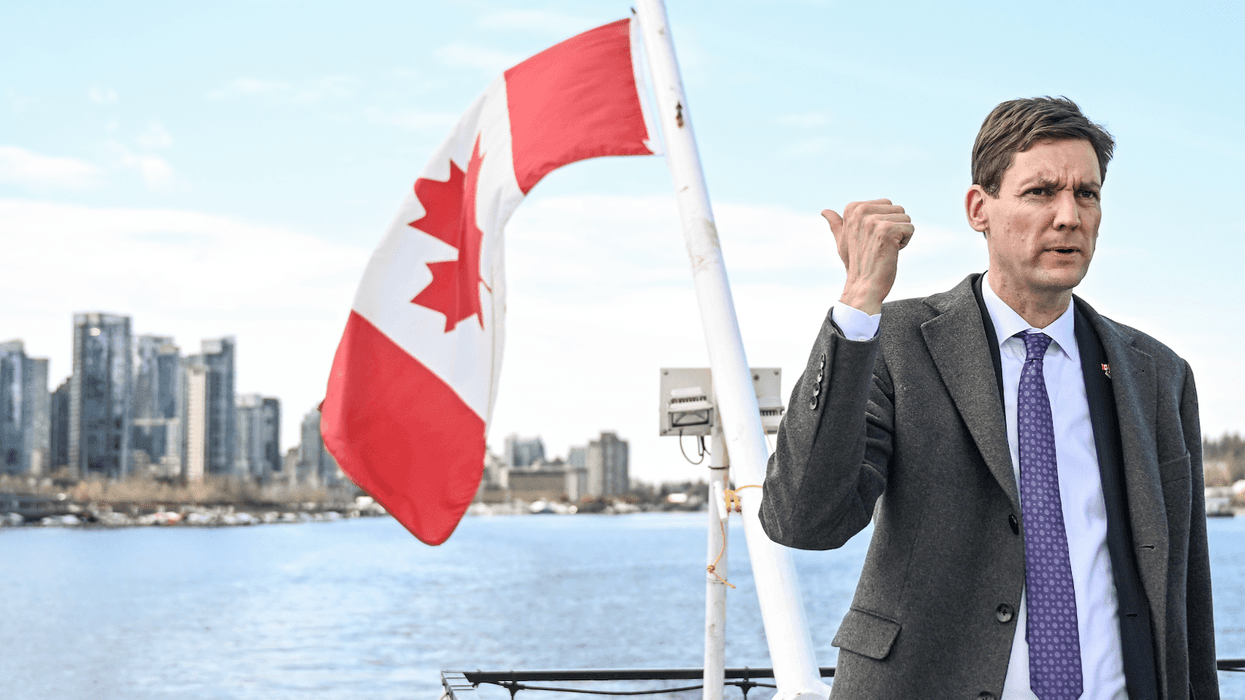
“To go to a foreign country and to ask for assistance in breaking up Canada, there’s an old-fashioned word for that," said one provincial premier.
The leader of British Columbia on Thursday excoriated separatists in neighboring Alberta who met secretly on several occasions with officials from the administration of President Donald Trump, whose frequent talk of making Canada the "51st state" has tanked relations with the US' northern neighbor.
The Financial Times reported Wednesday that leaders of the right-wing Alberta Prosperity Project (APP), who want the fossil fuel-rich province to become an independent nation, were welcomed for three meetings with Trump officials in Washington, DC since last April.
APP is reportedly seeking US assistance, including a $500 billion line of credit from the US Treasury Department to help bankroll an independent Alberta, if any potential independence referendum succeeds.
According to the CBC:
Organizers of the Alberta independence movement are collecting signatures in order to trigger a referendum in that province. The pro-independence campaign has been traveling across the province as organizers try to collect nearly 178,000 signatures over the next few months.
"To go to a foreign country and to ask for assistance in breaking up Canada, there's an old-fashioned word for that, and that word is treason," British Columbia Premier David Eby, who leads the center-left BC New Democratic Party, said in Ottawa.
"It is completely inappropriate to seek to weaken Canada, to go and ask for assistance, to break up this country from a foreign power and—with respect—a president who has not been particularly respectful of Canada's sovereignty," Eby continued.
"I think that while we can respect the right of any Canadian to express themselves to vote in a referendum, I think we need to draw the line at people seeking the assistance of foreign countries to break up this beautiful land of ours," he added.
APP co-founder Dennis Modry told the Financial Times Wednesday that the separatist movement is "not treasonous."
“What could be more noble than the pursuit of self-determination, the pursuit of your goals and aspirations, the pursuit of freedom and prosperity?” he asked.
Trump and some of his senior officials have repeatedly expressed their desire to annex Canada, despite polite but vehement Canadian rejection of such a union. Trump's coveting of Canada comes amid his threats to acquire Greenland by any means necessary, his planning for a possible Panama Canal takeover, and his attacks on Venezuela, Iran, Nigeria, and other countries.
Last week, US Treasury Secretary Scott Bessent poured more fuel on the fire by seemingly encouraging Albertan separatism.
"They have great resources. Albertans are a very independent people," Bessent said during a media interview. "Rumor [is] that they may have a referendum on whether they want to stay in Canada or not... People are talking. People want sovereignty. They want what the US has got."
Alberta Premier Danielle Smith of the province's United Conservative Party said Thursday that she "supports a strong and sovereign Alberta within a united Canada," even as critics—including Indigenous leaders—accuse her of making it easier for a pro-independence petition to succeed last year.
Smith said the she expects US officials to "confine their discussion about Alberta's democratic process to Albertans and to Canadians."
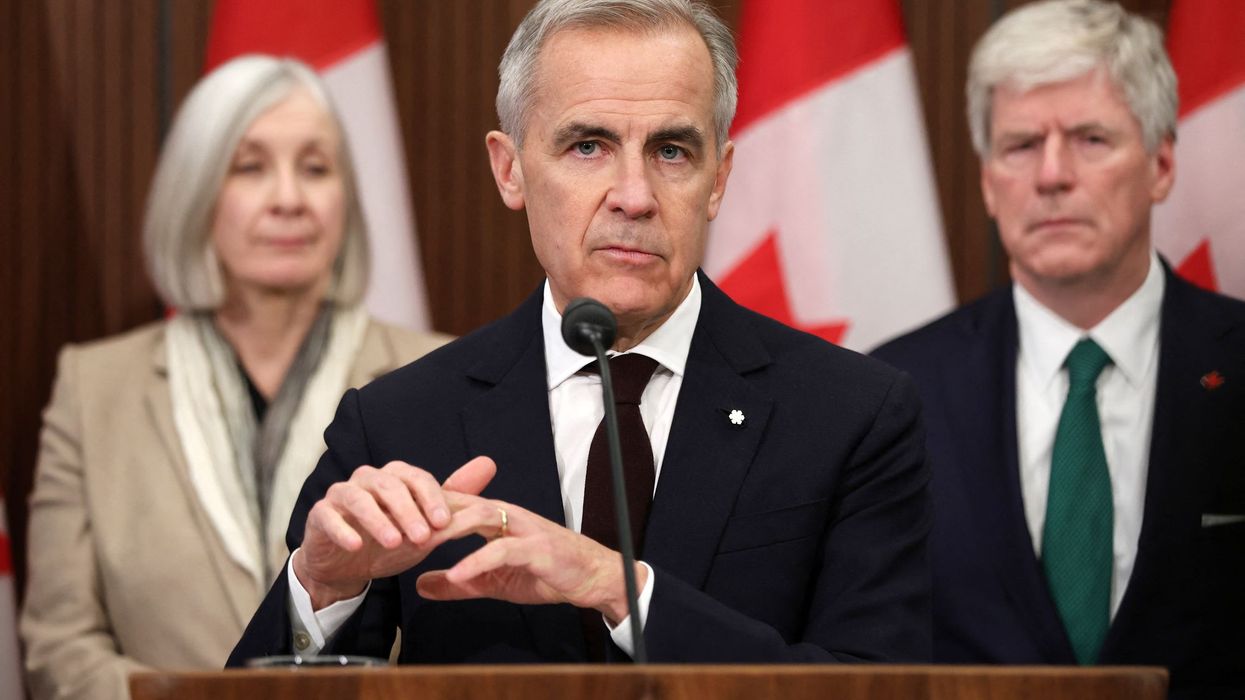
“We will use every tool in our toolbox to ensure that this pipeline does not go ahead,” said one First Nations leader after the deal struck between Prime Minister Mark Carney and the Conservative premier of Alberta.
First Nations groups backed by environmental and conservationist allies in Canada are denouncing a pipeline and tanker infrastructure agreement announced Thursday between Liberal Prime Minister Mark Carney and Conservative Alberta Premier Danielle Smith, calling it a betrayal and promising to fight its implementation tooth and nail.
“We will use every tool in our toolbox to ensure that this pipeline does not go ahead,” said Heiltsuk Nation Chief Marilyn Slett in response to the Carney-Smith deal that would bring tens of millions of barrels of tar sands oil from Alberta to the coast of British Columbia for export by building new pipeline and lifting a moratorium against oil tankers operating in fragile British Columbia coastal water.
While Carney, who argues that the pipeline is in Canada's economic interest, had vowed to secure the support of First Nations before finalizing any agreement with Alberta, furious reactions to the deal made it clear that promise was not met.
Xhaaidlagha Gwaayaai, the president of the Haida nation, was emphatic: "This project is not going to happen."
The agreement, according to the New York Times, is part of Carney’s "plan to curb Canada’s trade dependence on the United States, swings Canadian policy away from measures meant to fight climate change to focus instead on growing the oil and gas industry."
In a statement, the Union of British Columbia Indian Chiefs (UBCIC) "loudly" voiced its opposition to the memorandum of understanding signed by Carney and Smith.
"This MOU is nothing less than a high-risk and deeply irresponsible agreement that sacrifices Indigenous peoples, coastal communities, and the environment for political convenience," said Grand Chief Stewart Phillip, president of the UBCIC. "By explicitly endorsing a new bitumen pipeline to BC's coast and promising to rewrite the Oil Tanker Moratorium Act, the federal government is resurrecting one of the most deeply flawed and divisive ideas in Canadian energy politics."
Slett, who serves as secretary-treasurer of the UBCIC, said the agreement "was negotiated without the involvement of the very Nations who would shoulder those risks, and to suggest ‘Indigenous co-ownership’ of a pipeline while ignoring the clear opposition of Coastal First Nations is unacceptable."
Avi Lewis, running for the leadership of the progressive New Democratic Party (NDP) in the upcoming elections, decried the agreement as a failure of historic proportions.
"Carney’s deal with Danielle Smith is the sellout of the century: scrapping climate legislation for a pipeline that will never be built," said Lewis, a veteran journalist and climate activist. "We need power lines, not pipelines. Our path is through climate leadership and building good jobs in the clean economy."
Carney’s deal with Danielle Smith is the sellout of the century: scrapping climate legislation for a pipeline that will never be built.We need powerlines, not pipelines. Our path is through climate leadership & building good jobs in the clean economy.
[image or embed]
— Avi Lewis (@avilewis.ca) November 28, 2025 at 12:05 AM
In response to the deal, the minister of Canadian culture, Steven Guilbeault, who formerly served as environment minister under the previous Liberal administration, resigned in protest.
“Despite this difficult economic context, I remain one of those for whom environmental issues must remain front and center,” Guilbeault said in a statement.
"Over the past few months, several elements of the climate action plan I worked on as Minister of the Environment have been, or are about to be, dismantled,” he said. “In my view, these measures remain essential to our climate action plan.”
David Eby, the premier of British Columbia who opposes the new pipeline into his province and was not included in the discussions between Carney and Smith, echoed those who said the project is more dead than alive, despite the MOU, calling it a potential "energy vampire" that would distracts from better energy solutions that don't carry all the baggage of this proposed project.
“With all of the variables that have yet to be fulfilled—no proponent, no route, no money, no First Nations support—that it cannot draw limited federal resources, limited Indigenous governance resources, limited provincial resources away from the real projects that will employ people,” Eby added.
Keith Brooks, the program director at Environmental Defence, decried the deal as "worse than we had anticipated" and "a gift to the oil industry and Alberta Premier Smith, at the expense of practically everyone else."
"Filling this pipeline and expansion would require more oil sands mining, leading to more carbon pollution, more tailings, and worse impacts for communities near the tar sands," warned Brooks. "The pipeline to BC would have to cross some of the most challenging terrain in Canada. The impacts of construction would be severe, and the impacts of a spill, devastating."
Jessica Green, a professor at the University of Toronto focused on environmental politics, equated the "reckless" deal to a "climate dumpster fire" and called the push for more tar sands pipelines in Canada "the energy equivalent [of] investing in VHS tapes in 2025."
At least the United States under President Donald Trump, she added, "has the cojones to say it doesn’t give a shit about climate" while Carney, despite the contents of the deal with Alberta, "is still pretending that Canada does."
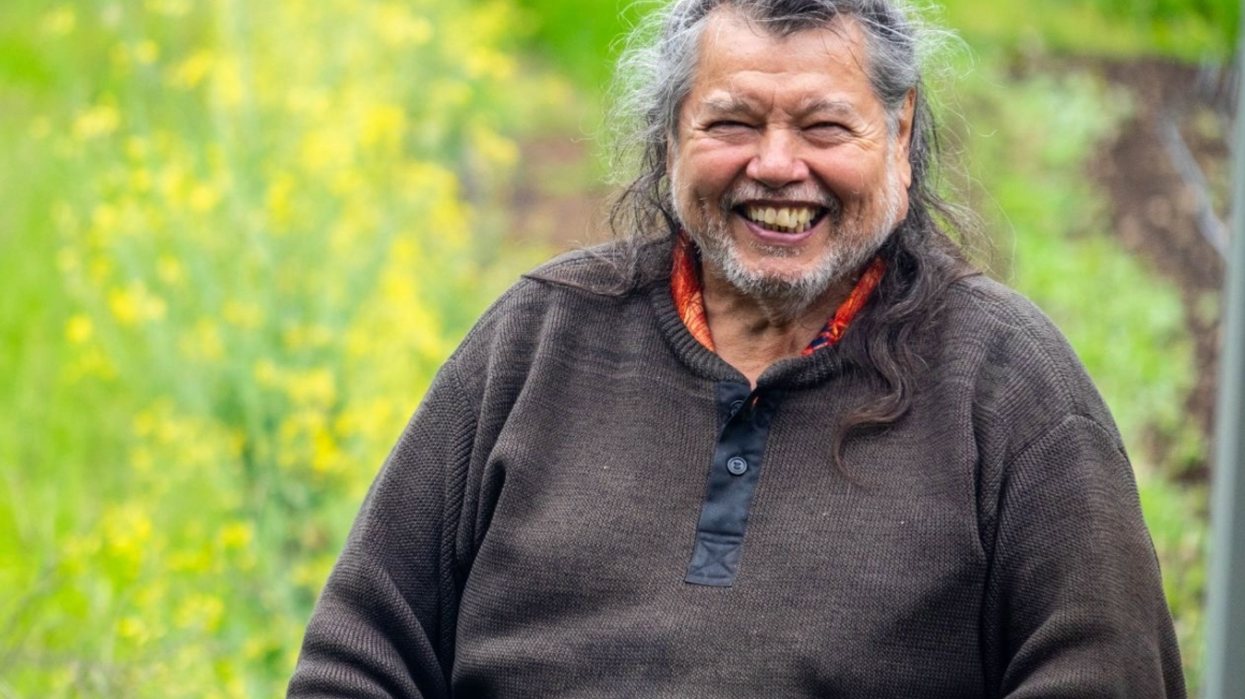
"This fight has been going on for 240 years," said Likhts'amisyu Clan Wing Chief Dsta'hyl of the Wet'suwet'en Nation. "Now, we are all 'prisoners of conscience' because of what the colonizers have done to us."
Amnesty International on Wednesday made what it called the "unprecedented decision" to designate as Canada's first-ever "prisoner of conscience" an Indigenous leader convicted for actions taken while defending his people's land against a fracked gas pipeline.
Likhts'amisyu Clan Wing Chief Dsta'hyl of the Wet'suwet'en Nation was arrested in 2021 for violating a court order to not obstruct the construction of TC Energy's Coastal GasLink liquefied natural gas (LNG) pipeline. The hereditary chief is currently under house arrest for contempt of court.
"The Canadian state has unjustly criminalized and confined Chief Dsta'hyl for defending the land and rights of the Wet'suwet'en people," Amnesty International Americas director Ana Piquer said in a statement Wednesday. "As a result, Canada joins the shameful list of countries where prisoners of conscience remain under house arrest or behind bars."
"With the utmost respect for Chief Dsta'hyl's critical work to protect Wet'suwet'en land, rights, and the environment we all depend on, Amnesty International demands his immediate and unconditional release and urges Canada to stop the criminalization of Wet'suwet'en and other Indigenous defenders during a global climate emergency," she continued.
"Indigenous peoples are on the frontlines of climate change and will face disproportionate harms if humanity fails to move on from burning fossil fuels," Piquer added. "States must hold up, not lock up, Indigenous land defenders like Chief Dsta'hyl and follow their lead towards a healthier, more sustainable future for all."
According to Amnesty:
Based in part on witness testimony of four large-scale Royal Canadian Mounted Police (RCMP) raids on Wet'suwet'en territory marked by the unlawful use of force... Wet'suwet'en land defenders and their supporters were arbitrarily detained for peacefully defending their land against the construction of the pipeline and exercising their Indigenous rights and their right of peaceful assembly. The rationale for the land defenders' detentions was violating the injunction order (an order which Amnesty International has determined is not in conformity with international law and standards) which makes their detentions arbitrary.
In June and July 2022, the [British Columbia] Prosecution Service decided to charge 20 land defenders with criminal contempt for allegedly disobeying the injunction order to stay away from pipeline construction sites. Seven of the 20 land defenders pleaded guilty because of restrictive bail conditions, as well as the familial, psychological, and financial impacts that the criminal trial process was having on them. Five others had the charges against them dropped.
Canadian authorities, including the RCMP, have answered nonviolent Wet'suwet'en land defense with armed officers including snipers who employed heavy-handed removal tactics. Scores of Wet'suwet'en land defenders, including four hereditary chiefs, have been arrested and charged, as have journalists and legal observers. In December 2021, Coastal GasLink dropped charges against two journalists who were arrested while covering a previous militarized police raid.
In 2022, the Gidimt'en—one of the five clans of the Wet'suwet'en Nation—filed a submission to the United Nations Human Rights Council detailing how their territory and human rights are being violated by Canadian and British Columbian authorities in service of the Coastal GasLink pipeline. The 416-mile conduit carries fracked gas from Michif Piiyii (Metis) territory in northeastern British Columbia to an export terminal in coastal Kitimat, on the land of the xa'isla wawis (Haisla) people.
The Gidimt'en filing noted that "ongoing human rights violations, militarization of Wet'suwet'en lands, forcible removal and criminalization of peaceful land defenders, and irreparable harm due to industrial destruction of Wet'suwet'en lands and cultural sites are occurring despite declarations by federal and provincial governments for reconciliation with Indigenous peoples."
The heavy-handed persecution of the Wet'suwet'en sparked solidarity protests throughout Canada and beyond that focused on the pipeline's impact on First Nations tribes, the environment and climate, and missing and murdered Indigenous women and girls.
Likhts'amisyu Clan members—whose presence in what is today northern British Columbia long predates the existence of Canada—claim they have not been consulted on the Coastal GasLink pipeline, which traverses land that does not belong to the Canadian government.
Dsta'hyl and other Wet'suwet'en leaders argued that they were enforcing ancient tribal trespassing laws. Ironically, they ended up charged with trespassing. During their trial last year, Dsta'hyl and other Likhts'amisyu chiefs asserted that they were fulfilling their duty to protect Wet'suwet'en land—or yintah—by enforcing their traditional trespass law.
In finding Dsta'hyl guilty of contempt of court this February, British Columbia Supreme Court Justice Michael Tammen declared there was no way of "harmonizing colonial law and Indigenous law," which he said "cannot comfortably coexist in the circumstances."
Dsta'hyl said Wednesday: "I've been convicted for protecting our own land while Wet'suwet'en laws have been sidelined. The end goal for us in this struggle is the recognition of Wet'suwet'en law in Canada, and it's unfortunate that the Crown is digging in their heels instead."
"This fight has been going on for 240 years," he added. "We have been incarcerated on the reserves where they have turned us into 'Status Indians.' Now, we are all 'prisoners of conscience' because of what the colonizers have done to us."
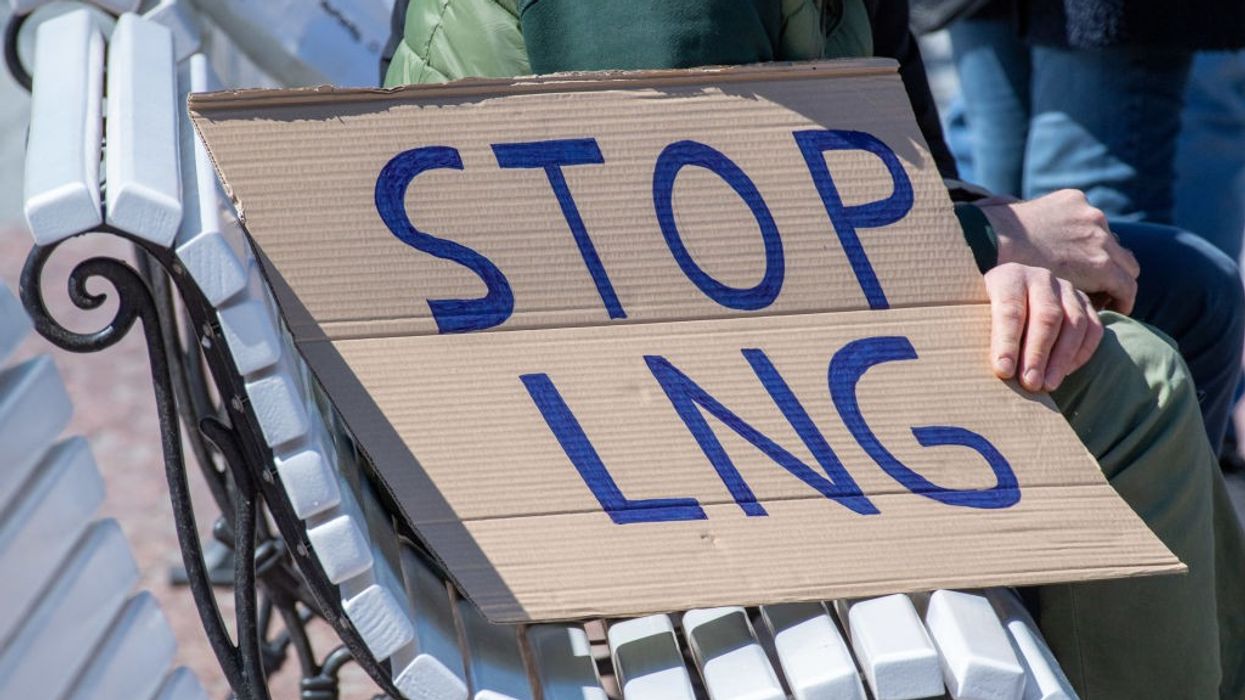
Despite what the industry says, fracked methane gas is far from natural and isn’t a climate solution.
In response to multiple complaints, Ad Standards Canada recently found that advertising for fossil gas gave an “overall misleading impression… that B.C. LNG is good for the environment, amounting to greenwashing.”
The ads, by industry front group Canada Action, promoted the debunked message that so-called “liquefied natural gas”—which is mostly the deadly greenhouse gas methane—is good for the environment and climate because it can replace higher-emitting coal-fired power. “B.C. LNG will reduce global emissions,” the ads claimed over a bright green background. Other industry groups and gas companies are using similar messaging.
Although the standards branch has no enforcement power and doesn’t release its findings publicly, the issue illustrates the lengths to which the fossil fuel industry will go to keep profits rolling in, even in the face of disaster. (The decision was leaked by the Canadian Association of Physicians for the Environment, which was not a complainant.)
Far from a “green” replacement for coal, LNG development locks up investment in fossil infrastructure, locks in emissions, and locks out renewables.
For a relatively brief, albeit far too long, period of human history, global economies have run on coal, oil, and gas. These fossil fuels appeared to be almost limitless, and could be quickly burned in gas-guzzling vehicles and factories, driving profits to the point that the industry became the most lucrative in history.
The fuels conferred real and imagined benefits for large numbers of people, offering mobility, heat, and light; faster production, and more. Used wisely, they might have provided a net benefit to humanity. But burned wastefully and rapidly in the name of greed and obscene profits, they’ve polluted air, land, and water; harmed human health; reduced biodiversity; and spewed climate-altering greenhouse gases such as carbon dioxide and methane into the atmosphere. We’re now reaping the consequences with heat domes, floods, droughts, illness, death, migrant crises, biodiversity loss, water shortages, and more.
Most or all of the true benefits fossil fuels offer can be better realized with cleaner energy sources and less-polluting products—along with a shift away from wasteful, unnecessary consumerism.
As the consequences of burning coal for power and oil for transportation and more become clearer, the sector has seized on numerous survival strategies. For decades, industry executives and allies downplayed or covered up the evidence—some from its own scientists—that its products would heat the planet to dangerous levels if used as intended. Although that tactic is still employed, mounting evidence and real-life experiences of global heating have made it more difficult to fool the public.
So the industry is resorting to other plans—scaling up plastic production (plastic is an oil and gas byproduct) and touting the benefits of “natural” gas among them.
But fracked methane gas is far from natural and isn’t a climate solution. Throughout its life cycle, it devastates landscapes, pollutes waterways, uses excessive amounts of water (often in drought-stricken areas), consumes massive volumes of energy to process and liquefy, and creates emissions during transport and burning.
Not only that, flaring and leaks from wellhead to power plant emit massive amounts of methane into the atmosphere. Methane, of which the gas is composed, is up to 87 times more potent than carbon dioxide over a 20-year period. It breaks down much faster than CO2, which remains in the atmosphere for centuries, but it causes a lot of heating while it’s there. That’s why reducing and eliminating it is a good, quick climate solution.
New research from the David Suzuki Foundation shows British Columbia’s rush to develop LNG is bad on every front, from economics to climate. Far from a “green” replacement for coal, LNG development locks up investment in fossil infrastructure, locks in emissions, and locks out renewables. The International Energy Agency and others predict that LNG demand will drop precipitously as cheaper renewables are deployed at accelerating speed. A massive oversupply in gas is also being developed, much of it by low-cost competitors for Asian markets, where B.C.’s gas would be exported.
Every credible agency and person—from the International Energy Agency to the United Nations to universities worldwide and climate scientists everywhere—has warned that further development of gas, oil, and coal will propel the world into irreversible climate chaos.
We must leave fossil fuels in the ground. Our future depends on it. No amount of greenwashing or gaslighting will change that.
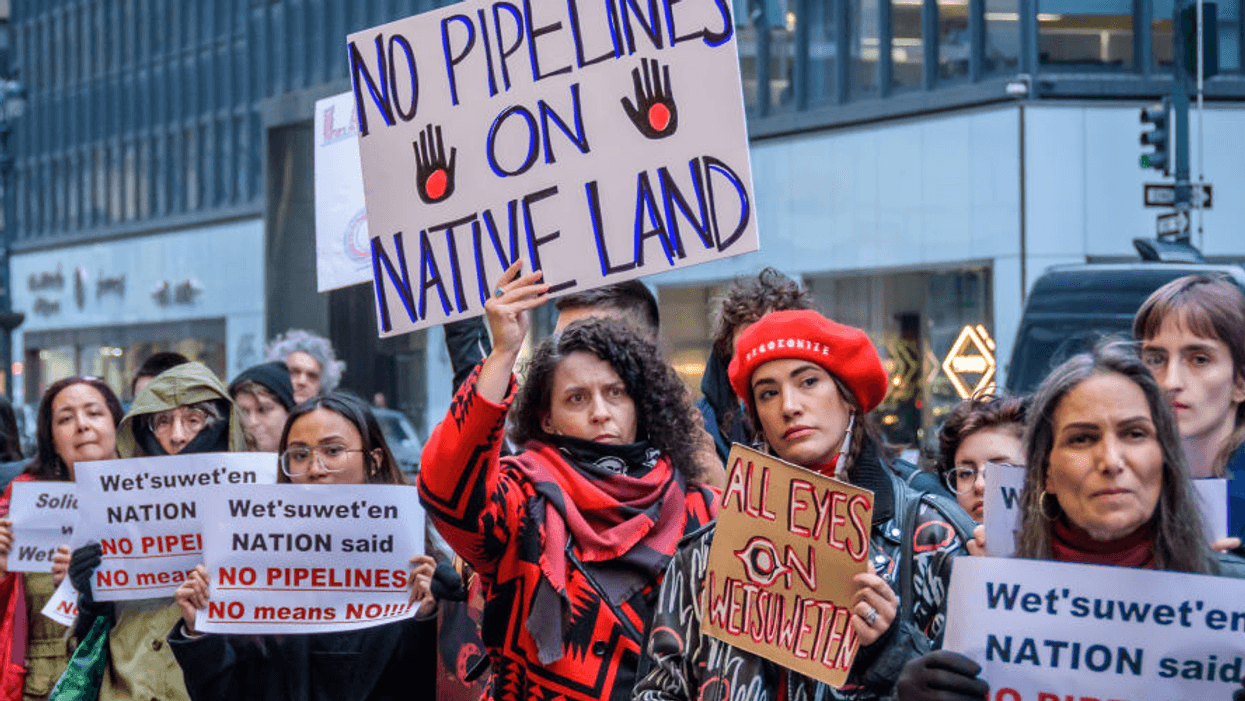
First Nations land defenders on Monday filed a submission to the United Nations detailing how their territory and human rights are being violated by Canadian and British Columbian authorities in service of a fossil fuel corporation's gas pipeline.
"We are intimidated and surveilled by armed RCMP, smeared as terrorists, and dragged through colonial courts. This is the reality of Canada."
The submission to the United Nations Human Rights Council was filed by the Gidimt'en--one of the five clans of the Wet'suwet'en Nation--who for years have been fighting to stop the construction of Coastal GasLink's pipeline through their territory in northern British Columbia.
The filing notes that "ongoing human rights violations, militarization of Wet'suwet'en lands, forcible removal and criminalization of peaceful land defenders, and irreparable harm due to industrial destruction of Wet'suwet'en lands and cultural sites are occurring despite declarations by federal and provincial governments for reconciliation with Indigenous peoples."
All five Wet'suwet'en clans oppose the pipeline, which is being built on tribal land that the Canadian Supreme Court acknowledges as unceded. Canadian authorities, including the Royal Canadian Mounted Police (RCMP), have answered nonviolent Wet'suwet'en land defense with heavily armed officers employing heavy-handed removal tactics.
Scores of Wet'suwet'en land defenders, including four hereditary chiefs, have been arrested and charged, as have journalists and legal observers. In December, Coastal GasLink dropped charges against two journalists who were arrested while covering a militarized police raid last November 19.
More than 30 land defenders are scheduled to appear in the British Columbian Supreme Court in Prince George, built on the site of a burned Lheidli T'enneh village, next week.
Meanwhile, construction continues on the 416-mile pipeline, which will carry gas from Michif Piiyii (Metis) territory in northeastern British Columbia to an export terminal in coastal Kitimat, on the land of the xa'isla wawis (Haisla) people.
"By deploying legal, political, and economic tactics to violate our rights, Canada and B.C. are contravening the spirit of reconciliation, as well as their binding obligations to Indigenous law, Canadian constitutional law, UNDRIP, and international law," the Gidimt'en submission states, referring to the United Nations Declaration on the Rights of Indigenous Peoples.
Gidimt'en Checkpoint spokesperson Sleydo' said in a statement that "we urge the United Nations to conduct a field visit to Wet'suwet'en territory because Canada and B.C. have not withdrawn RCMP from our territory and have not suspended Coastal GasLink's permits, despite the United Nations Committee on the Elimination of Racial Discrimination calling on them to do so."
"Wet'suwet'en is an international frontline to protect the rights of Indigenous peoples and to prevent climate change," she added. "Yet we are intimidated and surveilled by armed RCMP, smeared as terrorists, and dragged through colonial courts. This is the reality of Canada."
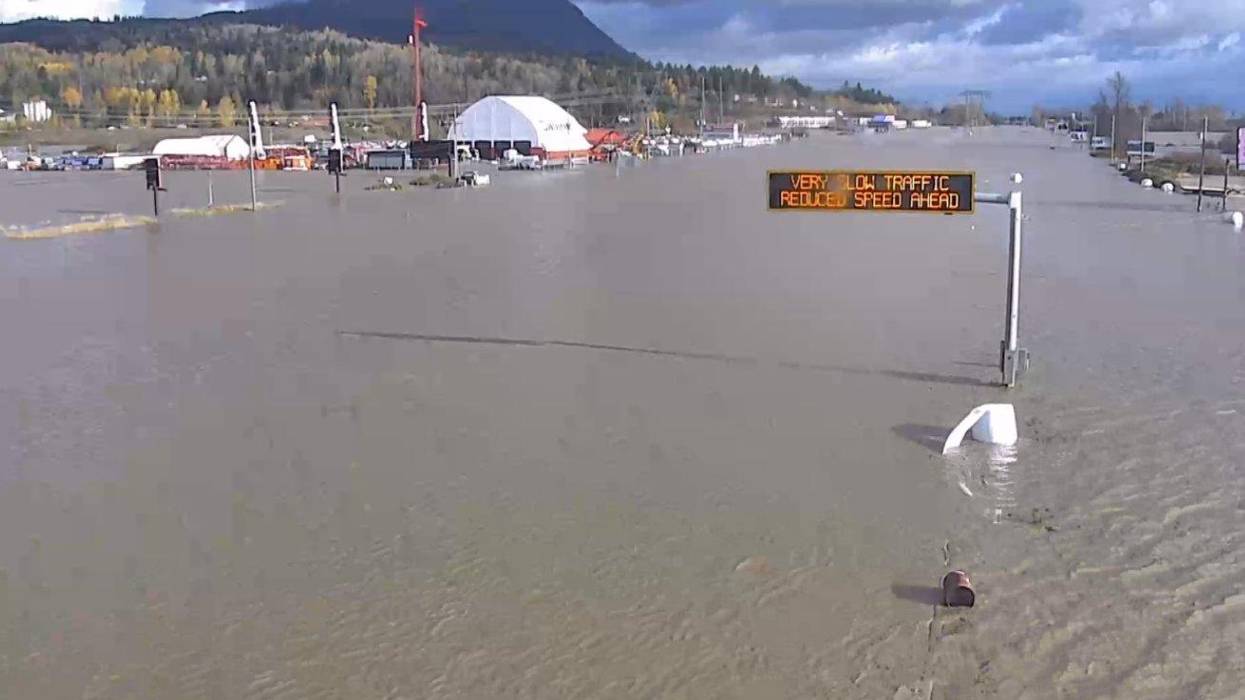
After a summer that featured the "world's most extreme heatwave in modern history," which experts linked to human-caused global heating, the Pacific Northwest was inundated with floodwaters Monday, fueling fresh calls for ambitious action to combat the climate emergency.
The recent rain and subsequent flooding--which came on the heels of the COP26 climate summit in Scotland--led to evacuations, power outages, rescues, school closures, and stranded vehicles in Washington state and British Columbia, Canada.
"We are in a climate emergency," meteorologist and writer Eric Holthaus tweeted regarding the "torrential flooding."
Washington Gov. Jay Inslee, a Democrat who ran for president in 2020 on a climate-focused platform and attended COP26 earlier this month, issued a severe weather emergency proclamation for 14 counties.
Inslee's office said in a statement that "the severe storm with floods, landslides, mudslides, and the potential for straight-line winds is causing road closures, the need to establish alternate transportation routes, evacuations, impacts to local utility services including significant power outages, localized reductions in available drinking water, and damage to homes and other public and private property and infrastructure."
Citing data from PowerOutage.Us, NBC News reported that "about 70,000 utility customers in Washington were without power early Tuesday."
As NBC detailed:
An atmospheric river--a plume of moisture that stretches across the Pacific and near Hawaii--has been aimed toward the region since last week, said Joe Boomgard-Zagrodnik, an agricultural meteorologist at Washington State University.
Beginning Thursday, a trio of storms tapped into that moisture and hammered areas north of Seattle and on Washington's Olympic Peninsula with driving rainfall.
Atmospheric river patterns are not uncommon in the region, but the barrage of storms comes during a historically wet fall. And the flooding strikes a region that suffered a heat wave that set records in June, became smothered with wildfire smoke in August and remained abnormally dry for much of summer.
"We were super hot and dry in the summer, and the switch flips. It definitely matches what the climate models show for the future around here--hotter, dryer summers and wetter winters," said Boomgard-Zagrodnik. "Our infrastructure isn't designed for that."
Noting that the National Weather Service (NWS) issued flood warnings for at least 12 rivers as of Monday afternoon, AccuWeather highlighted some new records:
An NWS river gauge showed that the Bogachiel River near La Push, Washington, had broken its all-time record high level Monday at 44.93 feet. The previous record for the station was 42.64 feet, set on November 6, 2006. The Nooksack River at North Cedarville, Washington, also broke its record Monday at 150.35 feet, versus the record of 149.61 feet on November 6, 2006. The river was seen still raging Monday evening. The Skagit River near Mount Vernon was forecast to break its record Tuesday and was already at 35 feet Monday evening, forcing officials to close bridges.
Chris Elder, the primary Whatcom County employee managing climate action, told The Bellingham Herald on Monday, "The reality is the impacts are happening."
Standing on his property near the Nooksack River's South Fork, which had flooded an agricultural field used by bison, Elder said, "It's wild, it's the highest I've ever seen it."
North of the U.S. border, Environment Canada meteorologist Armel Castellan told The Globe and Mail that two months of unusually heavy rains preceded the "very potent and strong" weather system that hit British Columbia this weekend.
"The conditions... have been historic," Castellan said, "with many locations getting an average amount of rain for November in under 48 hours."
The Toronto Star reported that "B.C. leaders are not yet saying whether the atmospheric river rainstorm is one of the largest seen in the province, but the speed with which it has wrought destruction and disruption already makes it a monumental disaster and is bringing back memories of the widespread wildfires that took place over the summer--many in the same regions now being hit by the storms."
The newspaper added that "the entire town of Merritt, B.C., home to 7,000 people, evacuated their homes Monday morning, as water from the rushing Coldwater River breached its banks and filled up the streets of surrounding communities as though they were part of a stoppered bathtub."
Along with Merritt, where the municipal wastewater treatment plant failed, an evacuation order was issued for the nearby Nooaitch Indian Band and other communities, according to CBC.
In Vancouver, the province's most populous city, every major highway was shut down Monday afternoon. There were road closures across B.C., and surging rivers even washed away portions of the Coquihalla and Trans Canada highways.
CBC reported that there is currently no timeline for schools to reopen in Merritt or Princeton, where the Tulameen and Similkameen rivers overflowed, forcing evacuations.
Princeton Mayor Spencer Coyne also told CBC journalist Heather Hiscox that residents of his flooded community could go days without heat because of a broken natural gas line.
Author and activist Bill McKibben, co-founder of the environmental group 350.org, noted the "sadly ironic twist" that the flooding shut down a tar sands pipeline controversially owned by the Canadian government in spite of Liberal Prime Minister Justin Trudeau's claims to support climate action and scientists' warnings about the need to keep fossil fuels in the ground.
"The Trans Mountain pipeline has been temporarily shut down because of flooding in the area of Hope," according to CBC, "and all construction on the pipeline expansion project has been halted in the Lower Mainland."
Greenpeace Canada referenced the pipeline in a Tuesday tweet targeting the country's minister of environment and climate change, Steven Guilbeault.
"The people of B.C. don't need your thoughts. They need you... to ACT NOW on the climate crisis in front of us," the group said. "#StopTMX, end fossil fuels."
This post has been updated with comment from Greenpeace Canada.
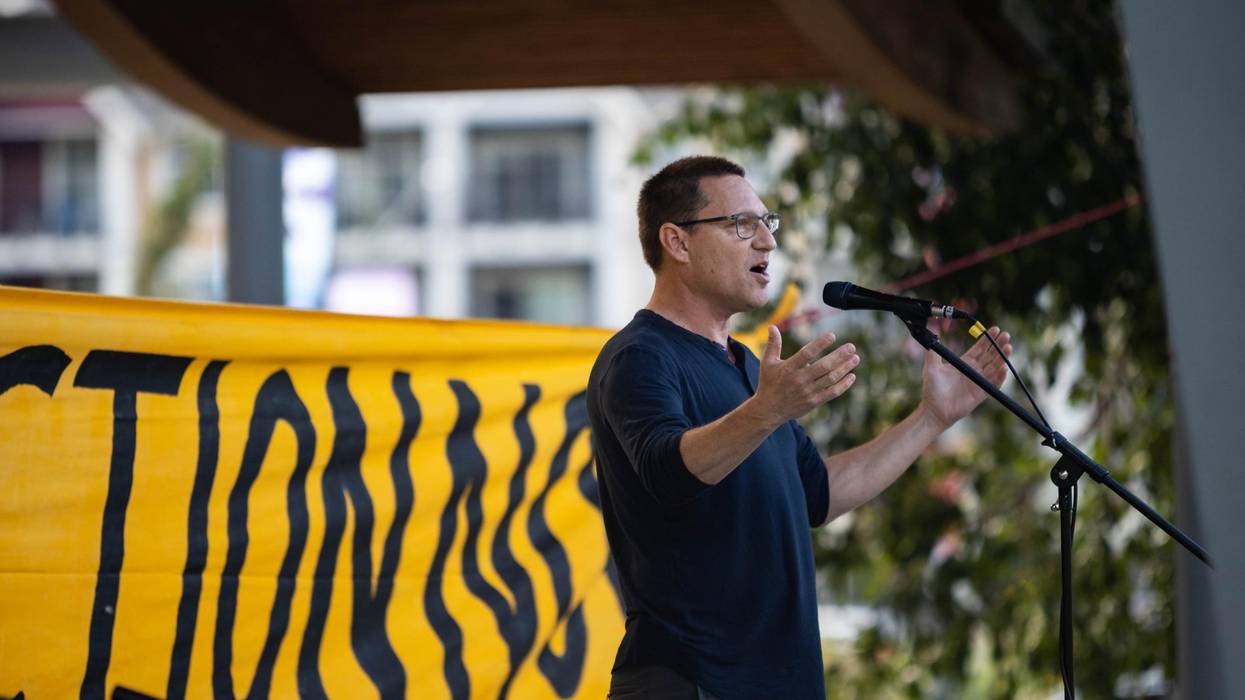
As Canadians head to the polls Monday on the final day of federal elections, a journalist, documentary filmmaker, and climate activist in British Columbia is hoping his plan to take aggressive action to combat the climate emergency will resonate with enough voters to score an upset victory.
"The entire political system is failing to confront the level of emergency that we have."
--Avi Lewis,
NDP candidate
Avi Lewis, the New Democratic Party's (NDP) candidate for the House of Commons for the West Vancouver-Sunshine Coast-Sea to Sky Country riding, knows his is a longshot campaign. The social democratic NDP--which finished a distant fourth place there in the 2019 election--has never held the seat in the riding, one of Canada's wealthiest, and a Liberal stronghold.
"We're in an uphill battle to pull off an upset of epic proportions," Lewis told CBC News Sunday.
However, Lewis--who is the third generation of his family to enter politics--believes he can flip the riding from the Liberals, the party of Prime Minister Justin Trudeau, by running on a Green New Deal platform that addresses the most pressing issues facing Canada today: the climate crisis and inequality.
"The entire political system is failing to confront the level of emergency that we have and embrace the level of opportunity in housing and health and transit and all the related systems that need changing," he added.
International climate campaigners including Canadian environmental activist David Suzuki and 350.org co-founder Bill McKibben have joined activists, artists, and intellectuals such as Jane Fonda, Alexandra Morton, Mike Douglas, Yan Martel, and Sara Quin in endorsing Lewis due to his strong stance on climate action.
In 2015, Lewis, along with his wife--the author, activist, and filmmaker Naomi Klein--and others published The Leap Manifesto, a bold call to action on climate and inequality spearheaded by a coalition of Indigenous leaders, labor unions, and environmentalists that was signed by more than 50,000 Canadians and whose principles were adopted by the NDP in 2016.
However, activists have criticized what they call the NDP's vague and inadequate climate policies, including the party's support for fossil fuel projects and its refusal to condemn fracking.
Unlike NDP leadership, Lewis has been unafraid to demand a halt to destructive projects, including the government-owned Trans Mountain Pipeline expansion. Both Trudeau's government and the Conservative Party opposition staunchly support the fossil fuel industry, which accounts for more than 5% of Canada's gross domestic product. Canada is the only G7 nation whose greenhouse gas emissions have increased since the Paris climate agreement was signed in 2015, mainly due to the extraction of tar sands oil, the world's dirtiest fuel.
Mike Simpson, the Green Party candidate running for the West Vancouver-Sunshine Coast-Sea to Sky Country parliamentary seat, has resisted pressure to step down and support Lewis. However, Lewis' stong stance on climate action has earned him the support of many Green Party members and voters.
"We need to send Avi to Ottawa," Suzuki asserted in an endorsement video featuring prominent British Columbian Greens, "to shake up the entire political establishment, including his own party, and tip the scales in favor of people and the planet."
Lewis' candidacy comes during a summer in which British Columbians suffered some of the world's hottest temperatures, as well as devastating wildfires. Provincial authorities said extreme heat claimed 569 lives between June 20 and July 29.
After the village of Lytton recorded a Canadian record temperature of 49.6degC (121.3degF) on June 30--surpassing all-time highs in desert cities including Las Vegas and Tucson, Arizona--it was destroyed by a massive wildfire.

"Can we now mobilize en masse to save all Earthly beings?" asked another.
Those were some of the responses to new reporting by the CBC on how last week's extreme heatwave that gripped British Columbia may have led to the deaths of over one billion intertidal animals like mussels and starfish that inhabit the Salish Sea coastline.
Christopher Harley, a marine ecologist at the University of British Columbia, told the outlet about how he had noticed a foul odor from dead intertidal animals on rocks at Vancouver's popular Kitsilano Beach as the city experienced record heat. Harley then set off with a team of researchers to gather data on nearby coastlines.
What the researchers noticed, CBC reported, were "endless rows of mussels with dead meat attached inside the shell, along with other dead creatures like sea stars and barnacles."
Related Content

They tracked temperatures too, recording 50degC (122degF) on rocky shoreline habitats, well above the high 30s (around 100degF) mussels can endure for short spurts. Harley likened a mussel on the rock enduring the scorching temperatures to "a toddler left in a car on a hot day"--stuck "at the mercy of the environment" until the tide returns. "And on Saturday, Sunday, Monday, during the heat wave, it just got so hot that the mussels, there was nothing they could do."
The heat wave was deadly for humans too.
Lisa Lapointe, British Columbia's chief coroner, announced Friday that from June 25 to July 1, the province's death toll was 719--three times higher than normal--and said heat was likely "a significant contributing factor to the increased number of deaths." The heat wave was also blamed for dozens of deaths in the U.S. states of Oregon and Washington.
The recent heat wave's deadly impact on shellfish was noted in the U.S. Pacific Northwest as well.
The Daily Mail reported last week on comments from the family-run Hama Hama Oyster company in Washington. "The epic heatwave is something no one has seen and then we had a low tide that was as far as it has been in 15 years and it happened mid-day," the company said.
The clams "look like they had just been cooked, like they were ready to eat," the company told the outlet.
In a June 30 Instagram post sharing an image of heat-impact clams, the company had a clear message: "Please vote for politicians who are brave enough to address climate change."
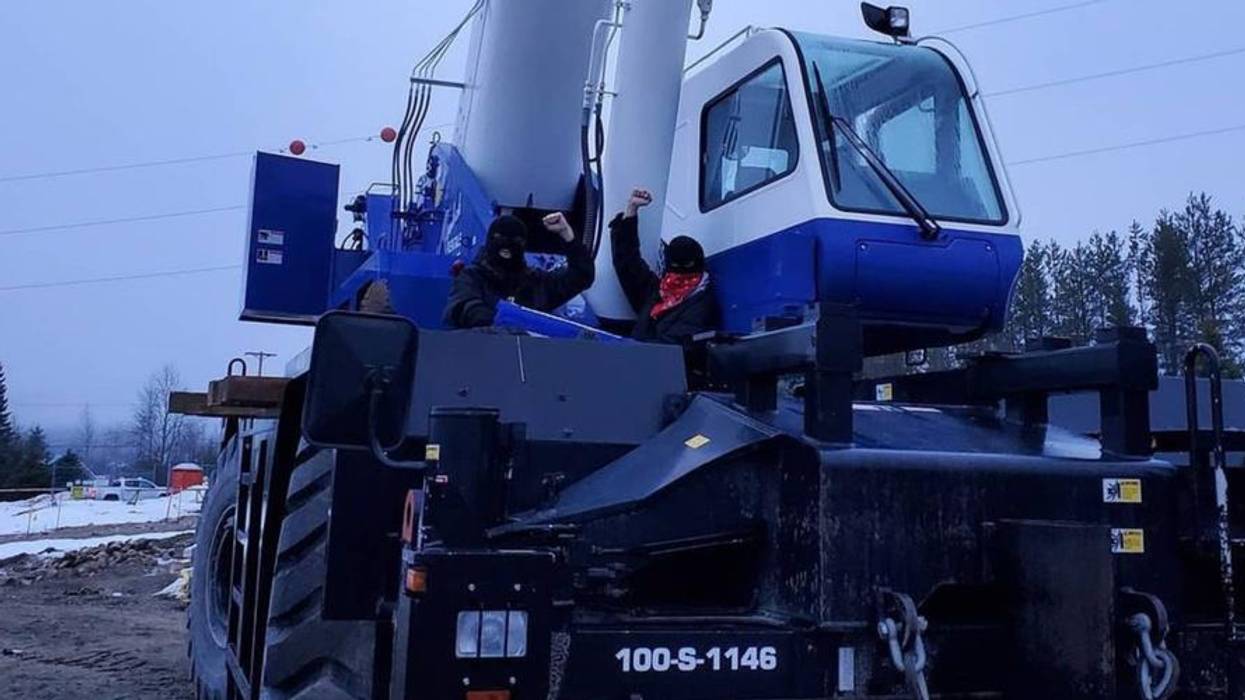
A pair of Indigenous land defenders locked themselves to equipment at a fossil fuel pumping station in British Columbia on Saturday, vowing to continune resisting a government-owned oil pipeline that is harming the climate, the environment, and First Nations peoples whose unceded lands it traverses.
"We have never provided and will never provide our collective free, prior, and informed consent--the minimal international standard--to the Trans Mountain Pipeline Project."
--Tiny House Warriors
The pipeline protesters--self-described on social media as "accomplices" of the Braided Warriors and Tiny House Warriors--locked themselves to a crane at Trans Mountain Corporation's Blue River pumping station.
The Trans Mountain Pipeline--which is owned by the Canadian government through subsidiary Trans Mountain Corporation--carries crude oil from the tar sands of Alberta to the British Columbian coast. It is widely considered the world's dirtiest oil.
In addition to the harm done to the climate and environment, the pipeline has grave social costs. According to First Nations advocates, it desecrates sacred Indigenous land, and transient workers housed in man camps are often perpetrators of crimes against Indigenous women, girls, and two-spirit people. Murder, rape, human trafficking, and other crimes abound, contributing to the epidemic of missing and murdered Indigenous women, girls, and two-spirit people (MMIWG2S).
Secwepemc land defenders have strategically built tiny houses along the route of the 518 km (321 mile) pipeline "to assert Secwepemc law and jurisdiction and block access to this pipeline."
"We have never provided and will never provide our collective free, prior, and informed consent--the minimal international standard--to the Trans Mountain Pipeline Project," the Tiny House Warriors website declares. "The Tiny House Warrior movement is the start of re-establishing village sites and asserting our authority over our unceded territories."
Kanahus Manuel, a Secwepemc land defender and Tiny House Warrior, told The Sparrow Project--a nonprofit grassroots public interest newswire focused on amplifying stories from struggles for social, economic, racial, and environmental justice--that Trans Mountain does "not not have consent from the Secwepemc and failure to recognize Secwepemc title, land rights, and Indigenous jurisdiction will only result in more conflict, direct actions, blockades, and Indigenous land occupations, which will increase the risks and economic uncertainty for Trans Mountain and its construction deadlines."
The Braided Warriors, an Indigenous organization that promotes First Nations rights and sovereignty in the Tsleil-Waututh, Squamish, and Musqueam territories, said on its Instagram page that "we are in solidarity with the Secwepemc people in their fight to stop foreign invasion of their lands and protect their lands, waters, animals, and peoples."
"It is our role to be accomplices to Indigenous land defenders and put ourselves on the line to stop the ongoing colonization of Indigenous territories and peoples."
--Braided Warriors
"It is our role to be accomplices to Indigenous land defenders and put ourselves on the line to stop the ongoing colonization of Indigenous territories and peoples," said Braided Warriors. "This pipeline will affect all of us and all future generations, but first and foremost will impact the nations and peoples along this route, including Secwepemc people."
"Today we stand on unceded, unsurrendered, illegally occupied Secwepemc land to show that we will not stop until the pipeline is terminated and the land is returned to the rightful title holders," they added.

"A disgrace."
That's how Canadian author and activist Naomi Klein reacted Tuesday to the news that Stacy Gallagher, an Indigenous land defender, had been sentenced to 90 days in jail after being arrested in 2019 for performing a ceremony along the Trans Mountain pipeline route in British Columbia.
First reported by VICE, which was informed of Gallagher's plight by a source close to him, the three-month prison sentence handed down by judge Shelley Fitzpatrick comes "despite a new policy that urges prosecutors to avoid jail time for Indigenous peoples if it's under two years," an initiative "geared towards protecting Indigenous peoples from a biased justice system."
According to VICE:
On Tuesday, Stacy Gallagher, 58, appeared in court after being convicted last year with criminal contempt. Gallagher, along with Indigenous elder Jim Leyden, was charged after spending time along the Trans Mountain pipeline route on three separate occasions between November and December of 2019--at times performing ceremonies and always peaceful, two fellow land defenders said.
Gallagher is one of more than 200 people, many Indigenous, who have been arrested for mobilizing against the $12.6 billion pipeline. Since 2018, Trans Mountain has had an injunction that makes it illegal for people to obstruct construction along the pipeline's route. It's up to the company to report activities in breach of the injunction, and police to enforce it. Vancouver Mayor Kennedy Stewart and former federal Green Party Leader Elizabeth May have been arrested for protesting it as well.
According to Trans Mountain's injunction, RCMP officers have to follow five steps when enforcing the injunction, including notifying people on site they are in breach of the law and giving them time to leave without arrest. But Gallagher and Leyden were charged weeks after they were on site.
Eugene Kung, a staff attorney with West Coast Environmental Law who is not part of Gallagher's legal team, told VICE: "From what I understand...the arrest and charges were based solely on video evidence, meaning there was never a notice of warning given."
"There were other non-Indigenous folks there, also presumably caught on camera but now not caught up in the contempt proceedings," Kung added. "So, is there a degree of (anti-Indigenous) targeting happening? That, to me, is a fair question to ask."