- Contrary to President Donald Trump’s ludicrous mistruths, reports from the United Nations, the European Union, and even the US Drug Enforcement Agency certify that Venezuela is essentially free of drug production—no cocaine or marijuana production, and certainly no fentanyl.
- With its community-based policing, Nicaragua is one of the safest countries in the whole region. In contrast, neighboring Costa Rica—under aggressively neoliberal administrations—is beset by a “tsunami of cocaine” and crime “amid a backdrop of growing inequality, high unemployment, and an erosion of investment in education,” according to a special report in the Los Angeles Times.
- Cuba, despite over six decades of punishing Yankee blockades, is arguably the most gang-and drug-free country in the hemisphere.
Despite the reactionary backwash, more than half the region’s population is still governed by progressive administrations, of which the largest countries are Brazil, Mexico, and Colombia.
This could change in 2026, with presidential elections in Colombia and Brazil, where right-wing challenges threaten progressive gains. As the Financial Times observes, “Brazil’s global balancing act is trickier than ever.” Peru, where left-wing President Pedro Castillo was deposed and imprisoned two years ago, may also continue rightwards in elections scheduled for April. Of the current Pink Tide governments, Mexico appears best insulated from an imminent reversal.
The “Donroe” Doctrine
Presiding over these developments is an increasingly assertive US hegemon, citing a “Donroe” corollary to the 19th-century Monroe Doctrine as justification for the havoc it is wreaking. Now formalized in the National Security Strategy, it's policy aims to “reassert and enforce the Monroe Doctrine to restore American pre-eminence” in Latin America and the Caribbean (LAC). As Venezuelan Ambassador Samuel Moncada warned the UN Security Council, Venezuela is only the “first target of a larger plan” to divide and conquer the region “piece by piece.”
Through a combination of elections, judicial maneuvers, and extra-parliamentary pressure, including direct interference by Washington, countries that were formerly left or left leaning have swung sharply to the right. This trend was evident in LAC’s four major elections in 2025—in Bolivia, Chile, Ecuador, and Honduras.
Across the region, the right now arguably constitutes a significant Washington-aligned force.
There were, however, crumbs of comfort for progressives. In Ecuador, the victorious President Daniel Noboa—whose win is likely attributable to electoral fraud—has since lost key popular referendums. In Bolivia, President Rodrigo Paz faces massive popular resistance as he moves to impose austerity economics. And in Chile, the defeated communist candidate Jeannette Jara did nevertheless secure 42% in December’s runoff vote.
Progressive governments have also shown a degree of unity in opposing US aggression against Venezuela, although Mexico and Brazil have also had to contend with Washington’s direct pressures on them. In Mexico, this included overt military threats.
The rightward shift is starkly illustrated by Chile’s election, where the outgoing Gabriel Boric had been a “flash in the pan” and unfulfilled expectations have “reshaped the political horizon of the left.” In March, when José Antonio Kast takes office, Chile will have a “Nazi” in power—or at least a self-avowed defender of the Pinochet dictatorship and the son of an actual German Nazi. Kast’s first foreign visit after his win was to Argentina’s hard-right Javier Milei, restoring an alliance between the two major Southern Cone countries. Both have large, right-leaning middle classes that sustained dictatorships in the recent past.
“Trump’s policies have intensified the extreme polarization in which the far right has replaced the center right,” notes Steve Ellner, retired professor at Venezuela’s Universidad de Oriente.
Across the region, the right now arguably constitutes a significant Washington-aligned force encompassing not only Chile and Argentina but also Paraguay, Bolivia, Ecuador, Panama, and El Salvador. All support Washington’s military aggression against Venezuela and genocide in Palestine. As Vijay Prashad observes, this new right bloc shares the libertarian economic doctrines of the Pinochet-era “Chicago Boys” (Kast’s brother was one of them), dramatized by Milei waving a chainsaw to symbolize his attack on the state.
Crime and the Criminalization of Migration
Both left and right agree that organized crime poses a major threat to LAC’s security. Although statistics show that most of the region is safer than a decade ago, violence has surged in some previously safe countries and reactionary forces have pushed crime as an issue in many others. “Polls show that in at least eight countries, including Chile, security is the dominant voter concern, driving many Latin Americans to demand iron-fisted measures and show a greater tolerance for tough-on-crime policies,” reports the New York Times.
The right’s response is captured by the phrase la mano dura (“the iron fist”), exemplified by the torturous prisons of Nayib Bukele’s El Salvador. Such approaches have proven more attractive to electorates in Chile, Honduras, and Ecuador than the community-based strategies advanced by the left—even though they are proven to work. Rafael Correa successfully reduced crime in Ecuador a decade ago. Xiomara Castro, too, achieved a significant decrease in Honduras, where the homicide rate dropped to the lowest level in 30 years. Left-leaning Mexico most dramatically reduced homicides by 37%.
The right’s alarming yet successful rhetoric links rising crime to drug trafficking and immigration. Trump-style measures have been sold to many Latin Americans yet, as Michelle Ellner of CodePink explains, in Cuba and Venezuela he is blocking migrants from entering the US “while systematically destroying the conditions that allow them to survive at home.”
This framing resonated even in Chile, which remains Latin America’s safest country despite an increase in gang-related crime. Kast successfully blamed the increase on Chile’s half million Venezuelan migrants, whom he threatens to deport, while also proposing to construct a US-style border wall.
The principal driver of the region’s crime is the drug trade. The unseen elephant in the room is the US—the world’s largest market for illegal narcotics as well as the leading money launderer of drug profits and the cartels’ gunrunner of choice. Yet Washington portrays itself as an ally in drug-related crime prevention, claiming to be tackling “narco-terrorism” not only in Venezuela but also in Colombia and Mexico.
This is hypocrisy of the highest order. As Venezuelan writer Francisco Delgado Rodríquez points out: “The only culprits are cartels and bandits with Latin American surnames, and their US counterparts or partners never appear, defying common sense given that the volumes of drugs, weapons, and profits generated necessarily require organized structures of their own on US soil.”
Nicaragua-based analyst Stephen Sefton also notes “the central role of the US government in manipulating the regional structures of organized crime and money laundering.” In reality, “US government propaganda uses the alibi of fighting organized crime and drug trafficking to justify its extensive military presence in the region.”
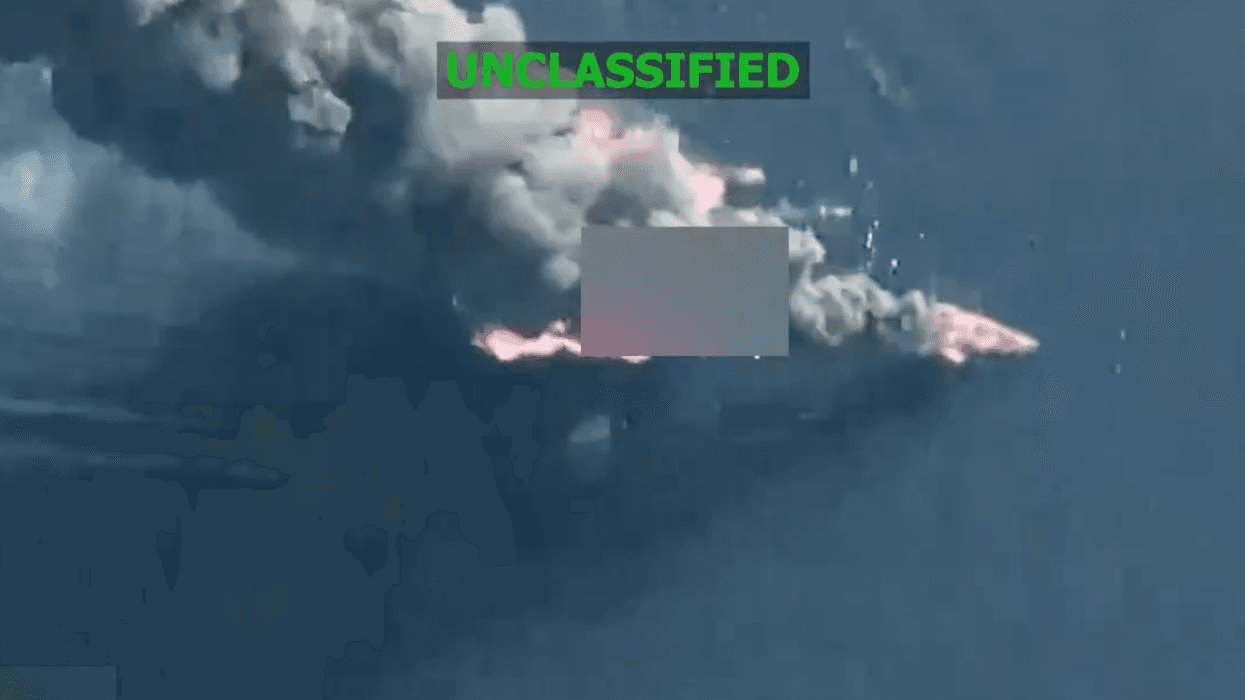
Trump has elevated this hypocrisy to new heights by releasing a former Honduran president who was serving a 45-year US prison sentence for drug trafficking and links to violent crime. Trump’s administration has gone on to murder, on the high seas, over 100 supposed drug traffickers, offering no proof of their crimes, and has committed acts of piracy against commercial vessels leaving Venezuela. This is in open defiance of the Law of the Sea, which the US explicitly cites in a different context—its actions to maintain “freedom of navigation” in the South China Sea.
The surge of drug-related crime, and even more of the rhetoric surrounding it, have coincided with the rise of a powerful Christian right. Once overwhelmingly Catholic, the region has seen rapid growth in conservative Protestant evangelical movements, particularly in Central America. Evangelicals constitute approximately 43% of the electorate in Honduras, 40% in Guatemala and Nicaragua, 37% in El Salvador, 29% in Panama, and 27% in Costa Rice and Brazil. Aligned with the populist right, these movements tend to promote social conservatism and pro-Zionism.
Regional fragmentation
In 2014, the 33 member states of the Community of Latin American and Caribbean States (CELAC) declared the region a Zone of Peace, pointedly asserting its sovereignty and its opposition to US military infiltration. In opposition to any such accord, Washington instrumentalizes a “war on drugs,” which Cuba has described as “a pretext to conceal military, paramilitary, and interventionist operations.”
Biden’s expansion of US military penetration continued seamlessly with Trump—only intensified further. This includes the deployment of a full naval armada off Venezuela’s coast; major military buildups in Puerto Rico and Panama; and the recruitment of Trinidad and Tobago, Dominican Republic, and Guyana into the offensive against Venezuela.
Despite the counter-hegemonic presence of China, the power of the US is such that it can threaten punitive tariffs on all the constituent countries and impose unilateral coercive measures on roughly 35% of the states in the Western Hemisphere.
Trump began his new term with mass migrant deportations and sweeping tariffs imposed on the region in January, a lurch toward xenophobia and economic parochialism. In response, Honduran President Xiomara Castro, then head of CELAC, called an emergency meeting, which was then canceled for lack of regional unity. The pan-Caribbean CARICOM has seen unity undermined by Trinidad and Tobago’s servile support of Trump’s armada. In response, Black Studies professor Isaac Saney asks, “Will the Caribbean accept fragmentation as its fate, or will this rupture provoke a renewed Pan-Caribbean struggle for a future beyond empire?”
Indeed, other regional organizations such as the progressive-oriented CELAC and even the US-dominated Organization of American States (OAS) have waned, especially given the latter’s anemic response to US military aggression in the Caribbean. The OAS’ controversy-ridden Summit of the Americas, scheduled for December, has been postponed to 2026.
Among the region’s most progressive forces, the Bolivarian Alliance for the Peoples of Our America (ALBA) has faced setbacks, including the loss of Bolivia following the election of a right-wing president. The influential leadership of Ralph Gonsalves was also lost when he was voted out in St. Vincent and the Grenadines.
“The level of fragmentation that we are seeing today among Latin American countries,” Foreign Policy observes, is “the most dramatic in the last half-century.”
Great Power Competition
Washington’s push to consolidate hemispheric dominance is linked to efforts to counter China, now South America’s largest trading partner and the second largest for the overall LAC region. China’s regional strategy sharply contrasts with Trump’s. China offers a win-win model of economic cooperation for mutual benefit, while the US proffers a zero-sum model of winners and losers.
China rejects excluding third parties from the region, while the US pledges to “deny non-Hemispheric competitors.” China emphasizes multilateral cooperation and shared Global South priorities, such as reforming international financial institutions, scientific collaboration, and high-tech investment. Beijing criticizes Washington’s “unilateral bullying.”
Most LAC governments try to triangulate between Beijing and Washington, while also developing new trading partnerships with countries such as India. Under US pressure, however, Brazil and Mexico may impose new tariffs on Chinese goods, although trade with China remains crucial for both. Argentina’s President Milei accepted a US bailout, but nonetheless renewed a currency swap line with China.
Washington is pressing its client states to take an anti-China stance, which it does not even take itself, by recognizing Taiwan and cutting formal diplomatic relations with the PRC. New rightist presidents in Bolivia and Honduras have promised to do so.
Furthermore, both the US and China need access to lithium, a vital mineral in advanced technology. Argentina, Bolivia, and Chile possess around 60% of the world’s known reserves. But while China offers complementary investment and industrial partnerships in return for a share of such resources, the US offers military bases and threats.
Despite the counter-hegemonic presence of China, the power of the US is such that it can threaten punitive tariffs on all the constituent countries and impose unilateral coercive measures on roughly 35% of the states in the Western Hemisphere. These sanctions, which are collective punishment, are illegal under international law. This is done with relative impunity and little prospect for relief for the victims. And victims there are of the so-called sanctions—especially those imposed on Venezuela and Cuba, which are under country-level embargoes or sectoral restrictions that constitute blockades because the measures are enforced against third countries.
What Pax Americana Looks Like
Haiti represents the ultimate outcome of neoliberal whittling down of the state: a hollowed-out government, near-total loss of sovereignty to the US and its allies, and a vacuum in which criminal gangs operate with impunity. This is the logical outcome of enforced submission to empire.
The US seeks to impose a similar subjugation on Venezuela precisely because Venezuela represents the hope of an alternative socioeconomic order. Michelle Ellner rightly argues that Venezuela is a test case:
What is being refined now—economic siege without formal war, maritime coercion without declared blockade, starvation without bombs—is a blueprint. Any country that refuses compliance with Washington’s political and economic demands should be paying attention. This will be the map for 21st century regime change.
Even if Venezuela had not a drop of oil to be exploited, it still would be in the crosshairs of imperialism as are Marco Rubio’s other two “enemies of humanity”—resource-poor Cuba and Nicaragua. Havana, made more vulnerable by the blockade on Venezuela, is now teetering on the brink of a disaster not of its own making. Nicaragua, so far treated lightly, faces attacks on its tourism industry and the likelihood of punishing tariffs. Also in line for regime change is Colombia, whose President Gustavo Petro has emerged as a continental conscience through his criticism of Washington’s deportation policies and his outspoken support for Palestine.
Nonetheless, Venezuelan President Nicolás Maduro faces the hardest test, likely with worse to come. He embodies a nation and more broadly a region bravely resisting imperial domination with remarkable resolve. Anti-imperialists hope and believe that such resistance by Latin America’s progressive governments will sustain them during 2026 and beyond.