SUBSCRIBE TO OUR FREE NEWSLETTER
Daily news & progressive opinion—funded by the people, not the corporations—delivered straight to your inbox.
5
#000000
#FFFFFF
To donate by check, phone, or other method, see our More Ways to Give page.
Daily news & progressive opinion—funded by the people, not the corporations—delivered straight to your inbox.
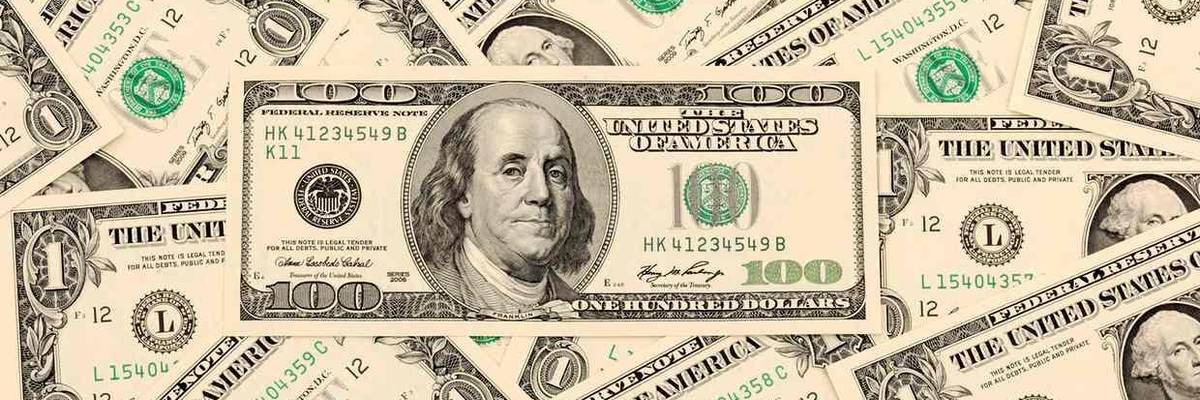
Analysts had expected Washington’s new 7-percent capital gains tax to raise $440 million from the state’s richest. The new tax has instead so far raised $849 million, almost double the take originally anticipated.
If you want to make social investments, it's important to recognize that vast amounts of capital held by the rich are just sitting around waiting to be put to good social use.
Back in 1933, the journalist-turned-lawyer Wesley Lloyd turned into a new member of Congress from Washington State. Two months into his first term, Lloyd rose to address his fellow lawmakers. They had all, he related, so far applied little more than “palliatives” to the continuing Great Depression.
“We have subsidized the farmer and charged the cost to labor,” Lloyd observed, “and we are attempting to subsidize labor and propose to let the farmer pay the bill.”
What Congress needed to do instead: “lay the ax of legislative enactment at the tap root” of what had gone wrong in America and “place a definite limitation on the acquisition and ownership of wealth.”
“A startlingly small number of our people,” Lloyd charged, had come to enjoy a “vastly major proportion of our national wealth.” His answer: a constitutional amendment giving Congress the power “to limit the wealth” of individual Americans to no more than $1 million, the equivalent of about $23 million today.
“I propose in the main,” said Lloyd, “to bring up the poor and bring down the rich into the class of the average man, where all may find real happiness and where we may know a widespread national prosperity.”
Over the next dozen years, under Franklin Roosevelt’s New Deal, the United States would make historically unprecedented progress toward that greater equality Lloyd so deeply desired. By 1945, America’s richest faced a 94 percent tax rate on income over $200,000. Lloyd, sadly, wouldn’t be around to see that progress. He died early in 1936, midway through his second term.
But Lloyd’s tax-the-rich spirit lives on, especially today in his home Washington State. Earlier this year, 19 of the state’s senators and 43 state reps introduced legislation that would fix a first-ever 1 percent annual tax on stocks, bonds, and other forms of “intangible personal property” worth over $250 million. The Evergreen State currently hosts over 700 grand fortunes that top this quarter-billion mark.
The holders of these massive accumulations have — for now at least — dodged this proposed annual 1 percent tax on their “financial intangible property.” The proposal failed to get through the 2023 state legislative session. But that failure hasn’t left Washington’s deepest pockets feeling like celebrating. The reason? They’ve just become subject to another new tax, a measure that Seattle Times columnist Danny Westneat is describing as the state’s first-ever “wealth-related levy.”
This particular levy, a 7-percent excise tax on asset-sale profits over $250,000, actually became law two years ago, then got shelved when a county court ruled the new tax unconstitutional. This past March, a state Supreme Court ruling reversed that county ruling, and wealthy Washingtonians are now paying up on their new taxes due — at much higher levels than the state’s legislative number-crunchers had anticipated!
Those analysts had expected Washington’s new 7-percent capital gains tax to raise $440 million from the state’s richest. The new tax has instead so far raised $849 million, almost double the take originally anticipated.
Washington’s wealthy still, to be sure, have plenty to be thankful for at tax time. Washington, for instance, remains without an income tax. But no state, we need to remember, has yet come up with what analysts at the Washington, D.C.-based Center for Budget and Policy Priorities would see as a perfect package of tax reforms that prioritize “equity and fairness.”
The Center is now hoping to nudge state lawmakers nationwide further in that direction with a new online tool for developing “State Revenue Options for Advancing Equity and Prosperity.” State policymakers, the Center notes, don’t always understand “how much revenue different policies might raise, whether a tax will fall more on families with low incomes or people at the top.” The new Center tool aims to build that understanding.
Understanding, of course, only takes lawmakers so far. They still have to overcome the opposition of the richest among us to paying anything close to their fair tax share. Lawmakers can certainly do that overcoming — if enough of us push them. And if we do enough of that pushing, maybe our lawmakers will start sounding like Wesley Lloyd back when he proposed to limit the personal wealth of our super richest.
“I do not seek to destroy wealth or industry,” Lloyd told his fellow members of Congress, “but I do propose to place the burden of public expense and national development upon the shoulders of those best able to bear that burden and those who have profited most. I would have the strong help the weak rather than have the weak forever carrying the strong.”
Dear Common Dreams reader, It’s been nearly 30 years since I co-founded Common Dreams with my late wife, Lina Newhouser. We had the radical notion that journalism should serve the public good, not corporate profits. It was clear to us from the outset what it would take to build such a project. No paid advertisements. No corporate sponsors. No millionaire publisher telling us what to think or do. Many people said we wouldn't last a year, but we proved those doubters wrong. Together with a tremendous team of journalists and dedicated staff, we built an independent media outlet free from the constraints of profits and corporate control. Our mission has always been simple: To inform. To inspire. To ignite change for the common good. Building Common Dreams was not easy. Our survival was never guaranteed. When you take on the most powerful forces—Wall Street greed, fossil fuel industry destruction, Big Tech lobbyists, and uber-rich oligarchs who have spent billions upon billions rigging the economy and democracy in their favor—the only bulwark you have is supporters who believe in your work. But here’s the urgent message from me today. It's never been this bad out there. And it's never been this hard to keep us going. At the very moment Common Dreams is most needed, the threats we face are intensifying. We need your support now more than ever. We don't accept corporate advertising and never will. We don't have a paywall because we don't think people should be blocked from critical news based on their ability to pay. Everything we do is funded by the donations of readers like you. When everyone does the little they can afford, we are strong. But if that support retreats or dries up, so do we. Will you donate now to make sure Common Dreams not only survives but thrives? —Craig Brown, Co-founder |
Back in 1933, the journalist-turned-lawyer Wesley Lloyd turned into a new member of Congress from Washington State. Two months into his first term, Lloyd rose to address his fellow lawmakers. They had all, he related, so far applied little more than “palliatives” to the continuing Great Depression.
“We have subsidized the farmer and charged the cost to labor,” Lloyd observed, “and we are attempting to subsidize labor and propose to let the farmer pay the bill.”
What Congress needed to do instead: “lay the ax of legislative enactment at the tap root” of what had gone wrong in America and “place a definite limitation on the acquisition and ownership of wealth.”
“A startlingly small number of our people,” Lloyd charged, had come to enjoy a “vastly major proportion of our national wealth.” His answer: a constitutional amendment giving Congress the power “to limit the wealth” of individual Americans to no more than $1 million, the equivalent of about $23 million today.
“I propose in the main,” said Lloyd, “to bring up the poor and bring down the rich into the class of the average man, where all may find real happiness and where we may know a widespread national prosperity.”
Over the next dozen years, under Franklin Roosevelt’s New Deal, the United States would make historically unprecedented progress toward that greater equality Lloyd so deeply desired. By 1945, America’s richest faced a 94 percent tax rate on income over $200,000. Lloyd, sadly, wouldn’t be around to see that progress. He died early in 1936, midway through his second term.
But Lloyd’s tax-the-rich spirit lives on, especially today in his home Washington State. Earlier this year, 19 of the state’s senators and 43 state reps introduced legislation that would fix a first-ever 1 percent annual tax on stocks, bonds, and other forms of “intangible personal property” worth over $250 million. The Evergreen State currently hosts over 700 grand fortunes that top this quarter-billion mark.
The holders of these massive accumulations have — for now at least — dodged this proposed annual 1 percent tax on their “financial intangible property.” The proposal failed to get through the 2023 state legislative session. But that failure hasn’t left Washington’s deepest pockets feeling like celebrating. The reason? They’ve just become subject to another new tax, a measure that Seattle Times columnist Danny Westneat is describing as the state’s first-ever “wealth-related levy.”
This particular levy, a 7-percent excise tax on asset-sale profits over $250,000, actually became law two years ago, then got shelved when a county court ruled the new tax unconstitutional. This past March, a state Supreme Court ruling reversed that county ruling, and wealthy Washingtonians are now paying up on their new taxes due — at much higher levels than the state’s legislative number-crunchers had anticipated!
Those analysts had expected Washington’s new 7-percent capital gains tax to raise $440 million from the state’s richest. The new tax has instead so far raised $849 million, almost double the take originally anticipated.
Washington’s wealthy still, to be sure, have plenty to be thankful for at tax time. Washington, for instance, remains without an income tax. But no state, we need to remember, has yet come up with what analysts at the Washington, D.C.-based Center for Budget and Policy Priorities would see as a perfect package of tax reforms that prioritize “equity and fairness.”
The Center is now hoping to nudge state lawmakers nationwide further in that direction with a new online tool for developing “State Revenue Options for Advancing Equity and Prosperity.” State policymakers, the Center notes, don’t always understand “how much revenue different policies might raise, whether a tax will fall more on families with low incomes or people at the top.” The new Center tool aims to build that understanding.
Understanding, of course, only takes lawmakers so far. They still have to overcome the opposition of the richest among us to paying anything close to their fair tax share. Lawmakers can certainly do that overcoming — if enough of us push them. And if we do enough of that pushing, maybe our lawmakers will start sounding like Wesley Lloyd back when he proposed to limit the personal wealth of our super richest.
“I do not seek to destroy wealth or industry,” Lloyd told his fellow members of Congress, “but I do propose to place the burden of public expense and national development upon the shoulders of those best able to bear that burden and those who have profited most. I would have the strong help the weak rather than have the weak forever carrying the strong.”
Back in 1933, the journalist-turned-lawyer Wesley Lloyd turned into a new member of Congress from Washington State. Two months into his first term, Lloyd rose to address his fellow lawmakers. They had all, he related, so far applied little more than “palliatives” to the continuing Great Depression.
“We have subsidized the farmer and charged the cost to labor,” Lloyd observed, “and we are attempting to subsidize labor and propose to let the farmer pay the bill.”
What Congress needed to do instead: “lay the ax of legislative enactment at the tap root” of what had gone wrong in America and “place a definite limitation on the acquisition and ownership of wealth.”
“A startlingly small number of our people,” Lloyd charged, had come to enjoy a “vastly major proportion of our national wealth.” His answer: a constitutional amendment giving Congress the power “to limit the wealth” of individual Americans to no more than $1 million, the equivalent of about $23 million today.
“I propose in the main,” said Lloyd, “to bring up the poor and bring down the rich into the class of the average man, where all may find real happiness and where we may know a widespread national prosperity.”
Over the next dozen years, under Franklin Roosevelt’s New Deal, the United States would make historically unprecedented progress toward that greater equality Lloyd so deeply desired. By 1945, America’s richest faced a 94 percent tax rate on income over $200,000. Lloyd, sadly, wouldn’t be around to see that progress. He died early in 1936, midway through his second term.
But Lloyd’s tax-the-rich spirit lives on, especially today in his home Washington State. Earlier this year, 19 of the state’s senators and 43 state reps introduced legislation that would fix a first-ever 1 percent annual tax on stocks, bonds, and other forms of “intangible personal property” worth over $250 million. The Evergreen State currently hosts over 700 grand fortunes that top this quarter-billion mark.
The holders of these massive accumulations have — for now at least — dodged this proposed annual 1 percent tax on their “financial intangible property.” The proposal failed to get through the 2023 state legislative session. But that failure hasn’t left Washington’s deepest pockets feeling like celebrating. The reason? They’ve just become subject to another new tax, a measure that Seattle Times columnist Danny Westneat is describing as the state’s first-ever “wealth-related levy.”
This particular levy, a 7-percent excise tax on asset-sale profits over $250,000, actually became law two years ago, then got shelved when a county court ruled the new tax unconstitutional. This past March, a state Supreme Court ruling reversed that county ruling, and wealthy Washingtonians are now paying up on their new taxes due — at much higher levels than the state’s legislative number-crunchers had anticipated!
Those analysts had expected Washington’s new 7-percent capital gains tax to raise $440 million from the state’s richest. The new tax has instead so far raised $849 million, almost double the take originally anticipated.
Washington’s wealthy still, to be sure, have plenty to be thankful for at tax time. Washington, for instance, remains without an income tax. But no state, we need to remember, has yet come up with what analysts at the Washington, D.C.-based Center for Budget and Policy Priorities would see as a perfect package of tax reforms that prioritize “equity and fairness.”
The Center is now hoping to nudge state lawmakers nationwide further in that direction with a new online tool for developing “State Revenue Options for Advancing Equity and Prosperity.” State policymakers, the Center notes, don’t always understand “how much revenue different policies might raise, whether a tax will fall more on families with low incomes or people at the top.” The new Center tool aims to build that understanding.
Understanding, of course, only takes lawmakers so far. They still have to overcome the opposition of the richest among us to paying anything close to their fair tax share. Lawmakers can certainly do that overcoming — if enough of us push them. And if we do enough of that pushing, maybe our lawmakers will start sounding like Wesley Lloyd back when he proposed to limit the personal wealth of our super richest.
“I do not seek to destroy wealth or industry,” Lloyd told his fellow members of Congress, “but I do propose to place the burden of public expense and national development upon the shoulders of those best able to bear that burden and those who have profited most. I would have the strong help the weak rather than have the weak forever carrying the strong.”