SUBSCRIBE TO OUR FREE NEWSLETTER
Daily news & progressive opinion—funded by the people, not the corporations—delivered straight to your inbox.
5
#000000
#FFFFFF
To donate by check, phone, or other method, see our More Ways to Give page.
Daily news & progressive opinion—funded by the people, not the corporations—delivered straight to your inbox.
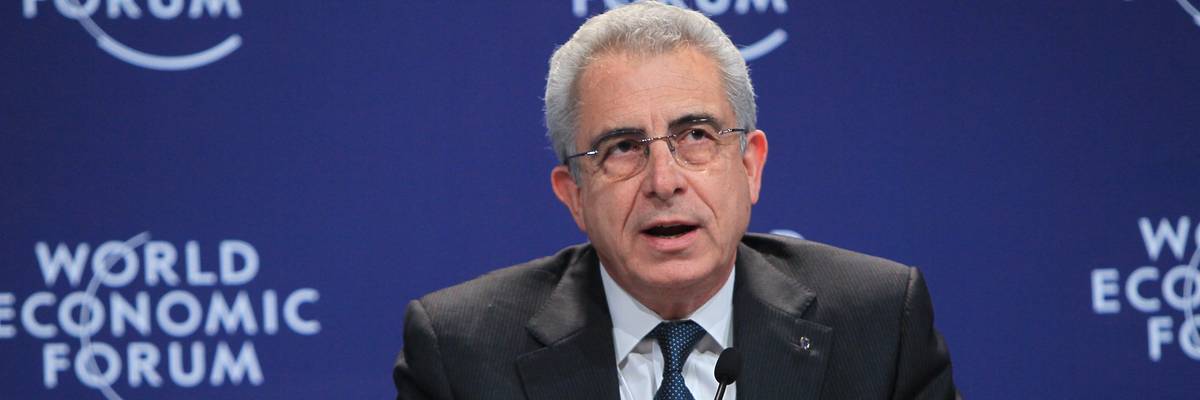
Ernesto Zedillo Ponce de Leon, director of the Center for the Study of Globalization at Yale University and former Mexican president, attends the interactive session "Mastering Complexity" during the 2012 Tianjin Summer Davos at Meijiang Convention and Exhibition Center on September 12, 2012 in Tianjin, China.
As long as these leaders pledge allegiance to the neoliberal order and the Washington Consensus, their authoritarian abuses are ignored, and they are embraced by elites.
On February 25, the Johns Hopkins School of Advanced International Studies, or SAIS, one of the most prestigious educational institutions in global affairs and an intellectual vanguard of the liberal order, held an event with former Mexican President Ernesto Zedillo. The theme: “Democratic Backsliding in Latin America.”
What the event crucially withheld is that Zedillo himself is responsible for crimes against humanity and the destruction of his country’s democratic system under the Partido Revolucionario Institucional’s “Perfect Dictatorship,” a period of uninterrupted 71-year rule.
Zedillo served as president from 1994 to 2000; he was the last heir of that era, during which the PRI kept rigging elections, threatening opposition parties, buying votes, and deploying security forces against opposition to hold on to power.
If Zedillo is lecturing on democratic backsliding, can we really expect him to acknowledge his own role in it?
Failing to mention his crimes was not an accident—it epitomized a broader, deliberate pattern of whitewashing of Latin American leaders responsible for horrendous crimes by U.S.-led, liberal institutions.
Within days of assuming office, Zedillo provoked the worst economic crisis in the country’s history, better known as the Peso Crisis, when he immediately devalued the peso by 15% and converted private banking debt to public debt, causing enormous economic strife, inequality, poverty, and death.
Zedillo also targeted political opponents including in his own party, and repeatedly used the state’s power against peaceful protesters. After years of calling Indigenous protesters demanding further autonomy “terrorists,” state security forces committed the Aguas Blancas and Acteal massacres under his watch. He attempted to suppress reporting on the massacres (only acknowledged decades later) and accelerated conflict with the Zapatistas, while categorically refusing to negotiate with the group despite its popular support against legitimate grievances.
Silence means access, and access bolsters the institution’s connections, at the cost of truth and progress. Voicing any concern over Zedillo’s blacklist of abuses might lead to Zedillo refusing to give the talk, which would affect SAIS’s prestigious image, no matter how it might pervert the school’s supposed educational mandate.
There are countless examples of this corrupt system at work. Former President of Colombia Iván Duque, who is largely responsible for purposefully tanking the Peace Accords and perpetuating civil conflict, as well as repeatedly using the military to kill peaceful protesters, was given a Global Fellowship with the Wilson Center’s Latin American Program and another at Cornell, and frequently visits prestigious think tanks and universities, including Georgetown, to lecture about democracy.
Alejandro Toledo, the disgraced former president of Peru now in jail for his role in the Odebrecht corruption scandal, has held positions at Stanford and Brookings. Álvaro Uribe, the former president of Colombia who exacerbated the War on Drugs and allegedly supported the far-right paramilitary death squads (now the largest drug producers in the country), was also given a fellowship at Georgetown. These are just a few examples of a long list of criminal Latin American leaders in prominent positions in liberal circles in Washington and beyond.
Former Ecuadorian President Guillermo Lasso, who suspended constitutional rights to deploy the military against protesters and drug cartels, and called an election to prevent Congress from holding him accountable for his corruption, was also given a column in the Wilson Center’s magazine (while he was being impeached), prompting my own resignation from the program. He was also offered a Senior Leadership Fellowship at the Florida International University, along with Juan Guiadó, Álvaro Uribe, and others.
To cite one last ongoing example, Ecuadorian President Daniel Noboa has also been parading around various universities and think tanks, particularly in Washington and Miami, allegedly earning significant cash and gifts despite Ecuadorian law preventing large foreign donations. Noboa has maintained a “state of exception” for more than 13 months, expanding state powers and suspending constitutional rights. Thousands have been arrested without trial, and the ensuing conflict has resulted in thousands more deaths, as the state feeds a worsening cycle of violence, disproportionately targeting marginalized populations, that shows little sign of letting up in the long-term. That includes four Afro-Ecuadorian boys, 15 years old and younger, who were murdered by military forces in Guayaquil late last year. Barring a major shift, it is expected that Noboa will be offered a cushy fellowship or consulting golden parachute in the United States after leaving office.
Their crimes seem to cause no pain for the American liberal intelligentsia, who are supposed to uphold an order based on “rules and norms.” Rather, they seem to be applied selectively based on naked national interest.
As long as these leaders pledge allegiance to the neoliberal order and the Washington Consensus, their authoritarian abuses are ignored, and they are embraced by elites. Attendees, organizers, and institutions enable this whitewashing to protect their geopolitical and economic interests—whether to uphold liberal order or, more cynically, to maintain U.S. control over Latin American sovereignty.
This revolving door extends beyond think tanks and universities—many of these disgraced leaders secure high-paying consulting roles with American firms, advising on the very legal and political systems they once manipulated. Zedillo, beyond his talk at SAIS (and his fellowship at Yale), is also a consultant with various American companies including Citigroup and Coca-Cola, for which he manages multi-million-dollar portfolios.
Evidently, this system has permeated through all institutions belonging to the old liberal order, whether they be think tanks, educational institutions, development organizations, or multilateral regional organizations, all of which have repeatedly provided cover, and even support, to criminal leaders from the region, in the name, supposedly, of “democracy and freedom.”
This incestuous system, consequently, rewards terrible leaders who pay lip service to liberalism, contributing to the perpetuation of institutionalized corruption, human rights abuses, and democratic backsliding in Latin America.
For those consuming these institutions' output—events, speeches, research, and courses—this corrupt cycle distorts the truth, obscuring the crucial historical and political context behind future policy decisions. If Zedillo is lecturing on democratic backsliding, can we really expect him to acknowledge his own role in it?
Having these bad actors as messengers also incentivizes the next generation to participate in the corrupt system themselves, having the leaders as mentors. The leaders, coming from a very powerful position with immense connections and social and economic capital, can provide internships, fellowships, and other opportunities, often with financial reward (and thus ownership). Mentees will then become part of the sociopolitical caste that birthed the corrupt leaders, be fed revisionist history, and perpetuate the cycle further, damaging progress for generations.
This incestuous system rewarding corruption and loyalty to the American-led liberal order should be called out at every turn. Certain heterodox analysts, scholars, journalists, and activists, have themselves been critical, incurring significant professional risks to speak truth to power. Some of these events and appointments, for instance, Uribe’s appointment to Georgetown, have been widely protested.
These critical debates are not “grey areas” or a “game,” they are part of a broader, centuries-long effort for independence, sovereignty, and popular rule, despite very well-funded colonial efforts, including by liberal elites in Washington, against self-determination.
As Eduardo Galeano wrote in his iconic The Open Veins of Latin America, “History never really says goodbye. History says, ‘See you later.’” The weaponization of democracy and freedom by liberal elite institutions to cover up pro-American regional leaders’ crimes for imperial interests is a mere repackaging of Monroe Doctrine dogma, and it won’t go away until it is gutted inside and out.
Dear Common Dreams reader, It’s been nearly 30 years since I co-founded Common Dreams with my late wife, Lina Newhouser. We had the radical notion that journalism should serve the public good, not corporate profits. It was clear to us from the outset what it would take to build such a project. No paid advertisements. No corporate sponsors. No millionaire publisher telling us what to think or do. Many people said we wouldn't last a year, but we proved those doubters wrong. Together with a tremendous team of journalists and dedicated staff, we built an independent media outlet free from the constraints of profits and corporate control. Our mission has always been simple: To inform. To inspire. To ignite change for the common good. Building Common Dreams was not easy. Our survival was never guaranteed. When you take on the most powerful forces—Wall Street greed, fossil fuel industry destruction, Big Tech lobbyists, and uber-rich oligarchs who have spent billions upon billions rigging the economy and democracy in their favor—the only bulwark you have is supporters who believe in your work. But here’s the urgent message from me today. It's never been this bad out there. And it's never been this hard to keep us going. At the very moment Common Dreams is most needed, the threats we face are intensifying. We need your support now more than ever. We don't accept corporate advertising and never will. We don't have a paywall because we don't think people should be blocked from critical news based on their ability to pay. Everything we do is funded by the donations of readers like you. When everyone does the little they can afford, we are strong. But if that support retreats or dries up, so do we. Will you donate now to make sure Common Dreams not only survives but thrives? —Craig Brown, Co-founder |
On February 25, the Johns Hopkins School of Advanced International Studies, or SAIS, one of the most prestigious educational institutions in global affairs and an intellectual vanguard of the liberal order, held an event with former Mexican President Ernesto Zedillo. The theme: “Democratic Backsliding in Latin America.”
What the event crucially withheld is that Zedillo himself is responsible for crimes against humanity and the destruction of his country’s democratic system under the Partido Revolucionario Institucional’s “Perfect Dictatorship,” a period of uninterrupted 71-year rule.
Zedillo served as president from 1994 to 2000; he was the last heir of that era, during which the PRI kept rigging elections, threatening opposition parties, buying votes, and deploying security forces against opposition to hold on to power.
If Zedillo is lecturing on democratic backsliding, can we really expect him to acknowledge his own role in it?
Failing to mention his crimes was not an accident—it epitomized a broader, deliberate pattern of whitewashing of Latin American leaders responsible for horrendous crimes by U.S.-led, liberal institutions.
Within days of assuming office, Zedillo provoked the worst economic crisis in the country’s history, better known as the Peso Crisis, when he immediately devalued the peso by 15% and converted private banking debt to public debt, causing enormous economic strife, inequality, poverty, and death.
Zedillo also targeted political opponents including in his own party, and repeatedly used the state’s power against peaceful protesters. After years of calling Indigenous protesters demanding further autonomy “terrorists,” state security forces committed the Aguas Blancas and Acteal massacres under his watch. He attempted to suppress reporting on the massacres (only acknowledged decades later) and accelerated conflict with the Zapatistas, while categorically refusing to negotiate with the group despite its popular support against legitimate grievances.
Silence means access, and access bolsters the institution’s connections, at the cost of truth and progress. Voicing any concern over Zedillo’s blacklist of abuses might lead to Zedillo refusing to give the talk, which would affect SAIS’s prestigious image, no matter how it might pervert the school’s supposed educational mandate.
There are countless examples of this corrupt system at work. Former President of Colombia Iván Duque, who is largely responsible for purposefully tanking the Peace Accords and perpetuating civil conflict, as well as repeatedly using the military to kill peaceful protesters, was given a Global Fellowship with the Wilson Center’s Latin American Program and another at Cornell, and frequently visits prestigious think tanks and universities, including Georgetown, to lecture about democracy.
Alejandro Toledo, the disgraced former president of Peru now in jail for his role in the Odebrecht corruption scandal, has held positions at Stanford and Brookings. Álvaro Uribe, the former president of Colombia who exacerbated the War on Drugs and allegedly supported the far-right paramilitary death squads (now the largest drug producers in the country), was also given a fellowship at Georgetown. These are just a few examples of a long list of criminal Latin American leaders in prominent positions in liberal circles in Washington and beyond.
Former Ecuadorian President Guillermo Lasso, who suspended constitutional rights to deploy the military against protesters and drug cartels, and called an election to prevent Congress from holding him accountable for his corruption, was also given a column in the Wilson Center’s magazine (while he was being impeached), prompting my own resignation from the program. He was also offered a Senior Leadership Fellowship at the Florida International University, along with Juan Guiadó, Álvaro Uribe, and others.
To cite one last ongoing example, Ecuadorian President Daniel Noboa has also been parading around various universities and think tanks, particularly in Washington and Miami, allegedly earning significant cash and gifts despite Ecuadorian law preventing large foreign donations. Noboa has maintained a “state of exception” for more than 13 months, expanding state powers and suspending constitutional rights. Thousands have been arrested without trial, and the ensuing conflict has resulted in thousands more deaths, as the state feeds a worsening cycle of violence, disproportionately targeting marginalized populations, that shows little sign of letting up in the long-term. That includes four Afro-Ecuadorian boys, 15 years old and younger, who were murdered by military forces in Guayaquil late last year. Barring a major shift, it is expected that Noboa will be offered a cushy fellowship or consulting golden parachute in the United States after leaving office.
Their crimes seem to cause no pain for the American liberal intelligentsia, who are supposed to uphold an order based on “rules and norms.” Rather, they seem to be applied selectively based on naked national interest.
As long as these leaders pledge allegiance to the neoliberal order and the Washington Consensus, their authoritarian abuses are ignored, and they are embraced by elites. Attendees, organizers, and institutions enable this whitewashing to protect their geopolitical and economic interests—whether to uphold liberal order or, more cynically, to maintain U.S. control over Latin American sovereignty.
This revolving door extends beyond think tanks and universities—many of these disgraced leaders secure high-paying consulting roles with American firms, advising on the very legal and political systems they once manipulated. Zedillo, beyond his talk at SAIS (and his fellowship at Yale), is also a consultant with various American companies including Citigroup and Coca-Cola, for which he manages multi-million-dollar portfolios.
Evidently, this system has permeated through all institutions belonging to the old liberal order, whether they be think tanks, educational institutions, development organizations, or multilateral regional organizations, all of which have repeatedly provided cover, and even support, to criminal leaders from the region, in the name, supposedly, of “democracy and freedom.”
This incestuous system, consequently, rewards terrible leaders who pay lip service to liberalism, contributing to the perpetuation of institutionalized corruption, human rights abuses, and democratic backsliding in Latin America.
For those consuming these institutions' output—events, speeches, research, and courses—this corrupt cycle distorts the truth, obscuring the crucial historical and political context behind future policy decisions. If Zedillo is lecturing on democratic backsliding, can we really expect him to acknowledge his own role in it?
Having these bad actors as messengers also incentivizes the next generation to participate in the corrupt system themselves, having the leaders as mentors. The leaders, coming from a very powerful position with immense connections and social and economic capital, can provide internships, fellowships, and other opportunities, often with financial reward (and thus ownership). Mentees will then become part of the sociopolitical caste that birthed the corrupt leaders, be fed revisionist history, and perpetuate the cycle further, damaging progress for generations.
This incestuous system rewarding corruption and loyalty to the American-led liberal order should be called out at every turn. Certain heterodox analysts, scholars, journalists, and activists, have themselves been critical, incurring significant professional risks to speak truth to power. Some of these events and appointments, for instance, Uribe’s appointment to Georgetown, have been widely protested.
These critical debates are not “grey areas” or a “game,” they are part of a broader, centuries-long effort for independence, sovereignty, and popular rule, despite very well-funded colonial efforts, including by liberal elites in Washington, against self-determination.
As Eduardo Galeano wrote in his iconic The Open Veins of Latin America, “History never really says goodbye. History says, ‘See you later.’” The weaponization of democracy and freedom by liberal elite institutions to cover up pro-American regional leaders’ crimes for imperial interests is a mere repackaging of Monroe Doctrine dogma, and it won’t go away until it is gutted inside and out.
On February 25, the Johns Hopkins School of Advanced International Studies, or SAIS, one of the most prestigious educational institutions in global affairs and an intellectual vanguard of the liberal order, held an event with former Mexican President Ernesto Zedillo. The theme: “Democratic Backsliding in Latin America.”
What the event crucially withheld is that Zedillo himself is responsible for crimes against humanity and the destruction of his country’s democratic system under the Partido Revolucionario Institucional’s “Perfect Dictatorship,” a period of uninterrupted 71-year rule.
Zedillo served as president from 1994 to 2000; he was the last heir of that era, during which the PRI kept rigging elections, threatening opposition parties, buying votes, and deploying security forces against opposition to hold on to power.
If Zedillo is lecturing on democratic backsliding, can we really expect him to acknowledge his own role in it?
Failing to mention his crimes was not an accident—it epitomized a broader, deliberate pattern of whitewashing of Latin American leaders responsible for horrendous crimes by U.S.-led, liberal institutions.
Within days of assuming office, Zedillo provoked the worst economic crisis in the country’s history, better known as the Peso Crisis, when he immediately devalued the peso by 15% and converted private banking debt to public debt, causing enormous economic strife, inequality, poverty, and death.
Zedillo also targeted political opponents including in his own party, and repeatedly used the state’s power against peaceful protesters. After years of calling Indigenous protesters demanding further autonomy “terrorists,” state security forces committed the Aguas Blancas and Acteal massacres under his watch. He attempted to suppress reporting on the massacres (only acknowledged decades later) and accelerated conflict with the Zapatistas, while categorically refusing to negotiate with the group despite its popular support against legitimate grievances.
Silence means access, and access bolsters the institution’s connections, at the cost of truth and progress. Voicing any concern over Zedillo’s blacklist of abuses might lead to Zedillo refusing to give the talk, which would affect SAIS’s prestigious image, no matter how it might pervert the school’s supposed educational mandate.
There are countless examples of this corrupt system at work. Former President of Colombia Iván Duque, who is largely responsible for purposefully tanking the Peace Accords and perpetuating civil conflict, as well as repeatedly using the military to kill peaceful protesters, was given a Global Fellowship with the Wilson Center’s Latin American Program and another at Cornell, and frequently visits prestigious think tanks and universities, including Georgetown, to lecture about democracy.
Alejandro Toledo, the disgraced former president of Peru now in jail for his role in the Odebrecht corruption scandal, has held positions at Stanford and Brookings. Álvaro Uribe, the former president of Colombia who exacerbated the War on Drugs and allegedly supported the far-right paramilitary death squads (now the largest drug producers in the country), was also given a fellowship at Georgetown. These are just a few examples of a long list of criminal Latin American leaders in prominent positions in liberal circles in Washington and beyond.
Former Ecuadorian President Guillermo Lasso, who suspended constitutional rights to deploy the military against protesters and drug cartels, and called an election to prevent Congress from holding him accountable for his corruption, was also given a column in the Wilson Center’s magazine (while he was being impeached), prompting my own resignation from the program. He was also offered a Senior Leadership Fellowship at the Florida International University, along with Juan Guiadó, Álvaro Uribe, and others.
To cite one last ongoing example, Ecuadorian President Daniel Noboa has also been parading around various universities and think tanks, particularly in Washington and Miami, allegedly earning significant cash and gifts despite Ecuadorian law preventing large foreign donations. Noboa has maintained a “state of exception” for more than 13 months, expanding state powers and suspending constitutional rights. Thousands have been arrested without trial, and the ensuing conflict has resulted in thousands more deaths, as the state feeds a worsening cycle of violence, disproportionately targeting marginalized populations, that shows little sign of letting up in the long-term. That includes four Afro-Ecuadorian boys, 15 years old and younger, who were murdered by military forces in Guayaquil late last year. Barring a major shift, it is expected that Noboa will be offered a cushy fellowship or consulting golden parachute in the United States after leaving office.
Their crimes seem to cause no pain for the American liberal intelligentsia, who are supposed to uphold an order based on “rules and norms.” Rather, they seem to be applied selectively based on naked national interest.
As long as these leaders pledge allegiance to the neoliberal order and the Washington Consensus, their authoritarian abuses are ignored, and they are embraced by elites. Attendees, organizers, and institutions enable this whitewashing to protect their geopolitical and economic interests—whether to uphold liberal order or, more cynically, to maintain U.S. control over Latin American sovereignty.
This revolving door extends beyond think tanks and universities—many of these disgraced leaders secure high-paying consulting roles with American firms, advising on the very legal and political systems they once manipulated. Zedillo, beyond his talk at SAIS (and his fellowship at Yale), is also a consultant with various American companies including Citigroup and Coca-Cola, for which he manages multi-million-dollar portfolios.
Evidently, this system has permeated through all institutions belonging to the old liberal order, whether they be think tanks, educational institutions, development organizations, or multilateral regional organizations, all of which have repeatedly provided cover, and even support, to criminal leaders from the region, in the name, supposedly, of “democracy and freedom.”
This incestuous system, consequently, rewards terrible leaders who pay lip service to liberalism, contributing to the perpetuation of institutionalized corruption, human rights abuses, and democratic backsliding in Latin America.
For those consuming these institutions' output—events, speeches, research, and courses—this corrupt cycle distorts the truth, obscuring the crucial historical and political context behind future policy decisions. If Zedillo is lecturing on democratic backsliding, can we really expect him to acknowledge his own role in it?
Having these bad actors as messengers also incentivizes the next generation to participate in the corrupt system themselves, having the leaders as mentors. The leaders, coming from a very powerful position with immense connections and social and economic capital, can provide internships, fellowships, and other opportunities, often with financial reward (and thus ownership). Mentees will then become part of the sociopolitical caste that birthed the corrupt leaders, be fed revisionist history, and perpetuate the cycle further, damaging progress for generations.
This incestuous system rewarding corruption and loyalty to the American-led liberal order should be called out at every turn. Certain heterodox analysts, scholars, journalists, and activists, have themselves been critical, incurring significant professional risks to speak truth to power. Some of these events and appointments, for instance, Uribe’s appointment to Georgetown, have been widely protested.
These critical debates are not “grey areas” or a “game,” they are part of a broader, centuries-long effort for independence, sovereignty, and popular rule, despite very well-funded colonial efforts, including by liberal elites in Washington, against self-determination.
As Eduardo Galeano wrote in his iconic The Open Veins of Latin America, “History never really says goodbye. History says, ‘See you later.’” The weaponization of democracy and freedom by liberal elite institutions to cover up pro-American regional leaders’ crimes for imperial interests is a mere repackaging of Monroe Doctrine dogma, and it won’t go away until it is gutted inside and out.