SUBSCRIBE TO OUR FREE NEWSLETTER
Daily news & progressive opinion—funded by the people, not the corporations—delivered straight to your inbox.
5
#000000
#FFFFFF
To donate by check, phone, or other method, see our More Ways to Give page.
Daily news & progressive opinion—funded by the people, not the corporations—delivered straight to your inbox.
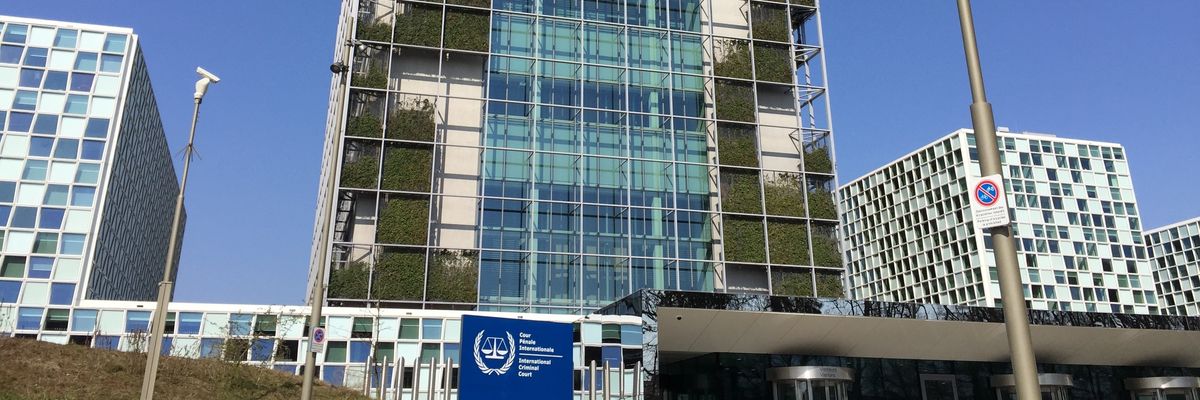
The International Criminal Court is pictured in The Hague, Netherlands.
Washington’s approach to the court has largely been tied to a broader assessment of U.S. foreign policy goals and the anticipated costs and benefits that supporting the court could bring.
This week, the prosecutor of the International Criminal Court, or ICC, applied for arrest warrants for three Hamas leaders, as well as Israeli Prime Minister Benjamin Netanyahu and Defense Minister Yoav Gallant, in connection with the ongoing war in Gaza.
The reaction of the United States, Israel’s main backer, was swift. U.S. President Joe Biden condemned the prosecutor’s action against Israel’s leaders as “outrageous” and accused the ICC of drawing false moral equivalence between Hamas and Israel.
While it is not yet clear if the ICC’s judges will decide to issue the warrants for Netanyahu and Gallant, the Biden administration has already hinted at the possibility of imposing U.S. sanctions against ICC officials.
The U.S.’ apparent about-face when the court targeted its ally is nothing new. Nor is it surprising.
Yet, just a year ago, when the ICC issued arrest warrants for Russian President Vladimir Putin and another Russian official for alleged international crimes in the Ukraine war, U.S. officials were full of praise for the court. Biden welcomed the action, calling it “justified.”
Since the Russian invasion of Ukraine, in fact, the U.S. has continually displayed its support for the ICC. One top U.S. official, the ambassador-at-large for global criminal justice, said the ICC “occupies an important place in the ecosystem of international justice.”
The U.S.’ apparent about-face when the court targeted its ally is nothing new. Nor is it surprising.
Rather, this vacillating approach is merely symptomatic of the U.S.’ complicated relationship with the ICC since its creation in 1998. Its hostile reaction to the Israel-Palestine situation will certainly have been expected by court officials.
I worked for many years as a cooperation advisor at the ICC’s office of the prosecutor. During that time, Washington’s position towards the court shifted several times—it supported the court at certain times and criticized it at others.
This has largely been tied to a broader assessment of U.S. foreign policy goals and the anticipated costs and benefits that supporting the court could bring.
The U.S. was initially a keen supporter of the creation of a permanent international criminal court and was an active participant in the ICC treaty negotiations in the 1990s.
This law also allowed the U.S. president to use “all means necessary”—a phrase understood to include armed force—to free American officials or servicemembers should they ever be detained for prosecution in The Hague, the seat of the ICC.
But it ultimately voted against the Rome Statute that created the court in 1998 due to concerns with the court’s jurisdictional framework. The U.S. feared it could allow for the prosecution of Americans without U.S. consent.
Although the U.S. still signed the Rome Statute, President George W. Bush later effectively unsigned it, saying the U.S. would not ratify the document and had no legal obligations to it.
The U.S. remains a non-member state to the ICC today.
Once the ICC was created, the U.S. adopted laws to restrict its interactions with the new court. Most importantly, it passed the American Servicemembers’ Protection Act of 2002 (ASPA) that prohibited providing any support to the ICC.
This law also allowed the U.S. president to use “all means necessary”—a phrase understood to include armed force—to free American officials or servicemembers should they ever be detained for prosecution in The Hague, the seat of the ICC. This earned it the nickname of “ The Hague Invasion Act.”
That same year, however, an amendment was passed to the law allowing exceptions for when the U.S. could assist international courts to bring to justice:
Saddam Hussein, Slobodan Milosovic, Osama bin Laden, other members of al Qaeda, leaders of Islamic Jihad, and other foreign nationals.
The amendment created significant flexibility, demonstrating that the U.S. was ready to assist international justice efforts as long as they targeted designated U.S “enemies” or other foreign nationals.
The U.S. soon adopted a pragmatic approach toward the court, supporting its activities depending on the circumstances and its interests.
In 2005, Washington allowed a United Nations Security Council referral to the ICC in relation to possible genocide and war crimes committed in Darfur, Sudan. The conflict was among the U.S.’ top foreign policy priorities in Africa at the time.
Later, the Obama administration formally adopted a “case-by-case” strategy to cooperate with the ICC when it aligned with U.S. interests.
Under this policy, the U.S. played an important role in the 2011 referral of alleged crimes against humanity and war crimes committed in Libya to the ICC. This was, again, in line with U.S. foreign policy interests.
U.S. diplomats also provided vital support in the arrest of Congolese warlord Bosco Ntaganda, who was later sentenced to 30 years in prison by the ICC for war crimes and crimes against humanity. And the U.S. assisted with the arrest of Dominic Ongwen of the Lord’s Resistance Army in Uganda, who was later sentenced to 25 years.
The relationship between the U.S. and the court soon soured again, though, during the Trump administration.
This was in part because of developments in the ICC’s investigation into alleged crimes committed in Afghanistan, which marked the first time the court probed possible crimes committed by U.S. forces.
In 2020, ICC judges authorized an investigation into U.S., Afghan, and Taliban forces. Soon after, the U.S. imposed sanctions on the ICC prosecutor, Fatou Bensouda, and another senior ICC official.
This week’s request for arrest warrants for Israeli leaders demonstrates yet another shift in the U.S. approach to the court.
After some delays, the investigation is continuing again, with a focus solely on crimes allegedly committed by the Taliban and Islamic State Khorasan Province. Other aspects of the investigation have been “deprioritized,” an implicit reference to the U.S. and its allies.
Soon after taking office, the Biden administration lifted the sanctions against the ICC officials, returning to a seemingly more collaborative period in U.S.-ICC relations.
These relations became closer following the Russian invasion of Ukraine, with the adoption of new laws that broadened the possibilities of U.S. cooperation with the court. The goals of the U.S. and ICC had seemingly aligned again, at least for the time being.
But this week’s request for arrest warrants for Israeli leaders demonstrates yet another shift in the U.S. approach to the court. It continues the pattern of the U.S. supporting the court when it suits it, prioritising its own foreign policy goals over wider international criminal justice efforts.
Dear Common Dreams reader, It’s been nearly 30 years since I co-founded Common Dreams with my late wife, Lina Newhouser. We had the radical notion that journalism should serve the public good, not corporate profits. It was clear to us from the outset what it would take to build such a project. No paid advertisements. No corporate sponsors. No millionaire publisher telling us what to think or do. Many people said we wouldn't last a year, but we proved those doubters wrong. Together with a tremendous team of journalists and dedicated staff, we built an independent media outlet free from the constraints of profits and corporate control. Our mission has always been simple: To inform. To inspire. To ignite change for the common good. Building Common Dreams was not easy. Our survival was never guaranteed. When you take on the most powerful forces—Wall Street greed, fossil fuel industry destruction, Big Tech lobbyists, and uber-rich oligarchs who have spent billions upon billions rigging the economy and democracy in their favor—the only bulwark you have is supporters who believe in your work. But here’s the urgent message from me today. It's never been this bad out there. And it's never been this hard to keep us going. At the very moment Common Dreams is most needed, the threats we face are intensifying. We need your support now more than ever. We don't accept corporate advertising and never will. We don't have a paywall because we don't think people should be blocked from critical news based on their ability to pay. Everything we do is funded by the donations of readers like you. When everyone does the little they can afford, we are strong. But if that support retreats or dries up, so do we. Will you donate now to make sure Common Dreams not only survives but thrives? —Craig Brown, Co-founder |
This week, the prosecutor of the International Criminal Court, or ICC, applied for arrest warrants for three Hamas leaders, as well as Israeli Prime Minister Benjamin Netanyahu and Defense Minister Yoav Gallant, in connection with the ongoing war in Gaza.
The reaction of the United States, Israel’s main backer, was swift. U.S. President Joe Biden condemned the prosecutor’s action against Israel’s leaders as “outrageous” and accused the ICC of drawing false moral equivalence between Hamas and Israel.
While it is not yet clear if the ICC’s judges will decide to issue the warrants for Netanyahu and Gallant, the Biden administration has already hinted at the possibility of imposing U.S. sanctions against ICC officials.
The U.S.’ apparent about-face when the court targeted its ally is nothing new. Nor is it surprising.
Yet, just a year ago, when the ICC issued arrest warrants for Russian President Vladimir Putin and another Russian official for alleged international crimes in the Ukraine war, U.S. officials were full of praise for the court. Biden welcomed the action, calling it “justified.”
Since the Russian invasion of Ukraine, in fact, the U.S. has continually displayed its support for the ICC. One top U.S. official, the ambassador-at-large for global criminal justice, said the ICC “occupies an important place in the ecosystem of international justice.”
The U.S.’ apparent about-face when the court targeted its ally is nothing new. Nor is it surprising.
Rather, this vacillating approach is merely symptomatic of the U.S.’ complicated relationship with the ICC since its creation in 1998. Its hostile reaction to the Israel-Palestine situation will certainly have been expected by court officials.
I worked for many years as a cooperation advisor at the ICC’s office of the prosecutor. During that time, Washington’s position towards the court shifted several times—it supported the court at certain times and criticized it at others.
This has largely been tied to a broader assessment of U.S. foreign policy goals and the anticipated costs and benefits that supporting the court could bring.
The U.S. was initially a keen supporter of the creation of a permanent international criminal court and was an active participant in the ICC treaty negotiations in the 1990s.
This law also allowed the U.S. president to use “all means necessary”—a phrase understood to include armed force—to free American officials or servicemembers should they ever be detained for prosecution in The Hague, the seat of the ICC.
But it ultimately voted against the Rome Statute that created the court in 1998 due to concerns with the court’s jurisdictional framework. The U.S. feared it could allow for the prosecution of Americans without U.S. consent.
Although the U.S. still signed the Rome Statute, President George W. Bush later effectively unsigned it, saying the U.S. would not ratify the document and had no legal obligations to it.
The U.S. remains a non-member state to the ICC today.
Once the ICC was created, the U.S. adopted laws to restrict its interactions with the new court. Most importantly, it passed the American Servicemembers’ Protection Act of 2002 (ASPA) that prohibited providing any support to the ICC.
This law also allowed the U.S. president to use “all means necessary”—a phrase understood to include armed force—to free American officials or servicemembers should they ever be detained for prosecution in The Hague, the seat of the ICC. This earned it the nickname of “ The Hague Invasion Act.”
That same year, however, an amendment was passed to the law allowing exceptions for when the U.S. could assist international courts to bring to justice:
Saddam Hussein, Slobodan Milosovic, Osama bin Laden, other members of al Qaeda, leaders of Islamic Jihad, and other foreign nationals.
The amendment created significant flexibility, demonstrating that the U.S. was ready to assist international justice efforts as long as they targeted designated U.S “enemies” or other foreign nationals.
The U.S. soon adopted a pragmatic approach toward the court, supporting its activities depending on the circumstances and its interests.
In 2005, Washington allowed a United Nations Security Council referral to the ICC in relation to possible genocide and war crimes committed in Darfur, Sudan. The conflict was among the U.S.’ top foreign policy priorities in Africa at the time.
Later, the Obama administration formally adopted a “case-by-case” strategy to cooperate with the ICC when it aligned with U.S. interests.
Under this policy, the U.S. played an important role in the 2011 referral of alleged crimes against humanity and war crimes committed in Libya to the ICC. This was, again, in line with U.S. foreign policy interests.
U.S. diplomats also provided vital support in the arrest of Congolese warlord Bosco Ntaganda, who was later sentenced to 30 years in prison by the ICC for war crimes and crimes against humanity. And the U.S. assisted with the arrest of Dominic Ongwen of the Lord’s Resistance Army in Uganda, who was later sentenced to 25 years.
The relationship between the U.S. and the court soon soured again, though, during the Trump administration.
This was in part because of developments in the ICC’s investigation into alleged crimes committed in Afghanistan, which marked the first time the court probed possible crimes committed by U.S. forces.
In 2020, ICC judges authorized an investigation into U.S., Afghan, and Taliban forces. Soon after, the U.S. imposed sanctions on the ICC prosecutor, Fatou Bensouda, and another senior ICC official.
This week’s request for arrest warrants for Israeli leaders demonstrates yet another shift in the U.S. approach to the court.
After some delays, the investigation is continuing again, with a focus solely on crimes allegedly committed by the Taliban and Islamic State Khorasan Province. Other aspects of the investigation have been “deprioritized,” an implicit reference to the U.S. and its allies.
Soon after taking office, the Biden administration lifted the sanctions against the ICC officials, returning to a seemingly more collaborative period in U.S.-ICC relations.
These relations became closer following the Russian invasion of Ukraine, with the adoption of new laws that broadened the possibilities of U.S. cooperation with the court. The goals of the U.S. and ICC had seemingly aligned again, at least for the time being.
But this week’s request for arrest warrants for Israeli leaders demonstrates yet another shift in the U.S. approach to the court. It continues the pattern of the U.S. supporting the court when it suits it, prioritising its own foreign policy goals over wider international criminal justice efforts.
This week, the prosecutor of the International Criminal Court, or ICC, applied for arrest warrants for three Hamas leaders, as well as Israeli Prime Minister Benjamin Netanyahu and Defense Minister Yoav Gallant, in connection with the ongoing war in Gaza.
The reaction of the United States, Israel’s main backer, was swift. U.S. President Joe Biden condemned the prosecutor’s action against Israel’s leaders as “outrageous” and accused the ICC of drawing false moral equivalence between Hamas and Israel.
While it is not yet clear if the ICC’s judges will decide to issue the warrants for Netanyahu and Gallant, the Biden administration has already hinted at the possibility of imposing U.S. sanctions against ICC officials.
The U.S.’ apparent about-face when the court targeted its ally is nothing new. Nor is it surprising.
Yet, just a year ago, when the ICC issued arrest warrants for Russian President Vladimir Putin and another Russian official for alleged international crimes in the Ukraine war, U.S. officials were full of praise for the court. Biden welcomed the action, calling it “justified.”
Since the Russian invasion of Ukraine, in fact, the U.S. has continually displayed its support for the ICC. One top U.S. official, the ambassador-at-large for global criminal justice, said the ICC “occupies an important place in the ecosystem of international justice.”
The U.S.’ apparent about-face when the court targeted its ally is nothing new. Nor is it surprising.
Rather, this vacillating approach is merely symptomatic of the U.S.’ complicated relationship with the ICC since its creation in 1998. Its hostile reaction to the Israel-Palestine situation will certainly have been expected by court officials.
I worked for many years as a cooperation advisor at the ICC’s office of the prosecutor. During that time, Washington’s position towards the court shifted several times—it supported the court at certain times and criticized it at others.
This has largely been tied to a broader assessment of U.S. foreign policy goals and the anticipated costs and benefits that supporting the court could bring.
The U.S. was initially a keen supporter of the creation of a permanent international criminal court and was an active participant in the ICC treaty negotiations in the 1990s.
This law also allowed the U.S. president to use “all means necessary”—a phrase understood to include armed force—to free American officials or servicemembers should they ever be detained for prosecution in The Hague, the seat of the ICC.
But it ultimately voted against the Rome Statute that created the court in 1998 due to concerns with the court’s jurisdictional framework. The U.S. feared it could allow for the prosecution of Americans without U.S. consent.
Although the U.S. still signed the Rome Statute, President George W. Bush later effectively unsigned it, saying the U.S. would not ratify the document and had no legal obligations to it.
The U.S. remains a non-member state to the ICC today.
Once the ICC was created, the U.S. adopted laws to restrict its interactions with the new court. Most importantly, it passed the American Servicemembers’ Protection Act of 2002 (ASPA) that prohibited providing any support to the ICC.
This law also allowed the U.S. president to use “all means necessary”—a phrase understood to include armed force—to free American officials or servicemembers should they ever be detained for prosecution in The Hague, the seat of the ICC. This earned it the nickname of “ The Hague Invasion Act.”
That same year, however, an amendment was passed to the law allowing exceptions for when the U.S. could assist international courts to bring to justice:
Saddam Hussein, Slobodan Milosovic, Osama bin Laden, other members of al Qaeda, leaders of Islamic Jihad, and other foreign nationals.
The amendment created significant flexibility, demonstrating that the U.S. was ready to assist international justice efforts as long as they targeted designated U.S “enemies” or other foreign nationals.
The U.S. soon adopted a pragmatic approach toward the court, supporting its activities depending on the circumstances and its interests.
In 2005, Washington allowed a United Nations Security Council referral to the ICC in relation to possible genocide and war crimes committed in Darfur, Sudan. The conflict was among the U.S.’ top foreign policy priorities in Africa at the time.
Later, the Obama administration formally adopted a “case-by-case” strategy to cooperate with the ICC when it aligned with U.S. interests.
Under this policy, the U.S. played an important role in the 2011 referral of alleged crimes against humanity and war crimes committed in Libya to the ICC. This was, again, in line with U.S. foreign policy interests.
U.S. diplomats also provided vital support in the arrest of Congolese warlord Bosco Ntaganda, who was later sentenced to 30 years in prison by the ICC for war crimes and crimes against humanity. And the U.S. assisted with the arrest of Dominic Ongwen of the Lord’s Resistance Army in Uganda, who was later sentenced to 25 years.
The relationship between the U.S. and the court soon soured again, though, during the Trump administration.
This was in part because of developments in the ICC’s investigation into alleged crimes committed in Afghanistan, which marked the first time the court probed possible crimes committed by U.S. forces.
In 2020, ICC judges authorized an investigation into U.S., Afghan, and Taliban forces. Soon after, the U.S. imposed sanctions on the ICC prosecutor, Fatou Bensouda, and another senior ICC official.
This week’s request for arrest warrants for Israeli leaders demonstrates yet another shift in the U.S. approach to the court.
After some delays, the investigation is continuing again, with a focus solely on crimes allegedly committed by the Taliban and Islamic State Khorasan Province. Other aspects of the investigation have been “deprioritized,” an implicit reference to the U.S. and its allies.
Soon after taking office, the Biden administration lifted the sanctions against the ICC officials, returning to a seemingly more collaborative period in U.S.-ICC relations.
These relations became closer following the Russian invasion of Ukraine, with the adoption of new laws that broadened the possibilities of U.S. cooperation with the court. The goals of the U.S. and ICC had seemingly aligned again, at least for the time being.
But this week’s request for arrest warrants for Israeli leaders demonstrates yet another shift in the U.S. approach to the court. It continues the pattern of the U.S. supporting the court when it suits it, prioritising its own foreign policy goals over wider international criminal justice efforts.