SUBSCRIBE TO OUR FREE NEWSLETTER
Daily news & progressive opinion—funded by the people, not the corporations—delivered straight to your inbox.
5
#000000
#FFFFFF
To donate by check, phone, or other method, see our More Ways to Give page.


Daily news & progressive opinion—funded by the people, not the corporations—delivered straight to your inbox.

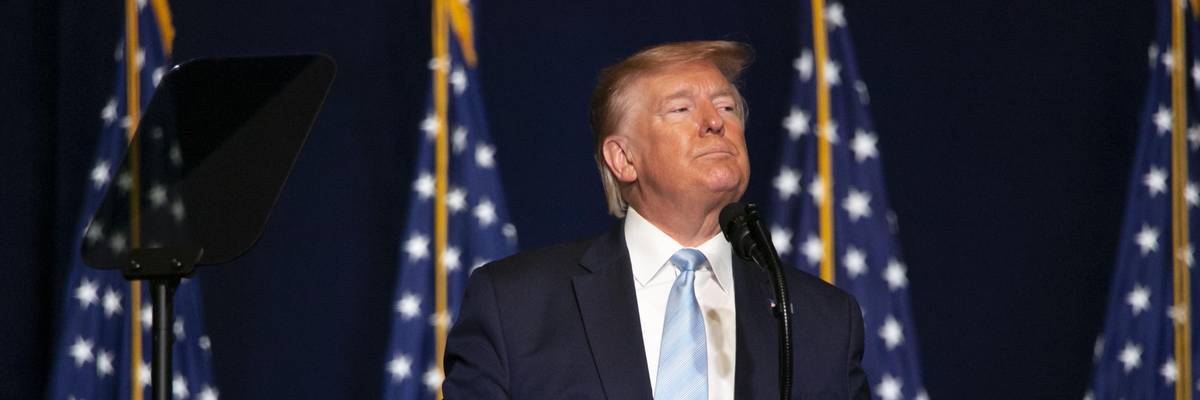
Then-U.S. President Donald Trump delivered remarks during an event in Miami, Florida on January 03, 2019.
The independent state legislature theory is already spent. It is no defense for the grave misconduct that we witnessed in 2020.
Soon after news broke that Donald Trump had been indicted for trying to overturn the 2020 presidential election, his defenders took to the airwaves to offer legalistic excuses for his actions. Among the defenses they’ve floated is the idea that state legislatures have the authority to reject the will of voters. But this defense is nonsense, as the Supreme Court just underscored in June.
Trump is charged with perpetrating a conspiracy made up of many interconnected schemes, all aimed at overturning the legitimate results of the election. One of those schemes involved trying to convince state legislatures to nullify popular votes that Trump lost and instead to submit to Congress their own slates of electors claiming (falsely) that Trump had won.
Trump attorney John Lauro argued on CNN that this scheme was not improper because “state legislatures have the ultimate ability to qualify electors.” According to Lauro, “Under Article II, Section 1, Clause 2 [of the U.S. Constitution], the actual responsibility for qualifying electors is in the state legislatures.”
This purported defense — a version of the so-called “independent state legislature theory” — is based on a misreading of the Constitution’s Elections and Electors Clauses. Those clauses direct states to regulate federal elections — including the voting process and the manner of appointing presidential electors — while empowering Congress to override state policy and enact federal election laws itself.
Proponents of the independent state legislature theory claim that these provisions free state legislatures from state-level checks and balances when they make rules for federal elections. Or, as Mr. Lauro argued, the Electors Clause would permit state legislatures to appoint presidential electors in whatever manner the legislators see fit, even if that means overriding the vote in their states, their state’s legal requirements for selecting electors, and other guarantees in state constitutions — not to mention federal statutory and constitutional law.
That argument is dead on arrival. There is no such thing as an “independent state legislature” and there never has been. The Supreme Court affirmed as much just five weeks before the indictment, when it flatly rejected the independent state legislature theory in Moore v. Harper.
In that case, several state legislators asked the Supreme Court to approve their extreme partisan gerrymander of North Carolina’s congressional map, notwithstanding its flagrant violation of the North Carolina Constitution. A broad cross-partisan coalition called out this request for the sham it was. And the Supreme Court agreed. Writing for a six-justice majority that included two Trump appointees, Chief Justice John Roberts explained: “The legislature acts both as a lawmaking body created and bound by its state constitution, and as the entity assigned particular authority by the Federal Constitution. Both constitutions restrain the legislature’s exercise of power.”
The Court reaffirmed over a century of precedent rejecting the independent state legislature theory, noting that no constitutional provision has ever given a state legislature the authority to make election laws in a manner outside of what the state constitution allows.
While Moore was a congressional redistricting case — and thus involved the Elections Clause — that provision and the Electors Clause are read in lockstep. And so, whether the scheme involves congressional district lines or presidential electors, no state legislature is “independent.” The gerrymanderers in Moore could no more ignore their state constitution when redistricting their state than legislators could ignore bedrock due process protections and existing state law dictating how electors are chosen and must cast their votes.
Trump will undoubtedly exhaust all avenues in attempting to ward off liability for his interference in the 2020 election. The independent state legislature theory, though, is already spent. It is no defense for the grave misconduct that we witnessed in 2020, no matter what Trump’s lawyers and allies claim.
Dear Common Dreams reader, It’s been nearly 30 years since I co-founded Common Dreams with my late wife, Lina Newhouser. We had the radical notion that journalism should serve the public good, not corporate profits. It was clear to us from the outset what it would take to build such a project. No paid advertisements. No corporate sponsors. No millionaire publisher telling us what to think or do. Many people said we wouldn't last a year, but we proved those doubters wrong. Together with a tremendous team of journalists and dedicated staff, we built an independent media outlet free from the constraints of profits and corporate control. Our mission has always been simple: To inform. To inspire. To ignite change for the common good. Building Common Dreams was not easy. Our survival was never guaranteed. When you take on the most powerful forces—Wall Street greed, fossil fuel industry destruction, Big Tech lobbyists, and uber-rich oligarchs who have spent billions upon billions rigging the economy and democracy in their favor—the only bulwark you have is supporters who believe in your work. But here’s the urgent message from me today. It's never been this bad out there. And it's never been this hard to keep us going. At the very moment Common Dreams is most needed, the threats we face are intensifying. We need your support now more than ever. We don't accept corporate advertising and never will. We don't have a paywall because we don't think people should be blocked from critical news based on their ability to pay. Everything we do is funded by the donations of readers like you. When everyone does the little they can afford, we are strong. But if that support retreats or dries up, so do we. Will you donate now to make sure Common Dreams not only survives but thrives? —Craig Brown, Co-founder |
Soon after news broke that Donald Trump had been indicted for trying to overturn the 2020 presidential election, his defenders took to the airwaves to offer legalistic excuses for his actions. Among the defenses they’ve floated is the idea that state legislatures have the authority to reject the will of voters. But this defense is nonsense, as the Supreme Court just underscored in June.
Trump is charged with perpetrating a conspiracy made up of many interconnected schemes, all aimed at overturning the legitimate results of the election. One of those schemes involved trying to convince state legislatures to nullify popular votes that Trump lost and instead to submit to Congress their own slates of electors claiming (falsely) that Trump had won.
Trump attorney John Lauro argued on CNN that this scheme was not improper because “state legislatures have the ultimate ability to qualify electors.” According to Lauro, “Under Article II, Section 1, Clause 2 [of the U.S. Constitution], the actual responsibility for qualifying electors is in the state legislatures.”
This purported defense — a version of the so-called “independent state legislature theory” — is based on a misreading of the Constitution’s Elections and Electors Clauses. Those clauses direct states to regulate federal elections — including the voting process and the manner of appointing presidential electors — while empowering Congress to override state policy and enact federal election laws itself.
Proponents of the independent state legislature theory claim that these provisions free state legislatures from state-level checks and balances when they make rules for federal elections. Or, as Mr. Lauro argued, the Electors Clause would permit state legislatures to appoint presidential electors in whatever manner the legislators see fit, even if that means overriding the vote in their states, their state’s legal requirements for selecting electors, and other guarantees in state constitutions — not to mention federal statutory and constitutional law.
That argument is dead on arrival. There is no such thing as an “independent state legislature” and there never has been. The Supreme Court affirmed as much just five weeks before the indictment, when it flatly rejected the independent state legislature theory in Moore v. Harper.
In that case, several state legislators asked the Supreme Court to approve their extreme partisan gerrymander of North Carolina’s congressional map, notwithstanding its flagrant violation of the North Carolina Constitution. A broad cross-partisan coalition called out this request for the sham it was. And the Supreme Court agreed. Writing for a six-justice majority that included two Trump appointees, Chief Justice John Roberts explained: “The legislature acts both as a lawmaking body created and bound by its state constitution, and as the entity assigned particular authority by the Federal Constitution. Both constitutions restrain the legislature’s exercise of power.”
The Court reaffirmed over a century of precedent rejecting the independent state legislature theory, noting that no constitutional provision has ever given a state legislature the authority to make election laws in a manner outside of what the state constitution allows.
While Moore was a congressional redistricting case — and thus involved the Elections Clause — that provision and the Electors Clause are read in lockstep. And so, whether the scheme involves congressional district lines or presidential electors, no state legislature is “independent.” The gerrymanderers in Moore could no more ignore their state constitution when redistricting their state than legislators could ignore bedrock due process protections and existing state law dictating how electors are chosen and must cast their votes.
Trump will undoubtedly exhaust all avenues in attempting to ward off liability for his interference in the 2020 election. The independent state legislature theory, though, is already spent. It is no defense for the grave misconduct that we witnessed in 2020, no matter what Trump’s lawyers and allies claim.
Soon after news broke that Donald Trump had been indicted for trying to overturn the 2020 presidential election, his defenders took to the airwaves to offer legalistic excuses for his actions. Among the defenses they’ve floated is the idea that state legislatures have the authority to reject the will of voters. But this defense is nonsense, as the Supreme Court just underscored in June.
Trump is charged with perpetrating a conspiracy made up of many interconnected schemes, all aimed at overturning the legitimate results of the election. One of those schemes involved trying to convince state legislatures to nullify popular votes that Trump lost and instead to submit to Congress their own slates of electors claiming (falsely) that Trump had won.
Trump attorney John Lauro argued on CNN that this scheme was not improper because “state legislatures have the ultimate ability to qualify electors.” According to Lauro, “Under Article II, Section 1, Clause 2 [of the U.S. Constitution], the actual responsibility for qualifying electors is in the state legislatures.”
This purported defense — a version of the so-called “independent state legislature theory” — is based on a misreading of the Constitution’s Elections and Electors Clauses. Those clauses direct states to regulate federal elections — including the voting process and the manner of appointing presidential electors — while empowering Congress to override state policy and enact federal election laws itself.
Proponents of the independent state legislature theory claim that these provisions free state legislatures from state-level checks and balances when they make rules for federal elections. Or, as Mr. Lauro argued, the Electors Clause would permit state legislatures to appoint presidential electors in whatever manner the legislators see fit, even if that means overriding the vote in their states, their state’s legal requirements for selecting electors, and other guarantees in state constitutions — not to mention federal statutory and constitutional law.
That argument is dead on arrival. There is no such thing as an “independent state legislature” and there never has been. The Supreme Court affirmed as much just five weeks before the indictment, when it flatly rejected the independent state legislature theory in Moore v. Harper.
In that case, several state legislators asked the Supreme Court to approve their extreme partisan gerrymander of North Carolina’s congressional map, notwithstanding its flagrant violation of the North Carolina Constitution. A broad cross-partisan coalition called out this request for the sham it was. And the Supreme Court agreed. Writing for a six-justice majority that included two Trump appointees, Chief Justice John Roberts explained: “The legislature acts both as a lawmaking body created and bound by its state constitution, and as the entity assigned particular authority by the Federal Constitution. Both constitutions restrain the legislature’s exercise of power.”
The Court reaffirmed over a century of precedent rejecting the independent state legislature theory, noting that no constitutional provision has ever given a state legislature the authority to make election laws in a manner outside of what the state constitution allows.
While Moore was a congressional redistricting case — and thus involved the Elections Clause — that provision and the Electors Clause are read in lockstep. And so, whether the scheme involves congressional district lines or presidential electors, no state legislature is “independent.” The gerrymanderers in Moore could no more ignore their state constitution when redistricting their state than legislators could ignore bedrock due process protections and existing state law dictating how electors are chosen and must cast their votes.
Trump will undoubtedly exhaust all avenues in attempting to ward off liability for his interference in the 2020 election. The independent state legislature theory, though, is already spent. It is no defense for the grave misconduct that we witnessed in 2020, no matter what Trump’s lawyers and allies claim.