

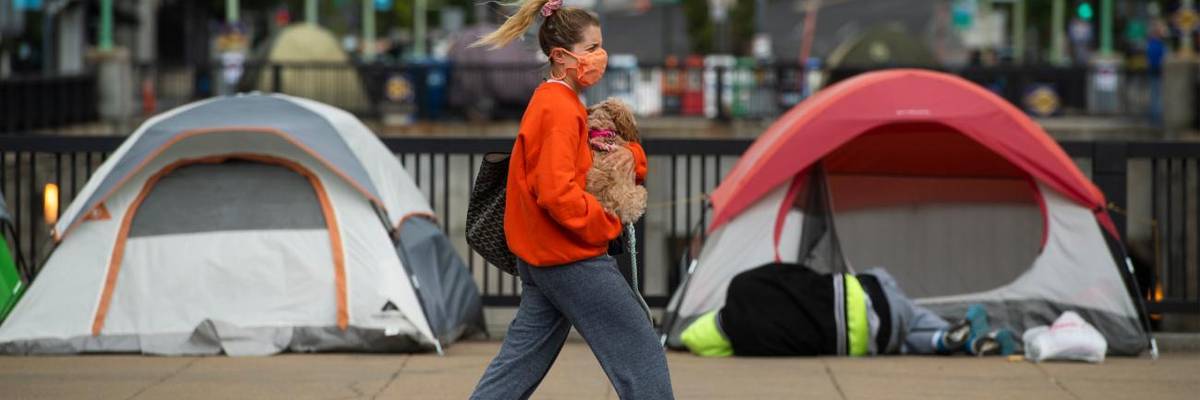
Don’t Let the Supreme Court Get the Last Word on Housing Justice
New laws criminalizing the state of being homeless will not pass, and existing laws will not be retained, if we the people reject them.
Yesterday’s Supreme Court decision in City of Grants Pass, Oregon v. Johnson was an abomination. Justice Sonia Sotomayor had it right when she said that criminally punishing people for sleeping outside when there is no shelter available to them is “unconscionable and unconstitutional.”
Alas, six of her fellow justices disagreed, ruling that fining and imprisoning people just because they are homeless does not violate the Eighth Amendment prohibition against cruel and unusual punishment. So these vile, counterproductive responses to our housing crisis have been held to be constitutional.
But the second half of Justice Sotomayor’s verdict is alive and well: Punishing people because they are unhoused is unconscionable. The Supreme Court failed to stop this hateful practice, but we can.
Laws that imprison people for being unhoused are just as unconscionable today as they were before the Supreme Court ruling.
In my work teaching a law school clinic where we defend people facing eviction, and in research and writing as part of a book project, I have spent the last few years researching and writing about inspiring housing rights campaigns across the country.
Tenant unions, religious groups, civic organizations, labor unions, and others have come together to lobby local officials in Louisville, confront corporate landlords in North Carolina, run candidates for office in Kansas City, commit civil disobedience in Connecticut, convene phone banks in Tacoma, and fight like hell in dozens of other communities, too. They have won victories like bans on cold-weather and school-year evictions, referendums creating huge boosts in affordable housing funds, ceilings on rent increases, and protections against unlawful evictions.
This growing movement demands the fulfillment of the human right to housing. The people in this movement, not a half-dozen unelected, lifetime-appointed elites in black robes, will have the last word on how we treat our unhoused sisters and brothers.
That was always going to be the case, no matter how the court decided Grants Pass. As a practical matter, the Supreme Court majority only ruled that anti-homeless legislation is allowable—not that it is advisable, much less required. New laws criminalizing the state of being homeless will not pass, and existing laws will not be retained, if we the people reject them.
More broadly, transformative justice always comes from the bottom up, not from court decisions handed down from on high. Compare the anti-abolition movement to the Dred Scott decision sanctioning slavery, the civil rights movement to the Plessy v. Ferguson decision that enshrined “separate but equal,” the labor movement to multiple anti-worker decisions like the Hammer v. Dagenhart ruling that struck down laws prohibiting child labor.
During one of my visits to the amazing advocates of the Louisville Tenant Union, I heard one of the tenants tell her story. She and her children had not only been unlawfully evicted, she was wrongly arrested and imprisoned in the process. Judges did not save her, and law enforcement certainly didn’t. Instead, she found support and justice when she joined together with her fellow tenants.
“The powers that be told me I was crazy, but that’s harder to say when I am standing next to 100 other people who have gone through the same thing,” she said. “We are the ones to keep us safe.”
She is right. Laws that imprison people for being unhoused are just as unconscionable today as they were before the Supreme Court ruling. Together, we can stop them. Together, we can keep all of us safe.
We are at a crossroads
This country and this world are at a monumental crossroads. In a few short weeks, US voters will have an opportunity to beat back the forces of fascism and confront the billionaires who are rigging the economy, our media system, and our democracy, making it increasingly impossible for ordinary people to get by. We’re not just talking about the election. We’re talking about what must be done once these fascist elements are vanquished from power. We need a bolder set of solutions than what either major party has so far been willing to offer and a working-class movement ready to fight like hell for it. Trump didn't emerge from nowhere. The conditions that fueled MAGA authoritarianism were created by decades of radical neoliberal economic policies and a corrupt political system dominated by corporate interests. They slashed taxes on the super-rich, promising that the benefits would trickle down. They said giveaways to the corporate titans would make life more affordable for the rest of us. It was all bullshit. And when a bitter, betrayed populace searches for someone to blame, right-wing demagogues have little trouble finding scapegoats. People know when they're being lied to, but you won't hear any of this from the corporate media. Only independent journalism—powered and funded by people who believe in building a better world—can deliver truly trustworthy daily news. Our Fall Campaign is underway, and we need your help. To power our newsroom through the rest of the year, we need to raise $125,000 by midnight on October 31. So if you share our vision, please contribute whatever you can to sustain our work. |
Yesterday’s Supreme Court decision in City of Grants Pass, Oregon v. Johnson was an abomination. Justice Sonia Sotomayor had it right when she said that criminally punishing people for sleeping outside when there is no shelter available to them is “unconscionable and unconstitutional.”
Alas, six of her fellow justices disagreed, ruling that fining and imprisoning people just because they are homeless does not violate the Eighth Amendment prohibition against cruel and unusual punishment. So these vile, counterproductive responses to our housing crisis have been held to be constitutional.
But the second half of Justice Sotomayor’s verdict is alive and well: Punishing people because they are unhoused is unconscionable. The Supreme Court failed to stop this hateful practice, but we can.
Laws that imprison people for being unhoused are just as unconscionable today as they were before the Supreme Court ruling.
In my work teaching a law school clinic where we defend people facing eviction, and in research and writing as part of a book project, I have spent the last few years researching and writing about inspiring housing rights campaigns across the country.
Tenant unions, religious groups, civic organizations, labor unions, and others have come together to lobby local officials in Louisville, confront corporate landlords in North Carolina, run candidates for office in Kansas City, commit civil disobedience in Connecticut, convene phone banks in Tacoma, and fight like hell in dozens of other communities, too. They have won victories like bans on cold-weather and school-year evictions, referendums creating huge boosts in affordable housing funds, ceilings on rent increases, and protections against unlawful evictions.
This growing movement demands the fulfillment of the human right to housing. The people in this movement, not a half-dozen unelected, lifetime-appointed elites in black robes, will have the last word on how we treat our unhoused sisters and brothers.
That was always going to be the case, no matter how the court decided Grants Pass. As a practical matter, the Supreme Court majority only ruled that anti-homeless legislation is allowable—not that it is advisable, much less required. New laws criminalizing the state of being homeless will not pass, and existing laws will not be retained, if we the people reject them.
More broadly, transformative justice always comes from the bottom up, not from court decisions handed down from on high. Compare the anti-abolition movement to the Dred Scott decision sanctioning slavery, the civil rights movement to the Plessy v. Ferguson decision that enshrined “separate but equal,” the labor movement to multiple anti-worker decisions like the Hammer v. Dagenhart ruling that struck down laws prohibiting child labor.
During one of my visits to the amazing advocates of the Louisville Tenant Union, I heard one of the tenants tell her story. She and her children had not only been unlawfully evicted, she was wrongly arrested and imprisoned in the process. Judges did not save her, and law enforcement certainly didn’t. Instead, she found support and justice when she joined together with her fellow tenants.
“The powers that be told me I was crazy, but that’s harder to say when I am standing next to 100 other people who have gone through the same thing,” she said. “We are the ones to keep us safe.”
She is right. Laws that imprison people for being unhoused are just as unconscionable today as they were before the Supreme Court ruling. Together, we can stop them. Together, we can keep all of us safe.
- 'Unfathomably Cruel': Billionaire-Backed Justices Rule in Favor of Criminalizing Homelessness ›
- Working Class Pay the Price When Supreme Court Justice Secretly Pal Around With Right-Wing Billionaires ›
- Don't Arrest the Homeless—House Them! ›
- Supreme Court Ruling Will Not Solve America's Housing Crisis ›
- Liberal Justices Grill Attorney in Supreme Court Case on Criminalizing Homelessness ›
- Opinion | Someone Tell the U.S. Supreme Court: Housing Is a Human Right! | Common Dreams ›
- Opinion | We Need a Movement to Counter the Supreme Court’s Cruelty to Homeless People | Common Dreams ›
- Opinion | A Belly Laugh About the Homeless | Common Dreams ›
- Opinion | US Supreme Court Justices Should Be Deadly Ashamed for What They Have Done to Homeless People | Common Dreams ›
- Opinion | Do You Want to Work for Justice? Go to Eviction Court | Common Dreams ›
Yesterday’s Supreme Court decision in City of Grants Pass, Oregon v. Johnson was an abomination. Justice Sonia Sotomayor had it right when she said that criminally punishing people for sleeping outside when there is no shelter available to them is “unconscionable and unconstitutional.”
Alas, six of her fellow justices disagreed, ruling that fining and imprisoning people just because they are homeless does not violate the Eighth Amendment prohibition against cruel and unusual punishment. So these vile, counterproductive responses to our housing crisis have been held to be constitutional.
But the second half of Justice Sotomayor’s verdict is alive and well: Punishing people because they are unhoused is unconscionable. The Supreme Court failed to stop this hateful practice, but we can.
Laws that imprison people for being unhoused are just as unconscionable today as they were before the Supreme Court ruling.
In my work teaching a law school clinic where we defend people facing eviction, and in research and writing as part of a book project, I have spent the last few years researching and writing about inspiring housing rights campaigns across the country.
Tenant unions, religious groups, civic organizations, labor unions, and others have come together to lobby local officials in Louisville, confront corporate landlords in North Carolina, run candidates for office in Kansas City, commit civil disobedience in Connecticut, convene phone banks in Tacoma, and fight like hell in dozens of other communities, too. They have won victories like bans on cold-weather and school-year evictions, referendums creating huge boosts in affordable housing funds, ceilings on rent increases, and protections against unlawful evictions.
This growing movement demands the fulfillment of the human right to housing. The people in this movement, not a half-dozen unelected, lifetime-appointed elites in black robes, will have the last word on how we treat our unhoused sisters and brothers.
That was always going to be the case, no matter how the court decided Grants Pass. As a practical matter, the Supreme Court majority only ruled that anti-homeless legislation is allowable—not that it is advisable, much less required. New laws criminalizing the state of being homeless will not pass, and existing laws will not be retained, if we the people reject them.
More broadly, transformative justice always comes from the bottom up, not from court decisions handed down from on high. Compare the anti-abolition movement to the Dred Scott decision sanctioning slavery, the civil rights movement to the Plessy v. Ferguson decision that enshrined “separate but equal,” the labor movement to multiple anti-worker decisions like the Hammer v. Dagenhart ruling that struck down laws prohibiting child labor.
During one of my visits to the amazing advocates of the Louisville Tenant Union, I heard one of the tenants tell her story. She and her children had not only been unlawfully evicted, she was wrongly arrested and imprisoned in the process. Judges did not save her, and law enforcement certainly didn’t. Instead, she found support and justice when she joined together with her fellow tenants.
“The powers that be told me I was crazy, but that’s harder to say when I am standing next to 100 other people who have gone through the same thing,” she said. “We are the ones to keep us safe.”
She is right. Laws that imprison people for being unhoused are just as unconscionable today as they were before the Supreme Court ruling. Together, we can stop them. Together, we can keep all of us safe.
- 'Unfathomably Cruel': Billionaire-Backed Justices Rule in Favor of Criminalizing Homelessness ›
- Working Class Pay the Price When Supreme Court Justice Secretly Pal Around With Right-Wing Billionaires ›
- Don't Arrest the Homeless—House Them! ›
- Supreme Court Ruling Will Not Solve America's Housing Crisis ›
- Liberal Justices Grill Attorney in Supreme Court Case on Criminalizing Homelessness ›
- Opinion | Someone Tell the U.S. Supreme Court: Housing Is a Human Right! | Common Dreams ›
- Opinion | We Need a Movement to Counter the Supreme Court’s Cruelty to Homeless People | Common Dreams ›
- Opinion | A Belly Laugh About the Homeless | Common Dreams ›
- Opinion | US Supreme Court Justices Should Be Deadly Ashamed for What They Have Done to Homeless People | Common Dreams ›
- Opinion | Do You Want to Work for Justice? Go to Eviction Court | Common Dreams ›