SUBSCRIBE TO OUR FREE NEWSLETTER
Daily news & progressive opinion—funded by the people, not the corporations—delivered straight to your inbox.
5
#000000
#FFFFFF
To donate by check, phone, or other method, see our More Ways to Give page.
Daily news & progressive opinion—funded by the people, not the corporations—delivered straight to your inbox.
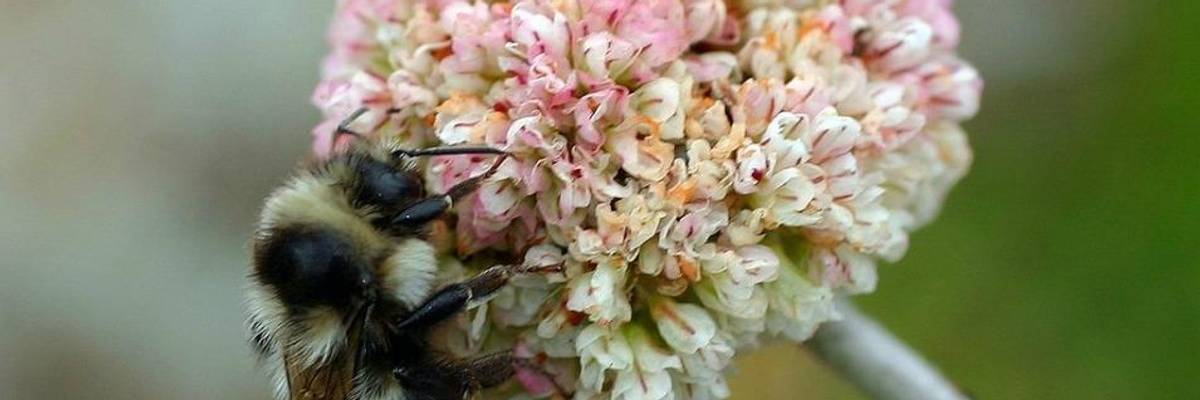
Researchers found that the rate at which bumblebees are declining is "consistent with a mass extinction."
Mass extinction will have far-reaching, potentially cataclysmic consequences for humankind
The words of United Nations Secretary General António Guterres couldn't have been starker:
"We are waging a war on nature. Ecosystems have become playthings of profit. Human activities are laying waste to once-thriving forests, jungles, farmland, oceans, rivers, seas and lakes. Our land, water and air are poisoned by chemicals and pesticides, and choked with plastics. The addiction to fossil fuels has thrown our climate into chaos. Unsustainable production and monstrous consumption habits are degrading our world. Humanity has become a weapon of mass extinction…with a million species at risk of disappearing forever."
Respecting and following the leadership of Indigenous communities is the first step towards making peace with Mother Nature, while we still can.
Guterres was opening the global summit of the Convention on Biological Diversity, or COP15 in UN parlance, which just wrapped up in Montreal. The convention was launched at the Rio Earth Summit in 1992, alongside the UN's better-known climate change negotiations.
The biodiversity convention is the best hope we have to stop what has been called the sixth extinction, as human activities extinguish tens of thousands of species every year, never to return. The previous five extinctions occurred from tens of millions to hundreds of millions of years ago. The most recent one happened 66 million years ago, when, scientists believe, a 6-mile-wide asteroid smashed into water off Mexico's Yucatan Peninsula. The impact caused massive tsunamis, acid rain and wildfires, then blanketed the atmosphere with sun-blocking dust, lowering temperatures worldwide and wiping out the dinosaurs.
We humans are now essentially doing to the planet what that asteroid did. As New Yorker writer Elizabeth Kolbert eloquently describes in her Pulitzer Prize-winning book, The Sixth Extinction, humans have evolved into a predator without equal. We overtake and destroy habitats with abandon, driving other species into permanent oblivion.
Key agreements forged last week in Montreal were signed by 196 nations. The U.S., along with the Vatican, didn't sign as neither is party to the Convention on Biological Diversity.
A central achievement of the Montreal negotiations was the "30x30" pledge to protect 30% of Earth's lands, oceans, coastal areas and inland waters by 2030. Also agreed to was the creation of a fund to help developing nations protect biodiversity, slated to reach $200 billion annually by 2030, while phasing down harmful subsidies by $500 billion per year. A requirement for the "full and active involvement" of indigenous peoples was also written into the text.
"It's absolutely impossible to create a biodiversity agreement without the inclusion of Indigenous rights, because 80% of remaining biodiversity is Indigenous lands and territories," Eriel Tchekwie Deranger, executive director of Indigenous Climate Action and member of the Athabasca Chipewyan First Nation said on the Democracy Now! news hour. "Some of the biggest challenges and risks that have come out of this COP is the fact that there aren't any real mechanisms with real teeth, similar to COP27 [the recent UN climate summit in Egypt], that actually protect our rights, our culture, and our ability to advance our rights to say yes and no to these types of agreements."
Eriel Deranger first appeared on Democracy Now! while in Copenagen in 2009, attending a different COP15–the 15th meeting of the UN climate change convention. She was delivering a basket to the Canadian embassy in advance of then-Canadian Prime Minister Stephen Harper's arrival for those pivotal climate negotiations:
"Inside the basket were copies of the treaties that are being violated by the Canada tar sands, and copies of the Kyoto Protocol, which he signed onto, as well as a copy of the Declaration on the Rights of Indigenous People, to remind him that there is something else that he needs to sign onto in order to really fully respect indigenous people's rights."
It was at that 2009 climate summit that wealthy nations pledged to create a $100 billion per year fund by 2020, to help poorer nations adapt to and mitigate climate change. To date, the fund has fallen far short of the pledge, and much of the money available is offered as loans, not grants. So activists like Eriel Deranger have reason to be skeptical of the $200 billion per year biodiversity pledge just made in Montreal.
"They're centering colonial economic ideals," Deranger said this week. "They're still giving national and colonial states the power to determine what Indigenous rights look like when they're implemented in these agreements, and how lands will be developed, undeveloped, protected…In Canada, we are committing to '30×30,' millions and millions of dollars for biodiversity protection, Indigenous protection and conservation areas, yet we are not talking about ending the expansion of the Alberta tar sands."
Mass extinction will have far-reaching, potentially cataclysmic consequences for humankind. António Guterres was right: we are waging a war on nature. Respecting and following the leadership of Indigenous communities is the first step towards making peace with Mother Nature, while we still can.
Dear Common Dreams reader, It’s been nearly 30 years since I co-founded Common Dreams with my late wife, Lina Newhouser. We had the radical notion that journalism should serve the public good, not corporate profits. It was clear to us from the outset what it would take to build such a project. No paid advertisements. No corporate sponsors. No millionaire publisher telling us what to think or do. Many people said we wouldn't last a year, but we proved those doubters wrong. Together with a tremendous team of journalists and dedicated staff, we built an independent media outlet free from the constraints of profits and corporate control. Our mission has always been simple: To inform. To inspire. To ignite change for the common good. Building Common Dreams was not easy. Our survival was never guaranteed. When you take on the most powerful forces—Wall Street greed, fossil fuel industry destruction, Big Tech lobbyists, and uber-rich oligarchs who have spent billions upon billions rigging the economy and democracy in their favor—the only bulwark you have is supporters who believe in your work. But here’s the urgent message from me today. It's never been this bad out there. And it's never been this hard to keep us going. At the very moment Common Dreams is most needed, the threats we face are intensifying. We need your support now more than ever. We don't accept corporate advertising and never will. We don't have a paywall because we don't think people should be blocked from critical news based on their ability to pay. Everything we do is funded by the donations of readers like you. When everyone does the little they can afford, we are strong. But if that support retreats or dries up, so do we. Will you donate now to make sure Common Dreams not only survives but thrives? —Craig Brown, Co-founder |
The words of United Nations Secretary General António Guterres couldn't have been starker:
"We are waging a war on nature. Ecosystems have become playthings of profit. Human activities are laying waste to once-thriving forests, jungles, farmland, oceans, rivers, seas and lakes. Our land, water and air are poisoned by chemicals and pesticides, and choked with plastics. The addiction to fossil fuels has thrown our climate into chaos. Unsustainable production and monstrous consumption habits are degrading our world. Humanity has become a weapon of mass extinction…with a million species at risk of disappearing forever."
Respecting and following the leadership of Indigenous communities is the first step towards making peace with Mother Nature, while we still can.
Guterres was opening the global summit of the Convention on Biological Diversity, or COP15 in UN parlance, which just wrapped up in Montreal. The convention was launched at the Rio Earth Summit in 1992, alongside the UN's better-known climate change negotiations.
The biodiversity convention is the best hope we have to stop what has been called the sixth extinction, as human activities extinguish tens of thousands of species every year, never to return. The previous five extinctions occurred from tens of millions to hundreds of millions of years ago. The most recent one happened 66 million years ago, when, scientists believe, a 6-mile-wide asteroid smashed into water off Mexico's Yucatan Peninsula. The impact caused massive tsunamis, acid rain and wildfires, then blanketed the atmosphere with sun-blocking dust, lowering temperatures worldwide and wiping out the dinosaurs.
We humans are now essentially doing to the planet what that asteroid did. As New Yorker writer Elizabeth Kolbert eloquently describes in her Pulitzer Prize-winning book, The Sixth Extinction, humans have evolved into a predator without equal. We overtake and destroy habitats with abandon, driving other species into permanent oblivion.
Key agreements forged last week in Montreal were signed by 196 nations. The U.S., along with the Vatican, didn't sign as neither is party to the Convention on Biological Diversity.
A central achievement of the Montreal negotiations was the "30x30" pledge to protect 30% of Earth's lands, oceans, coastal areas and inland waters by 2030. Also agreed to was the creation of a fund to help developing nations protect biodiversity, slated to reach $200 billion annually by 2030, while phasing down harmful subsidies by $500 billion per year. A requirement for the "full and active involvement" of indigenous peoples was also written into the text.
"It's absolutely impossible to create a biodiversity agreement without the inclusion of Indigenous rights, because 80% of remaining biodiversity is Indigenous lands and territories," Eriel Tchekwie Deranger, executive director of Indigenous Climate Action and member of the Athabasca Chipewyan First Nation said on the Democracy Now! news hour. "Some of the biggest challenges and risks that have come out of this COP is the fact that there aren't any real mechanisms with real teeth, similar to COP27 [the recent UN climate summit in Egypt], that actually protect our rights, our culture, and our ability to advance our rights to say yes and no to these types of agreements."
Eriel Deranger first appeared on Democracy Now! while in Copenagen in 2009, attending a different COP15–the 15th meeting of the UN climate change convention. She was delivering a basket to the Canadian embassy in advance of then-Canadian Prime Minister Stephen Harper's arrival for those pivotal climate negotiations:
"Inside the basket were copies of the treaties that are being violated by the Canada tar sands, and copies of the Kyoto Protocol, which he signed onto, as well as a copy of the Declaration on the Rights of Indigenous People, to remind him that there is something else that he needs to sign onto in order to really fully respect indigenous people's rights."
It was at that 2009 climate summit that wealthy nations pledged to create a $100 billion per year fund by 2020, to help poorer nations adapt to and mitigate climate change. To date, the fund has fallen far short of the pledge, and much of the money available is offered as loans, not grants. So activists like Eriel Deranger have reason to be skeptical of the $200 billion per year biodiversity pledge just made in Montreal.
"They're centering colonial economic ideals," Deranger said this week. "They're still giving national and colonial states the power to determine what Indigenous rights look like when they're implemented in these agreements, and how lands will be developed, undeveloped, protected…In Canada, we are committing to '30×30,' millions and millions of dollars for biodiversity protection, Indigenous protection and conservation areas, yet we are not talking about ending the expansion of the Alberta tar sands."
Mass extinction will have far-reaching, potentially cataclysmic consequences for humankind. António Guterres was right: we are waging a war on nature. Respecting and following the leadership of Indigenous communities is the first step towards making peace with Mother Nature, while we still can.
The words of United Nations Secretary General António Guterres couldn't have been starker:
"We are waging a war on nature. Ecosystems have become playthings of profit. Human activities are laying waste to once-thriving forests, jungles, farmland, oceans, rivers, seas and lakes. Our land, water and air are poisoned by chemicals and pesticides, and choked with plastics. The addiction to fossil fuels has thrown our climate into chaos. Unsustainable production and monstrous consumption habits are degrading our world. Humanity has become a weapon of mass extinction…with a million species at risk of disappearing forever."
Respecting and following the leadership of Indigenous communities is the first step towards making peace with Mother Nature, while we still can.
Guterres was opening the global summit of the Convention on Biological Diversity, or COP15 in UN parlance, which just wrapped up in Montreal. The convention was launched at the Rio Earth Summit in 1992, alongside the UN's better-known climate change negotiations.
The biodiversity convention is the best hope we have to stop what has been called the sixth extinction, as human activities extinguish tens of thousands of species every year, never to return. The previous five extinctions occurred from tens of millions to hundreds of millions of years ago. The most recent one happened 66 million years ago, when, scientists believe, a 6-mile-wide asteroid smashed into water off Mexico's Yucatan Peninsula. The impact caused massive tsunamis, acid rain and wildfires, then blanketed the atmosphere with sun-blocking dust, lowering temperatures worldwide and wiping out the dinosaurs.
We humans are now essentially doing to the planet what that asteroid did. As New Yorker writer Elizabeth Kolbert eloquently describes in her Pulitzer Prize-winning book, The Sixth Extinction, humans have evolved into a predator without equal. We overtake and destroy habitats with abandon, driving other species into permanent oblivion.
Key agreements forged last week in Montreal were signed by 196 nations. The U.S., along with the Vatican, didn't sign as neither is party to the Convention on Biological Diversity.
A central achievement of the Montreal negotiations was the "30x30" pledge to protect 30% of Earth's lands, oceans, coastal areas and inland waters by 2030. Also agreed to was the creation of a fund to help developing nations protect biodiversity, slated to reach $200 billion annually by 2030, while phasing down harmful subsidies by $500 billion per year. A requirement for the "full and active involvement" of indigenous peoples was also written into the text.
"It's absolutely impossible to create a biodiversity agreement without the inclusion of Indigenous rights, because 80% of remaining biodiversity is Indigenous lands and territories," Eriel Tchekwie Deranger, executive director of Indigenous Climate Action and member of the Athabasca Chipewyan First Nation said on the Democracy Now! news hour. "Some of the biggest challenges and risks that have come out of this COP is the fact that there aren't any real mechanisms with real teeth, similar to COP27 [the recent UN climate summit in Egypt], that actually protect our rights, our culture, and our ability to advance our rights to say yes and no to these types of agreements."
Eriel Deranger first appeared on Democracy Now! while in Copenagen in 2009, attending a different COP15–the 15th meeting of the UN climate change convention. She was delivering a basket to the Canadian embassy in advance of then-Canadian Prime Minister Stephen Harper's arrival for those pivotal climate negotiations:
"Inside the basket were copies of the treaties that are being violated by the Canada tar sands, and copies of the Kyoto Protocol, which he signed onto, as well as a copy of the Declaration on the Rights of Indigenous People, to remind him that there is something else that he needs to sign onto in order to really fully respect indigenous people's rights."
It was at that 2009 climate summit that wealthy nations pledged to create a $100 billion per year fund by 2020, to help poorer nations adapt to and mitigate climate change. To date, the fund has fallen far short of the pledge, and much of the money available is offered as loans, not grants. So activists like Eriel Deranger have reason to be skeptical of the $200 billion per year biodiversity pledge just made in Montreal.
"They're centering colonial economic ideals," Deranger said this week. "They're still giving national and colonial states the power to determine what Indigenous rights look like when they're implemented in these agreements, and how lands will be developed, undeveloped, protected…In Canada, we are committing to '30×30,' millions and millions of dollars for biodiversity protection, Indigenous protection and conservation areas, yet we are not talking about ending the expansion of the Alberta tar sands."
Mass extinction will have far-reaching, potentially cataclysmic consequences for humankind. António Guterres was right: we are waging a war on nature. Respecting and following the leadership of Indigenous communities is the first step towards making peace with Mother Nature, while we still can.