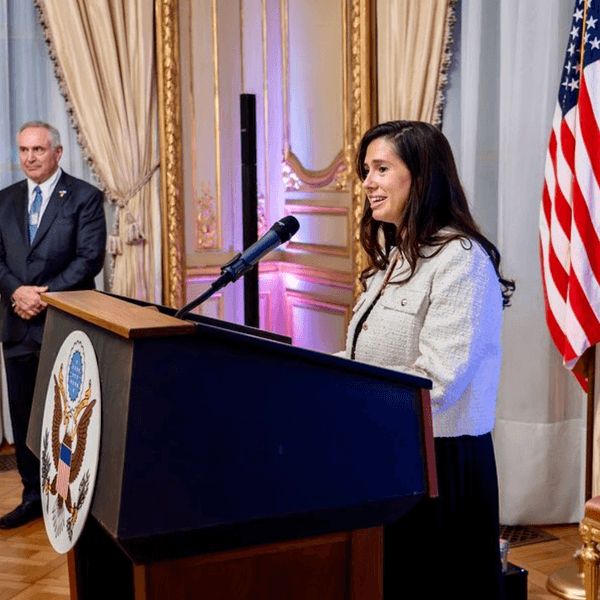

Israeli Prime Minister Benjamin Netanyahu shakes hands with Rear Adm. David Saar Salama at the Ashdod Naval Base on October 29, 2023.
Netanyahu Isn’t Interested in Peace, So Why Does Biden Keep Pretending Otherwise?
Instead of turning a blind eye to Israel’s behaviors that are deliberately designed to provoke more war, the U.S. needs to stop playing games and get serious about holding Israel accountable.
Why—in the midst of critical negotiations to implement U.S. President Joe Biden’s plan to bring about a cease-fire in Gaza, release Israelis held captive by Hamas and a significant number of Palestinians held by Israel, and move toward a negotiated permanent end to the conflict—would Israeli leader Benjamin Netanyahu decide to assassinate the chief Hamas negotiator while he was visiting Iran? And why—while the U.S. says it was working to deescalate tensions with Lebanon’s Hezbollah—would Israel choose to up the ante by assassinating Hezbollah’s number two?
We know the answers to both questions: Benjamin Netanyahu isn’t interested in peace. He doesn’t want a negotiated deal to release hostages and end the war on Gaza. He doesn’t want to deescalate the conflict there or in the north with Hezbollah. And he most certainly doesn’t want a “two-state solution” that would grant the Palestinian people independence in a sovereign state of their own.
There are two things Netanyahu does want, and, at this point, both are perversely connected. Above all, he desperately wants to remain in office, because should he lose his post as prime minister, the prosecution of the corruption charges against him will continue in full force. As the charges are so serious and the evidence so clear, he will likely be convicted and humiliated. This is not speculation—it’s widely discussed in Israel and was even hinted at by President Biden in a May 28 interview with Time Magazine. When he was asked “Is Netanyahu prolonging the war for political reasons?” Biden responded, “There is every reason for people to draw that conclusion.”
Why hasn’t the administration condemned the assassinations in Beirut and Iran when they know that they will surely sabotage the efforts of negotiators?
The second reason is that Netanyahu wants the war to continue and even be accelerated. He made this clear in his remarks before U.S. Congress and in an address to the Israeli public a few days ago. He seeks “total victory,” which he defines as more than the military defeat of Israel’s enemies. Without acknowledging any Israeli culpability, he charged that the Palestinians had created a hate-filled culture which in the post-war period would require massive deradicalization—the outcome of which would have Palestinians accepting Jewish hegemony in Eretz Israel and understanding their place as a conquered and subordinate people.
This is the messianic Zionist vision that has long driven Netanyahu and which he now sees as possible, but only if all of Israel’s enemies—meaning Iran and its surrogates—are brought to heel. And this can only be realized if Israel can involve the U.S. in their regional conquest.
Netanyahu’s worldview raises several additional questions that must be considered. If we know that Netanyahu has never accepted the terms of the Biden plan, why has the president continued to maintain that it was “Israel’s plan” and placed the burden on Hamas to accept it? And if we know that Netanyahu is unwilling to make any peace agreement for fear of losing his other extremist coalition partners (who have threatened to abandon his government should he accept any terms leading to peace), why do we continue to dance around that fact? Why hasn’t the administration condemned the assassinations in Beirut and Iran when they know that they will surely sabotage the efforts of negotiators? Why, when we know that Netanyahu has no intention of completing a deal to release those held captive, do we continue to allow him to exploit the pain of their families, pretending that negotiations are close to completion, when we know they aren’t? And why, when we know that the demands and actions of Netanyahu’s extremist coalition partners are wreaking havoc in the West Bank and Jerusalem—terrorizing the Palestinian population, annexing more land, building more settlements, and erasing the possibility of Palestinian self-determination—have we been so passive and tolerant in response?
Let’s be clear: Hamas and Hezbollah are not good actors. The former was born of the brutal and sustained Israeli occupation of Palestinian land. It was nurtured by Israel to create division in the Palestinian ranks and fueled by Israel’s ruthless decades-long strangulation of the population of Gaza. The latter was born of Israel’s invasion of Lebanon and by that country’s corrupt sectarian system that denied the Shia community adequate representation and resources. It was fueled by Israel’s decades-long occupation of Lebanon’s south and massive devastation of the country’s infrastructure in 2006. To be sure, both have engaged in condemnable actions. But to criticize only them, while absolving Israel of its far greater crimes, is hypocritical at best.
If the U.S. were serious about ending conflict in the region, instead of turning a blind eye to Israel’s behaviors that are deliberately designed to provoke more war, we need to stop playing games and get serious about holding Israel accountable. This leads to one final question: Why, when we continue to massively supply Israel with weapons and block all efforts to sanction their deplorable behaviors, do we expect that anything will change?
We are at a crossroads
This country and this world are at a monumental crossroads. In a few short weeks, US voters will have an opportunity to beat back the forces of fascism and confront the billionaires who are rigging the economy, our media system, and our democracy, making it increasingly impossible for ordinary people to get by. We’re not just talking about the election. We’re talking about what must be done once these fascist elements are vanquished from power. We need a bolder set of solutions than what either major party has so far been willing to offer and a working-class movement ready to fight like hell for it. Trump didn't emerge from nowhere. The conditions that fueled MAGA authoritarianism were created by decades of radical neoliberal economic policies and a corrupt political system dominated by corporate interests. They slashed taxes on the super-rich, promising that the benefits would trickle down. They said giveaways to the corporate titans would make life more affordable for the rest of us. It was all bullshit. And when a bitter, betrayed populace searches for someone to blame, right-wing demagogues have little trouble finding scapegoats. People know when they're being lied to, but you won't hear any of this from the corporate media. Only independent journalism—powered and funded by people who believe in building a better world—can deliver truly trustworthy daily news. Our Fall Campaign is underway, and we need your help. To power our newsroom through the rest of the year, we need to raise $125,000 by midnight on October 31. So if you share our vision, please contribute whatever you can to sustain our work. |
Why—in the midst of critical negotiations to implement U.S. President Joe Biden’s plan to bring about a cease-fire in Gaza, release Israelis held captive by Hamas and a significant number of Palestinians held by Israel, and move toward a negotiated permanent end to the conflict—would Israeli leader Benjamin Netanyahu decide to assassinate the chief Hamas negotiator while he was visiting Iran? And why—while the U.S. says it was working to deescalate tensions with Lebanon’s Hezbollah—would Israel choose to up the ante by assassinating Hezbollah’s number two?
We know the answers to both questions: Benjamin Netanyahu isn’t interested in peace. He doesn’t want a negotiated deal to release hostages and end the war on Gaza. He doesn’t want to deescalate the conflict there or in the north with Hezbollah. And he most certainly doesn’t want a “two-state solution” that would grant the Palestinian people independence in a sovereign state of their own.
There are two things Netanyahu does want, and, at this point, both are perversely connected. Above all, he desperately wants to remain in office, because should he lose his post as prime minister, the prosecution of the corruption charges against him will continue in full force. As the charges are so serious and the evidence so clear, he will likely be convicted and humiliated. This is not speculation—it’s widely discussed in Israel and was even hinted at by President Biden in a May 28 interview with Time Magazine. When he was asked “Is Netanyahu prolonging the war for political reasons?” Biden responded, “There is every reason for people to draw that conclusion.”
Why hasn’t the administration condemned the assassinations in Beirut and Iran when they know that they will surely sabotage the efforts of negotiators?
The second reason is that Netanyahu wants the war to continue and even be accelerated. He made this clear in his remarks before U.S. Congress and in an address to the Israeli public a few days ago. He seeks “total victory,” which he defines as more than the military defeat of Israel’s enemies. Without acknowledging any Israeli culpability, he charged that the Palestinians had created a hate-filled culture which in the post-war period would require massive deradicalization—the outcome of which would have Palestinians accepting Jewish hegemony in Eretz Israel and understanding their place as a conquered and subordinate people.
This is the messianic Zionist vision that has long driven Netanyahu and which he now sees as possible, but only if all of Israel’s enemies—meaning Iran and its surrogates—are brought to heel. And this can only be realized if Israel can involve the U.S. in their regional conquest.
Netanyahu’s worldview raises several additional questions that must be considered. If we know that Netanyahu has never accepted the terms of the Biden plan, why has the president continued to maintain that it was “Israel’s plan” and placed the burden on Hamas to accept it? And if we know that Netanyahu is unwilling to make any peace agreement for fear of losing his other extremist coalition partners (who have threatened to abandon his government should he accept any terms leading to peace), why do we continue to dance around that fact? Why hasn’t the administration condemned the assassinations in Beirut and Iran when they know that they will surely sabotage the efforts of negotiators? Why, when we know that Netanyahu has no intention of completing a deal to release those held captive, do we continue to allow him to exploit the pain of their families, pretending that negotiations are close to completion, when we know they aren’t? And why, when we know that the demands and actions of Netanyahu’s extremist coalition partners are wreaking havoc in the West Bank and Jerusalem—terrorizing the Palestinian population, annexing more land, building more settlements, and erasing the possibility of Palestinian self-determination—have we been so passive and tolerant in response?
Let’s be clear: Hamas and Hezbollah are not good actors. The former was born of the brutal and sustained Israeli occupation of Palestinian land. It was nurtured by Israel to create division in the Palestinian ranks and fueled by Israel’s ruthless decades-long strangulation of the population of Gaza. The latter was born of Israel’s invasion of Lebanon and by that country’s corrupt sectarian system that denied the Shia community adequate representation and resources. It was fueled by Israel’s decades-long occupation of Lebanon’s south and massive devastation of the country’s infrastructure in 2006. To be sure, both have engaged in condemnable actions. But to criticize only them, while absolving Israel of its far greater crimes, is hypocritical at best.
If the U.S. were serious about ending conflict in the region, instead of turning a blind eye to Israel’s behaviors that are deliberately designed to provoke more war, we need to stop playing games and get serious about holding Israel accountable. This leads to one final question: Why, when we continue to massively supply Israel with weapons and block all efforts to sanction their deplorable behaviors, do we expect that anything will change?
- Netanyahu Says He Is 'Only One Who Will Prevent a Palestinian State' ›
- Demanding 'Immediate Removal' of Netanyahu, Tens of Thousands Protest in Israel ›
- 'War Criminals': IDF Strikes Rafah After Hamas Agrees to Cease-Fire ›
- 'We Need Peace': Israelis Who Survived or Lost Loved Ones in Hamas Attack Speak Out Against War ›
- Netanyahu Shows Map of 'New Middle East'—Without Palestine—to UN General Assembly ›
- As Schumer Slams Netanyahu, Palestine Defenders Want 'Action From Democrats, Not Words' ›
Why—in the midst of critical negotiations to implement U.S. President Joe Biden’s plan to bring about a cease-fire in Gaza, release Israelis held captive by Hamas and a significant number of Palestinians held by Israel, and move toward a negotiated permanent end to the conflict—would Israeli leader Benjamin Netanyahu decide to assassinate the chief Hamas negotiator while he was visiting Iran? And why—while the U.S. says it was working to deescalate tensions with Lebanon’s Hezbollah—would Israel choose to up the ante by assassinating Hezbollah’s number two?
We know the answers to both questions: Benjamin Netanyahu isn’t interested in peace. He doesn’t want a negotiated deal to release hostages and end the war on Gaza. He doesn’t want to deescalate the conflict there or in the north with Hezbollah. And he most certainly doesn’t want a “two-state solution” that would grant the Palestinian people independence in a sovereign state of their own.
There are two things Netanyahu does want, and, at this point, both are perversely connected. Above all, he desperately wants to remain in office, because should he lose his post as prime minister, the prosecution of the corruption charges against him will continue in full force. As the charges are so serious and the evidence so clear, he will likely be convicted and humiliated. This is not speculation—it’s widely discussed in Israel and was even hinted at by President Biden in a May 28 interview with Time Magazine. When he was asked “Is Netanyahu prolonging the war for political reasons?” Biden responded, “There is every reason for people to draw that conclusion.”
Why hasn’t the administration condemned the assassinations in Beirut and Iran when they know that they will surely sabotage the efforts of negotiators?
The second reason is that Netanyahu wants the war to continue and even be accelerated. He made this clear in his remarks before U.S. Congress and in an address to the Israeli public a few days ago. He seeks “total victory,” which he defines as more than the military defeat of Israel’s enemies. Without acknowledging any Israeli culpability, he charged that the Palestinians had created a hate-filled culture which in the post-war period would require massive deradicalization—the outcome of which would have Palestinians accepting Jewish hegemony in Eretz Israel and understanding their place as a conquered and subordinate people.
This is the messianic Zionist vision that has long driven Netanyahu and which he now sees as possible, but only if all of Israel’s enemies—meaning Iran and its surrogates—are brought to heel. And this can only be realized if Israel can involve the U.S. in their regional conquest.
Netanyahu’s worldview raises several additional questions that must be considered. If we know that Netanyahu has never accepted the terms of the Biden plan, why has the president continued to maintain that it was “Israel’s plan” and placed the burden on Hamas to accept it? And if we know that Netanyahu is unwilling to make any peace agreement for fear of losing his other extremist coalition partners (who have threatened to abandon his government should he accept any terms leading to peace), why do we continue to dance around that fact? Why hasn’t the administration condemned the assassinations in Beirut and Iran when they know that they will surely sabotage the efforts of negotiators? Why, when we know that Netanyahu has no intention of completing a deal to release those held captive, do we continue to allow him to exploit the pain of their families, pretending that negotiations are close to completion, when we know they aren’t? And why, when we know that the demands and actions of Netanyahu’s extremist coalition partners are wreaking havoc in the West Bank and Jerusalem—terrorizing the Palestinian population, annexing more land, building more settlements, and erasing the possibility of Palestinian self-determination—have we been so passive and tolerant in response?
Let’s be clear: Hamas and Hezbollah are not good actors. The former was born of the brutal and sustained Israeli occupation of Palestinian land. It was nurtured by Israel to create division in the Palestinian ranks and fueled by Israel’s ruthless decades-long strangulation of the population of Gaza. The latter was born of Israel’s invasion of Lebanon and by that country’s corrupt sectarian system that denied the Shia community adequate representation and resources. It was fueled by Israel’s decades-long occupation of Lebanon’s south and massive devastation of the country’s infrastructure in 2006. To be sure, both have engaged in condemnable actions. But to criticize only them, while absolving Israel of its far greater crimes, is hypocritical at best.
If the U.S. were serious about ending conflict in the region, instead of turning a blind eye to Israel’s behaviors that are deliberately designed to provoke more war, we need to stop playing games and get serious about holding Israel accountable. This leads to one final question: Why, when we continue to massively supply Israel with weapons and block all efforts to sanction their deplorable behaviors, do we expect that anything will change?
- Netanyahu Says He Is 'Only One Who Will Prevent a Palestinian State' ›
- Demanding 'Immediate Removal' of Netanyahu, Tens of Thousands Protest in Israel ›
- 'War Criminals': IDF Strikes Rafah After Hamas Agrees to Cease-Fire ›
- 'We Need Peace': Israelis Who Survived or Lost Loved Ones in Hamas Attack Speak Out Against War ›
- Netanyahu Shows Map of 'New Middle East'—Without Palestine—to UN General Assembly ›
- As Schumer Slams Netanyahu, Palestine Defenders Want 'Action From Democrats, Not Words' ›