SUBSCRIBE TO OUR FREE NEWSLETTER
Daily news & progressive opinion—funded by the people, not the corporations—delivered straight to your inbox.
5
#000000
#FFFFFF
To donate by check, phone, or other method, see our More Ways to Give page.
Daily news & progressive opinion—funded by the people, not the corporations—delivered straight to your inbox.
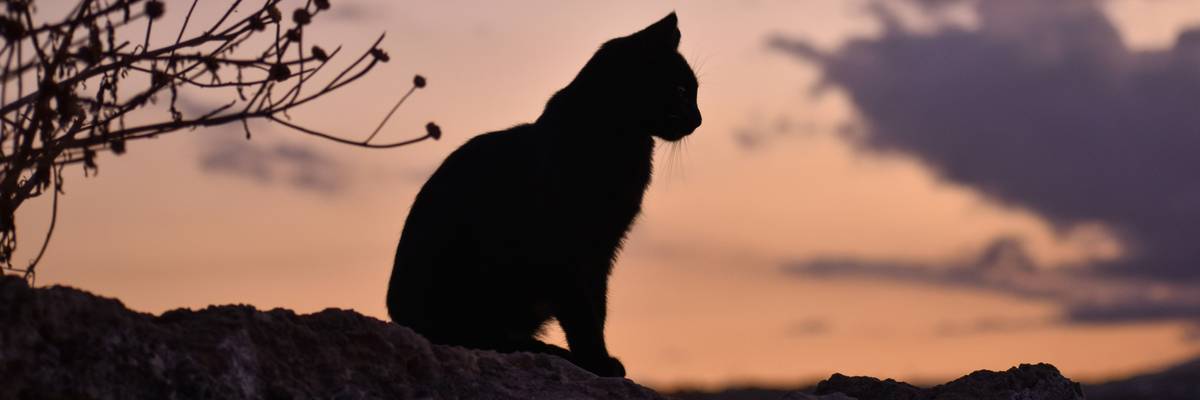
"Too often we try to dictate our emotions, ordering them this way and that like we’re some border guard of the heart," writes Eskow. "That’s a mistake."
I’ve been a little reluctant to admit how much I’ve grieved. Who am I to mourn so much for one small creature?
The ancient Sumerians had a proverb: “A loving heart builds houses.” I’ve thought of it many times since a member of our household, a cat, died last month. People who think cats are indifferent or self-centered would have been astonished at the depth of this one’s compassion and love. She built houses.
I’ve been a little reluctant to admit how much I’ve grieved for her. Who am I to mourn so much for one small creature? Am I weak? Self-indulgent? That led me to some psychology papers about the experience of losing a pet, or what some therapists call an “animal companion.” (Other groups use the term “non-human persons.”)
“Psychologists should view pet loss as an important domain,” one paper says. It cites “human–animal attachment,” “the benefits of pet companionship, and “the profound sense of grief that can be experienced in response to the death of a pet.” This mourning sometimes becomes “disenfranchised grief,” either because others don’t recognize the depth of the resulting sorrow or because the grieving person doesn’t feel they have the right to such profound emotion.
Our Palestinian friends have been among the most compassionate about our loss, despite the magnitude of the ongoing horror in Gaza. That makes sense, come to think of it. Grief should soften our hearts and help us recognize the personhood and pain of others.
Those papers told me what I already knew, but still needed to hear: that it’s only natural to mourn someone who lived by your side for years. Too often we try to dictate our emotions, ordering them this way and that like we’re some border guard of the heart. That’s a mistake. In fact, it’s worse than a mistake. It’s an apartheid of the spirit.
The Sumerian proverb continues: “A hating heart destroys houses.” The wars go on: wars of attrition, wars of starvation, wars of extermination. I ask myself: Who am I to feel sad when people around the world are losing everyone they love, from infants to the elderly?
But grief can’t be quantified or compared. It’s like a neutrino. It has no mass, just energy. It’s the dark-mirror image of “the Guide” in Stephen Mitchell’s translation of the Bhagavad Gita: “primordial poet, smaller than an atom, inconceivable, brilliant as the sun.”
Our Palestinian friends have been among the most compassionate about our loss, despite the magnitude of the ongoing horror in Gaza. That makes sense, come to think of it. Grief should soften our hearts and help us recognize the personhood and pain of others.
A confession: For years, I called myself a “dog person.” But those distinctions feel artificial now. Consciousness knows no taxonomy. It just is.
Cats are still maligned in Western societies, which is probably a holdover from European superstitions. But they’ve always had their advocates. The famously dissolute Charles Baudelaire wrote about them in his then-scandalous Flowers of Evil, using language so sentimental it could embarrass a schoolchild. Pablo Neruda wrote several poems about them. One says:
the cat
only wants to be a cat
and any cat is a cat
... from the night to his golden eyes.
It continues:
There is no unity
like him,
he is just one thing
like the sun or the topaz,
and the elastic line of his contours
is firm and subtle like
the line of a ship's prow.
The image above isn’t a sketch of the cat who just died. It’s her sister, who she cared for like a mother. That solicitude saved both their lives in the shelter when it was time for them to be euthanized. The volunteer who brought them to us said she saw it and thought, “I can’t let that love die.”
Grief can’t be quantified or compared. It’s like a neutrino. It has no mass, just energy.
It didn’t, until now.
Sleep, sleep cat of the night,
with episcopal ceremony
Take care of all our dreams ...
Here’s the thing about grief, as I’ve been reminded: You can’t think, read, or write your way out of it. You have to treat it like a new roommate, cohabiting with it until the new arrangement becomes comfortable for both of you.
The Buddhist teacher and therapist Dharmavidya David Brazier wrote a book on grief called “Who Loves Dies Well.” That phrase could have been this cat’s epitaph. A loving heart builds houses. They’re sturdy houses, with room enough for all the people who come looking for shelter. Once there, they remain your companions forever.
This house seems lonelier, for sure. But it was built to last, and it will always be home.
Dear Common Dreams reader, It’s been nearly 30 years since I co-founded Common Dreams with my late wife, Lina Newhouser. We had the radical notion that journalism should serve the public good, not corporate profits. It was clear to us from the outset what it would take to build such a project. No paid advertisements. No corporate sponsors. No millionaire publisher telling us what to think or do. Many people said we wouldn't last a year, but we proved those doubters wrong. Together with a tremendous team of journalists and dedicated staff, we built an independent media outlet free from the constraints of profits and corporate control. Our mission has always been simple: To inform. To inspire. To ignite change for the common good. Building Common Dreams was not easy. Our survival was never guaranteed. When you take on the most powerful forces—Wall Street greed, fossil fuel industry destruction, Big Tech lobbyists, and uber-rich oligarchs who have spent billions upon billions rigging the economy and democracy in their favor—the only bulwark you have is supporters who believe in your work. But here’s the urgent message from me today. It's never been this bad out there. And it's never been this hard to keep us going. At the very moment Common Dreams is most needed, the threats we face are intensifying. We need your support now more than ever. We don't accept corporate advertising and never will. We don't have a paywall because we don't think people should be blocked from critical news based on their ability to pay. Everything we do is funded by the donations of readers like you. When everyone does the little they can afford, we are strong. But if that support retreats or dries up, so do we. Will you donate now to make sure Common Dreams not only survives but thrives? —Craig Brown, Co-founder |
Richard (RJ) Eskow is a journalist who has written for a number of major publications. His weekly program, The Zero Hour, can be found on cable television, radio, Spotify, and podcast media.
The ancient Sumerians had a proverb: “A loving heart builds houses.” I’ve thought of it many times since a member of our household, a cat, died last month. People who think cats are indifferent or self-centered would have been astonished at the depth of this one’s compassion and love. She built houses.
I’ve been a little reluctant to admit how much I’ve grieved for her. Who am I to mourn so much for one small creature? Am I weak? Self-indulgent? That led me to some psychology papers about the experience of losing a pet, or what some therapists call an “animal companion.” (Other groups use the term “non-human persons.”)
“Psychologists should view pet loss as an important domain,” one paper says. It cites “human–animal attachment,” “the benefits of pet companionship, and “the profound sense of grief that can be experienced in response to the death of a pet.” This mourning sometimes becomes “disenfranchised grief,” either because others don’t recognize the depth of the resulting sorrow or because the grieving person doesn’t feel they have the right to such profound emotion.
Our Palestinian friends have been among the most compassionate about our loss, despite the magnitude of the ongoing horror in Gaza. That makes sense, come to think of it. Grief should soften our hearts and help us recognize the personhood and pain of others.
Those papers told me what I already knew, but still needed to hear: that it’s only natural to mourn someone who lived by your side for years. Too often we try to dictate our emotions, ordering them this way and that like we’re some border guard of the heart. That’s a mistake. In fact, it’s worse than a mistake. It’s an apartheid of the spirit.
The Sumerian proverb continues: “A hating heart destroys houses.” The wars go on: wars of attrition, wars of starvation, wars of extermination. I ask myself: Who am I to feel sad when people around the world are losing everyone they love, from infants to the elderly?
But grief can’t be quantified or compared. It’s like a neutrino. It has no mass, just energy. It’s the dark-mirror image of “the Guide” in Stephen Mitchell’s translation of the Bhagavad Gita: “primordial poet, smaller than an atom, inconceivable, brilliant as the sun.”
Our Palestinian friends have been among the most compassionate about our loss, despite the magnitude of the ongoing horror in Gaza. That makes sense, come to think of it. Grief should soften our hearts and help us recognize the personhood and pain of others.
A confession: For years, I called myself a “dog person.” But those distinctions feel artificial now. Consciousness knows no taxonomy. It just is.
Cats are still maligned in Western societies, which is probably a holdover from European superstitions. But they’ve always had their advocates. The famously dissolute Charles Baudelaire wrote about them in his then-scandalous Flowers of Evil, using language so sentimental it could embarrass a schoolchild. Pablo Neruda wrote several poems about them. One says:
the cat
only wants to be a cat
and any cat is a cat
... from the night to his golden eyes.
It continues:
There is no unity
like him,
he is just one thing
like the sun or the topaz,
and the elastic line of his contours
is firm and subtle like
the line of a ship's prow.
The image above isn’t a sketch of the cat who just died. It’s her sister, who she cared for like a mother. That solicitude saved both their lives in the shelter when it was time for them to be euthanized. The volunteer who brought them to us said she saw it and thought, “I can’t let that love die.”
Grief can’t be quantified or compared. It’s like a neutrino. It has no mass, just energy.
It didn’t, until now.
Sleep, sleep cat of the night,
with episcopal ceremony
Take care of all our dreams ...
Here’s the thing about grief, as I’ve been reminded: You can’t think, read, or write your way out of it. You have to treat it like a new roommate, cohabiting with it until the new arrangement becomes comfortable for both of you.
The Buddhist teacher and therapist Dharmavidya David Brazier wrote a book on grief called “Who Loves Dies Well.” That phrase could have been this cat’s epitaph. A loving heart builds houses. They’re sturdy houses, with room enough for all the people who come looking for shelter. Once there, they remain your companions forever.
This house seems lonelier, for sure. But it was built to last, and it will always be home.
Richard (RJ) Eskow is a journalist who has written for a number of major publications. His weekly program, The Zero Hour, can be found on cable television, radio, Spotify, and podcast media.
The ancient Sumerians had a proverb: “A loving heart builds houses.” I’ve thought of it many times since a member of our household, a cat, died last month. People who think cats are indifferent or self-centered would have been astonished at the depth of this one’s compassion and love. She built houses.
I’ve been a little reluctant to admit how much I’ve grieved for her. Who am I to mourn so much for one small creature? Am I weak? Self-indulgent? That led me to some psychology papers about the experience of losing a pet, or what some therapists call an “animal companion.” (Other groups use the term “non-human persons.”)
“Psychologists should view pet loss as an important domain,” one paper says. It cites “human–animal attachment,” “the benefits of pet companionship, and “the profound sense of grief that can be experienced in response to the death of a pet.” This mourning sometimes becomes “disenfranchised grief,” either because others don’t recognize the depth of the resulting sorrow or because the grieving person doesn’t feel they have the right to such profound emotion.
Our Palestinian friends have been among the most compassionate about our loss, despite the magnitude of the ongoing horror in Gaza. That makes sense, come to think of it. Grief should soften our hearts and help us recognize the personhood and pain of others.
Those papers told me what I already knew, but still needed to hear: that it’s only natural to mourn someone who lived by your side for years. Too often we try to dictate our emotions, ordering them this way and that like we’re some border guard of the heart. That’s a mistake. In fact, it’s worse than a mistake. It’s an apartheid of the spirit.
The Sumerian proverb continues: “A hating heart destroys houses.” The wars go on: wars of attrition, wars of starvation, wars of extermination. I ask myself: Who am I to feel sad when people around the world are losing everyone they love, from infants to the elderly?
But grief can’t be quantified or compared. It’s like a neutrino. It has no mass, just energy. It’s the dark-mirror image of “the Guide” in Stephen Mitchell’s translation of the Bhagavad Gita: “primordial poet, smaller than an atom, inconceivable, brilliant as the sun.”
Our Palestinian friends have been among the most compassionate about our loss, despite the magnitude of the ongoing horror in Gaza. That makes sense, come to think of it. Grief should soften our hearts and help us recognize the personhood and pain of others.
A confession: For years, I called myself a “dog person.” But those distinctions feel artificial now. Consciousness knows no taxonomy. It just is.
Cats are still maligned in Western societies, which is probably a holdover from European superstitions. But they’ve always had their advocates. The famously dissolute Charles Baudelaire wrote about them in his then-scandalous Flowers of Evil, using language so sentimental it could embarrass a schoolchild. Pablo Neruda wrote several poems about them. One says:
the cat
only wants to be a cat
and any cat is a cat
... from the night to his golden eyes.
It continues:
There is no unity
like him,
he is just one thing
like the sun or the topaz,
and the elastic line of his contours
is firm and subtle like
the line of a ship's prow.
The image above isn’t a sketch of the cat who just died. It’s her sister, who she cared for like a mother. That solicitude saved both their lives in the shelter when it was time for them to be euthanized. The volunteer who brought them to us said she saw it and thought, “I can’t let that love die.”
Grief can’t be quantified or compared. It’s like a neutrino. It has no mass, just energy.
It didn’t, until now.
Sleep, sleep cat of the night,
with episcopal ceremony
Take care of all our dreams ...
Here’s the thing about grief, as I’ve been reminded: You can’t think, read, or write your way out of it. You have to treat it like a new roommate, cohabiting with it until the new arrangement becomes comfortable for both of you.
The Buddhist teacher and therapist Dharmavidya David Brazier wrote a book on grief called “Who Loves Dies Well.” That phrase could have been this cat’s epitaph. A loving heart builds houses. They’re sturdy houses, with room enough for all the people who come looking for shelter. Once there, they remain your companions forever.
This house seems lonelier, for sure. But it was built to last, and it will always be home.