SUBSCRIBE TO OUR FREE NEWSLETTER
Daily news & progressive opinion—funded by the people, not the corporations—delivered straight to your inbox.
5
#000000
#FFFFFF
To donate by check, phone, or other method, see our More Ways to Give page.
Daily news & progressive opinion—funded by the people, not the corporations—delivered straight to your inbox.
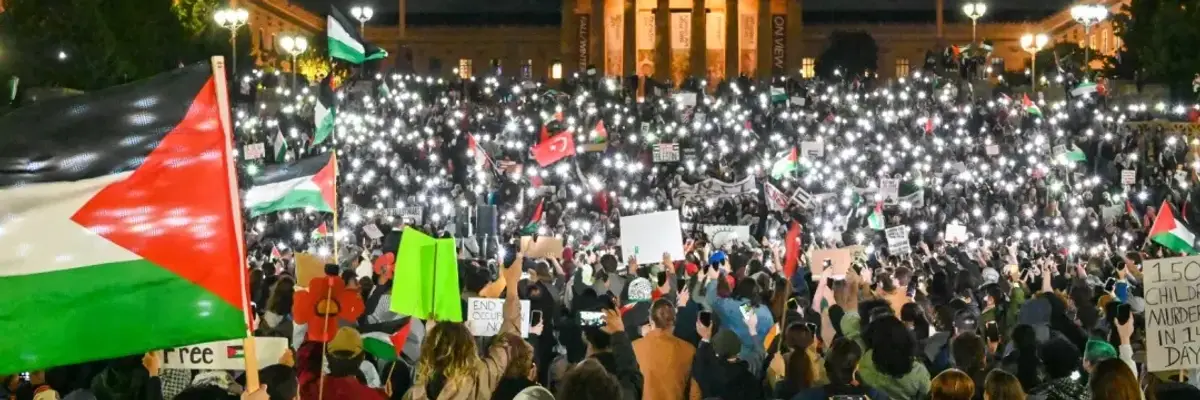
Thousands of marchers gather in Philadelphia to support peace and Palestinian rights, while a media report said it was attended by only “dozens.”
According to a 2019 study on 50 years of coverage, U.S. headlines are more than twice as likely to cite Israeli sources—including documented disinformation—than Palestinian sources.
Like many of us, I’ve been glued to media coverage of the terrible violence in Gaza and Israel.
I was deeply shaken by the brutal killings of over 1,000 Israelis on October 7. The families of Israelis killed and taken hostage deserve justice for these crimes. But instead of justice, all I’ve seen from the far-right Israeli government is more death.
Palestinians have already endured 75 years of displacement and oppression. The 2.2 million Palestinians living in the cramped Gaza strip have lived for 16 years under an Israeli siege that chokes their access to food, water, electricity, and movement.
Now Gazans’ access to these necessities has been cut off completely. Half of the population’s homes have been destroyed by Israeli bombings, and well over 6,000 civilians have been killed. All with no end in sight.
While headlines note when Israelis are “killed,” they often say that Palestinians simply “die,” without saying how.
As a Jewish American, I don’t feel safer when the Israeli government breaks international law to bomb families sheltering in refugee camps or cut off electricity to children in hospitals. I especially don’t feel safe knowing my U.S. tax dollars are funding these crimes.
And I’m not alone. Recently, I joined a march in Philadelphia calling for an end to the violence and freedom for the Palestinian people.
An estimated 10,000 of us showed up—including parents pushing strollers, friends holding banners together, and elderly couples arm in arm. We marched against what hundreds of scholars have warned is genocide.
It was a historic community call for peace. Yet it was noticeably absent from local news coverage. Days afterward, the only evidence it happened was one small news clip noting that “dozens gathered”—a comic misrepresentation.
“This is not only media suppression, but an erasure of history,” said Philadelphia organizer Nour Qutyan, who helped assemble the rally.
Just the previous week, a smaller rally in support of the Israeli government was covered by a swath of local news outlets. This eye-opening double standard reflects a much broader silencing of Palestinians and their advocates in the media.
During these weeks of Israel’s bombing campaign, leading Palestinian commentators including Noura Erakat, Omar Baddar, and Yousef Munayyer have had cable news appearances cut or canceled. Jewish American author Nathan Thrall had ads for a new book simply about Palestinians pulled from NPR and the BBC.
Equally noteworthy is the U.S. media’s passive treatment of Palestinian deaths. While headlines note when Israelis are “killed,” they often say that Palestinians simply “die,” without saying how.
According to a 2019 study on 50 years of coverage, U.S. headlines are also more than twice as likely to cite Israeli sources—including documented disinformation—than Palestinian sources.
This bias isn’t only unfair—it’s harmful.
Polls show the vast majority of Americans across party lines agree that our government should call for a ceasefire in Gaza. In Israel, even the siblings of people killed by Hamas are calling for peace, not war. Instead of uplifting these voices, many media outlets are inciting more violence.
By “silencing any criticisms of Israel,” Qutyan warns that “editors who are meant to uphold journalistic integrity, truth, and the so-called ethics of news media” are instead “co-signing genocide” in Gaza.
In the coming weeks, I will remain glued to the coverage of the violence that my tax dollars are funding. As a Jewish American, I demand life and freedom for Palestinians—and coverage which reflects that.
Dear Common Dreams reader, It’s been nearly 30 years since I co-founded Common Dreams with my late wife, Lina Newhouser. We had the radical notion that journalism should serve the public good, not corporate profits. It was clear to us from the outset what it would take to build such a project. No paid advertisements. No corporate sponsors. No millionaire publisher telling us what to think or do. Many people said we wouldn't last a year, but we proved those doubters wrong. Together with a tremendous team of journalists and dedicated staff, we built an independent media outlet free from the constraints of profits and corporate control. Our mission has always been simple: To inform. To inspire. To ignite change for the common good. Building Common Dreams was not easy. Our survival was never guaranteed. When you take on the most powerful forces—Wall Street greed, fossil fuel industry destruction, Big Tech lobbyists, and uber-rich oligarchs who have spent billions upon billions rigging the economy and democracy in their favor—the only bulwark you have is supporters who believe in your work. But here’s the urgent message from me today. It's never been this bad out there. And it's never been this hard to keep us going. At the very moment Common Dreams is most needed, the threats we face are intensifying. We need your support now more than ever. We don't accept corporate advertising and never will. We don't have a paywall because we don't think people should be blocked from critical news based on their ability to pay. Everything we do is funded by the donations of readers like you. When everyone does the little they can afford, we are strong. But if that support retreats or dries up, so do we. Will you donate now to make sure Common Dreams not only survives but thrives? —Craig Brown, Co-founder |
Like many of us, I’ve been glued to media coverage of the terrible violence in Gaza and Israel.
I was deeply shaken by the brutal killings of over 1,000 Israelis on October 7. The families of Israelis killed and taken hostage deserve justice for these crimes. But instead of justice, all I’ve seen from the far-right Israeli government is more death.
Palestinians have already endured 75 years of displacement and oppression. The 2.2 million Palestinians living in the cramped Gaza strip have lived for 16 years under an Israeli siege that chokes their access to food, water, electricity, and movement.
Now Gazans’ access to these necessities has been cut off completely. Half of the population’s homes have been destroyed by Israeli bombings, and well over 6,000 civilians have been killed. All with no end in sight.
While headlines note when Israelis are “killed,” they often say that Palestinians simply “die,” without saying how.
As a Jewish American, I don’t feel safer when the Israeli government breaks international law to bomb families sheltering in refugee camps or cut off electricity to children in hospitals. I especially don’t feel safe knowing my U.S. tax dollars are funding these crimes.
And I’m not alone. Recently, I joined a march in Philadelphia calling for an end to the violence and freedom for the Palestinian people.
An estimated 10,000 of us showed up—including parents pushing strollers, friends holding banners together, and elderly couples arm in arm. We marched against what hundreds of scholars have warned is genocide.
It was a historic community call for peace. Yet it was noticeably absent from local news coverage. Days afterward, the only evidence it happened was one small news clip noting that “dozens gathered”—a comic misrepresentation.
“This is not only media suppression, but an erasure of history,” said Philadelphia organizer Nour Qutyan, who helped assemble the rally.
Just the previous week, a smaller rally in support of the Israeli government was covered by a swath of local news outlets. This eye-opening double standard reflects a much broader silencing of Palestinians and their advocates in the media.
During these weeks of Israel’s bombing campaign, leading Palestinian commentators including Noura Erakat, Omar Baddar, and Yousef Munayyer have had cable news appearances cut or canceled. Jewish American author Nathan Thrall had ads for a new book simply about Palestinians pulled from NPR and the BBC.
Equally noteworthy is the U.S. media’s passive treatment of Palestinian deaths. While headlines note when Israelis are “killed,” they often say that Palestinians simply “die,” without saying how.
According to a 2019 study on 50 years of coverage, U.S. headlines are also more than twice as likely to cite Israeli sources—including documented disinformation—than Palestinian sources.
This bias isn’t only unfair—it’s harmful.
Polls show the vast majority of Americans across party lines agree that our government should call for a ceasefire in Gaza. In Israel, even the siblings of people killed by Hamas are calling for peace, not war. Instead of uplifting these voices, many media outlets are inciting more violence.
By “silencing any criticisms of Israel,” Qutyan warns that “editors who are meant to uphold journalistic integrity, truth, and the so-called ethics of news media” are instead “co-signing genocide” in Gaza.
In the coming weeks, I will remain glued to the coverage of the violence that my tax dollars are funding. As a Jewish American, I demand life and freedom for Palestinians—and coverage which reflects that.
Like many of us, I’ve been glued to media coverage of the terrible violence in Gaza and Israel.
I was deeply shaken by the brutal killings of over 1,000 Israelis on October 7. The families of Israelis killed and taken hostage deserve justice for these crimes. But instead of justice, all I’ve seen from the far-right Israeli government is more death.
Palestinians have already endured 75 years of displacement and oppression. The 2.2 million Palestinians living in the cramped Gaza strip have lived for 16 years under an Israeli siege that chokes their access to food, water, electricity, and movement.
Now Gazans’ access to these necessities has been cut off completely. Half of the population’s homes have been destroyed by Israeli bombings, and well over 6,000 civilians have been killed. All with no end in sight.
While headlines note when Israelis are “killed,” they often say that Palestinians simply “die,” without saying how.
As a Jewish American, I don’t feel safer when the Israeli government breaks international law to bomb families sheltering in refugee camps or cut off electricity to children in hospitals. I especially don’t feel safe knowing my U.S. tax dollars are funding these crimes.
And I’m not alone. Recently, I joined a march in Philadelphia calling for an end to the violence and freedom for the Palestinian people.
An estimated 10,000 of us showed up—including parents pushing strollers, friends holding banners together, and elderly couples arm in arm. We marched against what hundreds of scholars have warned is genocide.
It was a historic community call for peace. Yet it was noticeably absent from local news coverage. Days afterward, the only evidence it happened was one small news clip noting that “dozens gathered”—a comic misrepresentation.
“This is not only media suppression, but an erasure of history,” said Philadelphia organizer Nour Qutyan, who helped assemble the rally.
Just the previous week, a smaller rally in support of the Israeli government was covered by a swath of local news outlets. This eye-opening double standard reflects a much broader silencing of Palestinians and their advocates in the media.
During these weeks of Israel’s bombing campaign, leading Palestinian commentators including Noura Erakat, Omar Baddar, and Yousef Munayyer have had cable news appearances cut or canceled. Jewish American author Nathan Thrall had ads for a new book simply about Palestinians pulled from NPR and the BBC.
Equally noteworthy is the U.S. media’s passive treatment of Palestinian deaths. While headlines note when Israelis are “killed,” they often say that Palestinians simply “die,” without saying how.
According to a 2019 study on 50 years of coverage, U.S. headlines are also more than twice as likely to cite Israeli sources—including documented disinformation—than Palestinian sources.
This bias isn’t only unfair—it’s harmful.
Polls show the vast majority of Americans across party lines agree that our government should call for a ceasefire in Gaza. In Israel, even the siblings of people killed by Hamas are calling for peace, not war. Instead of uplifting these voices, many media outlets are inciting more violence.
By “silencing any criticisms of Israel,” Qutyan warns that “editors who are meant to uphold journalistic integrity, truth, and the so-called ethics of news media” are instead “co-signing genocide” in Gaza.
In the coming weeks, I will remain glued to the coverage of the violence that my tax dollars are funding. As a Jewish American, I demand life and freedom for Palestinians—and coverage which reflects that.