SUBSCRIBE TO OUR FREE NEWSLETTER
Daily news & progressive opinion—funded by the people, not the corporations—delivered straight to your inbox.
5
#000000
#FFFFFF
To donate by check, phone, or other method, see our More Ways to Give page.
Daily news & progressive opinion—funded by the people, not the corporations—delivered straight to your inbox.
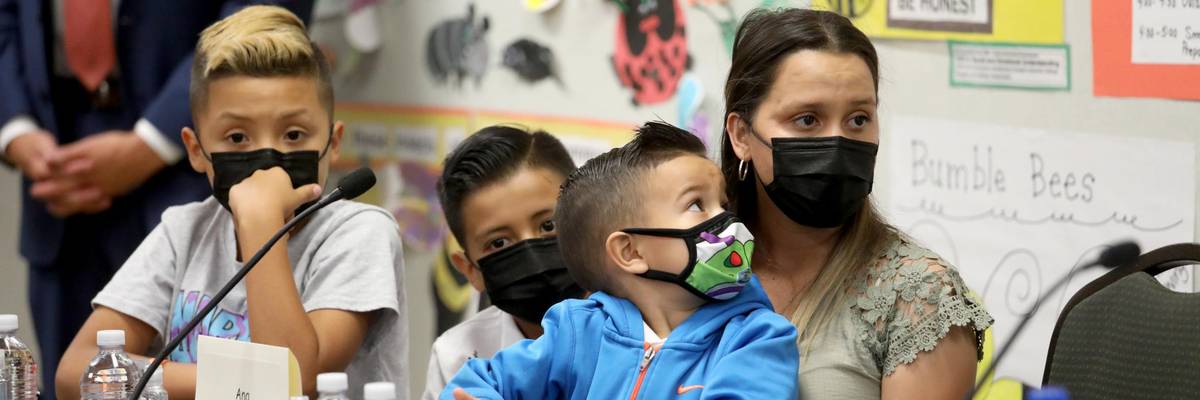
A mother and her children appear at a news conference to discuss the importance of the child tax credit at the Ethel Bradley Early Education Center on August 12, 2021 in Los Angeles.
Poverty is a policy choice by lawmakers with warped priorities. Now they have a chance to choose better, if only modestly.
From childhood on, I’ve spent my life haunted by the ghost of poverty.
A myth exists in America that financial well-being follows if we just work hard and make good choices. But it’s not that simple. At some point, most of us face unforeseen obstacles — from physical or mental health challenges to lost jobs, economic downturns, and natural disasters.
Along with low wages and other structural causes of poverty, that puts financial well-being out of reach for about 140 million people in this country, the Poor People’s Campaign estimates.
The reality of poverty isn’t even close to the stereotype propagated by politicians who want only to fund the military and subsidize the rich while cutting everything else. This isn’t a lifestyle one chooses by being lazy and getting fat off some mythical government largesse.
For many of us, poverty means working multiple low-wage jobs and still being short on rent, child care, food, or the energy bill. Poverty means you don’t have stable transportation and live in fear of anyone in your family needing health care.
It’s necessary, but not enough — too much money in the bill goes to corporations that don’t need it. Again, investment priorities are skewed in favor of the wealthy and corporations.
It means your children go without good winter boots or new clothes because you need the lights to stay on. It means there’s no time or money for anything beyond the scrape of daily life — no waterparks, no road trips, no relief.
People don’t choose this lifestyle. It’s created by policymakers who prioritize corporate profit and bloated military spending over investing in families in this country. Yet they expect poor people to be the ones who feel ashamed.
At one point I was living the American Dream. I’d been a successful chef, even bought a house at 23. But the 2008 collapse flipped my mortgage upside down, and the single investment I’d been able to make for my future crumbled.
A few years later, after the birth of my child, I was cast back into the same poverty I’d grown up with. Programs like Medicaid, SNAP, and WIC — the program to support women, infants, and children — kept our heads above water while I returned to university to complete an unfinished Bachelor’s degree. But our heads dipped under a few times. It was exhausting.
By the time I’d completed a graduate program and we’d eked out some stability, the pandemic hit. But this time, the help was different.
The expanded and enhanced Child Tax Credit in President Biden’s American Rescue Plan not only helped me pay my rent and monthly bills — it helped me be a better mom. Relieved of some financial anxiety, I could spend more time with my daughter and commit to the post-graduate job search, ultimately getting the good job that I have today.
Now I’m financially stable for the first time in my life. But tens of millions of others won’t get that same chance unless lawmakers act. Congress let the expanded Child Tax Credit expire at the end of 2021, even though it had cut child poverty in half. Subsequently, child poverty immediately skyrocketed — a disaster.
But now, Congress again has a chance to expand the Child Tax Credit in a tax package that may pass soon. Frustratingly, the package gives more tax breaks to corporations that already pay little to no taxes, even as it modestly expands the Child Tax Credit again — although by less than before — and improves the Low-Income Housing Tax Credit.
According to the Center on Budget and Policy Priorities, the new credit would lift 400,000 children out of poverty, make 3 million children less poor, and help a substantial number of the remaining 19 million poor children currently excluded from the full benefit.
It’s necessary, but not enough — too much money in the bill goes to corporations that don’t need it. Again, investment priorities are skewed in favor of the wealthy and corporations.
It’s only when we prioritize the well-being of families that we will see families thrive.
Dear Common Dreams reader, It’s been nearly 30 years since I co-founded Common Dreams with my late wife, Lina Newhouser. We had the radical notion that journalism should serve the public good, not corporate profits. It was clear to us from the outset what it would take to build such a project. No paid advertisements. No corporate sponsors. No millionaire publisher telling us what to think or do. Many people said we wouldn't last a year, but we proved those doubters wrong. Together with a tremendous team of journalists and dedicated staff, we built an independent media outlet free from the constraints of profits and corporate control. Our mission has always been simple: To inform. To inspire. To ignite change for the common good. Building Common Dreams was not easy. Our survival was never guaranteed. When you take on the most powerful forces—Wall Street greed, fossil fuel industry destruction, Big Tech lobbyists, and uber-rich oligarchs who have spent billions upon billions rigging the economy and democracy in their favor—the only bulwark you have is supporters who believe in your work. But here’s the urgent message from me today. It's never been this bad out there. And it's never been this hard to keep us going. At the very moment Common Dreams is most needed, the threats we face are intensifying. We need your support now more than ever. We don't accept corporate advertising and never will. We don't have a paywall because we don't think people should be blocked from critical news based on their ability to pay. Everything we do is funded by the donations of readers like you. When everyone does the little they can afford, we are strong. But if that support retreats or dries up, so do we. Will you donate now to make sure Common Dreams not only survives but thrives? —Craig Brown, Co-founder |
From childhood on, I’ve spent my life haunted by the ghost of poverty.
A myth exists in America that financial well-being follows if we just work hard and make good choices. But it’s not that simple. At some point, most of us face unforeseen obstacles — from physical or mental health challenges to lost jobs, economic downturns, and natural disasters.
Along with low wages and other structural causes of poverty, that puts financial well-being out of reach for about 140 million people in this country, the Poor People’s Campaign estimates.
The reality of poverty isn’t even close to the stereotype propagated by politicians who want only to fund the military and subsidize the rich while cutting everything else. This isn’t a lifestyle one chooses by being lazy and getting fat off some mythical government largesse.
For many of us, poverty means working multiple low-wage jobs and still being short on rent, child care, food, or the energy bill. Poverty means you don’t have stable transportation and live in fear of anyone in your family needing health care.
It’s necessary, but not enough — too much money in the bill goes to corporations that don’t need it. Again, investment priorities are skewed in favor of the wealthy and corporations.
It means your children go without good winter boots or new clothes because you need the lights to stay on. It means there’s no time or money for anything beyond the scrape of daily life — no waterparks, no road trips, no relief.
People don’t choose this lifestyle. It’s created by policymakers who prioritize corporate profit and bloated military spending over investing in families in this country. Yet they expect poor people to be the ones who feel ashamed.
At one point I was living the American Dream. I’d been a successful chef, even bought a house at 23. But the 2008 collapse flipped my mortgage upside down, and the single investment I’d been able to make for my future crumbled.
A few years later, after the birth of my child, I was cast back into the same poverty I’d grown up with. Programs like Medicaid, SNAP, and WIC — the program to support women, infants, and children — kept our heads above water while I returned to university to complete an unfinished Bachelor’s degree. But our heads dipped under a few times. It was exhausting.
By the time I’d completed a graduate program and we’d eked out some stability, the pandemic hit. But this time, the help was different.
The expanded and enhanced Child Tax Credit in President Biden’s American Rescue Plan not only helped me pay my rent and monthly bills — it helped me be a better mom. Relieved of some financial anxiety, I could spend more time with my daughter and commit to the post-graduate job search, ultimately getting the good job that I have today.
Now I’m financially stable for the first time in my life. But tens of millions of others won’t get that same chance unless lawmakers act. Congress let the expanded Child Tax Credit expire at the end of 2021, even though it had cut child poverty in half. Subsequently, child poverty immediately skyrocketed — a disaster.
But now, Congress again has a chance to expand the Child Tax Credit in a tax package that may pass soon. Frustratingly, the package gives more tax breaks to corporations that already pay little to no taxes, even as it modestly expands the Child Tax Credit again — although by less than before — and improves the Low-Income Housing Tax Credit.
According to the Center on Budget and Policy Priorities, the new credit would lift 400,000 children out of poverty, make 3 million children less poor, and help a substantial number of the remaining 19 million poor children currently excluded from the full benefit.
It’s necessary, but not enough — too much money in the bill goes to corporations that don’t need it. Again, investment priorities are skewed in favor of the wealthy and corporations.
It’s only when we prioritize the well-being of families that we will see families thrive.
From childhood on, I’ve spent my life haunted by the ghost of poverty.
A myth exists in America that financial well-being follows if we just work hard and make good choices. But it’s not that simple. At some point, most of us face unforeseen obstacles — from physical or mental health challenges to lost jobs, economic downturns, and natural disasters.
Along with low wages and other structural causes of poverty, that puts financial well-being out of reach for about 140 million people in this country, the Poor People’s Campaign estimates.
The reality of poverty isn’t even close to the stereotype propagated by politicians who want only to fund the military and subsidize the rich while cutting everything else. This isn’t a lifestyle one chooses by being lazy and getting fat off some mythical government largesse.
For many of us, poverty means working multiple low-wage jobs and still being short on rent, child care, food, or the energy bill. Poverty means you don’t have stable transportation and live in fear of anyone in your family needing health care.
It’s necessary, but not enough — too much money in the bill goes to corporations that don’t need it. Again, investment priorities are skewed in favor of the wealthy and corporations.
It means your children go without good winter boots or new clothes because you need the lights to stay on. It means there’s no time or money for anything beyond the scrape of daily life — no waterparks, no road trips, no relief.
People don’t choose this lifestyle. It’s created by policymakers who prioritize corporate profit and bloated military spending over investing in families in this country. Yet they expect poor people to be the ones who feel ashamed.
At one point I was living the American Dream. I’d been a successful chef, even bought a house at 23. But the 2008 collapse flipped my mortgage upside down, and the single investment I’d been able to make for my future crumbled.
A few years later, after the birth of my child, I was cast back into the same poverty I’d grown up with. Programs like Medicaid, SNAP, and WIC — the program to support women, infants, and children — kept our heads above water while I returned to university to complete an unfinished Bachelor’s degree. But our heads dipped under a few times. It was exhausting.
By the time I’d completed a graduate program and we’d eked out some stability, the pandemic hit. But this time, the help was different.
The expanded and enhanced Child Tax Credit in President Biden’s American Rescue Plan not only helped me pay my rent and monthly bills — it helped me be a better mom. Relieved of some financial anxiety, I could spend more time with my daughter and commit to the post-graduate job search, ultimately getting the good job that I have today.
Now I’m financially stable for the first time in my life. But tens of millions of others won’t get that same chance unless lawmakers act. Congress let the expanded Child Tax Credit expire at the end of 2021, even though it had cut child poverty in half. Subsequently, child poverty immediately skyrocketed — a disaster.
But now, Congress again has a chance to expand the Child Tax Credit in a tax package that may pass soon. Frustratingly, the package gives more tax breaks to corporations that already pay little to no taxes, even as it modestly expands the Child Tax Credit again — although by less than before — and improves the Low-Income Housing Tax Credit.
According to the Center on Budget and Policy Priorities, the new credit would lift 400,000 children out of poverty, make 3 million children less poor, and help a substantial number of the remaining 19 million poor children currently excluded from the full benefit.
It’s necessary, but not enough — too much money in the bill goes to corporations that don’t need it. Again, investment priorities are skewed in favor of the wealthy and corporations.
It’s only when we prioritize the well-being of families that we will see families thrive.