SUBSCRIBE TO OUR FREE NEWSLETTER
Daily news & progressive opinion—funded by the people, not the corporations—delivered straight to your inbox.
5
#000000
#FFFFFF
To donate by check, phone, or other method, see our More Ways to Give page.
Daily news & progressive opinion—funded by the people, not the corporations—delivered straight to your inbox.
The Biden camp continues to dismiss polls showing the President losing support among young and “minority” voters. This is a dangerous miscalculation.
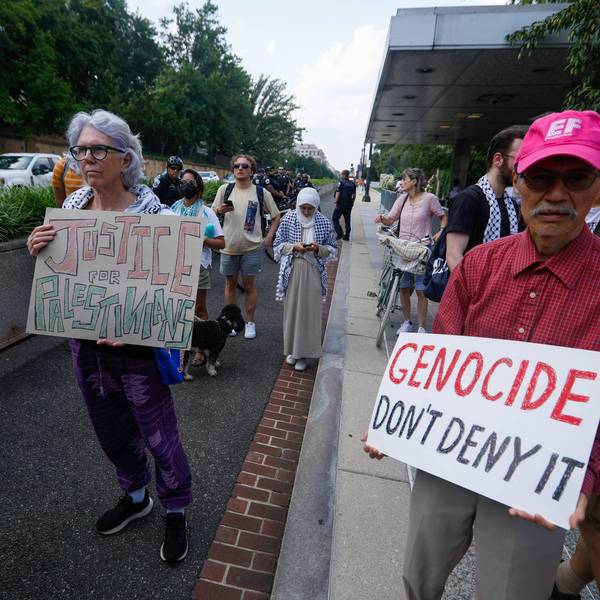
University student protests against US support for Israel’s war in Gaza have spread like wildfire. At last count, there have been sustained demonstrations on over 200 campuses. More recently, students have taken to establishing protest encampments in the center of some campuses. This began last week at Columbia University in New York. Ten days later there were encampments at almost four dozen universities.
What’s been most striking is not only the way this effort has spread, but also the amazing diversity of the students involved in the demonstrations. There are Arab American students, to be sure, who’ve been joined by fellow students of every race and creed.
The leadership of the protesting students have been disciplined and eloquent in their demands for a ceasefire and an end to the genocide in Gaza. Many have also called on their universities to divest funds from entities contributing to the Israeli war effort.
The protesters have been peaceful, though purposefully disruptive. At times they’ve occupied central locations on campus. They’ve also chanted, as demonstrators are wont to do. Yet, as noted by respected observers who’ve visited the protest sites, the protests have been peaceful and orderly.
As primary elections in several states have demonstrated, there is a hemorrhaging of support for the President’s reelection. And as repression against student demonstrators continues, that opposition is solidifying.
Goaded by Republican congressional leadership and a few pro-Israel Jewish organizations, there’s been an effort to paint these demonstrations as antisemitic and a threat to the safety of Jewish students. The members of Congress have latched onto this, exploiting it as a wedge issue and portraying the protesting students as liberal elites, captive to anti-Israel groups.
Both the Republican leadership and the small but influential group of Jewish leaders have used their respective platforms to repeatedly argue that chants used by some of the students are inherently antisemitic. For example, they’ve said that “from the river to the sea, Palestine will be free” is actually a call to commit genocide against Jews in Israel. They recently passed a Congressional resolution making that very point. Using such deliberately distorted interpretations of the slogans used by the students in support of Palestinians, they've pressured some university presidents to resign and have made life uncomfortable for others.
What’s been ignored is that in most of the encampments a disproportionately large number of the protesters are Jewish students. Ironically, while one Jewish leader was advising Jewish students at Columbia University to stay home and not come to campus because it was unsafe for them and was urging New York’s governor to call in National Guard units to restore order on campus, the Jewish students in the encampment were holding an interfaith Passover Seder.
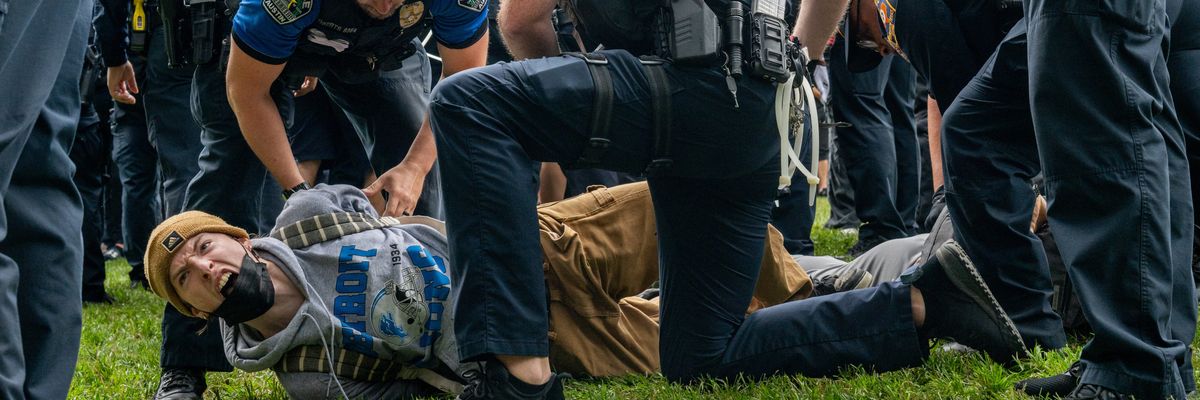
Later, New York City police were ordered onto campus to disband the encampment. This was followed by similar police actions in Texas, California, and Georgia where disturbing levels of violence (tear gas, rubber bullets, tasers, and baton beatings) were used against the peaceful protestors.
Instead of dampening the students’ commitment to continuing these protests, the actions by the police, elected officials, and university administrators have hardened the protesters’ resolve. And so the day after the encampments were forcibly disbanded, the students returned, reestablishing their protest sites.
With the ire of the students directed not only at Israel’s genocidal behaviors in Gaza, but also at how the Biden administration has enabled this war to continue, the way these campus protests are playing out does not bode well for the President during this election year.
Comparisons are being made to the 1968 anti-Vietnam war protests and the role they played in costing Democrats the presidency. Having been a participant in the protest politics both in that period and the current one, I can attest to the similarities, as well as some important differences.
Vietnam was the first war that was televised, bringing it into American homes. We saw the impact of napalm on civilians and learned of the use of torture against prisoners. In addition to opposition to the war for moral or political reasons was the more personal and unsettling concern with the national draft that required young people to register for military service.
The Vietnam era was also a time of broad national ferment that witnessed the emergence of several other protest movements: civil rights, environmental concerns, women’s rights, etc. There was limited overlap in the participation in these diverse movements.
Today is different. There is a significant overlap in the movements for women’s rights, Black empowerment, environmental justice, and now opposition to Israel’s war in Gaza. And because of the impact of social media, today’s young people, whom my brother John Zogby calls “the first globals,” are experiencing the war in Gaza non-stop, up close and personal, and are deeply disturbed by what they are seeing.
There were no Vietnamese students on campuses in the 1960s, but today empowered and organized Arab American and progressive American Jewish students have taken the lead in mobilizing opposition to Israel’s Gaza war—with the former saying “Not to our people” and the latter saying “Not in our name.” Because they have found allies in the other movements in which they too were participants, the anti-war effort has grown.
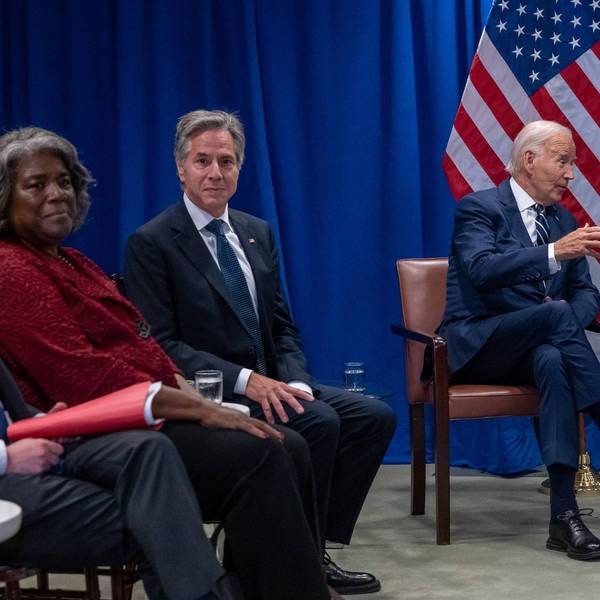
Through it all, the Biden White House has demonstrated only limited concern, apparently convinced that they’ll weather this storm and still defeat Donald Trump in November. They dismiss polls showing the President losing support among young and “minority” voters. This is a dangerous miscalculation. As primary elections in several states have demonstrated, there is a hemorrhaging of support for the President’s reelection. And as repression against student demonstrators continues, that opposition is solidifying.
Should the war continue for several more months and the scene at this summer’s Democratic Convention in Chicago be as ugly as it was in 1968, many young voters will be hard pressed to vote for Mr. Biden. They won’t vote for Mr. Trump. Most likely they’ll either vote for a third party or not vote at all.
Dear Common Dreams reader, It’s been nearly 30 years since I co-founded Common Dreams with my late wife, Lina Newhouser. We had the radical notion that journalism should serve the public good, not corporate profits. It was clear to us from the outset what it would take to build such a project. No paid advertisements. No corporate sponsors. No millionaire publisher telling us what to think or do. Many people said we wouldn't last a year, but we proved those doubters wrong. Together with a tremendous team of journalists and dedicated staff, we built an independent media outlet free from the constraints of profits and corporate control. Our mission has always been simple: To inform. To inspire. To ignite change for the common good. Building Common Dreams was not easy. Our survival was never guaranteed. When you take on the most powerful forces—Wall Street greed, fossil fuel industry destruction, Big Tech lobbyists, and uber-rich oligarchs who have spent billions upon billions rigging the economy and democracy in their favor—the only bulwark you have is supporters who believe in your work. But here’s the urgent message from me today. It's never been this bad out there. And it's never been this hard to keep us going. At the very moment Common Dreams is most needed, the threats we face are intensifying. We need your support now more than ever. We don't accept corporate advertising and never will. We don't have a paywall because we don't think people should be blocked from critical news based on their ability to pay. Everything we do is funded by the donations of readers like you. When everyone does the little they can afford, we are strong. But if that support retreats or dries up, so do we. Will you donate now to make sure Common Dreams not only survives but thrives? —Craig Brown, Co-founder |
University student protests against US support for Israel’s war in Gaza have spread like wildfire. At last count, there have been sustained demonstrations on over 200 campuses. More recently, students have taken to establishing protest encampments in the center of some campuses. This began last week at Columbia University in New York. Ten days later there were encampments at almost four dozen universities.
What’s been most striking is not only the way this effort has spread, but also the amazing diversity of the students involved in the demonstrations. There are Arab American students, to be sure, who’ve been joined by fellow students of every race and creed.
The leadership of the protesting students have been disciplined and eloquent in their demands for a ceasefire and an end to the genocide in Gaza. Many have also called on their universities to divest funds from entities contributing to the Israeli war effort.
The protesters have been peaceful, though purposefully disruptive. At times they’ve occupied central locations on campus. They’ve also chanted, as demonstrators are wont to do. Yet, as noted by respected observers who’ve visited the protest sites, the protests have been peaceful and orderly.
As primary elections in several states have demonstrated, there is a hemorrhaging of support for the President’s reelection. And as repression against student demonstrators continues, that opposition is solidifying.
Goaded by Republican congressional leadership and a few pro-Israel Jewish organizations, there’s been an effort to paint these demonstrations as antisemitic and a threat to the safety of Jewish students. The members of Congress have latched onto this, exploiting it as a wedge issue and portraying the protesting students as liberal elites, captive to anti-Israel groups.
Both the Republican leadership and the small but influential group of Jewish leaders have used their respective platforms to repeatedly argue that chants used by some of the students are inherently antisemitic. For example, they’ve said that “from the river to the sea, Palestine will be free” is actually a call to commit genocide against Jews in Israel. They recently passed a Congressional resolution making that very point. Using such deliberately distorted interpretations of the slogans used by the students in support of Palestinians, they've pressured some university presidents to resign and have made life uncomfortable for others.
What’s been ignored is that in most of the encampments a disproportionately large number of the protesters are Jewish students. Ironically, while one Jewish leader was advising Jewish students at Columbia University to stay home and not come to campus because it was unsafe for them and was urging New York’s governor to call in National Guard units to restore order on campus, the Jewish students in the encampment were holding an interfaith Passover Seder.
Later, New York City police were ordered onto campus to disband the encampment. This was followed by similar police actions in Texas, California, and Georgia where disturbing levels of violence (tear gas, rubber bullets, tasers, and baton beatings) were used against the peaceful protestors.
Instead of dampening the students’ commitment to continuing these protests, the actions by the police, elected officials, and university administrators have hardened the protesters’ resolve. And so the day after the encampments were forcibly disbanded, the students returned, reestablishing their protest sites.
With the ire of the students directed not only at Israel’s genocidal behaviors in Gaza, but also at how the Biden administration has enabled this war to continue, the way these campus protests are playing out does not bode well for the President during this election year.
Comparisons are being made to the 1968 anti-Vietnam war protests and the role they played in costing Democrats the presidency. Having been a participant in the protest politics both in that period and the current one, I can attest to the similarities, as well as some important differences.
Vietnam was the first war that was televised, bringing it into American homes. We saw the impact of napalm on civilians and learned of the use of torture against prisoners. In addition to opposition to the war for moral or political reasons was the more personal and unsettling concern with the national draft that required young people to register for military service.
The Vietnam era was also a time of broad national ferment that witnessed the emergence of several other protest movements: civil rights, environmental concerns, women’s rights, etc. There was limited overlap in the participation in these diverse movements.
Today is different. There is a significant overlap in the movements for women’s rights, Black empowerment, environmental justice, and now opposition to Israel’s war in Gaza. And because of the impact of social media, today’s young people, whom my brother John Zogby calls “the first globals,” are experiencing the war in Gaza non-stop, up close and personal, and are deeply disturbed by what they are seeing.
There were no Vietnamese students on campuses in the 1960s, but today empowered and organized Arab American and progressive American Jewish students have taken the lead in mobilizing opposition to Israel’s Gaza war—with the former saying “Not to our people” and the latter saying “Not in our name.” Because they have found allies in the other movements in which they too were participants, the anti-war effort has grown.
Through it all, the Biden White House has demonstrated only limited concern, apparently convinced that they’ll weather this storm and still defeat Donald Trump in November. They dismiss polls showing the President losing support among young and “minority” voters. This is a dangerous miscalculation. As primary elections in several states have demonstrated, there is a hemorrhaging of support for the President’s reelection. And as repression against student demonstrators continues, that opposition is solidifying.
Should the war continue for several more months and the scene at this summer’s Democratic Convention in Chicago be as ugly as it was in 1968, many young voters will be hard pressed to vote for Mr. Biden. They won’t vote for Mr. Trump. Most likely they’ll either vote for a third party or not vote at all.
University student protests against US support for Israel’s war in Gaza have spread like wildfire. At last count, there have been sustained demonstrations on over 200 campuses. More recently, students have taken to establishing protest encampments in the center of some campuses. This began last week at Columbia University in New York. Ten days later there were encampments at almost four dozen universities.
What’s been most striking is not only the way this effort has spread, but also the amazing diversity of the students involved in the demonstrations. There are Arab American students, to be sure, who’ve been joined by fellow students of every race and creed.
The leadership of the protesting students have been disciplined and eloquent in their demands for a ceasefire and an end to the genocide in Gaza. Many have also called on their universities to divest funds from entities contributing to the Israeli war effort.
The protesters have been peaceful, though purposefully disruptive. At times they’ve occupied central locations on campus. They’ve also chanted, as demonstrators are wont to do. Yet, as noted by respected observers who’ve visited the protest sites, the protests have been peaceful and orderly.
As primary elections in several states have demonstrated, there is a hemorrhaging of support for the President’s reelection. And as repression against student demonstrators continues, that opposition is solidifying.
Goaded by Republican congressional leadership and a few pro-Israel Jewish organizations, there’s been an effort to paint these demonstrations as antisemitic and a threat to the safety of Jewish students. The members of Congress have latched onto this, exploiting it as a wedge issue and portraying the protesting students as liberal elites, captive to anti-Israel groups.
Both the Republican leadership and the small but influential group of Jewish leaders have used their respective platforms to repeatedly argue that chants used by some of the students are inherently antisemitic. For example, they’ve said that “from the river to the sea, Palestine will be free” is actually a call to commit genocide against Jews in Israel. They recently passed a Congressional resolution making that very point. Using such deliberately distorted interpretations of the slogans used by the students in support of Palestinians, they've pressured some university presidents to resign and have made life uncomfortable for others.
What’s been ignored is that in most of the encampments a disproportionately large number of the protesters are Jewish students. Ironically, while one Jewish leader was advising Jewish students at Columbia University to stay home and not come to campus because it was unsafe for them and was urging New York’s governor to call in National Guard units to restore order on campus, the Jewish students in the encampment were holding an interfaith Passover Seder.
Later, New York City police were ordered onto campus to disband the encampment. This was followed by similar police actions in Texas, California, and Georgia where disturbing levels of violence (tear gas, rubber bullets, tasers, and baton beatings) were used against the peaceful protestors.
Instead of dampening the students’ commitment to continuing these protests, the actions by the police, elected officials, and university administrators have hardened the protesters’ resolve. And so the day after the encampments were forcibly disbanded, the students returned, reestablishing their protest sites.
With the ire of the students directed not only at Israel’s genocidal behaviors in Gaza, but also at how the Biden administration has enabled this war to continue, the way these campus protests are playing out does not bode well for the President during this election year.
Comparisons are being made to the 1968 anti-Vietnam war protests and the role they played in costing Democrats the presidency. Having been a participant in the protest politics both in that period and the current one, I can attest to the similarities, as well as some important differences.
Vietnam was the first war that was televised, bringing it into American homes. We saw the impact of napalm on civilians and learned of the use of torture against prisoners. In addition to opposition to the war for moral or political reasons was the more personal and unsettling concern with the national draft that required young people to register for military service.
The Vietnam era was also a time of broad national ferment that witnessed the emergence of several other protest movements: civil rights, environmental concerns, women’s rights, etc. There was limited overlap in the participation in these diverse movements.
Today is different. There is a significant overlap in the movements for women’s rights, Black empowerment, environmental justice, and now opposition to Israel’s war in Gaza. And because of the impact of social media, today’s young people, whom my brother John Zogby calls “the first globals,” are experiencing the war in Gaza non-stop, up close and personal, and are deeply disturbed by what they are seeing.
There were no Vietnamese students on campuses in the 1960s, but today empowered and organized Arab American and progressive American Jewish students have taken the lead in mobilizing opposition to Israel’s Gaza war—with the former saying “Not to our people” and the latter saying “Not in our name.” Because they have found allies in the other movements in which they too were participants, the anti-war effort has grown.
Through it all, the Biden White House has demonstrated only limited concern, apparently convinced that they’ll weather this storm and still defeat Donald Trump in November. They dismiss polls showing the President losing support among young and “minority” voters. This is a dangerous miscalculation. As primary elections in several states have demonstrated, there is a hemorrhaging of support for the President’s reelection. And as repression against student demonstrators continues, that opposition is solidifying.
Should the war continue for several more months and the scene at this summer’s Democratic Convention in Chicago be as ugly as it was in 1968, many young voters will be hard pressed to vote for Mr. Biden. They won’t vote for Mr. Trump. Most likely they’ll either vote for a third party or not vote at all.