
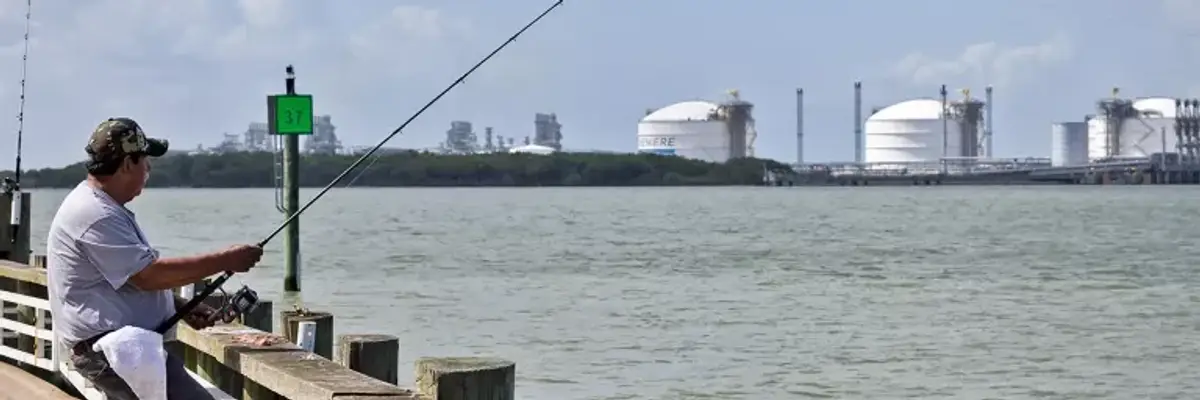
A man fishes near an LNG facility in Sabine Pass, Louisiana.
Why US Federal Regulators Must Embrace a Fossil Fuel-Free Future
FERC has played a significant role in worsening the climate crisis, perpetuating environmental injustice, and expanding the fossil fuel buildout by approving countless LNG projects, but there is still hope.
It is high time for a change at FERC, not just with the appointments of new commissioners but also with the integration of new policy that puts the health and safety of our communities over the unlimited profits of the fossil fuel industry.
It has been nearly one year since I and other community members from the Texas and Louisiana Gulf Coast were invited to join the Federal Energy Regulatory Commission (FERC) in discussing how they could better incorporate environmental justice into their decision-making. As someone who lives in Sulfur, Louisiana—a community overburdened by petrochemical and oil and gas pollution—I have seen firsthand the devastating effects of everything from liquefied natural gas (LNG) to plastics facilities. That’s why I looked forward to working with FERC on improving their processes to better suit the needs of the local communities, not just the oil and gas industry.
However, a year later, FERC has still failed to take meaningful action on this front and listen to our voices. Instead of heeding our calls and taking our input, FERC has continued with a status quo that threatens our health and safety. Their rubber stamp on more and more LNG projects in our communities has not stopped for a moment in spite of their stated commitments. As a result, our communities face a more dire future than ever.
FERC still has a chance to improve its ways by expanding cleaner energy sources for a sustainable future instead of dangerous fossil fuels.
FERC has played a significant role in worsening the climate crisis, perpetuating environmental injustice, and expanding the fossil fuel buildout by approving countless LNG projects. The facts are clear and devastating. The process of extracting and transporting LNG releases harmful emissions, with some scientists suggesting that these facilities could be even worse for the climate than coal. The air pollutants released from these terminals have been linked to various health issues in the communities surrounding them, including respiratory problems, cancer, and increased rates of asthma. Not only this, but the expansion of LNG also drives up energy costs and threatens the ecosystems that support our local fishing and tourism economies. And because the LNG industry disproportionately targets low-income communities and communities of color for their facilities, FERC’s unrelenting love for LNG perpetuates the environmental injustices the agency claims to prioritize.
It appears that every other government agency that has any authority in approving, overseeing, or regulating oil and gas projects is putting forth an effort to take a deeper look at what these projects are doing to communities and the climate. This has not been the case for FERC. But, there is still hope. FERC still has a chance to improve its ways by expanding cleaner energy sources for a sustainable future instead of dangerous fossil fuels.
Here’s how. To improve the health and safety of those living in frontline communities, particularly Black and Brown communities overburdened by pollution, FERC must foster a strong relationship with the communities it serves. This must include regular meetings with community members and on-site visits to witness firsthand the impacts of these projects. FERC must also consider the current pollution from existing facilities, cumulative impacts, greenhouse gas emissions, and environmental justice concerns when reviewing natural gas projects. FERC should also evaluate and incorporate guidance from other authoritative sources in identifying environmental justice communities affected by proposed projects.
Furthermore, FERC should require developers to consult and collaborate with the impacted communities and FERC itself. This collaboration is crucial in tailoring mitigation options that address the specific needs of environmental justice communities. FERC should involve frontline community members in the permitting process to ensure our voices are heard and considered. Lastly, FERC needs to ask critical questions about the necessity of new projects. This includes assessing the cumulative impacts on the environment and health. By thoroughly evaluating these factors, FERC can make more informed decisions that prioritize the well-being of communities.
As we transition to a future without fossil fuels, it’s clear that major change is needed at FERC. While the new commissioners at FERC go through the confirmation process, they must show they are dedicated to more than just the basic criteria of the job. We hope to see the commissioners eager to pave a new path forward by prioritizing justice: environmental justice and climate justice.
An Urgent Message From Our Co-Founder
Dear Common Dreams reader, It’s been nearly 30 years since I co-founded Common Dreams with my late wife, Lina Newhouser. We had the radical notion that journalism should serve the public good, not corporate profits. It was clear to us from the outset what it would take to build such a project. No paid advertisements. No corporate sponsors. No millionaire publisher telling us what to think or do. Many people said we wouldn't last a year, but we proved those doubters wrong. Together with a tremendous team of journalists and dedicated staff, we built an independent media outlet free from the constraints of profits and corporate control. Our mission has always been simple: To inform. To inspire. To ignite change for the common good. Building Common Dreams was not easy. Our survival was never guaranteed. When you take on the most powerful forces—Wall Street greed, fossil fuel industry destruction, Big Tech lobbyists, and uber-rich oligarchs who have spent billions upon billions rigging the economy and democracy in their favor—the only bulwark you have is supporters who believe in your work. But here’s the urgent message from me today. It's never been this bad out there. And it's never been this hard to keep us going. At the very moment Common Dreams is most needed, the threats we face are intensifying. We need your support now more than ever. We don't accept corporate advertising and never will. We don't have a paywall because we don't think people should be blocked from critical news based on their ability to pay. Everything we do is funded by the donations of readers like you. When everyone does the little they can afford, we are strong. But if that support retreats or dries up, so do we. Will you donate now to make sure Common Dreams not only survives but thrives? —Craig Brown, Co-founder |
It is high time for a change at FERC, not just with the appointments of new commissioners but also with the integration of new policy that puts the health and safety of our communities over the unlimited profits of the fossil fuel industry.
It has been nearly one year since I and other community members from the Texas and Louisiana Gulf Coast were invited to join the Federal Energy Regulatory Commission (FERC) in discussing how they could better incorporate environmental justice into their decision-making. As someone who lives in Sulfur, Louisiana—a community overburdened by petrochemical and oil and gas pollution—I have seen firsthand the devastating effects of everything from liquefied natural gas (LNG) to plastics facilities. That’s why I looked forward to working with FERC on improving their processes to better suit the needs of the local communities, not just the oil and gas industry.
However, a year later, FERC has still failed to take meaningful action on this front and listen to our voices. Instead of heeding our calls and taking our input, FERC has continued with a status quo that threatens our health and safety. Their rubber stamp on more and more LNG projects in our communities has not stopped for a moment in spite of their stated commitments. As a result, our communities face a more dire future than ever.
FERC still has a chance to improve its ways by expanding cleaner energy sources for a sustainable future instead of dangerous fossil fuels.
FERC has played a significant role in worsening the climate crisis, perpetuating environmental injustice, and expanding the fossil fuel buildout by approving countless LNG projects. The facts are clear and devastating. The process of extracting and transporting LNG releases harmful emissions, with some scientists suggesting that these facilities could be even worse for the climate than coal. The air pollutants released from these terminals have been linked to various health issues in the communities surrounding them, including respiratory problems, cancer, and increased rates of asthma. Not only this, but the expansion of LNG also drives up energy costs and threatens the ecosystems that support our local fishing and tourism economies. And because the LNG industry disproportionately targets low-income communities and communities of color for their facilities, FERC’s unrelenting love for LNG perpetuates the environmental injustices the agency claims to prioritize.
It appears that every other government agency that has any authority in approving, overseeing, or regulating oil and gas projects is putting forth an effort to take a deeper look at what these projects are doing to communities and the climate. This has not been the case for FERC. But, there is still hope. FERC still has a chance to improve its ways by expanding cleaner energy sources for a sustainable future instead of dangerous fossil fuels.
Here’s how. To improve the health and safety of those living in frontline communities, particularly Black and Brown communities overburdened by pollution, FERC must foster a strong relationship with the communities it serves. This must include regular meetings with community members and on-site visits to witness firsthand the impacts of these projects. FERC must also consider the current pollution from existing facilities, cumulative impacts, greenhouse gas emissions, and environmental justice concerns when reviewing natural gas projects. FERC should also evaluate and incorporate guidance from other authoritative sources in identifying environmental justice communities affected by proposed projects.
Furthermore, FERC should require developers to consult and collaborate with the impacted communities and FERC itself. This collaboration is crucial in tailoring mitigation options that address the specific needs of environmental justice communities. FERC should involve frontline community members in the permitting process to ensure our voices are heard and considered. Lastly, FERC needs to ask critical questions about the necessity of new projects. This includes assessing the cumulative impacts on the environment and health. By thoroughly evaluating these factors, FERC can make more informed decisions that prioritize the well-being of communities.
As we transition to a future without fossil fuels, it’s clear that major change is needed at FERC. While the new commissioners at FERC go through the confirmation process, they must show they are dedicated to more than just the basic criteria of the job. We hope to see the commissioners eager to pave a new path forward by prioritizing justice: environmental justice and climate justice.
- Groups, Lawmakers Demand FERC Deny Mountain Valley Pipeline Extension for NC ›
- 'Someone Needs to Show President Biden the Latest IPCC Report,' Greenpeace Says After Texas LNG Approvals ›
- 9 Dems Join House GOP in Bid to Reverse Biden LNG Pause ›
- On Back of Willow Project, Biden DOE Approves 'Another Carbon Bomb' in Alaska ›
- 'Appalling': Mountain Valley Pipeline Gets Two More Federal Approvals ›
- Green Groups Outline How to Boost Electricity Transmission Without Gutting Environmental Laws ›
It is high time for a change at FERC, not just with the appointments of new commissioners but also with the integration of new policy that puts the health and safety of our communities over the unlimited profits of the fossil fuel industry.
It has been nearly one year since I and other community members from the Texas and Louisiana Gulf Coast were invited to join the Federal Energy Regulatory Commission (FERC) in discussing how they could better incorporate environmental justice into their decision-making. As someone who lives in Sulfur, Louisiana—a community overburdened by petrochemical and oil and gas pollution—I have seen firsthand the devastating effects of everything from liquefied natural gas (LNG) to plastics facilities. That’s why I looked forward to working with FERC on improving their processes to better suit the needs of the local communities, not just the oil and gas industry.
However, a year later, FERC has still failed to take meaningful action on this front and listen to our voices. Instead of heeding our calls and taking our input, FERC has continued with a status quo that threatens our health and safety. Their rubber stamp on more and more LNG projects in our communities has not stopped for a moment in spite of their stated commitments. As a result, our communities face a more dire future than ever.
FERC still has a chance to improve its ways by expanding cleaner energy sources for a sustainable future instead of dangerous fossil fuels.
FERC has played a significant role in worsening the climate crisis, perpetuating environmental injustice, and expanding the fossil fuel buildout by approving countless LNG projects. The facts are clear and devastating. The process of extracting and transporting LNG releases harmful emissions, with some scientists suggesting that these facilities could be even worse for the climate than coal. The air pollutants released from these terminals have been linked to various health issues in the communities surrounding them, including respiratory problems, cancer, and increased rates of asthma. Not only this, but the expansion of LNG also drives up energy costs and threatens the ecosystems that support our local fishing and tourism economies. And because the LNG industry disproportionately targets low-income communities and communities of color for their facilities, FERC’s unrelenting love for LNG perpetuates the environmental injustices the agency claims to prioritize.
It appears that every other government agency that has any authority in approving, overseeing, or regulating oil and gas projects is putting forth an effort to take a deeper look at what these projects are doing to communities and the climate. This has not been the case for FERC. But, there is still hope. FERC still has a chance to improve its ways by expanding cleaner energy sources for a sustainable future instead of dangerous fossil fuels.
Here’s how. To improve the health and safety of those living in frontline communities, particularly Black and Brown communities overburdened by pollution, FERC must foster a strong relationship with the communities it serves. This must include regular meetings with community members and on-site visits to witness firsthand the impacts of these projects. FERC must also consider the current pollution from existing facilities, cumulative impacts, greenhouse gas emissions, and environmental justice concerns when reviewing natural gas projects. FERC should also evaluate and incorporate guidance from other authoritative sources in identifying environmental justice communities affected by proposed projects.
Furthermore, FERC should require developers to consult and collaborate with the impacted communities and FERC itself. This collaboration is crucial in tailoring mitigation options that address the specific needs of environmental justice communities. FERC should involve frontline community members in the permitting process to ensure our voices are heard and considered. Lastly, FERC needs to ask critical questions about the necessity of new projects. This includes assessing the cumulative impacts on the environment and health. By thoroughly evaluating these factors, FERC can make more informed decisions that prioritize the well-being of communities.
As we transition to a future without fossil fuels, it’s clear that major change is needed at FERC. While the new commissioners at FERC go through the confirmation process, they must show they are dedicated to more than just the basic criteria of the job. We hope to see the commissioners eager to pave a new path forward by prioritizing justice: environmental justice and climate justice.
- Groups, Lawmakers Demand FERC Deny Mountain Valley Pipeline Extension for NC ›
- 'Someone Needs to Show President Biden the Latest IPCC Report,' Greenpeace Says After Texas LNG Approvals ›
- 9 Dems Join House GOP in Bid to Reverse Biden LNG Pause ›
- On Back of Willow Project, Biden DOE Approves 'Another Carbon Bomb' in Alaska ›
- 'Appalling': Mountain Valley Pipeline Gets Two More Federal Approvals ›
- Green Groups Outline How to Boost Electricity Transmission Without Gutting Environmental Laws ›