SUBSCRIBE TO OUR FREE NEWSLETTER
Daily news & progressive opinion—funded by the people, not the corporations—delivered straight to your inbox.
5
#000000
#FFFFFF
To donate by check, phone, or other method, see our More Ways to Give page.
Daily news & progressive opinion—funded by the people, not the corporations—delivered straight to your inbox.
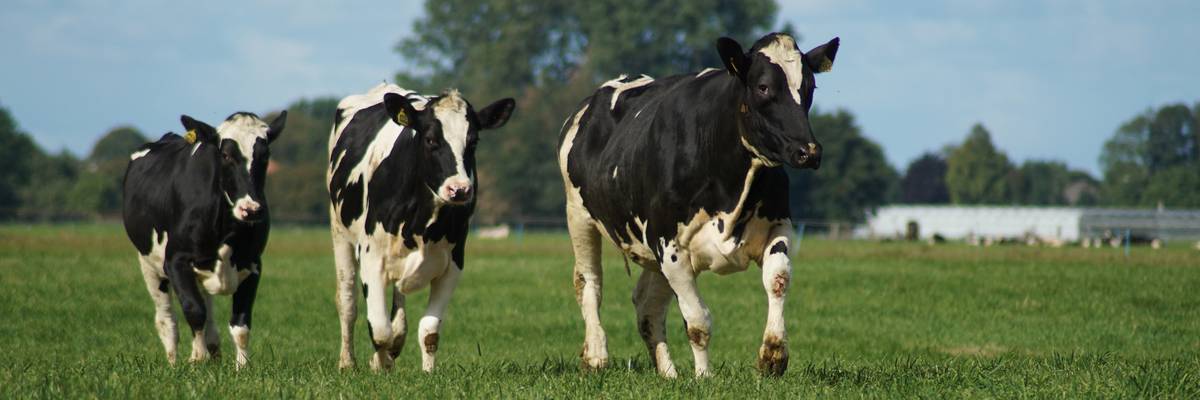
Three black and white cows walk along a grass field.
Through our Dairy Together campaign, the Michigan and Wisconsin Farmers Unions are proposing a federal program to manage the unchecked growth of large-scale dairies and to preserve local agriculture.
I consider myself lucky to be a fourth-generation family farmer in mid-Michigan. For years, my family had a thriving dairy cow herd on our 300-acre centennial farm. But as the years passed by, we were faced with the reality of surprise jumps in milk pricing and corporate dairy’s growing power. Eventually, after a tough decision, we stopped raising dairy cows. This was our livelihood, but we could not make a living the way things were.
Across the Midwest, due to the oversupply of dairy, independent farmers are forced to dump their milk, wasting precious time and money, and leaving the future of small dairy farms in peril. Imagine what thousands of gallons of wasted milk looks like; this situation is an unfair reality for independent farmers across the country whose viability is at risk. This problem is leaving our family farms in a dire state: Since 2018, more than 450 dairy operations in Michigan closed their doors.
The upcoming farm bill is an opportunity to save small dairy farms and to make our food system more secure. Michigan Farmers Union, along with our counterpart, Wisconsin Farmers Union, have a solution to preserve small dairy farms while ensuring independent farmers have a voice. Through our Dairy Together campaign, we are proposing a federal program to manage the unchecked growth of large-scale dairies and to preserve local agriculture. It’s time we rein in the corporate influence wreaking havoc on farmers and eaters alike.
The exponential growth of dairy operations is leading to overproduction, which hurts farmers and the consumer.
The Dairy Together initiative proposes a mandatory program for managed growth in the 2023 farm bill that is based on market demand and price stability. Through this program, if an operation wanted to grow above their allowable rate, they’d have to pay a premium (called a market access fee) in order to produce more milk. The allowable growth rate would be determined by the historic production levels based on each individual operation. As a result, our country would see more success on family farms because there would be fewer incentives granted to large-scale corporate agriculture.
Corporate megafarms are one of the leading existential threats to independent farmers and our food system, and the dairy sector is not immune to this problem. In 2017, the U.S. Department of Agriculture found that just 2,000 farms with herds of at least 1,000 dairy cows produced over half of our country’s milk. In contrast, in 1992, roughly 500 of those operations produced 10% of the country’s milk. Deregulation in agriculture following the 1996 farm bill—dubbed Freedom to Fail—allowed corporate agriculture to scale up exponentially, putting tens of thousands of independent farms out of business.
In order to perpetuate this outsized market share, wealthy agriculture companies hire lobbyists to write laws that protect their bottom line while everyone else pays the price—especially independent farmers. While dairy production and the total headcount of cattle are growing in Michigan, there is an actual decline in the number of dairy farms, which means that smaller farms are dying and the corporate operations are getting larger.
The exponential growth of dairy operations is leading to overproduction, which hurts farmers and the consumer. When supply and demand aren’t in check for the dairy sector, smaller operations struggle to make ends meet, while large corporate operations find it easier to recoup their losses due to their scale. This “get big or get out” mentality is hurting the vitality of rural farming communities and independent farmers across the country. Additionally, overproduction leads to volatile pricing, leaving families buying dairy in the lurch when groceries are already expensive.
For growth management to work, the program needs to be implemented nationally with government authorization and the full buy-in from farmers. Farmers would have direct control in growth management and price stability. Much of this oversight would happen under a farmer-led board that is elected regionally, ensuring that farmers have meaningful input in the development, implementation, and governance of this program.
As we look to the farm bill, which is supposed to get passed every five years, our federal lawmakers must pay attention to the growing insecurity that dairy farmers across the country are facing. As my own Senator Debbie Stabenow (who leads the farm bill process in the Senate) noted when retiring, heralding the next generation of leaders is paramount. In order to leave the state of dairy better than how we found it, now is the moment to heed the call for fairer and more competitive markets. I urge you to contact your federal lawmakers in support of a growth management plan for dairy in the 2023 farm bill.
Dear Common Dreams reader, It’s been nearly 30 years since I co-founded Common Dreams with my late wife, Lina Newhouser. We had the radical notion that journalism should serve the public good, not corporate profits. It was clear to us from the outset what it would take to build such a project. No paid advertisements. No corporate sponsors. No millionaire publisher telling us what to think or do. Many people said we wouldn't last a year, but we proved those doubters wrong. Together with a tremendous team of journalists and dedicated staff, we built an independent media outlet free from the constraints of profits and corporate control. Our mission has always been simple: To inform. To inspire. To ignite change for the common good. Building Common Dreams was not easy. Our survival was never guaranteed. When you take on the most powerful forces—Wall Street greed, fossil fuel industry destruction, Big Tech lobbyists, and uber-rich oligarchs who have spent billions upon billions rigging the economy and democracy in their favor—the only bulwark you have is supporters who believe in your work. But here’s the urgent message from me today. It's never been this bad out there. And it's never been this hard to keep us going. At the very moment Common Dreams is most needed, the threats we face are intensifying. We need your support now more than ever. We don't accept corporate advertising and never will. We don't have a paywall because we don't think people should be blocked from critical news based on their ability to pay. Everything we do is funded by the donations of readers like you. When everyone does the little they can afford, we are strong. But if that support retreats or dries up, so do we. Will you donate now to make sure Common Dreams not only survives but thrives? —Craig Brown, Co-founder |
I consider myself lucky to be a fourth-generation family farmer in mid-Michigan. For years, my family had a thriving dairy cow herd on our 300-acre centennial farm. But as the years passed by, we were faced with the reality of surprise jumps in milk pricing and corporate dairy’s growing power. Eventually, after a tough decision, we stopped raising dairy cows. This was our livelihood, but we could not make a living the way things were.
Across the Midwest, due to the oversupply of dairy, independent farmers are forced to dump their milk, wasting precious time and money, and leaving the future of small dairy farms in peril. Imagine what thousands of gallons of wasted milk looks like; this situation is an unfair reality for independent farmers across the country whose viability is at risk. This problem is leaving our family farms in a dire state: Since 2018, more than 450 dairy operations in Michigan closed their doors.
The upcoming farm bill is an opportunity to save small dairy farms and to make our food system more secure. Michigan Farmers Union, along with our counterpart, Wisconsin Farmers Union, have a solution to preserve small dairy farms while ensuring independent farmers have a voice. Through our Dairy Together campaign, we are proposing a federal program to manage the unchecked growth of large-scale dairies and to preserve local agriculture. It’s time we rein in the corporate influence wreaking havoc on farmers and eaters alike.
The exponential growth of dairy operations is leading to overproduction, which hurts farmers and the consumer.
The Dairy Together initiative proposes a mandatory program for managed growth in the 2023 farm bill that is based on market demand and price stability. Through this program, if an operation wanted to grow above their allowable rate, they’d have to pay a premium (called a market access fee) in order to produce more milk. The allowable growth rate would be determined by the historic production levels based on each individual operation. As a result, our country would see more success on family farms because there would be fewer incentives granted to large-scale corporate agriculture.
Corporate megafarms are one of the leading existential threats to independent farmers and our food system, and the dairy sector is not immune to this problem. In 2017, the U.S. Department of Agriculture found that just 2,000 farms with herds of at least 1,000 dairy cows produced over half of our country’s milk. In contrast, in 1992, roughly 500 of those operations produced 10% of the country’s milk. Deregulation in agriculture following the 1996 farm bill—dubbed Freedom to Fail—allowed corporate agriculture to scale up exponentially, putting tens of thousands of independent farms out of business.
In order to perpetuate this outsized market share, wealthy agriculture companies hire lobbyists to write laws that protect their bottom line while everyone else pays the price—especially independent farmers. While dairy production and the total headcount of cattle are growing in Michigan, there is an actual decline in the number of dairy farms, which means that smaller farms are dying and the corporate operations are getting larger.
The exponential growth of dairy operations is leading to overproduction, which hurts farmers and the consumer. When supply and demand aren’t in check for the dairy sector, smaller operations struggle to make ends meet, while large corporate operations find it easier to recoup their losses due to their scale. This “get big or get out” mentality is hurting the vitality of rural farming communities and independent farmers across the country. Additionally, overproduction leads to volatile pricing, leaving families buying dairy in the lurch when groceries are already expensive.
For growth management to work, the program needs to be implemented nationally with government authorization and the full buy-in from farmers. Farmers would have direct control in growth management and price stability. Much of this oversight would happen under a farmer-led board that is elected regionally, ensuring that farmers have meaningful input in the development, implementation, and governance of this program.
As we look to the farm bill, which is supposed to get passed every five years, our federal lawmakers must pay attention to the growing insecurity that dairy farmers across the country are facing. As my own Senator Debbie Stabenow (who leads the farm bill process in the Senate) noted when retiring, heralding the next generation of leaders is paramount. In order to leave the state of dairy better than how we found it, now is the moment to heed the call for fairer and more competitive markets. I urge you to contact your federal lawmakers in support of a growth management plan for dairy in the 2023 farm bill.
I consider myself lucky to be a fourth-generation family farmer in mid-Michigan. For years, my family had a thriving dairy cow herd on our 300-acre centennial farm. But as the years passed by, we were faced with the reality of surprise jumps in milk pricing and corporate dairy’s growing power. Eventually, after a tough decision, we stopped raising dairy cows. This was our livelihood, but we could not make a living the way things were.
Across the Midwest, due to the oversupply of dairy, independent farmers are forced to dump their milk, wasting precious time and money, and leaving the future of small dairy farms in peril. Imagine what thousands of gallons of wasted milk looks like; this situation is an unfair reality for independent farmers across the country whose viability is at risk. This problem is leaving our family farms in a dire state: Since 2018, more than 450 dairy operations in Michigan closed their doors.
The upcoming farm bill is an opportunity to save small dairy farms and to make our food system more secure. Michigan Farmers Union, along with our counterpart, Wisconsin Farmers Union, have a solution to preserve small dairy farms while ensuring independent farmers have a voice. Through our Dairy Together campaign, we are proposing a federal program to manage the unchecked growth of large-scale dairies and to preserve local agriculture. It’s time we rein in the corporate influence wreaking havoc on farmers and eaters alike.
The exponential growth of dairy operations is leading to overproduction, which hurts farmers and the consumer.
The Dairy Together initiative proposes a mandatory program for managed growth in the 2023 farm bill that is based on market demand and price stability. Through this program, if an operation wanted to grow above their allowable rate, they’d have to pay a premium (called a market access fee) in order to produce more milk. The allowable growth rate would be determined by the historic production levels based on each individual operation. As a result, our country would see more success on family farms because there would be fewer incentives granted to large-scale corporate agriculture.
Corporate megafarms are one of the leading existential threats to independent farmers and our food system, and the dairy sector is not immune to this problem. In 2017, the U.S. Department of Agriculture found that just 2,000 farms with herds of at least 1,000 dairy cows produced over half of our country’s milk. In contrast, in 1992, roughly 500 of those operations produced 10% of the country’s milk. Deregulation in agriculture following the 1996 farm bill—dubbed Freedom to Fail—allowed corporate agriculture to scale up exponentially, putting tens of thousands of independent farms out of business.
In order to perpetuate this outsized market share, wealthy agriculture companies hire lobbyists to write laws that protect their bottom line while everyone else pays the price—especially independent farmers. While dairy production and the total headcount of cattle are growing in Michigan, there is an actual decline in the number of dairy farms, which means that smaller farms are dying and the corporate operations are getting larger.
The exponential growth of dairy operations is leading to overproduction, which hurts farmers and the consumer. When supply and demand aren’t in check for the dairy sector, smaller operations struggle to make ends meet, while large corporate operations find it easier to recoup their losses due to their scale. This “get big or get out” mentality is hurting the vitality of rural farming communities and independent farmers across the country. Additionally, overproduction leads to volatile pricing, leaving families buying dairy in the lurch when groceries are already expensive.
For growth management to work, the program needs to be implemented nationally with government authorization and the full buy-in from farmers. Farmers would have direct control in growth management and price stability. Much of this oversight would happen under a farmer-led board that is elected regionally, ensuring that farmers have meaningful input in the development, implementation, and governance of this program.
As we look to the farm bill, which is supposed to get passed every five years, our federal lawmakers must pay attention to the growing insecurity that dairy farmers across the country are facing. As my own Senator Debbie Stabenow (who leads the farm bill process in the Senate) noted when retiring, heralding the next generation of leaders is paramount. In order to leave the state of dairy better than how we found it, now is the moment to heed the call for fairer and more competitive markets. I urge you to contact your federal lawmakers in support of a growth management plan for dairy in the 2023 farm bill.