

SUBSCRIBE TO OUR FREE NEWSLETTER
Daily news & progressive opinion—funded by the people, not the corporations—delivered straight to your inbox.
5
#000000
#FFFFFF
To donate by check, phone, or other method, see our More Ways to Give page.
Daily news & progressive opinion—funded by the people, not the corporations—delivered straight to your inbox.
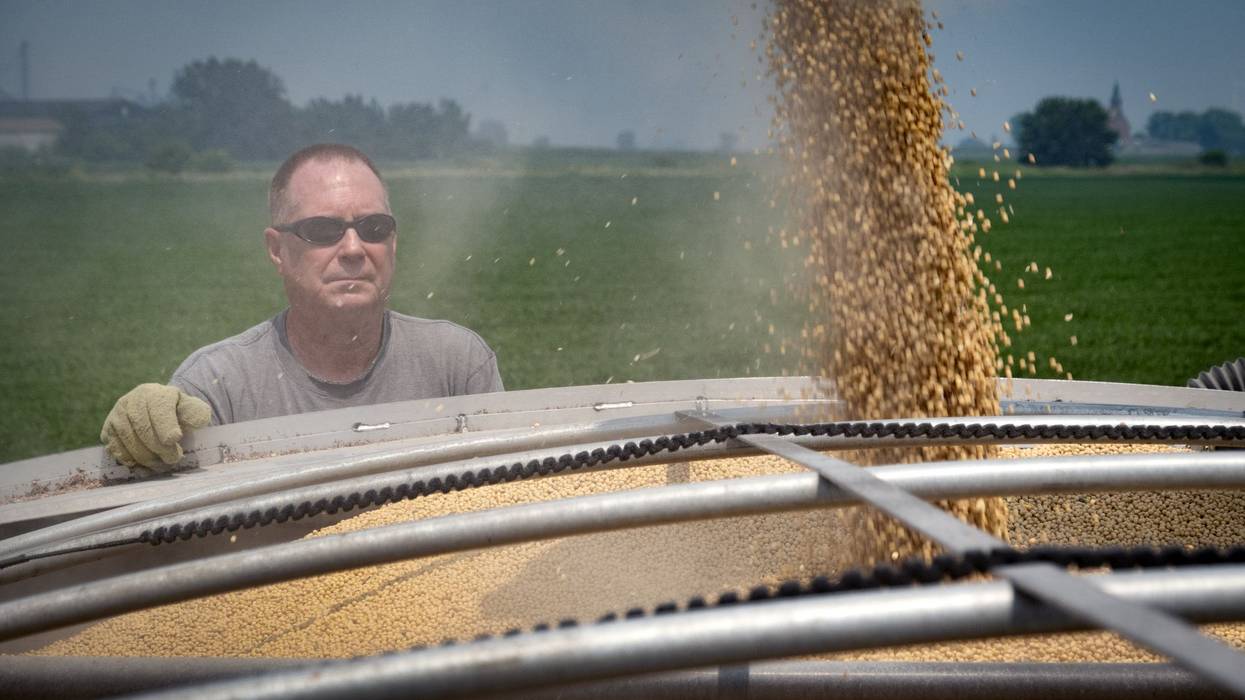
The administration’s domestic policies, coupled with aggressive foreign postures, are accelerating disillusionment among Trump’s core supporters.
As President Donald Trump’s second term unfolds, the contradictions at the heart of his “America First” agenda are increasingly apparent. What began as a populist revolt against elite globalism appears to have morphed into policies that alienate the very rural and small-town constituencies that backed him in 2016, 2020, and 2024.
These rust-belt and rural counties were drawn to his promises of economic revival, border security, and non-interventionism. Yet, emerging signs of fracture in this MAGA base suggest a potential backlash in the upcoming midterms.
The administration’s domestic policies, coupled with aggressive foreign postures, are accelerating disillusionment among Trump’s core supporters.
Domestically, Trump’s intensified immigration enforcement has backfired. Ramped-up Immigration and Customs Enforcement raids were sold as fulfilling pledges of mass deportations targeting “criminals”. But these operations have swept up undocumented workers essential to rural economies. Small family farms and businesses in states including California, Idaho, and Pennsylvania are reliant on immigrant labor for harvesting crops, dairy operations, and meatpacking. They now face acute shortages.
Trump, meanwhile, is perceived as profiting personally. His properties and branding deals benefit from economic nationalism, even as family farms teeter on the verge of bankruptcy.
Agricultural employment dropped by 155,000 workers between March and July 2025, reversing prior growth trends. Farmers in Ventura County, California, for example, denounced raids that targeted routes frequented by agricultural workers. Fields lie unharvested signalling financial ruin for some operations. Family-run farms struggle to find replacements. Low wages and grueling conditions simply fail to attract American-born laborers.
This labor crisis exacerbates a broader sense of betrayal. Rural voters supported Trump for his anti-elite rhetoric, expecting protection for their livelihoods. Instead, the administration’s actions have hollowed out local workforces without viable alternatives.
The H-2A visa program, meant to provide temporary foreign workers, has been streamlined—but remains insufficient amid ongoing raids, which deter even legal migrants. These disruptions ripple through small-town economies, where agriculture underpins community stability. Democrats, sensing opportunity, are investing in rural outreach, emphasizing economic populism to woo disillusioned voters who feel abandoned by Trump’s enforcement zeal.
Compounding these woes are the ongoing tariff disruptions. Trump touts his tariffs as tools to “make America great,” but in fact they have driven up costs for the same rural groups. Between January and September 2025, tariffs on imports from China, Canada, Mexico, and others have surged, collecting US$125 billion. However, the figure may be even higher according to experts.
But while the administration claims these taxes punish foreign adversaries, the burden falls squarely on American importers and consumers. Small businesses, which account for around 30% of imports, faced an average of US$151,000 in extra costs from April to September 2025, translating to $25,000 monthly hikes. Farmers, already squeezed by low grain prices, pay more for necessities, such as fertilizers (hit by 44% effective tariffs on Indian imports) and machinery parts.
Midwest producers of soybeans, corn, and pork—key US exports—suffer doubly from retaliatory tariffs abroad, which reduce demand and depress revenues. In Tennessee and Pennsylvania, builders report 2.5% rises in material costs, while food prices climb due to duties on beef, tomatoes, and coffee.
Trump, meanwhile, is perceived as profiting personally. His properties and branding deals benefit from economic nationalism, even as family farms teeter on the verge of bankruptcy. This disparity fuels resentment. Polls show Trump’s approval slipping in swing counties, with economic anxiety eroding the loyalty that once overlooked his character flaws.
These domestic fractures are mirrored in foreign policy, where Trump’s interventionism starkly contradicts his campaign pledge of “America First” restraint. Having promised no new wars, he has instead pursued aggressive postures that many Republicans view as unnecessary. The most emblematic is his renewed bid to acquire Greenland, apparently by negotiation or force, which has swiftly followed the US raid on Venezuela in the first week of January, accompanied by threats against other Latin American countries including Cuba and Colombia.
The US president has justified demands for control over the Arctic island—citing threats from Russia and China—as a strategic necessity. But NATO allies such as Denmark—of which Greenland is a constituent part—have rebuked it as an potentially alliance-shattering move. Congressional Republicans, including Sens. Mitch McConnell (R-Ky.) and Thom Tillis (R-NC), have broken ranks, warning that force would obliterate NATO and tarnish US influence.
Such dissent highlights broader paradoxes. Trump’s populist realism prioritizes tough rhetoric for domestic consumption but yields aggressive, even reckless actions abroad. His administration is effectively dismantling post-1945 institutions while embracing 19th-century spheres-of-influence and outright colonialist thinking, including invoking an updated version of the 1823 Monroe doctrine.
The fractures signal that Trump’s “America First” policies may ultimately leave its rural and rust belt champions behind.
Rural voters, weary of endless wars, supported his non-interventionist promises. Now they see echoes of past entanglements in Trump’s suggestion that the US could intervene in Iran. This cognitive dissonance is accelerating disillusionment with his presidency.
These self-inflicted but inherent contradictions are hastening a pivotal reckoning for Trumpism. In many counties that have thrice backed him—and especially in swing counties—economic hardship and policy betrayals erode the cultural ties binding rural America to the Republican party. Democrats, through programs such as the Rural Urban Bridge Initiative, are betting on this “betrayal” narrative, spotlighting farmers’ plights to flip seats in November 2026.
Polls show Latinos and independents souring on Trump, with the US president’s base turnout potentially waning as the midterm elections approach in November. If Republicans suffer larger-than-expected losses in those elections, it could mark the decline of Trumpism’s grip by exposing its elite-serving underbelly beneath populist veneer.
Yet, without a compelling alternative vision, Democrats risk squandering this opening. For now, the fractures signal that Trump’s “America First” policies may ultimately leave its rural and rust belt champions behind. Whether Trumpism proves resilient or begins a long decline may well be decided not in Washington and Mar-a-Lago, but in the county seats and small towns that once formed its unbreakable base.
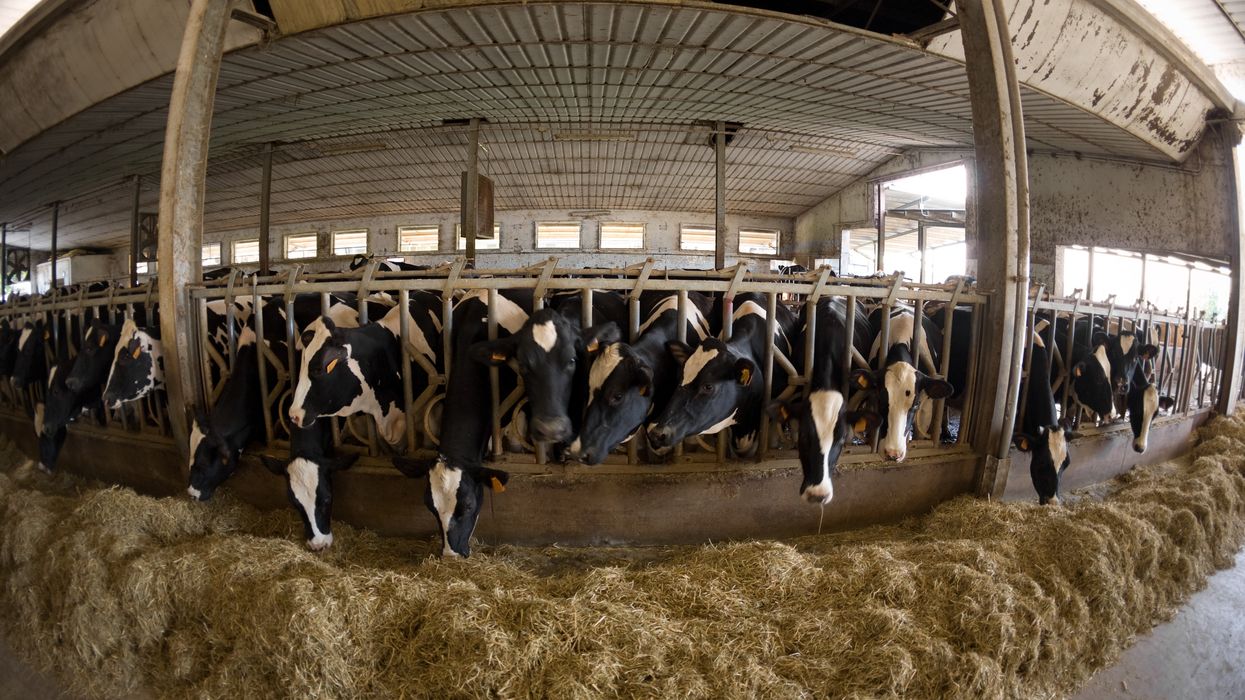
There are better responses to the climate crisis that also treat rural people and our land, air, and water with respect.
There has been much media hype about manure digesters and how they will “solve” climate change by capturing and burning methane from confined animal feeding operations or CAFOs—aka factory farms. Billions in taxpayer handouts and other incentives through pollution offset trading markets are encouraging factory farms to expand and profit from their waste stream. Some economists now speculate that factory farms are earning more from making methane than milk!
A recent Friends of the Earth and Socially Responsible Agriculture Project report
goes even further, suggesting that if the U.S. really wanted to reduce it’s agricultural contribution towards greenhouse gases, it would make more sense for regulators to phase out or split up CAFOs and shift taxpayer support towards smaller grass-based livestock operations instead.
Sadly, the misguided notion of manure digesters as a “solution” to the climate crisis is nothing new. Back in 2009 at the United Nations Climate Change Conference in Copenhagen, I almost fell off my chair when then-U.S. Department of Agriculture (USDA) Secretary Tom Vilsack announced that manure digesters on factory farms were going to be a key part of former President Barack Obama’s climate change agenda. He later admitted that less than 10% of dairy farms (ie CAFOs) would be large enough to qualify for these USDA digester grants—another example of how federal policies support industrial agribusiness to the detriment of smaller farmers.
Intentional factory farm production and subsequent “climate smart” combustion of methane is not only oxymoronic, but will undermine the future prospect of life here on Earth.
This manure digester building binge has ramped up even more under President Joe Biden—with Vilsack once again back at the helm of the USDA. The latest Instititue for Agriculture and Trade Policy report critiquing the Environmental Quality Incentive Program (EQIP) reveals just how much of this popular USDA effort has been hijacked by a small elite number of CAFOs, to the detriment of the majority of farmers who have their EQIP applications declined. Encouraging livestock grazing is NOT front and center among “climate smart” practices promoted under EQIP and the Natural Resources Conservation Service—that star role is held by waste lagoons and manure digesters.
A typical CAFO digester for 2000 dairy cows costs over $2 million, with EQIP covering up to $400,000. But there are many other funds available, such as through the Rural Energy for America Program (REAP), which bankrolled $78 million for digesters in the last decade. The recent Inflation Reduction Act (IRA) added another $250 million to EQIP, along with another $2 billion for REAP, including a brand new 30% tax credit for all new digesters built.
The current trough of taxpayer funding for the manure methane industrial complex is long and deep, but there is even more potential revenue to be milked. In Wisconsin alone there are now 15 manure digesters getting money for their methane offsetting of 1.3 million carbon credits available through the California Cap and Trade System. How does this work? Build a methane digester in Wisconsin, claim that by burning off this really bad methane it is equal to reducing the impact of so many tons of carbon dioxide emitted in California, and then get a bonus check for that hard offset work! The value of one carbon credit on the California market as of April 2023 was $28.66.
The problem with this taxpayer mandated and subsidized “cap and trade” system is that it does not necessarily reduce overall greenhouse gas emissions—it just moves pollution around (and the atmosphere doesn’t care about your zipcode). Worse yet, if your offset claims prove to be bogus and corrupt, the climate crisis ends up much worse. This was exactly the case when Midwest activists alerted California officials that some of the Wisconsin CAFOs claiming methane offset credits were really engaged in wire fraud, since their digesters were either broken or not effectively functioning to capture methane as claimed. More details can be found in the SRAP expose of this 21st century Ponzi style scheme. Along with many allies, Family Farm Defenders has been diligently opposing such corporatized pollution trading mechanisms through the Alliance Against Farm Bill Offsets, whether they involve offsets for carbon sequestration pipelines, manure digesters, or “no-till” GMO monocultures.
My gut reaction 15 years ago to Vilsack’s manure digester panacea to global climate change remains true today—why pay to fix a problem that doesn’t even need to exist? Countless studies have shown that the most cost effective, eco-friendly, and often quite profitable form of animal husbandry—including dairying—is managed rotational grazing. If animals are just allowed to enjoy pasture outside (as they prefer and are meant to do by mother nature) and then also allowed to deposit their manure in a healthy perennial ecosystem, one does not end up with a methane crisis. It is only when one decides to confine thousands of animals in a warehouse, offer them nothing but TMR to consume (with dubious components like feather meal and ethanol leftovers), liquefy millions of gallons of their manure, and then store it in massive anaerobic lagoons, that one creates a pollutant 80+ times worse than carbon dioxide.
Sure, one can always capture and burn the methane that doesn’t leak from a CAFO digester to make electricity or run a vehicle (which means more greenhouse gas pollution), but you still have the leftover sludge (aka digestate) to deal with. This is loaded with nitrates, phosphorous, and—depending upon what other waste gets dumped into the digester—PFAS, pharmaceuticals, agrochemicals, heavy metals—which will then seep into the ground and became part of runoff, contributing to tainted wells, beach closures, toxic fish, the list goes on and on. Besides methane, there are other toxic CAFO gases—such as hydrogen sulfide, ammonia, and nitrous oxide—that cause chronic headaches for neighboring residents and hurt anyone else downwind.
And let’s not forget the ever present danger of methane explosions and lagoon ruptures. When a massive lagoon leaked on a hog factory farm in Wayne County, North Carolina, in May 2022, spilling into the nearby Nahunta Swamp, it was revealed that hundreds of rotting pigs, along with deli meat and discarded hotdogs, were part of the digester feedstock to make the methane being sold to Duke Energy. Closer to home, just ask anyone who lives near Waunakee, Wisconsin, what it was like to have a poorly designed and managed digester both explode and also leak 400,000+ gallons of fresh manure into Lake Mendota about a decade ago. This single disaster set back Yahara Watershed cleanup efforts for years. It would have been so much cheaper, simpler, and less disastrous for Wisconsin state and Dane County taxpayers to have promoted composting instead (which some better CAFOs actually do, without lagoons).
In November 2022 Kari Lydersen wrote a disturbing investigation, chronicling the many risks to farm workers from factory farms and their manure digesters. She tells one story of Bob Baenziger, Jr., retired Army veteran and former offshore oil rig diver, who died in 2021 as a hired contractor trying to fix a broken cable in an Iowa manure digester. Drowning in such a squalid pool is something straight out of Dante’s Inferno. The same year Samuel Antonio Padilla Castro, a Honduran immigrant, was working a 12-hour shift at the Fair Oaks Farm in Indiana when his clothing was caught in manure handling equipment, strangling him to death. His death left behind a widow, three children, and a token $10,500 Occupational Safety and Health Administration fine. Austin Frerick’s profile of the McCloskey family, which owns Fair Oaks Farm, in his new book, Barons, reveals more of the underbelly of this “Dairy Disneyland,” including their role as digester cheerleaders. Another Fair Oaks tourist and digester advocate he mentions is Tom Vilsack.
Our current “get big or get out” farm policy does not have much time or interest in agroecological approaches for healthier food that also ensure food sovereignty. Instead, corporate agribusiness is allowed to manipulate commodity markets—driving out what little competition exists from smaller farmers and local processors. The political allies of the food giants then ensure that taxpayers help underwrite the largest industrialized operations left standing, since they are the easiest to vertically integrate into the dominant oligopoly structure. Is it any surprise to see agribusiness lobbyists and their academic apologists now touting manure digesters as “climate smart” just in time for Earth Day and pushing for pollution trading offset schemes within the 2024 Farm Bill?
Thankfully, there are better responses to the climate crisis that also treat rural people and our land, air, and water with respect. Existing federal initiatives such as the Conservation Reserve Program could be expanded to better direct payments to farmers who are already doing so much responsible land and climate stewardship—without carbon offset peddlers skimming 25% off the top. The EQIP and REAP programs need to be overhauled to severely limit or even eliminate CAFO lagoon and digester grants and earmark more towards smaller grass-based diversified operations instead. This is the gist behind the EQIP Reform Act, introduced by Sen. Cory Booker (D-N.J.) and Rep. Mike Lee (R-Utah) last year as part of the Farm Bill debate.
More generally, factory farms must be treated as a pollution point source, subject to all the monitoring, regulation, and liability required for any other industrial operation. Why should CAFOs evade the common sense oversight that other businesses respect? Defending local control also remains critical. Last year grassroots activists in St. Croix County were able to push back and shut down a massive digester proposal near New Richmond, Wisconsin, being aggressively promoted by Nature Energy, a Shell Oil subsidiary. Thousands of folks recently responded to a statewide action alert successfully demanding that Wisconsin Gov. Tony Evers veto CAFO industry-crafted preemption legislation that would have hamstrung the right to pass ordinances that would restrict their manure digesters and other rural mal-development projects. Democratic direct action can get the goods!
NASA space probes have revealed that there is a massive ocean of liquid methane on Titan, one of the moons circling Saturn. There is also not any life that we know of on Titan… Intentional factory farm production and subsequent “climate smart” combustion of methane is not only oxymoronic, but will undermine the future prospect of life here on Earth. Farmers can feed the world and the cool the planet—without the false promise of manure digesters.
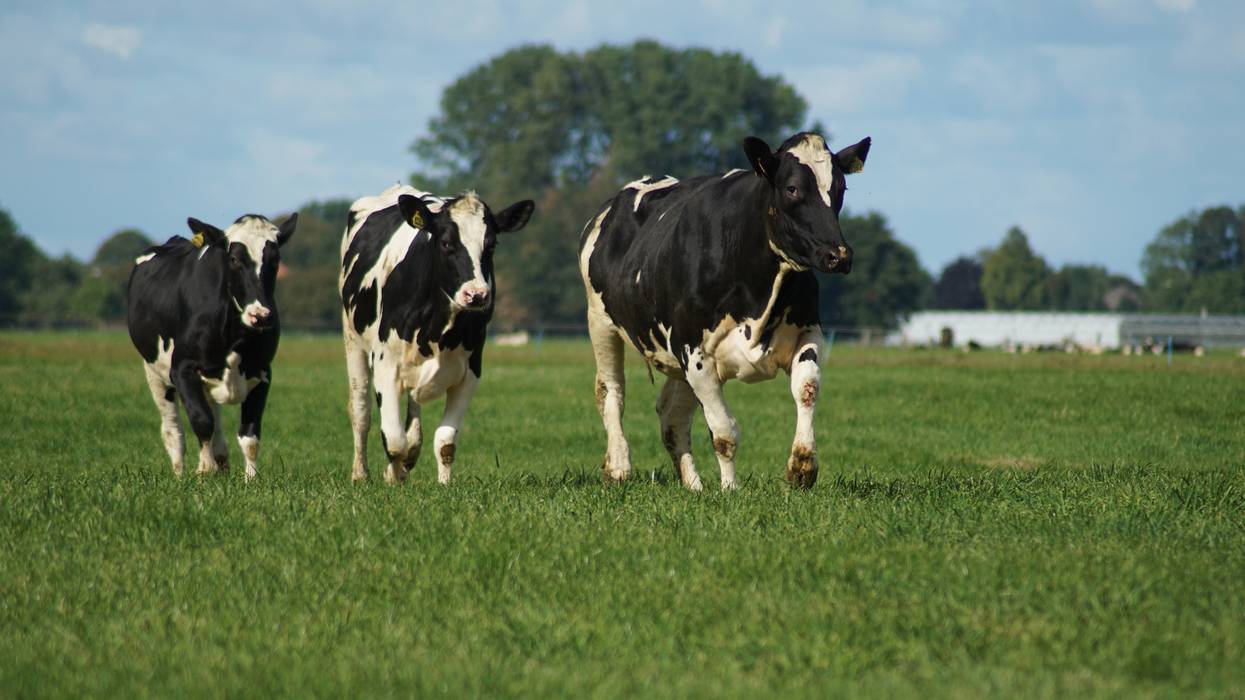
Through our Dairy Together campaign, the Michigan and Wisconsin Farmers Unions are proposing a federal program to manage the unchecked growth of large-scale dairies and to preserve local agriculture.
I consider myself lucky to be a fourth-generation family farmer in mid-Michigan. For years, my family had a thriving dairy cow herd on our 300-acre centennial farm. But as the years passed by, we were faced with the reality of surprise jumps in milk pricing and corporate dairy’s growing power. Eventually, after a tough decision, we stopped raising dairy cows. This was our livelihood, but we could not make a living the way things were.
Across the Midwest, due to the oversupply of dairy, independent farmers are forced to dump their milk, wasting precious time and money, and leaving the future of small dairy farms in peril. Imagine what thousands of gallons of wasted milk looks like; this situation is an unfair reality for independent farmers across the country whose viability is at risk. This problem is leaving our family farms in a dire state: Since 2018, more than 450 dairy operations in Michigan closed their doors.
The upcoming farm bill is an opportunity to save small dairy farms and to make our food system more secure. Michigan Farmers Union, along with our counterpart, Wisconsin Farmers Union, have a solution to preserve small dairy farms while ensuring independent farmers have a voice. Through our Dairy Together campaign, we are proposing a federal program to manage the unchecked growth of large-scale dairies and to preserve local agriculture. It’s time we rein in the corporate influence wreaking havoc on farmers and eaters alike.
The exponential growth of dairy operations is leading to overproduction, which hurts farmers and the consumer.
The Dairy Together initiative proposes a mandatory program for managed growth in the 2023 farm bill that is based on market demand and price stability. Through this program, if an operation wanted to grow above their allowable rate, they’d have to pay a premium (called a market access fee) in order to produce more milk. The allowable growth rate would be determined by the historic production levels based on each individual operation. As a result, our country would see more success on family farms because there would be fewer incentives granted to large-scale corporate agriculture.
Corporate megafarms are one of the leading existential threats to independent farmers and our food system, and the dairy sector is not immune to this problem. In 2017, the U.S. Department of Agriculture found that just 2,000 farms with herds of at least 1,000 dairy cows produced over half of our country’s milk. In contrast, in 1992, roughly 500 of those operations produced 10% of the country’s milk. Deregulation in agriculture following the 1996 farm bill—dubbed Freedom to Fail—allowed corporate agriculture to scale up exponentially, putting tens of thousands of independent farms out of business.
In order to perpetuate this outsized market share, wealthy agriculture companies hire lobbyists to write laws that protect their bottom line while everyone else pays the price—especially independent farmers. While dairy production and the total headcount of cattle are growing in Michigan, there is an actual decline in the number of dairy farms, which means that smaller farms are dying and the corporate operations are getting larger.
The exponential growth of dairy operations is leading to overproduction, which hurts farmers and the consumer. When supply and demand aren’t in check for the dairy sector, smaller operations struggle to make ends meet, while large corporate operations find it easier to recoup their losses due to their scale. This “get big or get out” mentality is hurting the vitality of rural farming communities and independent farmers across the country. Additionally, overproduction leads to volatile pricing, leaving families buying dairy in the lurch when groceries are already expensive.
For growth management to work, the program needs to be implemented nationally with government authorization and the full buy-in from farmers. Farmers would have direct control in growth management and price stability. Much of this oversight would happen under a farmer-led board that is elected regionally, ensuring that farmers have meaningful input in the development, implementation, and governance of this program.
As we look to the farm bill, which is supposed to get passed every five years, our federal lawmakers must pay attention to the growing insecurity that dairy farmers across the country are facing. As my own Senator Debbie Stabenow (who leads the farm bill process in the Senate) noted when retiring, heralding the next generation of leaders is paramount. In order to leave the state of dairy better than how we found it, now is the moment to heed the call for fairer and more competitive markets. I urge you to contact your federal lawmakers in support of a growth management plan for dairy in the 2023 farm bill.
The 2015 US Food Sovereignty Prize will be awarded on October 14 in Des Moines, Iowa. This year, one of the two winners is the Federation of Southern Cooperatives, a network of cooperatives comprising mostly Black family farmers across the deep South. The Federation upholds a vision of local production for local consumption and defense of their family land needed for that local production. The second winner, the Black Fraternal Organization of Honduras, has a similar mission and values.
Some Federation of Southern Cooperatives farmers continued working land that the US government had deeded to their ancestors after they were freed from slavery. Ben Burkett, president of the federation and a member of the Mississippi Association of Cooperatives, farms the 164 acres that his great-grandfather was given by the government in 1889. Burkett still has the land title signed by President Grover Cleveland.
Composed of 35 agricultural co-ops, representing 12,000 farm families in 13 states from Texas to North Carolina—primarily African-American but also some Latino, Native American, and white—the Federation employs organizing, political advocacy, and legal strategies to defend land. It also helps develop economically self-sufficient communities, assisting member co-ops in purchasing supplies and finding marketing outlets. Moreover, it offers financial and technical assistance.
The Federation's work to keep land in the hands of the small farmers is one of the foundations of food sovereignty, a framework of policies, principles and practices through which food systems are controlled by, and serve the best interest of, people instead of corporations.
Taking on the "Last Plantation"
In 1920, one in every seven farmers in the US was African-American. Together, they owned nearly 15 million acres. By 1982, however, African-American farmers numbered one in 67, owning only 3.1 million acres. 1 Racism, violence, and massive migration from the rural South to the industrialized North caused a steady decline in the number of Black farmers.
Even for those who have long held onto their family's land, maintaining it today is a constant struggle. Historical patterns of racism and economic pressures in an agribusiness-driven food system have pushed many Black farmers off their land.
Institutional racism in the agricultural policies of the United States Department of Agriculture - nicknamed "the last plantation" - is also to blame for the loss of Black land. Over the years, studies by the US Civil Rights Commission (CRC), as well as by the USDA itself, showed that the USDA actively discriminated against Black farmers. A 1964 CRC study showed that the agency unjustly denied African-American farmers loans, disaster aid, and representation on agricultural committees. 2
In response, in 1997-98, African-American farmers - organized through the Federation of Southern Cooperatives and other Black organizations - filed class-action lawsuits against the USDA for unjustly denying them loans. The lawsuits were consolidated into one case, Pigford v. Glickman, settled in 1999.
However, due to delays in filing claims, nearly 60,000 farmers and their heirs were left out of this settlement. In November 2010, the U.S. Congress passed the Claims Settlement Act, or Pigford II, to compensate Black farmers left out of the first settlement. President Obama signed the Claims Settlement Act a month later, making $1.25 billion available for claimants through cash payments and loan forgiveness. The final settlement allocated about $50,000 each to roughly 16,000 farmers nationwide.
"I never would have thought the government would pay anybody any money," Burkett said of the settlement. "Initially, I would say, 'You never get a dime.' But I was wrong."
"Not As Good As We Want It to Be"
Over the years, each generation of the Burkett family bought more land, so the original 164 acres has expanded to 296 acres. On them, under the name of B&B Farms, Burkett - with the help of his family - grows 15 different varieties of vegetables and timber. Burkett says he believes the co-op structure is the only way to survive as a farmer in the rural South.
Speaking of Pigford and Pigford II, Burkett says he would have preferred that the money had been pooled and put into a trust to borrow against or to help new farmers. He added that that would have provided future generations with some seed funding and current farmers a layer of security.
In an interview, Burkett explains the rationale of the Federation taking a lead in the Pigford v. Glickman lawsuit.
"The lawsuit was about discrimination in the county office of the USDA. I got a loan to buy my equipment, seeds, and fertilizers. I could not write any checks directly. I had to write a check, and somebody in the [USDA] office had to sign it. They were only treating black farmers like that, not white farmers. For example, if I wanted to buy $5,000 worth of soybean seed, I had to find the seed from the Forest County co-op and get an invoice. I then returned to the [USDA] office and got the check. They sign the check, and I sign it, and then I have to take it back to the store. I'm just one of them; they treated me like that.
"A lot of farmers go in and get their loan approved. This happened to me, too. My loan was approved in February or March, but I didn't get the money until July 15th. That's cutting time. Planting is over. It was several things like that that brought the suit about. A lot of black farmers went into the USDA offices and were denied. They wouldn't even give them the application for a loan. The USDA officers told them, 'You can't make any money farming, so. . .' In the lawsuit, [denial of your loan] had to happen to you between '81 and '96. It was happening before then, and it is happening now, after the lawsuit. That's just the price of doing business, I suppose.
"They can pass a rule in Washington, D.C., [in the] USDA or Congress. Then, it comes to the state of Mississippi. If the state says they don't want to, they don't have to. We have a [USDA] county committee comprising five farmers who do the hiring, the firing, and everything else. Those fellows in Washington, D.C., can talk but can't fire anybody. They cannot fire a soul in the state of Mississippi.
"As long as it's set up that way, it won't change. I believe that in my heart. There are all kinds of laws about discrimination [that say] 'regardless of race, religion, creed or color.' Discrimination, morals, people's ideologies... you can't make policy or legislate that away.
"But, it is much better. I remember the '60s, I remember segregation, and it is better now. Not as good as we want it to be, but not as bad as it was."
Because racism persists in the agricultural system, hurting the efforts of Burkett and other Black farmers, the Federation of Southern Cooperatives keeps fighting for equal justice through grassroots mobilizations, in the courts, and through state and national legislation.
Burkett said, "Racism is still here in the marketplace and credit, but we have learned to deal with it and not give up on changing the system. We struggle every day to bring about a change."
Footnotes

Farm Aid's annual benefit concert, Farm Aid 2013, took place at Saratoga Performing Arts Center in Saratoga Springs, NY on Saturday, September 21.
Every year, come harvest season, we gather for the annual Farm Aid concert. Artists, farmers, activists and eaters, we come together to recognize the crucial importance of family farmers. We take account of how far we've come and we renew our spirits for the fights ahead.
We stand with family farmers.
This strength is what's grown the Good Food Movement. Today, we're at our strongest. More people than ever are seeking out family farm food. Businesses sourcing from family farmers are searching for new farmers because demand exceeds supply. Entrepreneurs are making new connections between eaters and farmers. Community organizations and passionate volunteers are bringing good food to neighborhoods that need it most. Together, all of these people are building communities centered on a family farm economy. They're linking eaters with farmers, building relationships and nourishing bodies and souls. Their actions are transforming food and agriculture, from the ground up.
But even still, a handful of corporations dominate our food system.
There are good folks in Congress who are fighting for a family farm food system that benefits family farmers and all Americans. But they're blocked by a majority that lets corporate power, partisan politics and big money get in the way of progress. Their votes have reinforced a dominant, chemical-dependent food system that is harmful to our environment, our health and local economies, while cutting billions from nutrition and food programs for people who need food.
Pete Seeger - This Land is Your Land (Live at Farm Aid 2013)Pete Seeger performs "This Land is Your Land" with Farm Aid board artists John Mellencamp, Willie Nelson, Dave Matthews and ...
In recent years the Good Food Movement has forged ahead, including some progress made in the last farm bill. This movement has created more opportunities to support and promote family farm agriculture. But without meaningful action now on farm policy, those gains and more will be lost. Without better farm policies, family farmers will not have the chance to compete in a fair marketplace and earn a living. Conservation programs, so crucial in a changing climate, will be compromised. New and beginning farmers will lose access to the credit, resources and land they need to start their farm businesses. Programs for underserved farmers will disappear. Innovations happening right now on the farm to grow renewable energy will be lost. And industrial ag stands to win if efforts to reform wasteful farm subsidy programs are ignored.
Today, as the minutes tick down to another farm bill deadline, people in towns and cities everywhere are taking matters into their own hands. They're standing up with family farmers and insisting on food that is best for them and their families. They're seeking out food from family farms at farmers markets, grocery stores and restaurants. They are organizing to change the food served in schools, hospitals and public institutions. They're making their voice heard and voting for family farm food every way they can.
Our message is hard to miss. America needs family farmers. Congress, can you hear us?