5
#000000
#FFFFFF
To donate by check, phone, or other method, see our More Ways to Give page.
Daily news & progressive opinion—funded by the people, not the corporations—delivered straight to your inbox.
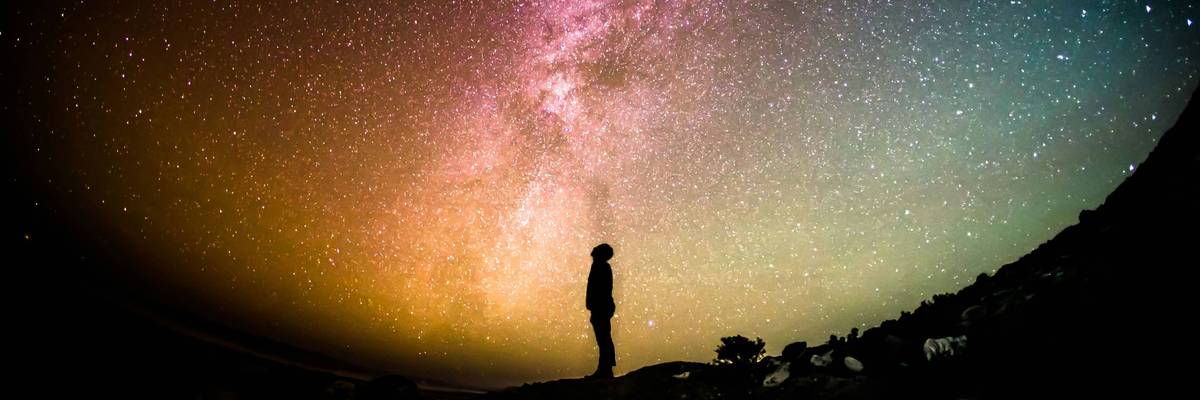
"Every small decision, every conversation, launches another ripple," writes Rice. "None of us is helpless."
Meaningful impact need not be bold and flashy. Our small, everyday choices seed change.
Today, like yesterday, I wake up and decide to make the world a better place.
I know, I know. There are over 8 billion people living on Earth. There are more places than any one of us will ever see, and more cultures than we will ever understand. How could a single person make an impact? How could a single person change the world for the better?
Many people would say it’s impossible. And at barely 5’2”, I’m glaringly aware of my literal smallness. As an astrophysicist, I know that I take up only about 10-83 times the volume of the observable Universe: a number so small I can’t wrap my head around it. The closest comparison I can muster is that I’m about the size of an atom in the scale of the solar system. And even then, I’d still be a bit smaller.
But none of that matters. My goal is still entirely within reach. That’s something that astrophysics has also taught me: small forces can make big changes.
The proof is under our feet. Today, Earth returns to the point in the solar system where it landed 365.24 days—almost, but not quite. Almost imperceptibly, it overshoots.
This cascade of small influences may, at first glance, go unnoticed. Nevertheless, slowly but surely, the trajectory of the entire planet budges.
At first glance, the Earth’s motion may appear to be shaped entirely by a single source: its most powerful influence, the Sun. But the Earth-Sun system is not static. Instead, our planet is pulled in many directions by innumerable small forces.
Its motion is shaped by the other seven planets in our solar system, each hundreds of millions of miles away. Those massive planetary neighbors had their motion fundamentally shaped by the tugs of innumerable ancient asteroids in the early solar system. Those, in turn, were shaped by the influence of distant passing stars—whose own trajectories were altered by the collective impact of stars, gas, and dark matter across the Milky Way.
This cascade of small influences may, at first glance, go unnoticed. Nevertheless, slowly but surely, the trajectory of the entire planet budges. The direction of our world is determined by countless infinitesimal forces compounding to move not only mountains, but entire planets.
Just as the Earth’s motion is shaped by the sum of small forces, the direction of humanity is shaped by the sum of small choices that people make every day. We often think that making an impact looks like a single person conveying their idea to the public at large, proclaiming from a platform. Sometimes, yes, change does require a spark, the one person who says something. But the true power in these proclamations comes not from their splash, but from the ripples that they create. And a series of small ripples can create waves.
Every small decision, every conversation, launches another ripple. Rosa Parks helped ignite the Civil Rights movement by refusing to move from her seat on a bus. The #MeToo movement arose from a single conversation in which a woman was deeply affected by a young girl’s experience with abuse. The invention of MRI began as a scribble on the back of a napkin.
Every small decision, every conversation, launches another ripple.
It may sometimes seem as if the very strongest forces — or the very loudest voices — are the only ones that “matter.” Some forces, some voices, do have a disproportionate reach. In the enormity of the world, and of our Universe, we may feel small.
Yet the sum of small forces has, on Earth, made all the difference: subtly shifting the planet’s tilt and its path to produce Earth’s long-term climate cycles, dictate the timing of ice ages, and shape how life emerged and adapted on our planet. The modest tugs of the planets and of the moon, together with the cascading influence of the Milky Way environment, produce the conditions necessary for life as we know it on Earth.
Meaningful impact need not be bold and flashy. Our small, everyday choices seed change. Intentionally or not, in ways obvious or not, these decisions compound to budge the trajectory of our world.
So today I will treat the cashier at my grocery store with kindness. I will take the time to ask my neighbor about their day, and to listen with care. I will check in on friends and family members. I will tell the people I look up to how much I admire them, and why. In the flurry of headlines, apps, and work duties vying for my attention, I will choose compassion and intention.
None of us is helpless. Our actions—as well as the actions we don't take—make a real, tangible impact. So, ask yourself: in which direction will you push the world today?
Dear Common Dreams reader, It’s been nearly 30 years since I co-founded Common Dreams with my late wife, Lina Newhouser. We had the radical notion that journalism should serve the public good, not corporate profits. It was clear to us from the outset what it would take to build such a project. No paid advertisements. No corporate sponsors. No millionaire publisher telling us what to think or do. Many people said we wouldn't last a year, but we proved those doubters wrong. Together with a tremendous team of journalists and dedicated staff, we built an independent media outlet free from the constraints of profits and corporate control. Our mission has always been simple: To inform. To inspire. To ignite change for the common good. Building Common Dreams was not easy. Our survival was never guaranteed. When you take on the most powerful forces—Wall Street greed, fossil fuel industry destruction, Big Tech lobbyists, and uber-rich oligarchs who have spent billions upon billions rigging the economy and democracy in their favor—the only bulwark you have is supporters who believe in your work. But here’s the urgent message from me today. It's never been this bad out there. And it's never been this hard to keep us going. At the very moment Common Dreams is most needed, the threats we face are intensifying. We need your support now more than ever. We don't accept corporate advertising and never will. We don't have a paywall because we don't think people should be blocked from critical news based on their ability to pay. Everything we do is funded by the donations of readers like you. When everyone does the little they can afford, we are strong. But if that support retreats or dries up, so do we. Will you donate now to make sure Common Dreams not only survives but thrives? —Craig Brown, Co-founder |
Today, like yesterday, I wake up and decide to make the world a better place.
I know, I know. There are over 8 billion people living on Earth. There are more places than any one of us will ever see, and more cultures than we will ever understand. How could a single person make an impact? How could a single person change the world for the better?
Many people would say it’s impossible. And at barely 5’2”, I’m glaringly aware of my literal smallness. As an astrophysicist, I know that I take up only about 10-83 times the volume of the observable Universe: a number so small I can’t wrap my head around it. The closest comparison I can muster is that I’m about the size of an atom in the scale of the solar system. And even then, I’d still be a bit smaller.
But none of that matters. My goal is still entirely within reach. That’s something that astrophysics has also taught me: small forces can make big changes.
The proof is under our feet. Today, Earth returns to the point in the solar system where it landed 365.24 days—almost, but not quite. Almost imperceptibly, it overshoots.
This cascade of small influences may, at first glance, go unnoticed. Nevertheless, slowly but surely, the trajectory of the entire planet budges.
At first glance, the Earth’s motion may appear to be shaped entirely by a single source: its most powerful influence, the Sun. But the Earth-Sun system is not static. Instead, our planet is pulled in many directions by innumerable small forces.
Its motion is shaped by the other seven planets in our solar system, each hundreds of millions of miles away. Those massive planetary neighbors had their motion fundamentally shaped by the tugs of innumerable ancient asteroids in the early solar system. Those, in turn, were shaped by the influence of distant passing stars—whose own trajectories were altered by the collective impact of stars, gas, and dark matter across the Milky Way.
This cascade of small influences may, at first glance, go unnoticed. Nevertheless, slowly but surely, the trajectory of the entire planet budges. The direction of our world is determined by countless infinitesimal forces compounding to move not only mountains, but entire planets.
Just as the Earth’s motion is shaped by the sum of small forces, the direction of humanity is shaped by the sum of small choices that people make every day. We often think that making an impact looks like a single person conveying their idea to the public at large, proclaiming from a platform. Sometimes, yes, change does require a spark, the one person who says something. But the true power in these proclamations comes not from their splash, but from the ripples that they create. And a series of small ripples can create waves.
Every small decision, every conversation, launches another ripple. Rosa Parks helped ignite the Civil Rights movement by refusing to move from her seat on a bus. The #MeToo movement arose from a single conversation in which a woman was deeply affected by a young girl’s experience with abuse. The invention of MRI began as a scribble on the back of a napkin.
Every small decision, every conversation, launches another ripple.
It may sometimes seem as if the very strongest forces — or the very loudest voices — are the only ones that “matter.” Some forces, some voices, do have a disproportionate reach. In the enormity of the world, and of our Universe, we may feel small.
Yet the sum of small forces has, on Earth, made all the difference: subtly shifting the planet’s tilt and its path to produce Earth’s long-term climate cycles, dictate the timing of ice ages, and shape how life emerged and adapted on our planet. The modest tugs of the planets and of the moon, together with the cascading influence of the Milky Way environment, produce the conditions necessary for life as we know it on Earth.
Meaningful impact need not be bold and flashy. Our small, everyday choices seed change. Intentionally or not, in ways obvious or not, these decisions compound to budge the trajectory of our world.
So today I will treat the cashier at my grocery store with kindness. I will take the time to ask my neighbor about their day, and to listen with care. I will check in on friends and family members. I will tell the people I look up to how much I admire them, and why. In the flurry of headlines, apps, and work duties vying for my attention, I will choose compassion and intention.
None of us is helpless. Our actions—as well as the actions we don't take—make a real, tangible impact. So, ask yourself: in which direction will you push the world today?
Today, like yesterday, I wake up and decide to make the world a better place.
I know, I know. There are over 8 billion people living on Earth. There are more places than any one of us will ever see, and more cultures than we will ever understand. How could a single person make an impact? How could a single person change the world for the better?
Many people would say it’s impossible. And at barely 5’2”, I’m glaringly aware of my literal smallness. As an astrophysicist, I know that I take up only about 10-83 times the volume of the observable Universe: a number so small I can’t wrap my head around it. The closest comparison I can muster is that I’m about the size of an atom in the scale of the solar system. And even then, I’d still be a bit smaller.
But none of that matters. My goal is still entirely within reach. That’s something that astrophysics has also taught me: small forces can make big changes.
The proof is under our feet. Today, Earth returns to the point in the solar system where it landed 365.24 days—almost, but not quite. Almost imperceptibly, it overshoots.
This cascade of small influences may, at first glance, go unnoticed. Nevertheless, slowly but surely, the trajectory of the entire planet budges.
At first glance, the Earth’s motion may appear to be shaped entirely by a single source: its most powerful influence, the Sun. But the Earth-Sun system is not static. Instead, our planet is pulled in many directions by innumerable small forces.
Its motion is shaped by the other seven planets in our solar system, each hundreds of millions of miles away. Those massive planetary neighbors had their motion fundamentally shaped by the tugs of innumerable ancient asteroids in the early solar system. Those, in turn, were shaped by the influence of distant passing stars—whose own trajectories were altered by the collective impact of stars, gas, and dark matter across the Milky Way.
This cascade of small influences may, at first glance, go unnoticed. Nevertheless, slowly but surely, the trajectory of the entire planet budges. The direction of our world is determined by countless infinitesimal forces compounding to move not only mountains, but entire planets.
Just as the Earth’s motion is shaped by the sum of small forces, the direction of humanity is shaped by the sum of small choices that people make every day. We often think that making an impact looks like a single person conveying their idea to the public at large, proclaiming from a platform. Sometimes, yes, change does require a spark, the one person who says something. But the true power in these proclamations comes not from their splash, but from the ripples that they create. And a series of small ripples can create waves.
Every small decision, every conversation, launches another ripple. Rosa Parks helped ignite the Civil Rights movement by refusing to move from her seat on a bus. The #MeToo movement arose from a single conversation in which a woman was deeply affected by a young girl’s experience with abuse. The invention of MRI began as a scribble on the back of a napkin.
Every small decision, every conversation, launches another ripple.
It may sometimes seem as if the very strongest forces — or the very loudest voices — are the only ones that “matter.” Some forces, some voices, do have a disproportionate reach. In the enormity of the world, and of our Universe, we may feel small.
Yet the sum of small forces has, on Earth, made all the difference: subtly shifting the planet’s tilt and its path to produce Earth’s long-term climate cycles, dictate the timing of ice ages, and shape how life emerged and adapted on our planet. The modest tugs of the planets and of the moon, together with the cascading influence of the Milky Way environment, produce the conditions necessary for life as we know it on Earth.
Meaningful impact need not be bold and flashy. Our small, everyday choices seed change. Intentionally or not, in ways obvious or not, these decisions compound to budge the trajectory of our world.
So today I will treat the cashier at my grocery store with kindness. I will take the time to ask my neighbor about their day, and to listen with care. I will check in on friends and family members. I will tell the people I look up to how much I admire them, and why. In the flurry of headlines, apps, and work duties vying for my attention, I will choose compassion and intention.
None of us is helpless. Our actions—as well as the actions we don't take—make a real, tangible impact. So, ask yourself: in which direction will you push the world today?