

SUBSCRIBE TO OUR FREE NEWSLETTER
Daily news & progressive opinion—funded by the people, not the corporations—delivered straight to your inbox.
5
#000000
#FFFFFF
To donate by check, phone, or other method, see our More Ways to Give page.
Daily news & progressive opinion—funded by the people, not the corporations—delivered straight to your inbox.
Jennifer R. Farmer, jenniferr@spotlightpr.org
Martha Waggoner, mwaggoner@breachrepairers.org
Several poor and low-wealth women and social justice leaders were arrested during a Moral Women's March in Washington, D.C., on Monday.
The event was part of the Poor People's Campaign's 'Season of Nonviolent Moral Direct Action,' which began earlier this month and will continue into August. Close to 100 women from 42 states surrendered to arrest as they joined the Poor People's Campaign: A National Call for Moral Revival event, which fell on the anniversary of the Seneca Falls Convention of 1848.
Several poor and low-wealth women and social justice leaders were arrested during a Moral Women's March in Washington, D.C., on Monday.
The event was part of the Poor People's Campaign's 'Season of Nonviolent Moral Direct Action,' which began earlier this month and will continue into August. Close to 100 women from 42 states surrendered to arrest as they joined the Poor People's Campaign: A National Call for Moral Revival event, which fell on the anniversary of the Seneca Falls Convention of 1848.
The Seneca Falls convening was the first women's rights convention in the U.S. The 100 participants represent the 100 signatures on the Declaration of Sentiments at Seneca Falls. The Women's Moral Monday March demanded change of a broken system that disproportionately affects women of color and poor women.
The Rev. Dr. Liz Theoharis, co-chair of the Poor People's Campaign: A National Call for Moral Revival; Yara Allen, theomusicologist for the Poor People's Campaign; Shailly Gupta Barnes, policy director for the Poor People's Campaign; Vicki Ryder and Ana Blackburn of the Poor People's Campaign in North Carolina; Rahna Epting of MoveOn, Barbara Arnwine of the Transformative Justice Coalition; Tayna Fogle of the Poor People's Campaign in Kentucky, Jodie Evans from Code Pink, and more surrendered their bodies to arrest.
The women were gathered at the U.S. Supreme Court to protect voting rights and urge passage of the For the People's Act, the full restoration of the Voting Rights Act; an end to the filibuster and enactment of a $15/hour minimum wage.
"We are clear that we are who our ancestors dreamt of; we are the seeds that they planted. We're planting seeds today. And we are building the movement that will give our children and the next generations the life that they deserve. We don't want to survive, we want to thrive," said Kenia Alcocer, who moderated the event and is a part of the national Poor People's Campaign.
"I carry with me today the voices of all the poor and low wealth, women, children and marginalized citizens of Oklahoma," said Marianne Smith, chair of the Poor People's Campaign in Oklahoma. "Rather than seeing an improvement I'm witnessing a decline in the rights and opportunities for the generations behind me. We're demanding equal rights."
"We are here to carry the torch. How dare legislators give us, 56 years later, a bill that was worse than the Voting Right Act originally passed," said Tayna Fogle of the Poor People's Campaign in Kentucky. "How dare they suppress the vote. What are they scared of? Well, no matter what they've done, including mass incarceration, they took our men, they took our loved ones, they thought we would forget but they forget that women have the power in this country."
Poor and low-income women from over 42 states participated, including several states that have passed voter suppression laws this year: Alabama, Arkansas, Florida, Iowa, Kansas, Louisiana, Montana, Oklahoma and Texas.
Over 140 million people are poor or one emergency away from economic ruin, including more than 70 million women of all races, gender, and sexual orientations and faith traditions.
"Our democracy is in peril," said the Rev. Dr. Liz Theoharis, co-chair of the Poor People's Campaign: A National Call for Moral Revival. "In this time, when our Voting Rights are under attack, and economic justice is being denied, we must and so we are, calling out the immoral obstructionism of Congress. We're demanding that the United States Senate end the filibuster and pass all provisions of the For the People Act. We're demanding that they fully restore the 1965 Voting Rights Act. And we're demanding that we raise the federal minimum wage to $15 an hour. Right now. Not tomorrow. Not next year. Now."
"In this season when extremists have committed themselves to voter up suppression, we cannot let the forces of greed destroy the very rights you had before you could even comprehend them," said the Rev. Dr. William J. Barber, co-chair of the Poor People's Campaign: A National Call for Moral Revival. "We cannot, and we will not. We are here today to say that the gutting of the Voting Rights Act in 2013 and the obstruction of Mitch McConnell that has prevented Congress from restoring it for over eight years, has undermined and eroded our Democracy. We don't want some of our justice, we want all of our justice. It's kind of like being pregnant, either you are or you're not."
The statement signed by 100 women is here.
The Poor People's Campaign: A National Call for Moral Revival, is building a generationally transformative digital gathering called the Mass Poor People's Assembly and Moral March on Washington, on June 20, 2020. At that assembly, we will demand that both major political parties address the interlocking injustices of systemic racism, poverty, ecological devastation, militarism and the distorted moral narrative of religious nationalism by implementing our Moral Agenda.

Trump claimed on social media that a diplomatic agreement would be signed on Sunday, but Iran's Foreign Ministry pushed back on that timeline.
President Donald Trump claimed Saturday that the US and Iran are on track to sign a diplomatic agreement this weekend, but added that "we have the ultimate alternative" if the process doesn't "work out."
"The 'ultimate alternative' sounds a lot like a nuclear threat," Sina Toossi, a senior fellow at the Center for International Policy, wrote in response to the president's Truth Social post. "Not the first time Trump has hinted at it."
The agreement Trump referenced is believed to be "memorandum of understanding" that's expected be fleshed out in "technical talks" that could begin next week, according to Pakistani Prime Minister Shehbaz Sharif, who is mediating the negotiations.
"We are closer to a peace deal than ever before," Sharif wrote on social media, echoing Iranian Foreign Minister Abbas Araghchi, who said on Friday that "the Islamabad Memorandum of Understanding has never been closer."
"Pending its finalization, the media should refrain from entering speculation about its content," Araghchi added. "In line with our responsible and transparent approach, all details will be shared with the public in due course."
On Saturday, a spokesperson for the Iranian Foreign Ministry cast doubt on the timeline put forth by Trump and Sharif.
"We will have to wait and see about the exact date of the signing of the memorandum of understanding, although it will not be tomorrow,” said Esmaeil Baqaei, as reported by Iranian state media. “The possibility of this happening in the coming days cannot be ruled out. However, due to the hesitation of the other side, we must be cautious in making any comments about this process.”
In his Truth Social post on Saturday, Trump declared that the Strait of Hormuz will be "OPEN TO ALL" immediately after the deal is signed—a condition that Iran has not confirmed.
"We look forward to working with Iran, and the entire Middle East, long into the future," Trump added. "Hopefully, this process will all work out quickly, easily, and smoothly. If it doesn’t, we have the ultimate alternative, hopefully never to be used again!"
Trump has repeatedly issued genocidal threats against Iran since launching the illegal war in late February, openly declaring his intention to target Iran's civilian infrastructure and wipe out its "whole civilization." Experts say such threats, even if they aren't acted on, constitute war crimes under international law.
"The test will be a simple one: Are you sufficiently loyal to the president? If the answer is no, it will result in the denial of lifesaving disaster relief, funding for research into cures, the closure of Head Start offices, and more."
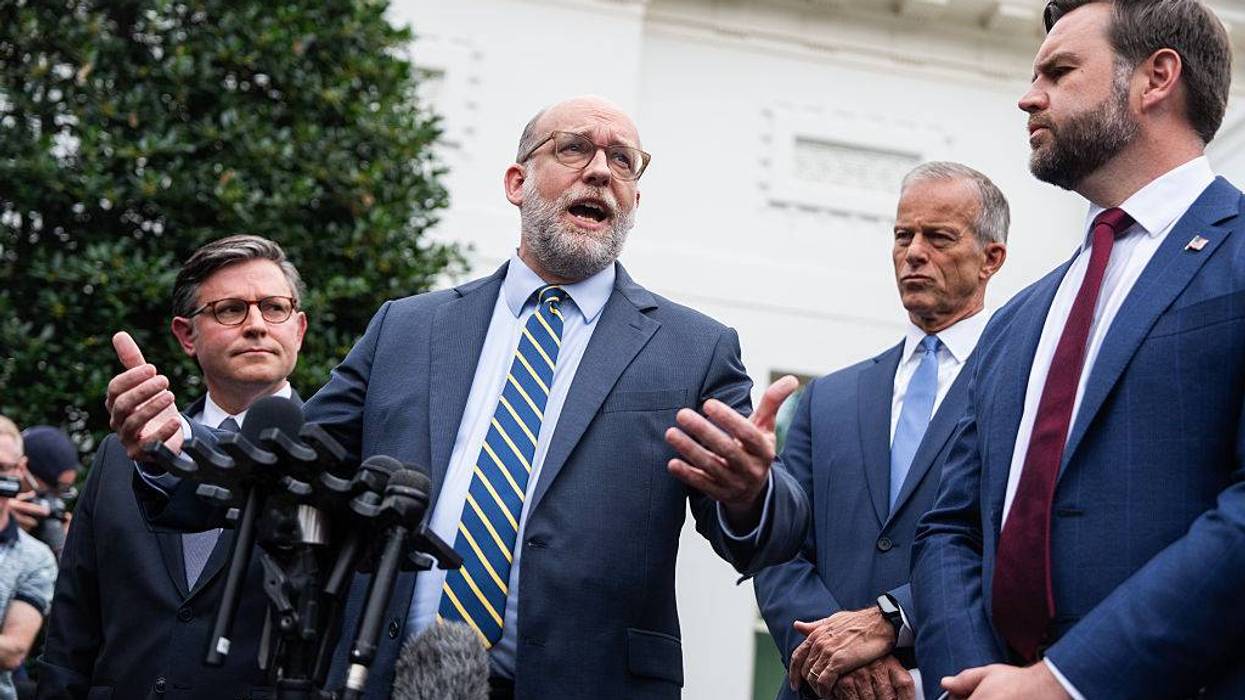
A Trump White House plan to give political appointees more power over federal grant money has sparked alarm among scientists, public health organizations, environmental groups, and others who fear that the proposal amounts to an attempt to subordinate critical funds to the whims of the president and his far-right allies.
More than 300 organizations signed a joint letter on Friday calling on White House budget director Russell Vought, the proposed rule's architect, to extend the public comment period that's set to end on July 13, warning that the "scope and impact of [the Office of Management and Budget's] rule is vast."
"The rule will impact the entirety of government grant-making across the United States," the groups warned. "OMB itself says the revisions suggested would relate to over $179 billion of funds to small entities."
Politico, which exclusively obtained the letter, noted that the "proposed rule has already garnered over 15,000 public comments, with many expressing alarm that the changes could undermine research across fields."
Under Vought's rule, federal agencies would be required to perform "pre-issuance reviews" of federal grants—funds appropriated by Congress—to ensure their distribution is consistent with "applicable law, federal agency priorities, and the national interest."
The rule lays out a number of standards that political appointees at federal agencies must screen for when deciding whether an organization can receive federal grant dollars. For instance, the rule would prohibit the distribution of federal grants to organizations that "promote anti-American values" or support "ideologies that deny the biological reality of sex or the sex binary in humans."
The New York Times reported that the consequences of Vought's rule "could fall hardest on health and science, a field in which [President Donald Trump] has pursued some of the steepest cuts in his second term."
"In exchange for federal assistance, researchers would face limits on the subjects that they can explore, the foreign labs with which they may collaborate and even the conferences at which they can appear," the Times noted. "Dr. Georges C. Benjamin, the chief executive of the American Public Health Association, a professional organization and advocacy group, said the policy could 'devastate innovation, science, and research' in the United States."
"This is an executive power grab that would hand presidential political appointees unchecked control over more than a trillion dollars that Congress appropriated in the interests of all Americans."
Earlier this month, Lawyers for Good Government and the Environmental Protection Network said that "if finalized, the rule would put senior political appointees in charge of approving and canceling individual grants, while stripping recipients of due process rights" while attaching "ideological conditions to nearly every federal dollar, raising First Amendment and equal-protection concerns."
The two organizations published a fact sheet warning that the proposed rule has the potential to halt billions of dollars in funding that communities across the US depend on for "health, public education, scientific research, public safety, and economic development projects."
“This is an executive power grab that would hand presidential political appointees unchecked control over more than a trillion dollars that Congress appropriated in the interests of all Americans,” said Jillian Blanchard, senior vice president for climate change and environmental justice at Lawyers for Good Government. “Conditioning funding for critical programs on ideology and viewpoint discrimination, while erasing basic due-process protections, violates freedoms of speech, equal protection, and eviscerates Congress’ power of the purse.”
Democratic lawmakers have also sounded the alarm about Vought's proposal. Rep. Rosa DeLauro (D-Conn.), the top Democrat on the House Appropriations Committee, said Thursday that she has given her Republican colleagues two opportunities to denounce Vought's rule—and they declined both times.
"Vought continues to attempt to steal from communities across the country. Now, he is trying to set a new political test on grants for a wide swath of the federal government," said DeLauro. "The test will be a simple one: Are you sufficiently loyal to the president? If the answer is no, it will result in the denial of lifesaving disaster relief, funding for research into cures, the closure of Head Start offices, and more. If you are not loyal enough, if you speak out against this administration, the president and his cronies will take away resources Congress provided."
"The future of Colombia must be decided by the Colombian people—not American politicians with their own agenda."
A group of Democratic members of the US Congress on Friday condemned President Donald Trump and Republican lawmakers' attempts to influence the results of Colombia's upcoming presidential runoff, calling it an "insult" to the Colombian people's sovereignty.
"We see actions by US President Donald Trump and other members of Congress to endorse, advocate for, or otherwise tip the scales to a particular candidate as detrimental to the democratic rights of the Colombian people," said the lawmakers, led by Rep. Jim McGovern (D-Mass.). "The future of Colombia must be decided by the Colombian people—not American politicians with their own agenda."
The statement came days after Trump publicly injected himself into Colombia's presidential contest by endorsing far-right candidate Abelardo De La Espriella, a 47-year-old defense lawyer who has pledged to "disembowel the left."
“The results of this Election are very important to the future of Colombia and its relationship to the United States,” Trump wrote in a Truth Social post earlier this month. “Because of his tremendous accomplishments in life, and his political support for me, personally, it is my Honor to give Abelardo my Complete and Total Endorsement.”
The US president said that if De la Espriella wins, he "will have the total support and strength of the United States behind him."
The Center for Economic and Policy Research noted that "the implicit threat in Trump’s endorsement of De la Espriella is that Colombians will be punished—through reduced aid, tariffs, sanctions, etc.—if they vote for a political leader not backed by the United States."
Two Republican lawmakers, Rep. María Salazar of Florida and Sen. Bernie Moreno of Ohio, have also endorsed De la Espriella. The New York Times reported that "before Mr. Trump posted his full-throated endorsement of Mr. De La Espriella, Mr. Moreno held a call with reporters in which he said US officials had 'vetted' Mr. De La Espriella and found him to be 'impeccable.'"
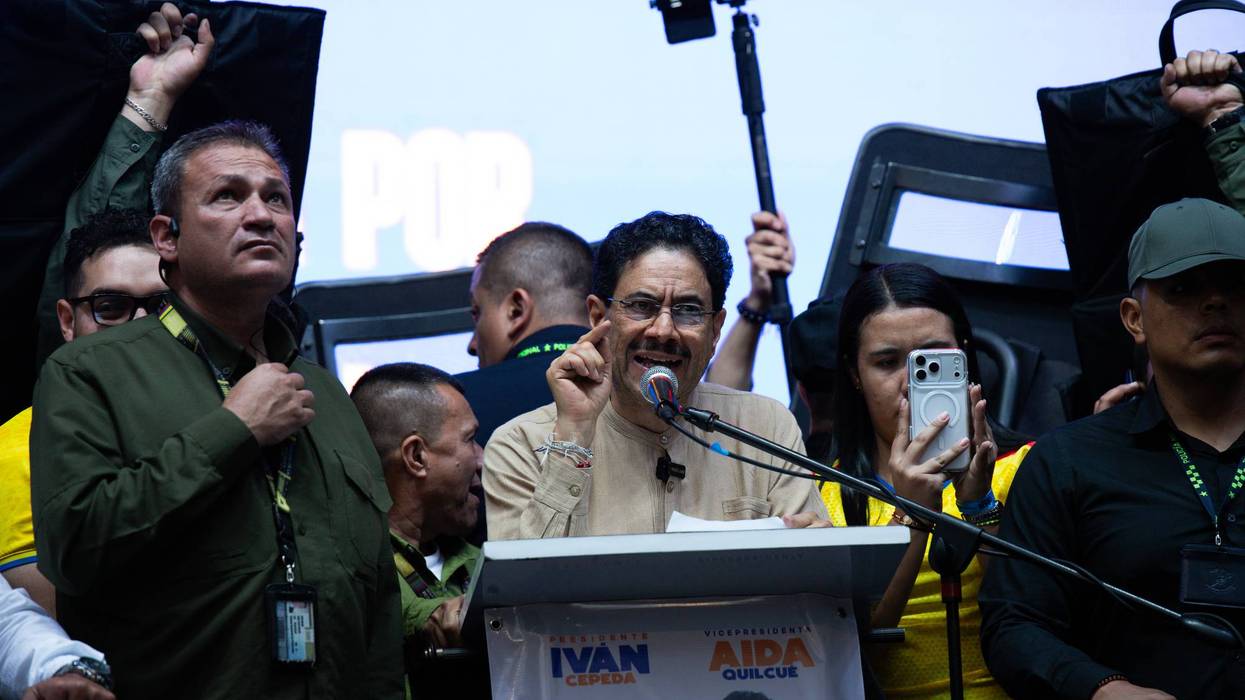
De la Espriella will face leftist Sen. Iván Cepeda, an ally of incumbent President Gustavo Petro, in the June 21 presidential runoff.
Petro has criticized his US counterpart for meddling in Colombia's presidential race, urging Trump in a recent social media post to "not intervene in the campaign and allow the people of Colombia to decide freely."
"Whoever wins will maintain the friendship of more than two centuries between Colombia and the US," Petro added.
Earlier this week, Petro planned to meet with New York City Mayor Zohran Mamdani during the Colombian leader's trip to the US, but "the Trump administration effectively nixed it in a behind-the-scenes effort," The Washington Post reported.
"The Colombian government quietly called off the event following a meeting between US and Colombian officials in Bogotá in which State Department officials made clear that this week’s engagement was unacceptable, a move Colombian officials interpreted as a threat to arrest Petro on site if he proceeded," the newspaper revealed. "A State Department official told The Washington Post that the visit would violate visa restrictions the US imposed against Petro following his comments last year criticizing US support of Israel’s war in Gaza and imploring US soldiers to disobey presidential orders to kill."