However, Johnson said Tuesday on X that "British-Australia media keep buying this line that my book was pulled from the library after a 'complaint from a Bondi attack survivor.' We have no evidence this is true. This is simply the story they’re telling. Has anyone independently verified this chain of events?"
Johnson also noted that the Bondi massacre, in which two gunmen fatally shot 15 victims, "had nothing to do with Palestinians or Gaza."
"There is ZERO link between the two, and it’s false [to] keep implying there was," he added.
Johnson's book, published in April by Pluto Press, argues that US corporate media have helped enable Israel’s devastation of Gaza through sanitizing Israeli actions, obscuring US responsibility, and dehumanizing Palestinians as Israeli forces killed and wounded hundreds of thousands of them in what United Nations experts, human rights groups, a South Africa-led case currently before the International Court of Justice, and many others call a genocide.
Johnson told The Guardian that critics "seem to be objecting largely based on the title using the word ‘genocide.'" a
“But ‘genocide’ is not my word, or my finding," he stressed. "The fact of genocide in Gaza is the overwhelming consensus of the human rights world, and it is a wholly mainstream opinion among those tasked with studying and determining such matters."
“That it makes some people upset is unfortunate, but reality is often upsetting," he said. "This particular reality is especially upsetting... to the parents of the over 20,000 children killed by Israel in Gaza since October 2023."
"Do Sydney officials plan on removing pro-Israel books from their libraries because it potentially upsets these community members?” Johnson added.
The Sydney dispute is hardly an isolated case of the silencing of pro-Palestine speech or criticism of Israel's well-documented crimes against humanity and war crimes, for which alleged perpetrator Israeli Prime Minister Benjamin Netanyahu is wanted by the International Criminal Court in The Hague.
In March, Adelaide University canceled a venue booking for a literary event featuring Francesca Albanese, the UN special rapporteur on the occupied Palestinian territories. Organizers accused the university of bowing to political pressure.
In the United States, college campuses were the epicenter of suppression. New York University withheld a graduating student's diploma after he condemned Israel’s actions in Gaza during his commencement speech. New York authorities also violently cracked down on NYU's anti-genocide protests, and the school adopted a definition of antisemitism conflating anti-Zionism and hatred of Jews.
Seven miles uptown, Columbia University suspended its chapters of the nonviolent groups Students for Justice in Palestine and Jewish Voice for Peace.
George Washington University in Washington, DC banned a graduate from campus after she criticized the university’s ties to Israel, while earlier this year the University of Southern Maine withdrew its support for a Palestine conference because it was slated to include remote participation by Albanese. USM officials cited the dubious sanctions imposed on Albanese and her family by the Trump administration.
There has also been widespread censorship and suppression of pro-Palestine speech in countries including Canada, France, Germany, and the United Kingdom.
These incidents are indicative of a wider pattern documented by Irene Khan, the UN special rapporteur on freedom of expression, who in 2024 reported that courses, lectures, and panels on Palestine have been canceled and that institutions in Western Europe and North America have restricted books, art, scholarship, and speech concerning Israel and Palestine.
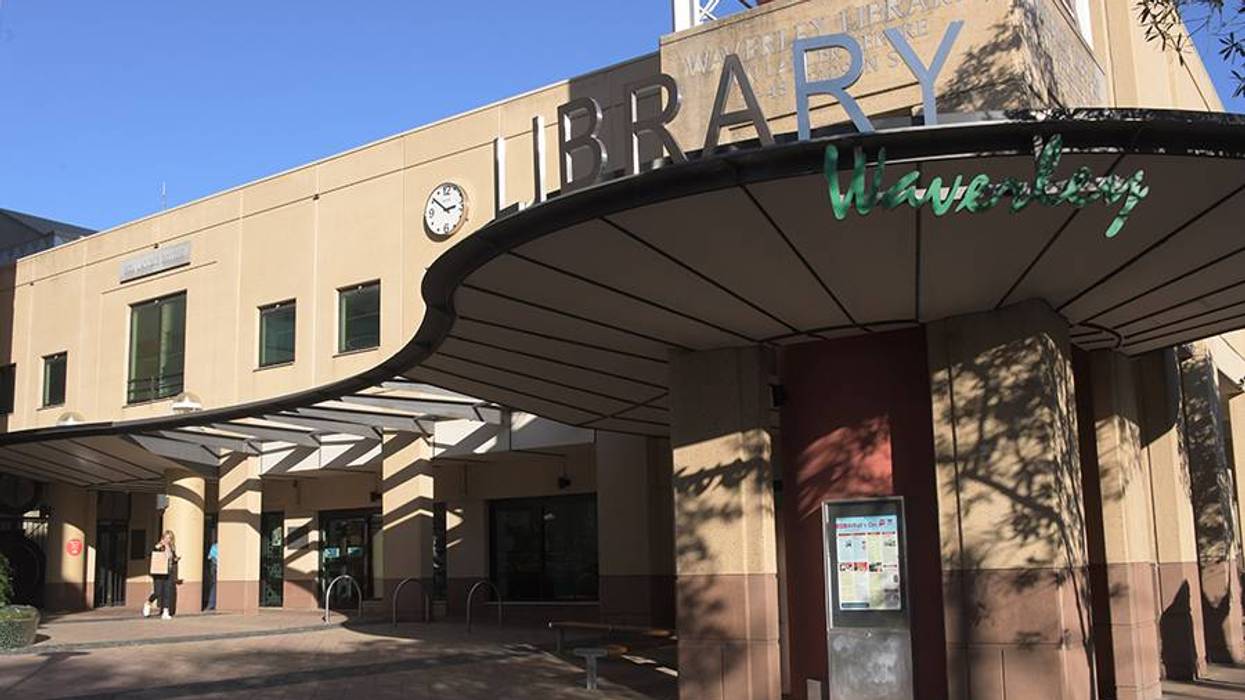
While some Jewish leaders and groups welcomed the removal of Johnson's book from Waverley Library, others decried the censorship.
“Public libraries belong to all of us, and should host a range of views and topics, be they books about queer families or Israel’s widely condemned war crimes," Bart Shteinman, an executive member of the progressive Jewish Council of Australia, told The Guardian. He also called the decision to pull the book "deeply alarming."
One Palestinian account on Bluesky posted: "Is the idea that nothing critical of Israel can ever stand? Because the lobby groups keep telling us there’s a difference between prejudice and criticism, but they keep acting like there’s not."
Another social media user, this one on X, lambasted what she called the "lily-livered library" for "pandering to the vile zealots who protect Israel, despite the evidence before our eyes."
Rhonda Garad, a researcher at Monash University in Melbourne, bluntly said on X that "we've reached the book-burning stage of the fascist takeover."