SUBSCRIBE TO OUR FREE NEWSLETTER
Daily news & progressive opinion—funded by the people, not the corporations—delivered straight to your inbox.
5
#000000
#FFFFFF
To donate by check, phone, or other method, see our More Ways to Give page.


Daily news & progressive opinion—funded by the people, not the corporations—delivered straight to your inbox.
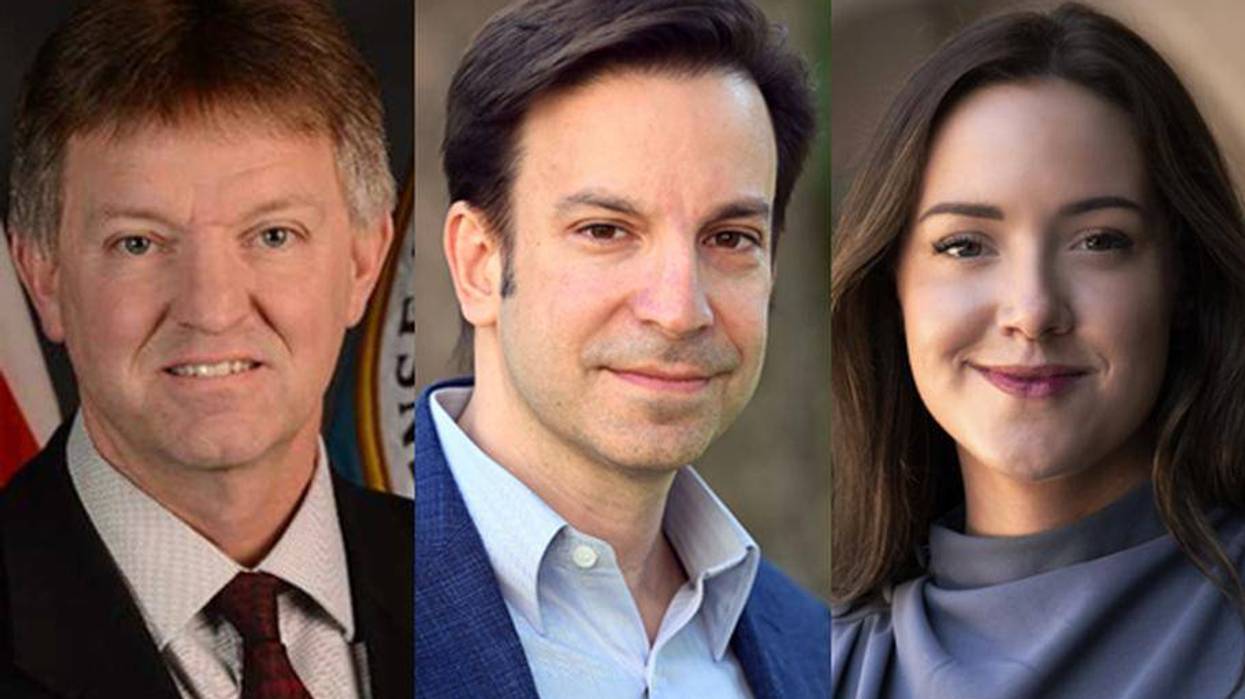
Steffie Woolhandler, M.D., M.P.H.
David Himmelstein, M.D.
Dan Ariely, Ph.D.
Mark Almberg, communications director PNHP, (312) 782-6006, mark@pnhp.org
A leading authority on behavioral economics has teamed up with two health policy experts in an article at the Health Affairs blog to argue that pay-for-performance (P4P) schemes in medicine may do more harm than good by "crowding out" altruism and other intrinsic motivations to do a good job.
Such P4P schemes, which are being quickly adopted by Medicare and many private insurers under the new federal health law, typically involve giving bonuses to doctors and hospitals for hitting specific, numerical targets in such matters as prescribing certain drugs or ordering screening tests.
However, despite the widespread rush to embrace P4P, a growing body of research has found no evidence that these schemes actually benefit patients, write professor Dan Ariely and physicians Dr. Steffie Woolhandler and Dr. David Himmelstein. Their article was posted to the blog late Thursday afternoon.
Moreover, it's likely the introduction of such schemes into the cognitively complex work of medicine will backfire, they say.
"Traditionally, economists have viewed extrinsic (i.e. monetary) reward as either the only motivator or as simply additive to intrinsic motivators such as purpose, altruism, mastery, or autonomy," the authors write.
"According to this view, higher pay induces better performance. But this simple model of reward-induced performance ignores the complexity of human drive, particularly the role of intrinsic motivation - the desire to perform an activity for its own inherent rewards.
"Offering your dinner-party host a $10 reward for cooking a wonderful meal isn't likely to motivate future invitations."
The authors cite multiple research studies - involving blood donors in the United States, volunteer workers in Switzerland, and Israelis with children in day care, to name just a few - that show how introducing financial incentives into the picture led to diminished motivation to do the right thing.
They also cite a meta-analysis summarizing 128 studies that show such findings are representative of a consistent body of research.
In addition, the authors warn that "crowd-out" of doctors' intrinsic motivation may be particularly severe when contracts are more detailed and controlling. P4P incentives may also lead providers to game the system by checking boxes or exaggerating diagnoses when they know that doing so will garner bonuses.
Pay-for-performance programs also increase administrative costs, they say, citing the extensive economics literature on the downsides of overly detailed contracts.
The authors are recognized experts in their respective fields. Dan Ariely is the James B. Duke Professor of Psychology and Behavioral Economics at Duke University. He is the author of numerous research studies and three bestselling books on behavioral economics, including "The (Honest) Truth about Dishonesty."
Dr. Steffie Woolhandler and Dr. David Himmelstein are physicians and professors at the City University of New York's School of Public Health at Hunter College and visiting professors of medicine at Harvard Medical School. They have published many articles in leading medical journals on health insurance and mortality, medical bankruptcy and administrative costs in health care, among other subjects. They are also co-founders of Physicians for a National Health Program, a single-payer advocacy group. PNHP provided no financial or other support for their research.
Physicians for a National Health Program is a single issue organization advocating a universal, comprehensive single-payer national health program. PNHP has more than 21,000 members and chapters across the United States.
Despite Mamdani's campaign pledge, legal experts have consistently cast doubt on a New York City mayor's authority to order the arrest of a foreign leader.
New York City Mayor-elect Zohran Mamdani may have a chance to fulfill one of his campaign promises on his first day of office, although legal experts have repeatedly cast doubt on his power to make it happen.
Republican New York City Councilwoman Inna Vernikov on Tuesday sent a formal invitation to Israeli Prime Minister Benjamin Netanyahu to speak in New York City on January 1, 2026, while at the same time daring Mamdani to keep his pledge to have him arrested on war crimes charges.
"On January 1, Mamdani will take office," Vernikov wrote in a post on X. "And also on January 1, I look forward to welcoming Bibi to New York City. NY will always stand with Israel, and no radical Marxists with a title can change that."
The International Criminal Court (ICC) last year issued an arrest warrant for Netanyahu and former Defense Minister Yoav Gallant for war crimes and crimes against humanity committed during Israel's war in Gaza that has killed at least 69,000 Palestinians.
During his successful mayoral campaign, Mamdani repeatedly said that he would enforce the warrant against Netanyahu should the Israeli leader set foot in his city.
Although Mamdani backed off some of his most strident past statements during the campaign, particularly when it comes to the New York Police Department (NYPD), he doubled down on arresting Netanyahu during a September interview with The New York Times.
"This is a moment where we cannot look to the federal government for leadership," Mamdani told the paper. "This is a moment when cities and states will have to demonstrate what it actually looks like to stand up for our own values, our own people."
However, legal experts who spoke with the Times cast doubt on Mamdani's authority as the mayor of a major American city to arrest a foreign head of government, even if the person in question has been indicted by the ICC.
Among other things, experts said that the NYPD does not have jurisdiction to arrest Netanyahu on international war crimes charges, and the Israeli leader would have to commit some crime in violation of local state or city laws to justify such an action.
Additionally, the US has never been party to the ICC and does not recognize its legal authority.
Matthew Waxman, a professor at Columbia Law School, told the Times that Mamdani's stated determination to arrest Netanyahu was "more a political stunt than a serious law-enforcement policy."
Speaker Mike Johnson has been accused of blocking Grijalva from her seat because she'd be the 218th vote to release the files on the late sex criminal Jeffrey Epstein.
After being kept out of Congress for more than seven weeks by Republican House Speaker Mike Johnson, the Arizona Democrat Adelita Grijalva will finally be sworn in as a member of the US House of Representatives this week.
Johnson told CNN on Monday night that Grijalva will be sworn in after Congress returns from a lengthy absence this week, when it is expected to vote to end the longest government shutdown in US history.
The blockade on Grijalva, who was elected to fill her late father's House seat on September 23, is also the longest that an elected member of Congress has been kept out of the chamber after winning a special election.
While Johnson has insisted he could not swear in members of Congress during a recess, he notably did so this April for two Florida Republicans—Reps. Randy Fine and Jimmy Patronis—just one day after their elections.
Though he's denied the accusation, many have assumed that Johnson has dragged his feet on seating Grijalva because she is expected to be the final vote needed for the House to vote on a measure requiring the US Department of Justice to release its files on deceased sex offender Jeffrey Epstein.
In late October, 20 victims of Epstein and his partner Ghislane Maxwell signed an open letter calling on Johnson to swear Grijalva into office.
"This delay appears to be a deliberate attempt to block her participation in the discharge petition that would force a vote to unseal the Epstein/Maxwell files," the survivors said. "The American public has a right to transparency and accountability, and we, as survivors, deserve justice."
In a news appearance last Monday, Grijalva said that someone told her on election night that Johnson is "not going swear you in because of those files."
"I thought, no, that can't be it," she said. "And here we are..."
The financier's ties to President Donald Trump have led to mounting suspicion, including from fellow Republicans like Reps. Thomas Massie (Ky.) and Marjorie Taylor Greene (Ga.), who have said they plan to join Democrats in voting for the files' release.
Johnson has managed to delay a vote on the Epstein files for months. In July, as a bipartisan resolution pushed by Massie and Rep. Ro Khanna (D-Calif.) was gaining steam, Johnson sent Congress home early for its August recess, which delayed business until September.
In the final weeks before the shutdown, after a bill to fund the government stalled in the Senate, Johnson sent members home again on September 19, just days before Grijalva's election would have made her the 218th vote to force an Epstein resolution to the floor.
While Grijalva expressed excitement at finally being sworn in, she said, "this delay never should have happened in the first place."
"For seven weeks, 813,000 Arizonans have been denied a voice and access to basic constituent services," she said in a statement published Monday. "This is an abuse of power that no speaker should have."
The House is expected to vote on a continuing resolution to reopen the government after eight Senate Democrats caved to Republican pressure on Sunday after weeks of holding the line in hopes of securing the extension of Affordable Care Act subsidies that, if allowed to expire at the end of the year, will result in health insurance premiums more than doubling for over 20 million Americans.
"While I am eager to get to work," Grijalva said, "I am disappointed that one of my first votes will be on a bill that does nothing to protect working people from skyrocketing premiums, loss of health coverage, or do anything significant to rein in Trump's abuse of power."
Despite outcry from progressives, no Democrats in the Senate have yet expressed support for replacing Schumer as leader.
With many Democratic base voters up in arms over Senate Democrats caving on the federal government shutdown fight, there have been calls for Senate Minority Leader Chuck Schumer to step down from his leadership role.
None of those calls, however, have come from senators currently serving in the Democratic Caucus, including progressive stalwarts such as Sens. Bernie Sanders (I-Vt.) and Elizabeth Warren (D-Mass.).
As reported by The American Prospect on Tuesday, no Democrats in the Senate have yet expressed support for replacing Schumer (D-NY) as leader, despite the fact that "every single one of them has the power to force a vote on Schumer’s continued control of the caucus" if they chose to do so.
According to the Prospect, any senator in the Democratic Caucus "could bring forward a motion to amend the Democratic Caucus Rules to say that he should lose his leadership position if a set number of members disapprove of him." What's more, the Prospect explained, "the motion would be 'self-executing,' resulting in Schumer’s removal at the same time that it’s approved."
As noted in a Politico report, Senate Democrats who were opposed to the shutdown cave did not directly criticize Schumer for his handling of the issue, and some, like Warren, tried to direct voters' anger toward Republicans.
"I want Republicans to actually grow a backbone and say, regardless of what [President] Donald Trump says, we’re actually going to restore these cuts on healthcare," she said on Sunday. "But it looks like I’ve lost that fight, so I don’t want to post more pain on people who are hungry and on people who haven’t been paid."
Sen. Chris Murphy (D-Conn.) was more directly critical of the deal that Democrats cut on reopening the government, but he nonetheless stopped short of calling for Schumer's removal.
“This bill doesn’t do anything to arrest the healthcare catastrophe, nor does it constrain in any meaningful way President Trump’s illegality,” he said. “I think the voters were pretty clear on Tuesday night what they wanted Congress to do, and more specifically, what they wanted Democrats to do, and I am really saddened that we didn’t listen to them.”
The appetite for ditching Schumer appears much stronger among Democrats serving in the US House of Representatives, however.
Axios on Monday reported that House Democrats' anger at their Senate counterparts erupted during a private phone call among members, as Rep. Melanie Stansbury (D-NM) told her colleagues that "people are fucking pissed" at seeing Democrats once again cave in a fight with Trump.
One anonymous Democrat also told Axios that almost "everyone [was] strongly against" the deal Senate Democrats cut to reopen the government without an agreement to extend enhanced tax credits for Americans who buy their health insurance through Affordable Care Act (ACA) exchanges.
Rep. Seth Moulton (D-Mass.), who is running a primary challenge against Sen. Ed Markey (D-Mass.), called on Schumer to step down as minority leader, and challenged his opponent to do the same.
"If Chuck Schumer were an effective leader, he would have united his caucus to vote ‘No’ tonight and hold the line on healthcare," Moulton wrote in a social media post earlier this week. "Maybe now Ed Markey will finally join me in pledging not to vote for Schumer?”
Progressive advocacy organization Indivisible on Monday started ramping up pressure on Democrats to push for Schumer to step down as minority leader, and the group explicitly said that it would "not back any Senate primary candidate unless they call for Schumer to step down as Minority Leader."