

SUBSCRIBE TO OUR FREE NEWSLETTER
Daily news & progressive opinion—funded by the people, not the corporations—delivered straight to your inbox.
5
#000000
#FFFFFF
To donate by check, phone, or other method, see our More Ways to Give page.
Daily news & progressive opinion—funded by the people, not the corporations—delivered straight to your inbox.

In a letter submitted today, 84 leading archaeologists worldwide, with support from the Center for Constitutional Rights (CCR) and the Campaign to Preserve Mamilla Jerusalem Cemetery, urged Board Members of the Simon Wiesenthal Center, the mayor of Jerusalem, Mr. Nir Barkat, and the Head of the Israeli Antiquities Authority (IAA) to immediately halt current and future construction of the "Museum of Tolerance" on the site of Mamilla, a historically renowned Muslim cemetery. This plea comes as the Israeli architects commissioned to build the museum are threatening to resign from the project, as did Frank Gehry before them. The appeal is added to those of a growing number of cultural preservation and rights groups who have vocally opposed the project since 2010. Over this time, CCR has acted as legal counsel in appeals to the UN High Commissioner for Human Rights, the UN Special Rapporteurs on Religion and Racial Discrimination, the Independent Expert on Cultural Rights, and the UN Educational, Scientific, and Cultural Organization (UNESCO) to halt construction of the museum.
In their letter the archaeologists cite international ethics rules, as well as Israeli laws that were circumvented during the excavation of the Mamilla cemetery with the discovery of hundreds of Muslim burials, such as the 1978 Antiquities Act, which prohibits excavation in areas known to be burial sites, and 1994 regulations mandating that human remains be turned over to the Ministry of Religious Affairs for reburial. IAA policy also requires thorough recording of burial excavations, and the IAA has guidelines for the treatment of human remains.
In addition, the letter details an affidavit from the museums site's IAA Chief Excavator, Gideon Suleimani, which states "[S]ignificant archaeological transgressions that go to the heart of ethical issues in the archaeology profession took place on the Museum site. ...SWC knew that the site was full of human remains[;] SWC hurried the excavations, resulting in poor archaeological practices[;] SWC and the IAA misrepresented the extent of human remains present on the site and the status of the excavations to the Israeli Supreme Court[; and] the treatment of the Muslim burial site would not have occurred with a Jewish burial site."
Said Tel Aviv University archaeologist Raphael Greenberg, "The case of Mamilla is a travesty of archaeological ethics. Mamilla Cemetery should be preserved as a demonstration of respect for Jerusalem's shared heritage."
Said Yale University archaeology Professor Harvey Weiss, "The bulldozing of historic cemeteries is the ultimate act of territorial aggrandizement: the erasure of prior residents. Desecration of Jerusalem's Mamilla cemetery is a continuing cultural and historical tragedy."
The archaeologists conclude with a final appeal: in the same manner that SWC has demanded respect for Jewish cemeteries all over the world and urged their preservation, action must be taken now to halt the destruction of the Mamilla cemetery. This is an important archaeological and cultural site and its preservation would exemplify the very commitment to tolerance and human dignity the "Museum of Tolerance" is meant to promote. To honor this commitment, the addressees ought to ensure a definite halt to construction on this cultural heritage site and respect it as an integral part of the Jewish, Christian and Muslim history of the Holy Land.
CCR Senior Staff Attorney Maria LaHood stated, "The Mamilla cemetery case signifies disregard for Palestinian cultural heritage, holy sites and human rights, just like the more recent vandalism and desecration of Muslim and Christian cemeteries in Jaffa and in northern Israel.Israeli President Shimon Peres said that those acts of desecration were 'contrary to the moral values of Israeli society'. According to the most recent reports, this wave of vandalism has now hit Mamilla, where 15 headstones were defaced and damaged a few days ago. Yet Israel remains silent about the shocking treatment of Mamilla cemetery and the thousands of human remains uncovered there."
The letter with the signatories is available here. Signatories to the letter include noted archaeologists from around the world such as Graeme Barker and J. Nicholas Postgate of Cambridge University, Susan E. Alcock of Brown University, Harvey Weiss of Yale University, Raphael Greenberg of Tel Aviv University and McGuire Gibson of the University of Chicago.
For more information on the Petition to halt the destruction of the Mamilla Cemetery in Jerusalem, visit CCR's case page and the Mamilla Campaign website.
The Center for Constitutional Rights is dedicated to advancing and protecting the rights guaranteed by the United States Constitution and the Universal Declaration of Human Rights. CCR is committed to the creative use of law as a positive force for social change.
(212) 614-6464
"The Constitution's system of checks and balances ensures that no individual or branch of government holds absolute power," said one legal expert. "The president is ignoring this design."
Just days after President Donald Trump's administration asked the right-wing US Supreme Court to allow construction of a new White House ballroom to continue while a legal challenge plays out, federal lawmakers and advocacy groups on Tuesday urged the justices to block any more work on the project absent congressional approval.
"The Constitution's system of checks and balances ensures that no individual or branch of government holds absolute power," said Trevor Potter, president of the nonpartisan Campaign Legal Center, which filed an amicus brief with Citizens for Responsibility and Ethics in Washington (CREW).
"The president is ignoring this design by unilaterally demolishing the East Wing of the White House and trying to construct a massive ballroom with private funds, raising the risk of corruption that constitutional checks are supposed to prevent," he continued.
Potter stressed that "Congress, not the president, is empowered to raise and spend taxpayer dollars—and it has not authorized the ballroom. The administration's reliance on private donor funding for the ballroom project violates a core principle of separation of powers embedded in our Constitution."
CREW president Donald Sherman highlighted that "President Trump has spent his second term creating pay-to-play opportunities for corporations to curry favor and advance his personal priorities, without regard for the Constitution or the American people's best interests."
Trump kicked off his second term with an inauguration dubbed "a coronation of our country’s descent into oligarchy" because of the billionaires who got prime seating at the event. Since then, according to recent disclosures, he's pocketed at least $2.2 billion, over half of it from his family’s crypto scheming.
Amid alarm over Trump's enrichment of himself and his allies—and his plummeting approval rating—Sherman said that "the Supreme Court should deny the request for a stay and ensure that this administration isn't allowed to run roughshod over the separation of powers and dodge congressional approval for spending taxpayer dollars."
Sherman and Potter's groups were far from alone in filing a brief with that demand; dozens of Democrats who serve as ranking members of various committees across both chambers of Congress as well as the minority leader, whip, and caucus chair in the House of Representatives submitted a similar filing to the nation's top court.
The Democrats "understand that the Constitution empowers Congress—not the President—to control federal property, including
determining whether (and how) parts of the White House should be demolished or constructed," their lawyers wrote, noting that they previously sent a brief to US Court of Appeals for the District of Columbia, which earlier this month upheld a district judge's ruling that halted most construction.
The filing argues that the injunction should remain in place, and "the construction the president seeks should not proceed until Congress authorizes that construction and appropriates the funds for it," an event that is unlikely during this session, even with the GOP's narrow control of both chambers.
Welcoming the lawmakers' brief, Jon Golinger, democracy advocate at the watchdog group Public Citizen, asked, "If President Trump is so proud of his Golden Ballroom, why is he so afraid to ask Congress to approve it?"
"A key reason the Constitution requires Congress to authorize the White House ballroom project is to ensure transparency and oversight of the '$335 million of an expected $400 million' that the White House says it's raised from donors, including corporations who have been awarded billions in government contracts and anonymous donors with secret agendas," Golinger said.
"We agree that by law Congress needs to authorize it and urge the court to reject the White House's desperate 'Hail Mary' pass," he added. "The Supreme Court is expected to decide by this Friday whether to intervene in the ballroom case or to allow the Court of Appeals injunction to take effect, which would block further ballroom construction unless and until Congress authorizes it."
The National Trust for Historic Preservation, which is behind the legal challenge to the project, also sent its arguments against Trump's ballroom on Tuesday. The group's president and CEO, Brent Leggs, noted that "last week, the administration made two audacious claims in asking the US Supreme Court to greenlight continued aboveground construction of the White House ballroom."
"First, that no court in the land has the authority to stop them," he explained. "And second, that because they are using the same indestructible concrete used in nuclear power plants, it would be impossible to remove the ballroom even if ordered to do so. They are working around the clock in an attempt to outrace judicial review."
Leggs said that in its filing, his group "reiterated that the administration has no unilateral legal authority—constitutional, statutory, or otherwise—to build a ballroom on the site of the now-demolished East Wing, unless and until Congress expressly approves. Each court that has reviewed this case has agreed with the National Trust. We hope the Supreme Court will uphold the rule of law by stopping this illegal project."
"Our position was supported by several amicus briefs, including one from the Society for the Rule of Law and former Republican White House lawyers," he added. "These briefs highlight the point the National Trust has made for months: The executive branch lacks unilateral authority to destroy or transform the White House, and cannot use national security as a justification for ignoring the Constitution."
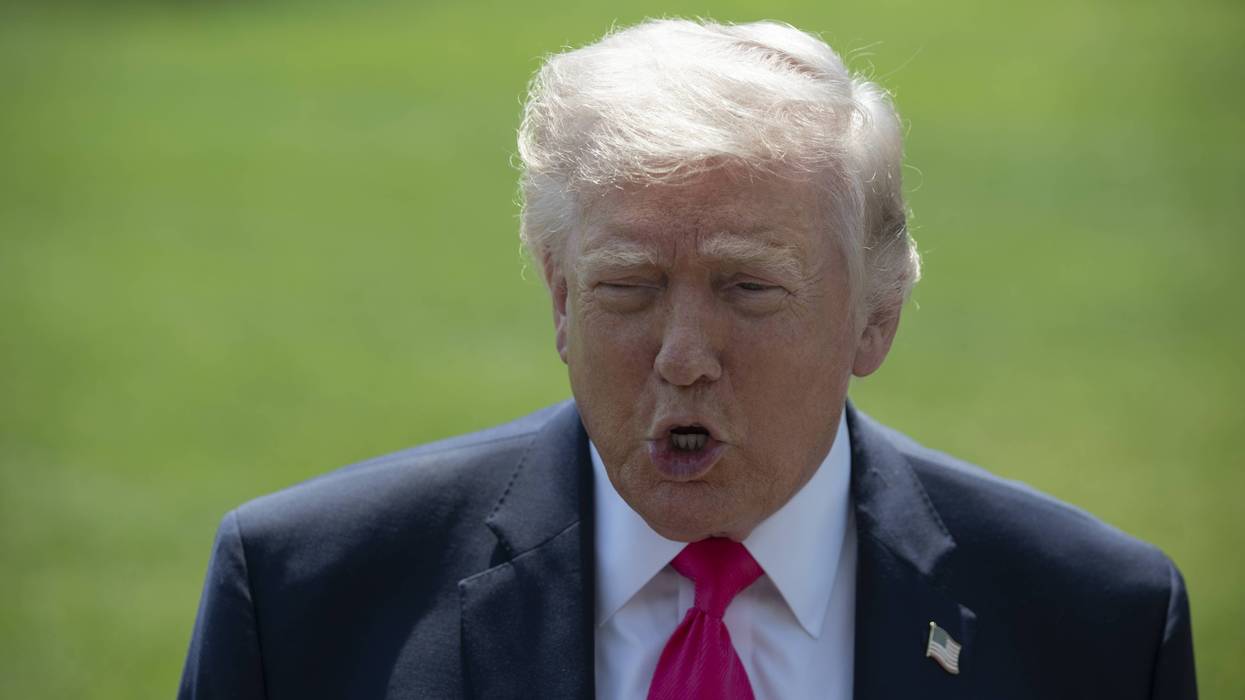
"The hypocrisy is the point," said Rep. Ayanna Pressley.
President Donald Trump has pushed to strip millions of Americans of the right to vote by mail. But he doesn't seem to think these restrictions should apply to him.
The White House confirmed to The New York Times that the president voted by mail ahead of Florida's Republican primary on Tuesday, marking at least the third time he has done so since becoming president. He also voted by mail in a state legislative special election earlier this year and in the 2020 Republican primary.
Though Trump has repeatedly characterized mail-in voting itself as a form of "cheating" and pushed to abolish it for most Americans under his proposed SAVE America Act, White House spokesperson Olivia Wales said it was a "non-story" that he chose to participate in the practice himself.
"The SAVE America Act has commonsense exceptions for Americans to use mail-in ballots for illness, disability, military, or travel— but universal mail-in voting should not be allowed because it’s highly susceptible to fraud," she said. "As everyone knows, the president is a resident of Palm Beach and participates in Florida elections, but he obviously primarily lives at the White House in Washington, DC."
Florida notably does not distinguish between absentee and other forms of mail-in voting, allowing residents to cast votes without an excuse—so the system Trump used to vote by mail is the same one he wants to make illegal.
Failing to pass his SAVE America Act through Congress, Trump has attempted to restrict mail-in voting via executive order.
An order he signed in March required states to hand over lists of eligible voters to the federal government and said that the US Postal Service could block residents of states from voting by mail if they refused to comply. The order also directed the Department of Homeland Security (DHS) to create state "citizenship lists" to be sent to election officials.
This order has been blocked in federal court, and Trump has pushed for the Supreme Court to allow it to go into effect before the November 3 midterm election. Voting rights advocates have warned that if the order goes into effect, many eligible voters will be wrongly excluded because their names don't appear on DHS's federal lists.
There is scarce evidence that any form of mail-in balloting is susceptible to fraud anywhere near the levels that would be necessary to swing the result of an election.
An analysis by the Brookings Institution last year, which examined data from the right-wing Heritage Foundation's election fraud database, found that for every 10 million mail ballots cast, about four ballots were associated with voting fraud, though the database is not exhaustive.
It's not clear why voting by mail for convenience would be any more "susceptible to fraud" than doing so for illness, disability, military, or travel, as the White House claims.
In fact, the Brookings study found that states with universal no-excuse mail-in voting have the lowest rates of mail-in fraud, and some states, like Washington, have seen reductions in fraud after transitioning to universal mail-in voting.
Advocates for universal mail-in balloting have emphasized that it makes voting easier and more accessible than when it's restricted to election days at physical polling places. They also say restricting it is especially harmful to voters from racial minority groups who face greater barriers to in-person voting and are more likely to have absentee ballot applications rejected.
Rep. Ayanna Pressley (D-Mass.) rejected the idea that the right of other Americans to vote by mail was any less legitimate than Trump's right to do so.
"Trump just voted by mail AGAIN while trying to take away the right for millions of people to do the same," Pressley wrote in a social media post. "The hypocrisy is the point. We won't let Republicans attack the sacred right to vote, including by mail."
"Is the idea that nothing critical of Israel can ever stand?" asked one critic. "Because the lobby groups keep telling us there’s a difference between prejudice and criticism, but they keep acting like there’s not."
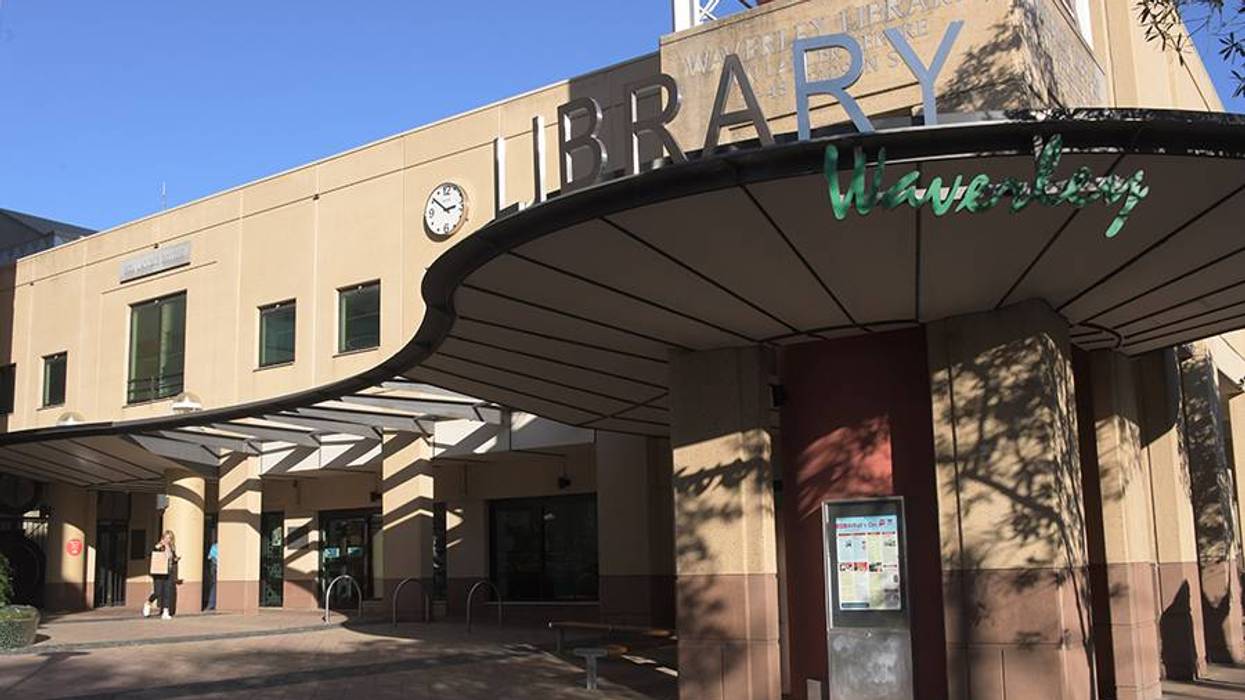
A public library in metropolitan Sydney, Australia confirmed Tuesday that it removed a book critically examining Western media coverage of Israel’s annihilation of Gaza from its shelves, reportedly after a complaint that its prominent display was distressing to a survivor of last year’s mass shooting targeting a Hanukkah celebration in Bondi Beach.
How to Sell a Genocide: The Media’s Complicity in the Destruction of Gaza, by US journalist and media critic Adam Johnson, was pulled from Waverley Library in Bondi Junction and placed under review. JWire reported last week that the Waverley Council removed the book after a Bondi massacre survivor saw it displayed on the library's “New Release/Hot Item” shelf.
However, Johnson said Tuesday on X that "British-Australia media keep buying this line that my book was pulled from the library after a 'complaint from a Bondi attack survivor.' We have no evidence this is true. This is simply the story they’re telling. Has anyone independently verified this chain of events?"
Johnson also noted that the Bondi massacre, in which two gunmen fatally shot 15 victims, "had nothing to do with Palestinians or Gaza."
"There is ZERO link between the two, and it’s false [to] keep implying there was," he added.
Johnson's book, published in April by Pluto Press, argues that US corporate media have helped enable Israel’s devastation of Gaza through sanitizing Israeli actions, obscuring US responsibility, and dehumanizing Palestinians as Israeli forces killed and wounded hundreds of thousands of them in what United Nations experts, human rights groups, a South Africa-led case currently before the International Court of Justice, and many others call a genocide.
Johnson told The Guardian that critics "seem to be objecting largely based on the title using the word ‘genocide.'" a
“But ‘genocide’ is not my word, or my finding," he stressed. "The fact of genocide in Gaza is the overwhelming consensus of the human rights world, and it is a wholly mainstream opinion among those tasked with studying and determining such matters."
“That it makes some people upset is unfortunate, but reality is often upsetting," he said. "This particular reality is especially upsetting... to the parents of the over 20,000 children killed by Israel in Gaza since October 2023."
"Do Sydney officials plan on removing pro-Israel books from their libraries because it potentially upsets these community members?” Johnson added.
The Sydney dispute is hardly an isolated case of the silencing of pro-Palestine speech or criticism of Israel's well-documented crimes against humanity and war crimes, for which alleged perpetrator Israeli Prime Minister Benjamin Netanyahu is wanted by the International Criminal Court in The Hague.
In March, Adelaide University canceled a venue booking for a literary event featuring Francesca Albanese, the UN special rapporteur on the occupied Palestinian territories. Organizers accused the university of bowing to political pressure.
In the United States, college campuses were the epicenter of suppression. New York University withheld a graduating student's diploma after he condemned Israel’s actions in Gaza during his commencement speech. New York authorities also violently cracked down on NYU's anti-genocide protests, and the school adopted a definition of antisemitism conflating anti-Zionism and hatred of Jews.
Seven miles uptown, Columbia University suspended its chapters of the nonviolent groups Students for Justice in Palestine and Jewish Voice for Peace.
George Washington University in Washington, DC banned a graduate from campus after she criticized the university’s ties to Israel, while earlier this year the University of Southern Maine withdrew its support for a Palestine conference because it was slated to include remote participation by Albanese. USM officials cited the dubious sanctions imposed on Albanese and her family by the Trump administration.
There has also been widespread censorship and suppression of pro-Palestine speech in countries including Canada, France, Germany, and the United Kingdom.
These incidents are indicative of a wider pattern documented by Irene Khan, the UN special rapporteur on freedom of expression, who in 2024 reported that courses, lectures, and panels on Palestine have been canceled and that institutions in Western Europe and North America have restricted books, art, scholarship, and speech concerning Israel and Palestine.
While some Jewish leaders and groups welcomed the removal of Johnson's book from Waverley Library, others decried the censorship.
“Public libraries belong to all of us, and should host a range of views and topics, be they books about queer families or Israel’s widely condemned war crimes," Bart Shteinman, an executive member of the progressive Jewish Council of Australia, told The Guardian. He also called the decision to pull the book "deeply alarming."
One Palestinian account on Bluesky posted: "Is the idea that nothing critical of Israel can ever stand? Because the lobby groups keep telling us there’s a difference between prejudice and criticism, but they keep acting like there’s not."
Another social media user, this one on X, lambasted what she called the "lily-livered library" for "pandering to the vile zealots who protect Israel, despite the evidence before our eyes."
Rhonda Garad, a researcher at Monash University in Melbourne, bluntly said on X that "we've reached the book-burning stage of the fascist takeover."

"When you are shameless, contemptuous of international law, and morally bankrupt, you boast of disgrace as though it were an achievement," said one critic.
US Secretary of State Marco Rubio on Tuesday drew an outraged reaction from critics after he unveiled sanctions against Tomoko Akane, president of the International Criminal Court.
In announcing the sanctions, Rubio described the ICC as "a corrupt and fatally politicized" institution that has supposedly "abused its authority and exceeded its mandate."
Rubio said the ICC "has repeatedly attempt to assert authority over... the United States and other countries that have not consented to its jurisdiction," which he said "sets a dangerous precedent for all nations."
In addition to sanctioning Akane, Rubio said the US would also be sanctioning ICC senior trial lawyer Abdoulaye Saye.
While Rubio did not mention what specific actions the ICC has taken to warrant such sanctions, a Tuesday report in The Guardian noted that Saye was charged with investigating war crimes allegedly committed by Israel during its years-long assault on Gaza.
The Trump administration had previously sanctioned then-ICC prosecutor Karim Khan—who obtained arrest warrants for Israeli Prime Minister Benjamin Netanyahu and former Israeli Defense Minister Yoav Gallant—and an additional eight ICC officials.
The social media account of Drop Site News accused Rubio of attacking the court solely to protect Netanyahu from war crimes prosecution, pointing out that "there is currently not a single American citizen under indictment, investigation, or facing an arrest warrant" from the ICC.
The sanctions earned the praise of the Israeli American Public Affairs Committee (AIPAC), which accused the ICC of conducting "politically motivated investigations and prosecutions targeting America and Israel."
Rutgers Law School professor Adil Haque said the ICC sanctions showed the US was acting like a "rogue government" and engaged in "deranged behavior."
Michael Karanicolas, law professor at Dalhousie University, didn't just point fingers at the US over the sanctions, but at US allies who have sat back as international institutions have come under assault.
"I’m no longer surprised by the Trump administration’s efforts to destroy the ICC," wrote Karanicolas. "What I keep waiting for is any response from Canada or the European governments who ostensibly still believe in international law to defend these institutions."
War correspondent and international political analyst Elijah Magnier delivered a withering rebuke of Rubio's announcement.
"When you are shameless, contemptuous of international law, and morally bankrupt," wrote Magnier, "you boast of disgrace as though it were an achievement."
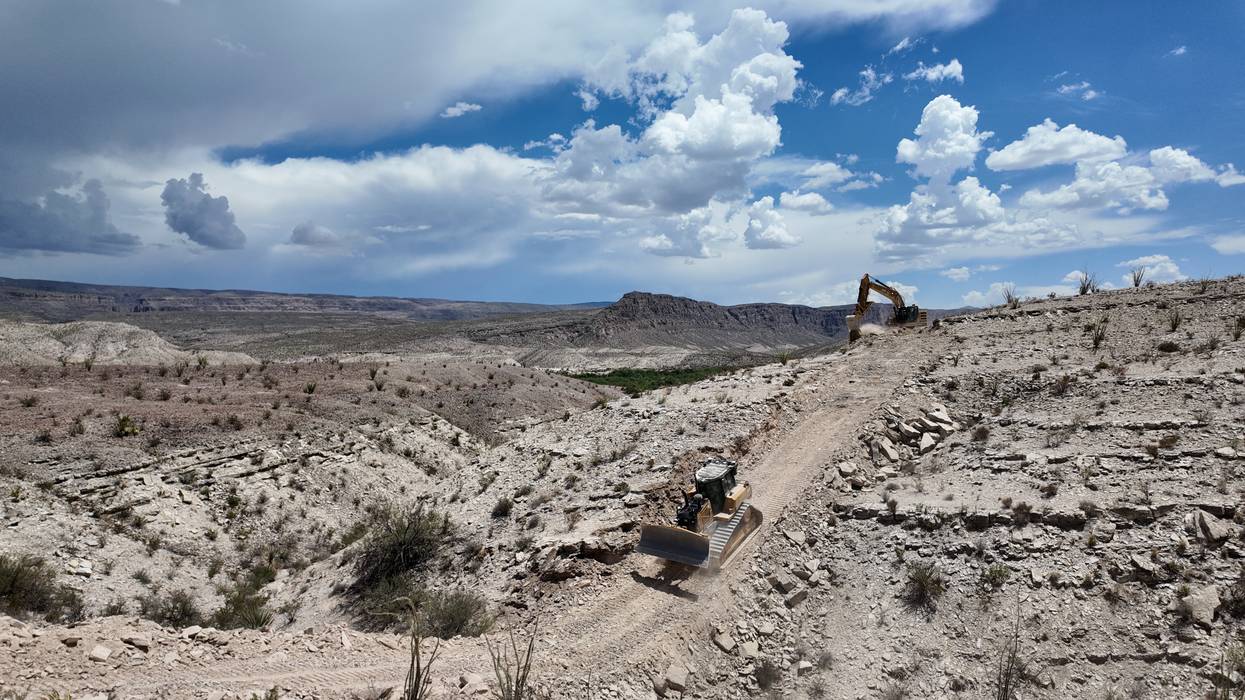
"Even with Customs and Border Protection pumping the brakes, the contractors could resume bulldozing deeper into the national park, causing irreversible damage to the wildest place in Texas," warned one campaigner.
Since US Customs and Border Protection Commissioner Rodney Scott on Monday announced a temporary pause on construction in Big Bend National Park for an "on-the-ground evaluation," conservationists have called for CBP to permanently halt the Trump administration's widely opposed plans for southwest Texas.
"We've been watching the permanent destruction of a great American national park unfold in real time," said Laiken Jordahl, national public lands advocate at the Center for Biological Diversity, in a statement.
The center joined Friends of the Ruidosa Church and a local river guide and landowner on Monday in asking a federal judge to stop border barrier and road construction in the region until the court rules on their lawsuit challenging a related waiver of various laws issued by the Trump administration.
"Even with Customs and Border Protection pumping the brakes, the contractors could resume bulldozing deeper into the national park, causing irreversible damage to the wildest place in Texas," Jordahl warned. "We're hopeful the judge will stop this destruction until there's a ruling on the merits of our case."
CPB previously ditched plans for a 30-foot wall in the area, but crews recently started work on a new road, barriers intended to stop cars from crossing over from Mexico, and other infrastructure as part of President Donald Trump's intense anti-immigrant agenda. Conservationists are concerned about negative impacts on not only the national park but also nearby Amistad National Recreation Area and Big Bend Ranch State Park.
The border construction in the region has been met with sweeping opposition, including from both Democratic and Republican elected officials. GOP Texas Gov. Greg Abbott suggested Monday that his weekend conversation with Homeland Security Secretary Markwayne Mullin led to the pause. He said the department leader assured him there would be "no construction of any type of barrier at Big Bend National Park," with federal agents instead relying on "other tools" to prevent any border crossings.
The public outcry is working. Keep up the pressure until they fully abandon the plan to wreck Big Bend for no reason other than to make contractors money.Law enforcement, conservationists, Democrats, Republicans, Texans all agree: leave Big Bend alone.
[image or embed]
— Congressman Greg Casar (@repcasar.bsky.social) August 17, 2026 at 6:58 PM
Tiernan Sittenfeld, president and CEO for the National Parks Conservation Association, framed the pause as proof that public pressure works, saying: "The people have spoken, and they do not want the Trump administration to bulldoze America's national parks for border infrastructure. This pause on construction comes following hundreds of thousands of Americans bravely raising their voices to save Big Bend National Park."
"Unfortunately, the federal contractors' bulldozers have already inflicted tremendous damage to one of America's most iconic national parks," she noted. "Their heavy equipment has torn through miles of priceless wild landscape, wreaking havoc on sensitive wildlife and irreplaceable habitat."
"We demand that Customs and Border Protection take accountability for the destruction that has occurred at the park and do better by the American people and by our national parks," she added. "When Customs and Border Protection meets with West Texas communities, national park advocates, and expert national park staff, we urge the agency to commit to preventing any further harm to Big Bend and other protected landscapes."
Big Bend National Park is pretty perfect “as is,” so keep raising your voices.
[image or embed]
— Senator Martin Heinrich (@heinrich.senate.gov) August 17, 2026 at 6:08 PM
Dave Cortez, director of the Sierra Club Lone Star Chapter, pledged Monday that "West Texas will not stand by while these irreplaceable landscapes remain at risk. This pause is a step in the right direction, but the threat has not passed."
"While we call on Texans of all political stripes to continue to press Gov. Abbott to defend Big Bend, we need every American who cherishes our public lands to continue to contact their members of Congress and encourage them to abandon every plan that puts Big Bend in harm's way," Cortez continued.
His colleague who manages the national Sierra Club's lands conservation campaign, Jackie Feinberg, also stressed that "Big Bend should never have been bulldozed for a destructive border project, and the Trump administration must make this pause permanent and repair the damage already done."
"Anything less than a full withdrawal is unacceptable for the millions of Americans across the country who love and cherish our national parks and public lands," she said. "The Sierra Club will keep fighting until this project is permanently rescinded. We call on Congress to act to defend Big Bend and ensure that our shared lands and waters nationwide are protected for generations to come."
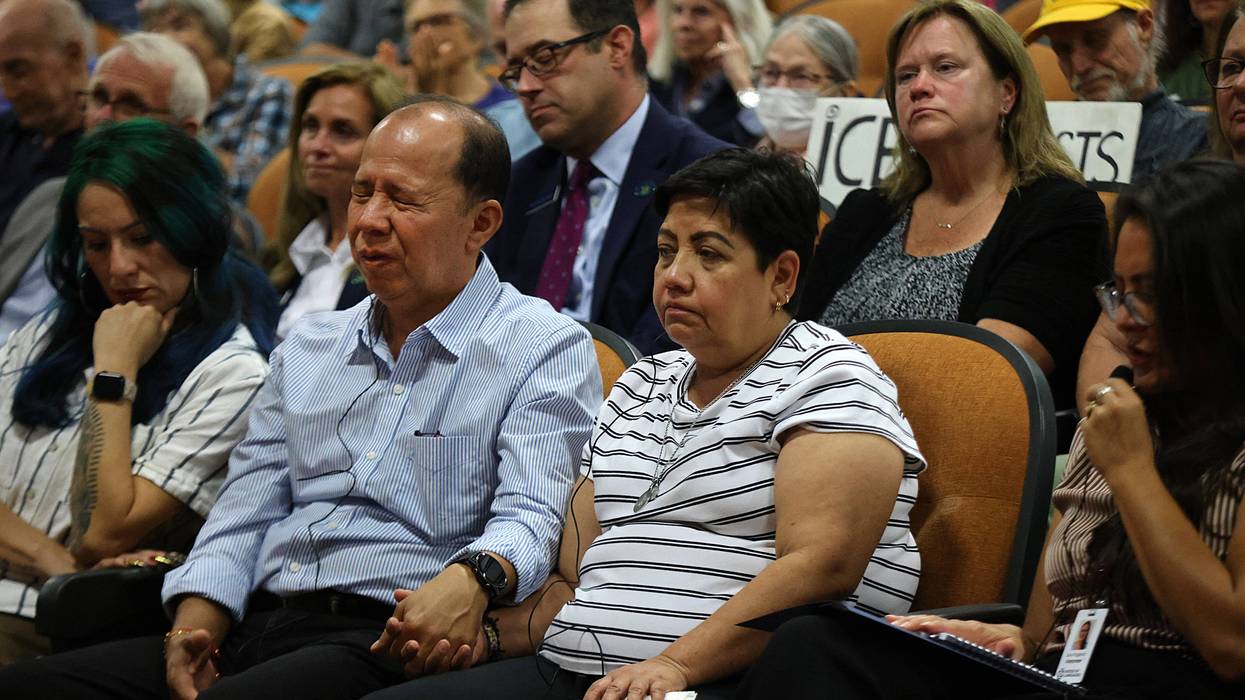
"I ask only of God and of the justice system that my son’s case be brought to light, along with the cases of the many others who have had to go through something like this," said the father of Johan Sebastián Durán Guerrero.
With Republican lawmakers refusing to use their congressional authority to investigate a federal agent's fatal shooting last month of Johan Sebastián Durán Guerrero in Biddeford, Maine, Democratic leaders assembled a "shadow hearing" on Monday at a local high school, where the 25-year-old's grieving father was among those who spoke to a crowd of about 200 people and pleaded for answers about his son's killing.
“The death of Johan Sebastián, under those conditions, at the hands of ICE, filled our community with fear and uncertainty," said Omar Durán, referring to US Immigration and Customs Enforcement. "That is why I ask only of God and of the justice system that my son’s case be brought to light, along with the cases of the many others who have had to go through something like this.”
Durán Guerrero was at least the 11th person to be fatally shot by federal agents since President Donald Trump began deploying ICE and other agencies under the Department of Homeland Security (DHS) to cities and towns across the US to carry out his mass deportation operation.
Federal agents have shot at more than 20 people on US streets under the Trump administration; Durán Guerrero was among several who have been shot at while driving a vehicle, which is against ICE's own policies.
Rep. Chellie Pingree (D-Maine) reported Monday that the ICE agents who were operating in Durán Guerrero's neighborhood in Biddeford on the morning of July 13 were actually looking for his roommate, who owned the car he was driving.
NEW: Chellie Pingree reveals the intended target of the Biddeford ICE stop last month was Johan Sebastian Guerrero's roommate: pic.twitter.com/AEubBvMAjN
— The Maine Wire (@TheMaineWire) August 17, 2026
Pingree said agents did not have a final removal order for the person who was the target of their operation, contrary to what DHS has said about the case.
“This shocking revelation in clear contradiction to what ICE and DHS have been saying about the operation raises fundamental questions,” Pingree said. “How is ICE deciding who to target and detain in Maine? What information are agents relying on?”
"If ICE cannot accurately determine a person's immigration status or circumstance before taking enforcement action, that is a profound failure of competence and accountability," the congresswoman added.
Even in cases where ICE has a deportation order for a person, agents are prohibited from using deadly force unless they have reason to believe the target of the operation poses an imminent threat to an officer's or someone else's safety.
An agent identified as David Michael Brouillette shot Durán Guerrero, who had a 3-year-old daughter with his partner, and DHS has claimed that the officer fired his weapon because Durán Guerrero was trying to flee and Brouillette feared "for public safety."
The agents involved in the operation were not wearing body cameras that were turned on at the time of the shooting, but an eyewitness reported that Durán Guerrero said, "I tried to stop" when the officers pulled him out of his vehicle, bleeding profusely from his head. Surveillance footage taken from a nearby store showed a white car circling an intersection after the shooting before agents stopped it.
"If there were active body cameras on every law enforcement member who was participating there, we wouldn’t be looking at some scratchy videos from one store that’s over here, or one person that’s standing in their doorway that’s trying to get it,” Pingree said at a news conference after Monday's hearing. “We would actually know every moment that’s happened at the scene.”
Durán Guerrero worked as a delivery driver and a cleaner at a veterinary clinic, and had a valid work permit and a pending asylum case.
A lawyer for Durán Guerrero's family said state investigators have interviewed his partner, Karolina Rojas, but no federal agencies have ever contacted her following the killing.
"Any reasonable investigation would include interviewing the family and eyewitnesses,” the lawyer, Ben Gideon, said Monday.
DHS said after the shooting that its inspector general would investigate, but both the agency and the Justice Department refused to answer questions from The New York Times about whether the probe had begun.
The office of Maine Attorney General Aaron Frey is investigating the shooting, and is expected to present its findings to the Maine Deadly Force Review Panel. The panel can make recommendations to DHS, but it does not have jurisdiction over the federal agency.
Durán Guerrero's parents traveled from his home country of Colombia for the shadow hearing. His mother did not speak publicly, while his father described the "deep pain" of hearing his young granddaughter ask where Durán Guerrero is.
The father of Johan Sebastian Duran Guerrero, the man who was shot and killed by an ICE officer in Biddeford last month, delivered an emotional statement during a field hearing about the deadly shooting in Maine. https://t.co/QH8J1JtFVk pic.twitter.com/jYx70sCAUw
— WMTW TV (@WMTWTV) August 17, 2026
"Our dream was always to be reunited and to hold each other again," he said. "Today, that dream can no longer come true."

Trump has cleared the way for 45 million acres of protected forest to be opened for logging and construction in what one conservation group called the "largest evisceration of public lands protection in American history."
The Trump administration is moving to reverse a decades-old rule that protected 45 million acres of forest lands from logging and construction, in what the Center for Biological Diversity called the "largest evisceration of public lands protection in American history."
On Tuesday, Agriculture Secretary Brooke Rollins announced that the US Forest Service had filed a proposed rule to fully rescind the 2001 Roadless Area Conservation Rule, enacted under former President Bill Clinton, which had prevented road building and commercial logging on about 30% of all national forest land.
Rollins described the "roadless rule" as a barrier to government wildfire prevention efforts. "Across the country, we’ve watched preventable conditions—overgrown stands, insect outbreaks, and disease—turn healthy landscapes into tinderboxes,” she said. "For too long, outdated restrictions have kept tens of millions of forested acres off-limits to the very treatments that improve forest health and reduce wildfire risk to our communities."
But conservation groups argue that the administration's reversal of the roadless rule has little to do with wildfire prevention and everything to do with opening up protected lands to logging interests and other extractive industries, which have long pushed for the rule to be weakened.
Increasing logging on federal lands has been a major goal of Trump's second term, and repealing the roadless rule is part of that effort. An executive order signed in March 2025 calling for the "immediate expansion" of timber production said that federal policies had made the country unable to "fully exploit our domestic timber supply."
In June2025, when the US Department of Agriculture first announced plans to rescind the roadless rule, it said that increasing timber production would be one of the benefits. The USDA said the rule hurt “jobs and economic development” and that repealing it aligned with Trump's goal to eliminate "barriers that hamper American business and innovation."
Earthjustice has argued that, contrary to what the administration says, repealing the roadless rule will actually lead to more wildfires, not fewer.
It points to findings from the Forest Service that 9 in 10 wildfires are caused by human activity, including throwing cigarettes out of windows, leaving campfires abandoned, and driving cars on grassy areas, causing them to ignite.
A peer-reviewed study published in January in the journal Fire Ecology by researchers with The Wilderness Society found that fires are about four times as likely to start near a road as in roadless forests.
Another study by the Forest Service in 2020, during the first Trump administration, examined two decades of data and found that roadless forests actually received more fuel-reduction treatments per square kilometer than areas elsewhere in the National Forest System.
"Speculation that eliminating road prohibitions would improve forest health is not supported by nearly 20 years of monitoring data," the study concluded.
Josh Hicks, director of conservation campaigns at the Wilderness Society, said Tuesday, "Opening our backcountry forests to more roads and development, and therefore more ignitions, is... not a wildfire solution, and never will be."
While doing little to curb the recent increases in wildfires exacerbated by climate change, conservationists argue that repealing the roadless rule will pose other harms to communities and wildlife across the country.
“Roadless forests supply clean drinking water for tens of millions of Americans, are home to irreplaceable wildlife, and store enormous amounts of carbon,” said Gabrielle Berthel, forest advocate at the Natural Resources Defense Council. "Repealing the Roadless Area Conservation Rule would allow for the fragmentation of some of the last intact forest ecosystems in the country, with irreversible consequences for the communities that rely on these forests and the people who seek out these special places for recreation."
The Center for Biological Diversity (CBD) noted that these forests serve as habitats for numerous threatened species that risk being disrupted, including American wolverines, Canada lynx, grizzly bears, and northern spotted owls.
Randi Spivak, the public lands policy director at the CBD, emphasized that "these are some of the last truly wild forests left in the country... Once you start bulldozing roads for commercial logging and industrial development, there’s no getting them back."
More than 625,000 public comments have been submitted to the Forest Service since plans to rescind the roadless rule were announced last June. The USDA will accept public comments on the proposal until September 21, after which the administration is expected to move toward a final rule later this year.
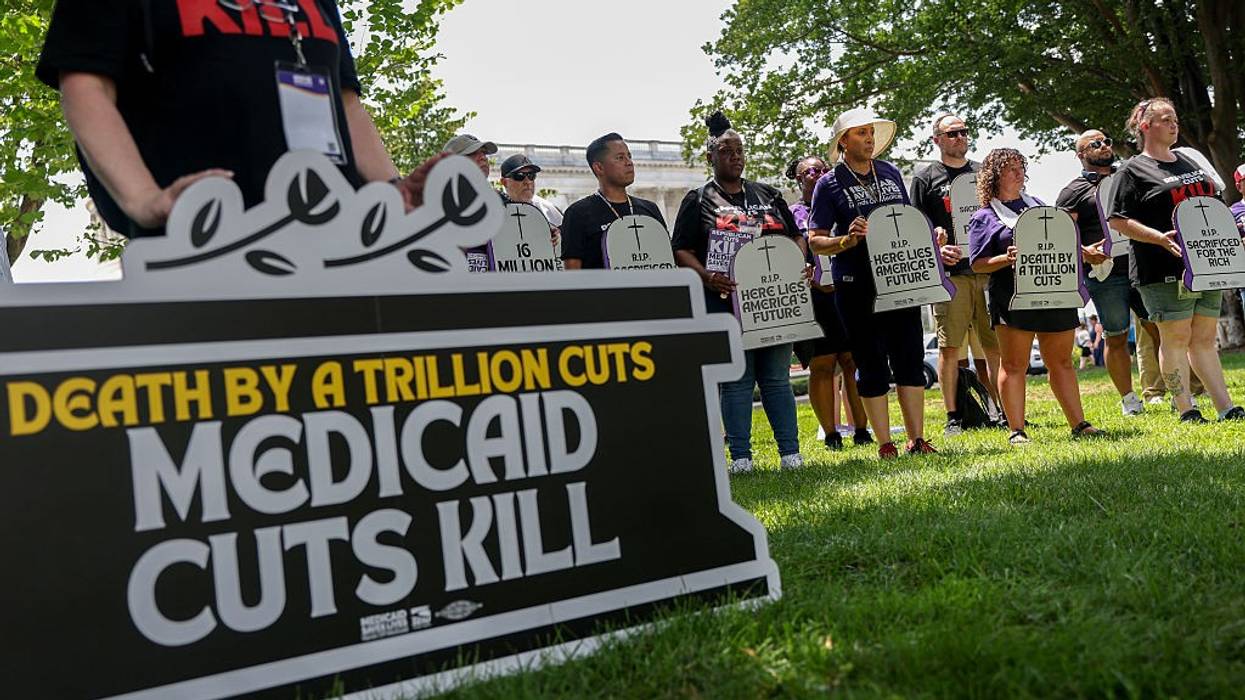
New fact sheets detail how people in every US state are suffering from the Republican Party's assault on Medicaid and the Affordable Care Act.
The unprecedented healthcare cuts that President Donald Trump and the Republican Party enacted last summer have impacted people in all 50 US states, stripping insurance coverage from around 8 million Americans total and wreaking havoc on hospitals and other providers nationwide.
The advocacy group Protect Our Care on Tuesday released state-by-state fact sheets detailing how many people have lost Medicaid, Children's Health Insurance Program (CHIP), and Affordable Care Act coverage due to Republican policy decisions, including the party's roughly $900 billion in cuts to Medicaid and decision to let enhanced ACA subsidies expire, sending premiums skyrocketing.
“Eight million Americans have lost their health care because Donald Trump and Republicans decided they would rather hand out tax breaks to billionaires than protect working families," said Brad Woodhouse, the president of Protect Our Care. "Every day that healthcare becomes more expensive, a family is forced to make an impossible choice between putting food on the table and staying covered, a senior is forced to ration their medication, and an expectant mother has to travel farther to access maternity care."
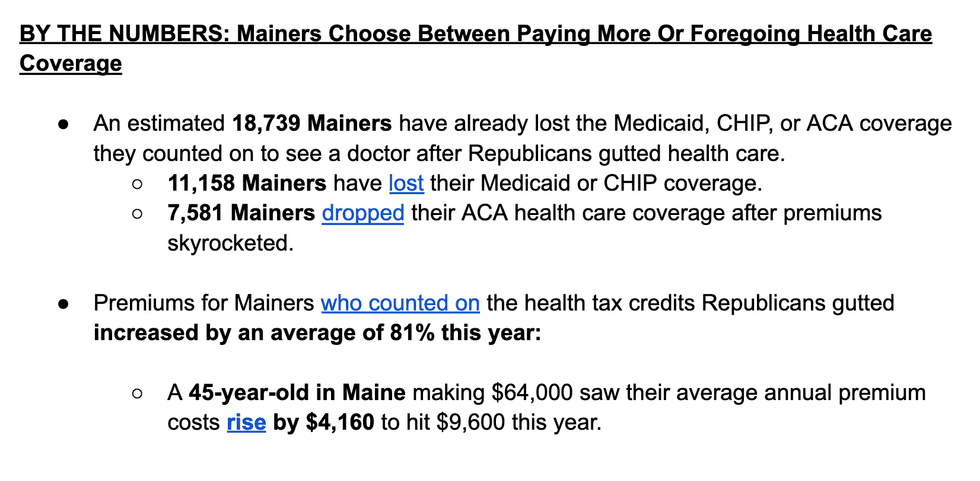
In Maine, where Democrats are looking to finally unseat vulnerable Sen. Susan Collins, more than 18,700 people have lost Medicaid, CHIP, or ACA coverage under the Republican budget law. Included in that total are the more than 7,500 Mainers who dropped ACA marketplace coverage after premiums soared due to the lapse of enhanced subsidies at the end of 2025.
Collins voted to advance GOP budget legislation that included the devastating Medicaid cuts, but voted against final passage.
Protect Our Care noted that "Maine hospitals and clinics are facing a $38 million loss in funding and a 6.7% spike in uncompensated care demand that will affect their ability to keep their doors open."
"As of August 2026, 20 Maine healthcare providers are at-risk, announced cuts, are closing, or have closed," the group added.
More than 25,600 Alaskans have lost health coverage under the Republican budget law and premiums have surged by an average of 346% this year, according to Protect Our Care's fact sheets.
US Sen. Dan Sullivan (R-Alaska), who along with Collins is seen as one of the most vulnerable Republicans this election cycle, voted for the more than $900 billion in Medicaid cuts.
"From Alaska to Florida, these people are our neighbors, our parents, our kids, and they’re sick of paying the price for Republicans’ greed," Woodhouse said on Tuesday. "They deserve better, and in November they will demand it at the ballot box.”

"Taylor Farms’ repeated connection to major outbreaks and recalls warrants a closer look at whether these are unrelated incidents or signs of recurring weaknesses."
An agricultural industry watchdog on Tuesday released a report examining how corporate consolidation enabled this summer's widespread outbreak of Cyclosporiasis, a foodborne illness that causes explosive diarrhea.
The report, published by Farm Action, argues that the wide reach of produce giant Taylor Farms, which is the source of the outbreak, spread food contaminated by the Cyclospora parasite far and wide before an issue was detected.
One problem with Taylor Farms' reach, the report states, is that it is often hidden, leaving people unaware of the source of certain products.
"Taylor Farms produces 40% of the salad kits sold in the country and grows about one-quarter of its own vegetables, sourcing the rest through partner farms," the report says. "That makes it a major link between farms and some of the nation’s largest food buyers."
The company's produce is used at popular fast-food chains such as Taco Bell, McDonald's, and Chipotle, and is sold at big-name grocery stories including Whole Foods, Target, Safeway, and Costco.
Beyond that, its produce is bought by foodservice distribution giants Sysco and US Foods, who send it to assorted schools, hospitals, and hotels.
The report says that the consolidation of the produce production industry was itself enabled by the industry consolidation of grocery stores, restaurant chains, and foodservice distributors, which found it more efficient to buy from conglomerates such as Taylor Farms, which the report categorizes as "grower-shipper-packers (GSPs)."
"Like other large GSPs, Taylor Farms sources produce through regional and international networks rather than relying primarily on nearby farms," writes Farm Action. "That helps explain why investigators traced lettuce implicated in the 2026 Cyclospora outbreak to Mexico, even in the middle of summer when much of the US is capable of growing lettuce."
Because Taylor distributes its produce to so many places under so many different brands, the report continues, consumers have a hard time avoiding them even if they are actively trying.
What's more, the 2026 Cyclospora outbreak isn't the first time Taylor has been linked to a food safety event, as Farm Action found that it was connected to "the 2026 Salmonella outbreak linked to jalapeño products, previous Cyclospora outbreaks, the 2024 E. coli outbreak linked to McDonald’s onions, the 2021 E. coli cluster involving romaine lettuce, and numerous recalls for allergens, labeling errors, contamination risks, and processing defects."
"These incidents do not by themselves prove a pattern of systemic problems," the report adds. "But Taylor Farms’ repeated connection to major outbreaks and recalls warrants a closer look at whether these are unrelated incidents or signs of recurring weaknesses."
The report concludes by recommending stronger enforcement of US antitrust laws to break up big distributors, as well as stronger food safety and traceability policies.
Sarah Carden, senior director of research and policy at Farm Action, said the report on Taylor Farms should be a wakeup call to food safety regulators about the dangers of corporate centralization.
"Taylor Farms has extraordinary reach across the produce supply chain, a history of connections to major food safety events, significant political spending and access, and a workplace record that raises serious questions," said Carden. "Its growth also shows how consolidation has left farmers with fewer buyers and made our food supply increasingly dependent on a small number of powerful companies."

"It is the height of absurdity that Congress is even considering a proposal to become more entangled with the Israeli military and use our tax dollars to subsidize their weapons companies."
A new poll of US voters published on Tuesday offers a warning for congressional lawmakers backing a plan to deepen military ties between the United States and Israel, finding that a clear majority of voters oppose the proposal—which some critics have called "treasonous."
The Data for Progress survey of 1,217 likely US voters—conducted August 3–7 for Demand Progress and the Institute for Middle East Understanding (IMEU) Policy Project—revealed that 61% of respondents oppose legislation in the National Defense Authorization Act (NDAA) for 2027 that would integrate Israeli weapons companies into the Pentagon at a level exceeding that of any other country. That figure rose to 78% among Democrats and 73% among independents.
“This poll is a flashing red warning sign for any member of Congress who supports the defense authorization bill," Demand Progress senior policy adviser Cavan Kharrazian said in a statement. "A clear majority of voters do not support further integrating the Israeli military and Israeli military companies into the Pentagon, which the NDAA is set to do."
NEW POLL: 61% of Americans - including 78% of Democrats and 73% of Independents - oppose a measure moving through Congress to integrate Israeli weapons companies into the Pentagon. Read more of the results from our poll with @demandprogress.bsky.social andconducted by @dataforprogress.org.⬇️
[image or embed]
— IMEU Policy Project (@imeupolicy.bsky.social) August 18, 2026 at 8:14 AM
The Republican-controlled House of Representatives voted last month 216-212, mostly along party lines, in favor of a record $1.15 trillion NDAA. The military spending bill contains Section 219, a provision that would create a US–Israel Defense Technology Cooperation Initiative, accelerating joint defense research, development, testing, and integration of technologies including artificial intelligence, missile defense, and counter-drone systems.
Reps. Thomas Massie (R-Ky.) and Ro Khanna (D-Calif.) submitted an amendment to strip Section 219 from the NDAA. The measure failed to pass.
Congresswoman Ilhan Omar (D-Minn.), who voted against the NDAA, described Section 219 as “an outrageous threat to our country’s security and autonomy."
The Senate version of the military spending authorization bill has a related provision—Section 1217, the United States-Israel FUTURES Act—and the two chambers will need to reconcile their NDAA legislation before the final language is decided. Reconciliation is not expected to occur before November at the earliest.
“It’s time for Congress to listen to the American people for once, and not the same voices who always want to cut Israel a blank check," Kharrazian said. That "blank check" has totaled more than $174 billion in non-inflation-adjusted aid since the modern state of Israel was founded in 1948.
The new poll found that 57% of respondents believe the Israeli military and Israeli weapons companies should not receive increased access to US military systems. Fifty-one percent said Israel benefits more from the US-Israel relationship, compared with just 12% who said the United States benefits more.
Although Republican voters support the Pentagon provision by a 16-point margin, when asked about it without additional context, they are considerably less enthusiastic about the idea of granting any foreign military special access, opposing it 62%-27%.
Forty percent of surveyed voters said they believe that the US-Israeli relationship is "too close," compared with 42% who say it is "about right." Among Democrats, 56% say relations are too close, versus just 23% who say about right. Twenty-two percent of Republicans and 43% of Independents said US-Israeli relations are too close.
Asked if they think President Donald Trump is too supportive of Israel's right-wing government, 49% said yes, compared with only 33% who said the president is giving Israel the right amount of backing and just 8% who believe he's not giving the key ally enough support.
Respondents' views of Israel itself have deteriorated markedly, with 44% saying they now view the country less favorably than they did three years ago—compared with just 17% who say their views have improved amid the war of annihilation in Gaza that United Nations experts, human rights groups, and a South Africa-led case currently before the International Court of Justice call a genocide, as well as the wider Israeli occupation, colonization, ethnic cleansing, and apartheid in Palestine.
Looking only at the past six months, 41% of respondents said their view of Israel has become less favorable, versus 16% who say it has become more favorable. Among Democrats, the split is 56%-13%; among Independents it's 42%-11%.
“Israel is a nation committing genocide that just dragged the American people into a disastrous war that is still hitting our pocketbooks," IMEU Policy Project executive director Margaret DeReus said, referring to the Iran War. “Senators take an oath to do what is best for the American people above all; to uphold that oath, they must scrap this ridiculous proposal.”
"It is the height of absurdity," DeReus added, "that Congress is even considering a proposal to become more entangled with the Israeli military and use our tax dollars to subsidize their weapons companies."