

SUBSCRIBE TO OUR FREE NEWSLETTER
Daily news & progressive opinion—funded by the people, not the corporations—delivered straight to your inbox.
5
#000000
#FFFFFF
To donate by check, phone, or other method, see our More Ways to Give page.
Daily news & progressive opinion—funded by the people, not the corporations—delivered straight to your inbox.
Brad Luna 202/216.1514
Trevor Thomas 202/216.1547
The Human Rights Campaign (HRC), the nation's largest lesbian, gay, bisexual and transgender (LGBT) civil rights organization, today lauded the introduction of the Military Readiness Enhancement Act of 2010 in the U.S. Senate. The bill, sponsored by U.S. Senator Joseph Lieberman (I-CT), would repeal the military's "Don't Ask, Don't Tell" (DADT) law, which prohibits lesbians and gays from serving openly in the U.S. Armed Forces. Rep. Patrick Murphy (D-PA), an Iraq War veteran and a former paratrooper in the U.S. Army's elite 82nd Airborne Division, is the lead sponsor of similar legislation in the U.S House of Representatives.
"By introducing the first bill to repeal 'Don't Ask, Don't Tell' in the Senate, Senator Lieberman is continuing the momentum to repeal 'Don't Ask, Don't Tell' this year," said Human Rights Campaign President Joe Solmonese. "His introduction of the Military Readiness Enhancement Act of 2010 is a bold, patriotic move that will long be remembered as key to removing the stain of the discriminatory 'Don't Ask, Don't Tell' law from the U.S. code. Over the last few weeks, military leaders have made it clear that repeal of the failed 'Don't Ask, Don't Tell' law must happen. As a senior member of the Senate Armed Services Committee and an expert on national security, Senator Lieberman's leadership in the fight to repeal 'Don't Ask, Don't Tell' is critical to achieving repeal this year."
Military leaders, including Secretary of Defense Robert Gates and Chairman of the Joint Chiefs of Staff Adm. Michael Mullen, recognize that DADT is a failed law and support its repeal. Former Vice President and Defense Secretary Dick Cheney also recently came out for repeal by stating, "When the chiefs come forward and say, 'We think we can do it,' then it strikes me as it's time to reconsider the policy, and I think Adm. Mullen said that." Moreover, former supports of the law, such as General Colin Powell, former Chairmen of the Joint Chiefs of Staff, and General John M. Shalikashvili, former Chairman of the Joint Chiefs of Staff, have all indicated their support for repealing DADT as well.
The vast majority of Americans - including majorities of Republicans, Independents and Democrats - support repealing the DADT. Americans recognize that on the battlefield, it does not matter whether a soldier is lesbian, gay or straight; what matters is that a soldier gets the job done. This discriminatory law hurts military readiness and national security while putting American soldiers fighting overseas at risk.
Last week, HRC launched a national action alert and announced details of its ongoing campaign to repeal DADT. To focus on key states where congressional support for repeal is critical, HRC has dispatched field staff to six states - Florida, Indiana, Massachusetts, Nebraska, Virginia and West Virginia, with other states to follow in the months ahead. HRC is also asking members and supporters to sign up and to join the growing network of supporters to repeal DADT. To learn more visit: www.hrc.org/RepealDADT.
Prior to this, HRC has spent years laying the groundwork for repeal of DADT through programs like the "Voices of Honor" and "Legacy of Service" tours, which organized in key states to highlight the costs of DADT and promote the voices of gay and straight veterans who support repeal. These efforts began in 2005 when HRC and Servicemembers United launched the first of three national tours to share the stories of service members who have been harmed by DADT. From Philadelphia to Phoenix, from Kansas City to San Diego, the tours made stops nationwide, driving local and national media attention, including coverage by the military itself.
In addition, HRC submitted testimony and prepared witnesses in 2008 for the first congressional hearing to review the "Don't Ask, Don't Tell" law since it was enacted in 2003. Furthermore, in 2007, to commemorate the 14th anniversary of DADT, HRC displayed 12,000 flags on the National Mall to recognize the 12,000 women and men discharged from the military since the enactment of DADT.
The Human Rights Campaign represents a grassroots force of over 750,000 members and supporters nationwide. As the largest national lesbian, gay, bisexual and transgender civil rights organization, HRC envisions an America where LGBT people are ensured of their basic equal rights, and can be open, honest and safe at home, at work and in the community.

The Trump administration last week sued Minnesota after it passed a law banning prediction markets from operating in the state.
A Sunday report in The New York Times revealed how the Trump administration is using a key government agency to shut down any efforts to regulate online betting markets such as Kalshi and Polymarket.
According to the Times, the administration has stacked the Commodity Futures Trading Commission (CFTC) with industry insiders who have systematically "mowed down" staffers at the agency who have expressed interest in providing oversight on prediction markets.
Among other things, the report documented how multiple officials at CTFC have been put on leave simply for asking questions about the betting markets' ties to members of President Donald Trump's family or for having past experience enforcing regulations related to cryptocurrencies.
What's more, the Times found that even being an industry insider isn't enough to guarantee good standing in the agency. Brian Quintenz, who was tapped by Trump to lead CTFC last year, saw his nomination withdrawn after he drew the ire of Cameron and Tyler Winklevoss for refusing to support their cryptocurrency exchange's complaint against the agency.
Revelations about industry insiders rolling over regulators at CTFC come as the Trump administration is fighting any attempts by states to regulate prediction markets.
As explained in a Thursday report from CNBC, the Trump administration is "fighting a multi-front battle to stop the state actions and assert its regulatory authority," with CTFC arguing that it is "the only entity that can regulate" betting platforms.
16 different states are engaged in legal proceedings against the platforms, and Minnesota last week passed a law to ban them outright, which immediately drew a lawsuit from the administration.
The new Minnesota law, which is scheduled to take effect in August, bans prediction markets "from hosting, creating or advertising in the state," according to ABC News.
In an interview with ABC, Minnesota state Rep. Emma Greenman (D-63B) said she authored the legislation because she has grown increasingly concerned about young people in the state seeing their finances drained from placing online bets.
"We're seeing studies come out that say [the companies] are targeting 18- to 21-year-olds," said Greenman, "and we are seeing gambling starting younger and younger."
CFTC Chair Michael Selig last month warned states against trying to regulate prediction markets, which he said would "circumvent the clear directive of Congress."
"Our message to Wisconsin is the same as to New York, Arizona, and others," said Selig. "If you interfere with the operation of federal law in regulating financial markets, we will sue you."
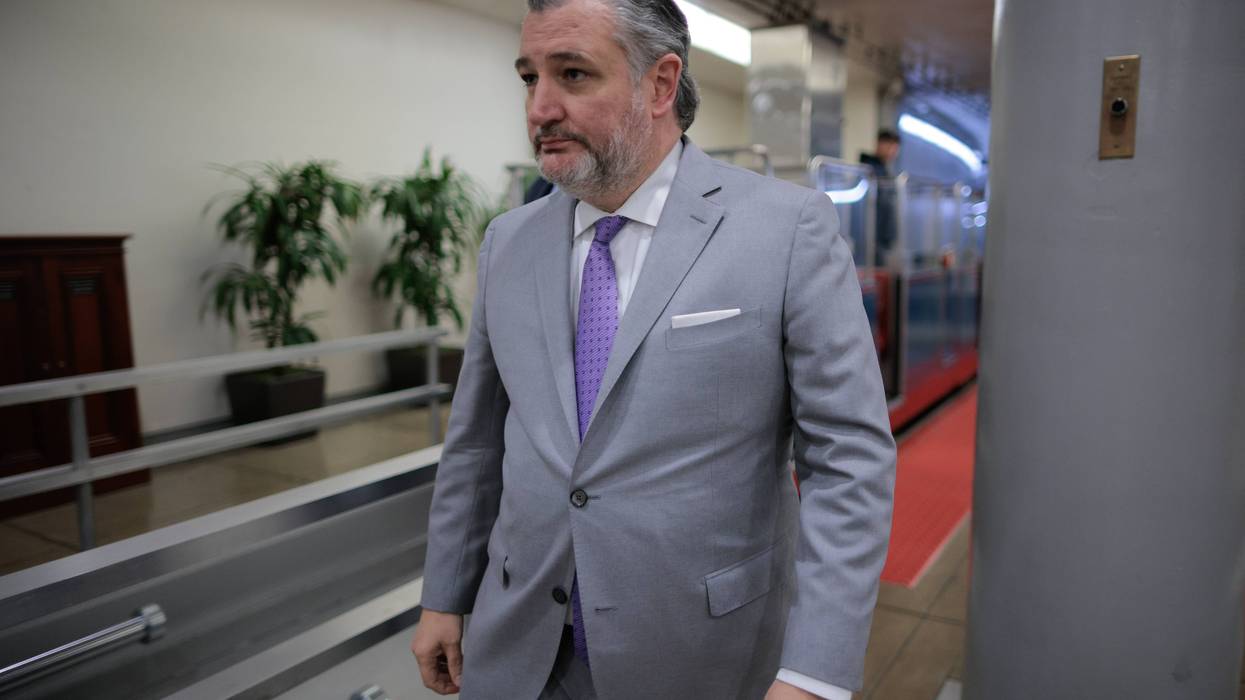
"Nothing was accomplished by Operation Epic Fury except putting the Islamic Revolutionary Guard Corps in charge of Iran and the Strait of Hormuz," said one critic of the war.
President Donald Trump revealed on Saturday that he is mulling a deal that would end his illegal war with Iran, and some hawks within the Republican Party are expressing alarm.
According to a Sunday report in The New York Times, many details of the agreement to end the war remain murky, with the fate of Iran's enriched uranium up in the air. US and Iranian officials have also given contradictory messages about the proposed deal's contents, suggesting there is much work still to be done before any agreement is finalized.
Regardless, three hawkish GOP senators on Saturday raised major concerns about the contents of the deal, warning against accepting any agreement that will leave Iran in a stronger position than before Trump illegally launched a war against it without any authorization from Congress in late February.
"If it is perceived in the region that a deal with Iran allows the regime to survive and become more powerful over time, we will have poured gasoline on the conflicts in Lebanon and Iraq," wrote Sen. Lindsey Graham (R-SC), who lobbied Trump to attack Iran repeatedly before the start of the war. "A deal that is perceived to allow Iran to survive and possess the ability to control the [Strait of Hormuz] in the future will put Hezbollah in Lebanon and the Shia militias in Iraq on steroids.
Sen. Ted Cruz (R-Texas), another longtime Iran hawk, said he was "deeply concerned" about what he's been hearing about the deal and expressed particular worry about Iran getting relief from US sanctions while still maintaining the ability to shut down the Strait of Hormuz.
"If the result of all that is to be an Iranian regime—still run by Islamists who chant 'death to America'—now receiving billions of dollars," Cruz wrote, "being able to enrich uranium and develop nuclear weapons, and having effective control over the Strait of Hormuz, then that outcome would be a disastrous mistake."
Sen. Roger Wicker (D-Miss.) was even blunter in his condemnation of the reported agreement.
"The rumored 60-day ceasefire—with the belief that Iran will ever engage in good faith—would be a disaster," Wicker wrote. "Everything accomplished by Operation Epic Fury would be for naught!"
Ben Rhodes, a former deputy national security adviser for President Barack Obama, challenged Wicker's claims that Trump's illegal war had achieved anything of value.
"Nothing was accomplished by Operation Epic Fury," Rhodes wrote, "except putting the Islamic Revolutionary Guard Corps in charge of Iran and the Strait of Hormuz."
Rhodes' criticism was echoed by Stephen Wertheim, senior fellow at the Carnegie Endowment for International Peace, who wrote that "everything accomplished by Operation Epic Fury is already for naught."
Ali Vaez, director of the Iran Project at the International Crisis Group, accused the Iran hawks of being delusional for thinking further bombing would force Iran to capitulate.
"DC's Iran hawks got two wars, nearly every conceivable sanction designation, a blockade, threw a wrench in global economy," Vaez wrote, "and will still claim that just a little more pressure and a touch more bombing will magically yield the concessions they still won't be satisfied with."

Data released by the University of Michigan and Gallup this week showed US consumer sentiment cratering even as stock markets hit record highs.
Multiple polls and surveys released in recent days have shown US consumer sentiment cratering—and all the while, the US stock market keeps hitting record highs.
The Kobeissi Letter, a financial newsletter, posted a graphic Saturday that matched consumer sentiment as measured by the University of Michigan's Surveys of Consumers with the performance of the S&P 500 stock index over a 30-year span.
The graphic shows that, up until around 2020, consumer sentiment matched stock market performance closely, although there was a large divergence between the two leading up to the 2008 financial crisis, where stocks briefly outperformed consumer sentiment before crashing downward as the housing bubble burst.
But throughout the last six years, the graphic shows, the S&P 500 has produced an almost continuous upward surge even as consumer sentiment spirals downward.
Absolutely incredible:
Over the last 6 years, the S&P 500 has risen +130% while US Consumer Sentiment has collapsed by -55%, to its lowest since data began in 1952.
We are witnessing the formation of the biggest wealth divide in modern history. https://t.co/XGMR6DfuNc pic.twitter.com/2w7cRvn7ok
— The Kobeissi Letter (@KobeissiLetter) May 23, 2026
"Absolutely incredible," commented Kobeissi Letter. "Over the last six years, the S&P 500 has risen +130% while US Consumer Sentiment has collapsed by -55%, to its lowest since data began in 1952. We are witnessing the formation of the biggest wealth divide in modern history."
Kobeissi Letter produced the graphic one day after the University of Michigan's latest survey found consumer sentiment hitting the lowest level on record.
Joanne Hsu, director of the survey, observed that "the cost of living continues to be a first-order concern, with 57% of consumers spontaneously mentioning that high prices were eroding their personal finances, up from 50% last month."
On the same day, Gallup published new data showing that Americans' economic confidence has fallen to its lowest level since October 2022, with just 16% of Americans rating the economy as excellent or good, and nearly half describing it as poor.
Axios reported on Saturday that even Republicans have been growing sour on the US economy, citing a recent poll from The Associated Press showing GOP approval of President Donald Trump on the economy to be at around 60%, down from 80% just three months ago.
"The growing GOP gloom could hardly come at a worse time for Trump and the party," Axios noted, "less than six months out from a midterm election that's likely to turn on the economy."
The gap between overall consumer sentiment and stock market performance also lines up with recent consumer spending trends. Data published by The Financial Times earlier this year showed that the top 10% of earners in the US now account for nearly half of all consumer spending, while the bottom 80% of earners now account for less than 40% of all consumer spending.
A February report from TD Economics economist Ksenia Bushmeneva noted that “the economic divide between America’s households at the top of the income spectrum and everyone else continued to widen last year,” as “upper-income households benefited from the still-robust wage growth, strong gains in equity markets, and better access to consumer credit.”