


A leading international human rights organization said Monday that Israel's deadly bombing of a Lebanese residential compound housing journalists last month was carried out using a munition guidance kit supplied by the United States.
Human Rights Watch (HRW) said its investigation determined that the October 25 strike in southern Lebanon, launched in the early hours of the morning as most of the journalists staying in the compound slept, was "most likely a deliberate attack on civilians and an apparent war crime."
The group's investigators visited the Hasbaya Village Club Resort, the target of the strike, and found no evidence that the compound was being used for military activity, undercutting Israel's initial claim that it hit a building from which "terrorists were operating."
HRW also said it reviewed information indicating that Israel's military "knew or should have known" that journalists were staying in the compound. Journalists who were at the compound when Israel's strike hit said the Israeli military did not issue a warning ahead of the attack.
"All the indications show that this would have been a deliberate targeting of journalists: a war crime."
The airstrike killed at least three journalists and injured several others. Remnants from the scene of the strike collected by the targeted resort's owner were "consistent" with Joint Direct Attack Munitions (JDAMs) that the U.S. has provided to the Israeli military.
One fragment, according to HRW "bore a numerical code identifying it as having been manufactured by Woodard, a U.S. company that makes components for guidance systems on munitions." Boeing, a major U.S. military contractor, assembles and sells JDAMs, which are attached to bombs with the stated goal of making airstrikes more precise.
Other remnants HRW reviewed were consistent with materials from a 500-pound bomb equipped with a JDAM.
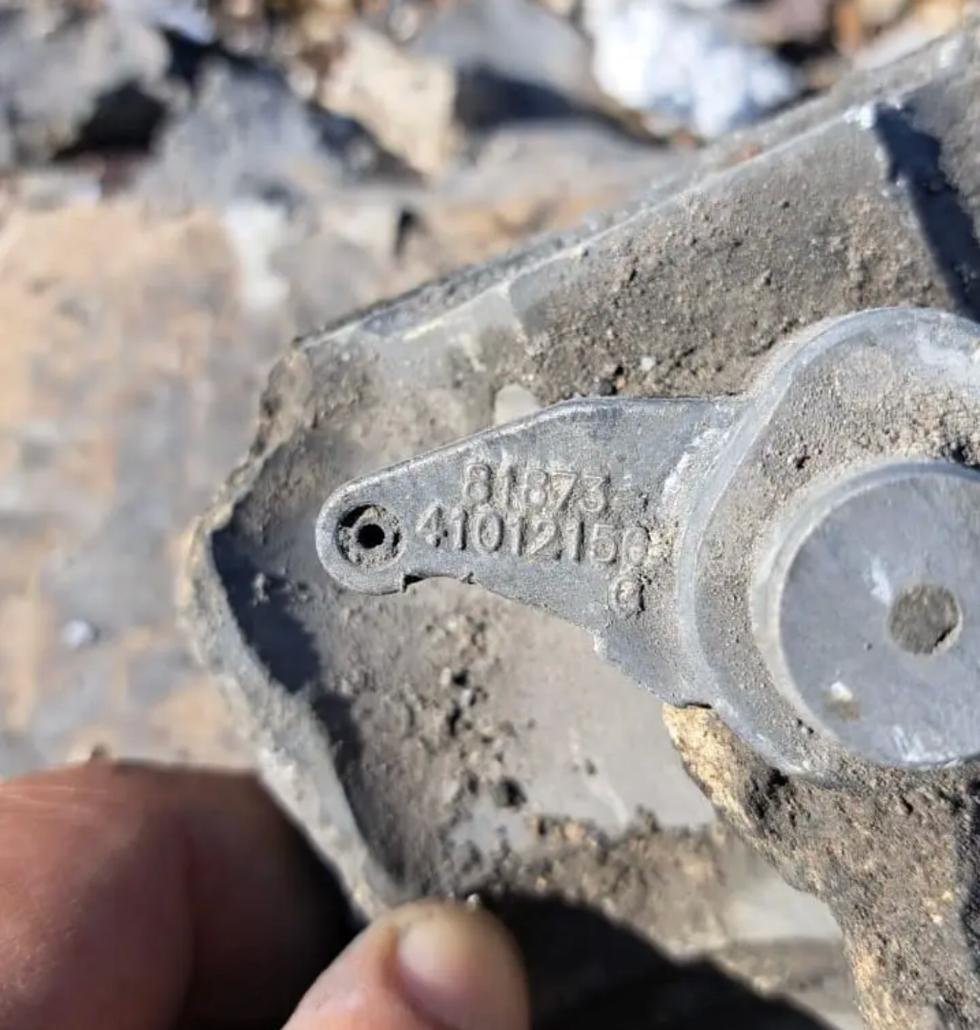 A bomb remnant retrieved following Israel's October 25, 2024 attack. (Photo: Anoir Ghaida via Human Rights Watch)
Richard Weir, a senior researcher at HRW, said in a statement Monday that "Israel's use of U.S. arms to unlawfully attack and kill journalists away from any military target is a terrible mark on the United States as well as Israel."
"The Israeli military's previous deadly attacks on journalists without any consequences give little hope for accountability in this or future violations against the media," said Weir. "As evidence mounts of Israel's unlawful use of U.S. weapons, including in apparent war crimes, U.S. officials need to decide whether they will uphold U.S. and international law by halting arms sales to Israel or risk being found legally complicit in serious violations."
The Guardian conducted a separate investigation of the Israeli strike and reached conclusions mirroring HRW's, reporting Monday that "Israel used a U.S. munition to target and kill three journalists and wound three."
"On 25 October at 3:19 am, an Israeli jet shot two bombs at a chalet hosting three journalists—cameraman Ghassan Najjar and technician Mohammad Reda from pro-Hezbollah outlet al-Mayadeen, as well as cameraman Wissam Qassem from the Hezbollah-affiliated outlet al-Manar," the newspaper observed. "All three were killed in their sleep in the attack which also wounded three other journalists from different outlets staying nearby. There was no fighting in the area before or at the time of the strike."
Nadim Houry, a human rights lawyer and executive director of the Arab Reform Initiative, told The Guardian that "all the indications show that this would have been a deliberate targeting of journalists: a war crime."
"This was clearly delineated as a place where journalists were staying," Houry said.
The findings were published just days after the U.S. Senate voted down an effort led by Sen. Bernie Sanders (I-Vt.) to block new sales of American weaponry to Israel. One of the resolutions put forth by Sanders would have blocked the imminent transfer of over $260 million worth of JDAMs to Israel's military.
In a fact sheet, Sanders' office pointed to six examples in which Israel's military used JDAMs in deadly attacks on civilians in Gaza and Lebanon, including children.
"The United States is complicit in these atrocities," Sanders said in a floor speech ahead of last week's vote. "That complicity must end."
A leading international human rights organization said Monday that Israel's deadly bombing of a Lebanese residential compound housing journalists last month was carried out using a munition guidance kit supplied by the United States.
Human Rights Watch (HRW) said its investigation determined that the October 25 strike in southern Lebanon, launched in the early hours of the morning as most of the journalists staying in the compound slept, was "most likely a deliberate attack on civilians and an apparent war crime."
The group's investigators visited the Hasbaya Village Club Resort, the target of the strike, and found no evidence that the compound was being used for military activity, undercutting Israel's initial claim that it hit a building from which "terrorists were operating."
HRW also said it reviewed information indicating that Israel's military "knew or should have known" that journalists were staying in the compound. Journalists who were at the compound when Israel's strike hit said the Israeli military did not issue a warning ahead of the attack.
"All the indications show that this would have been a deliberate targeting of journalists: a war crime."
The airstrike killed at least three journalists and injured several others. Remnants from the scene of the strike collected by the targeted resort's owner were "consistent" with Joint Direct Attack Munitions (JDAMs) that the U.S. has provided to the Israeli military.
One fragment, according to HRW "bore a numerical code identifying it as having been manufactured by Woodard, a U.S. company that makes components for guidance systems on munitions." Boeing, a major U.S. military contractor, assembles and sells JDAMs, which are attached to bombs with the stated goal of making airstrikes more precise.
Other remnants HRW reviewed were consistent with materials from a 500-pound bomb equipped with a JDAM.
A bomb remnant retrieved following Israel's October 25, 2024 attack. (Photo: Anoir Ghaida via Human Rights Watch)
Richard Weir, a senior researcher at HRW, said in a statement Monday that "Israel's use of U.S. arms to unlawfully attack and kill journalists away from any military target is a terrible mark on the United States as well as Israel."
"The Israeli military's previous deadly attacks on journalists without any consequences give little hope for accountability in this or future violations against the media," said Weir. "As evidence mounts of Israel's unlawful use of U.S. weapons, including in apparent war crimes, U.S. officials need to decide whether they will uphold U.S. and international law by halting arms sales to Israel or risk being found legally complicit in serious violations."
The Guardian conducted a separate investigation of the Israeli strike and reached conclusions mirroring HRW's, reporting Monday that "Israel used a U.S. munition to target and kill three journalists and wound three."
"On 25 October at 3:19 am, an Israeli jet shot two bombs at a chalet hosting three journalists—cameraman Ghassan Najjar and technician Mohammad Reda from pro-Hezbollah outlet al-Mayadeen, as well as cameraman Wissam Qassem from the Hezbollah-affiliated outlet al-Manar," the newspaper observed. "All three were killed in their sleep in the attack which also wounded three other journalists from different outlets staying nearby. There was no fighting in the area before or at the time of the strike."
Nadim Houry, a human rights lawyer and executive director of the Arab Reform Initiative, told The Guardian that "all the indications show that this would have been a deliberate targeting of journalists: a war crime."
"This was clearly delineated as a place where journalists were staying," Houry said.
The findings were published just days after the U.S. Senate voted down an effort led by Sen. Bernie Sanders (I-Vt.) to block new sales of American weaponry to Israel. One of the resolutions put forth by Sanders would have blocked the imminent transfer of over $260 million worth of JDAMs to Israel's military.
In a fact sheet, Sanders' office pointed to six examples in which Israel's military used JDAMs in deadly attacks on civilians in Gaza and Lebanon, including children.
"The United States is complicit in these atrocities," Sanders said in a floor speech ahead of last week's vote. "That complicity must end."
A leading international human rights organization said Monday that Israel's deadly bombing of a Lebanese residential compound housing journalists last month was carried out using a munition guidance kit supplied by the United States.
Human Rights Watch (HRW) said its investigation determined that the October 25 strike in southern Lebanon, launched in the early hours of the morning as most of the journalists staying in the compound slept, was "most likely a deliberate attack on civilians and an apparent war crime."
The group's investigators visited the Hasbaya Village Club Resort, the target of the strike, and found no evidence that the compound was being used for military activity, undercutting Israel's initial claim that it hit a building from which "terrorists were operating."
HRW also said it reviewed information indicating that Israel's military "knew or should have known" that journalists were staying in the compound. Journalists who were at the compound when Israel's strike hit said the Israeli military did not issue a warning ahead of the attack.
"All the indications show that this would have been a deliberate targeting of journalists: a war crime."
The airstrike killed at least three journalists and injured several others. Remnants from the scene of the strike collected by the targeted resort's owner were "consistent" with Joint Direct Attack Munitions (JDAMs) that the U.S. has provided to the Israeli military.
One fragment, according to HRW "bore a numerical code identifying it as having been manufactured by Woodard, a U.S. company that makes components for guidance systems on munitions." Boeing, a major U.S. military contractor, assembles and sells JDAMs, which are attached to bombs with the stated goal of making airstrikes more precise.
Other remnants HRW reviewed were consistent with materials from a 500-pound bomb equipped with a JDAM.
A bomb remnant retrieved following Israel's October 25, 2024 attack. (Photo: Anoir Ghaida via Human Rights Watch)
Richard Weir, a senior researcher at HRW, said in a statement Monday that "Israel's use of U.S. arms to unlawfully attack and kill journalists away from any military target is a terrible mark on the United States as well as Israel."
"The Israeli military's previous deadly attacks on journalists without any consequences give little hope for accountability in this or future violations against the media," said Weir. "As evidence mounts of Israel's unlawful use of U.S. weapons, including in apparent war crimes, U.S. officials need to decide whether they will uphold U.S. and international law by halting arms sales to Israel or risk being found legally complicit in serious violations."
The Guardian conducted a separate investigation of the Israeli strike and reached conclusions mirroring HRW's, reporting Monday that "Israel used a U.S. munition to target and kill three journalists and wound three."
"On 25 October at 3:19 am, an Israeli jet shot two bombs at a chalet hosting three journalists—cameraman Ghassan Najjar and technician Mohammad Reda from pro-Hezbollah outlet al-Mayadeen, as well as cameraman Wissam Qassem from the Hezbollah-affiliated outlet al-Manar," the newspaper observed. "All three were killed in their sleep in the attack which also wounded three other journalists from different outlets staying nearby. There was no fighting in the area before or at the time of the strike."
Nadim Houry, a human rights lawyer and executive director of the Arab Reform Initiative, told The Guardian that "all the indications show that this would have been a deliberate targeting of journalists: a war crime."
"This was clearly delineated as a place where journalists were staying," Houry said.
The findings were published just days after the U.S. Senate voted down an effort led by Sen. Bernie Sanders (I-Vt.) to block new sales of American weaponry to Israel. One of the resolutions put forth by Sanders would have blocked the imminent transfer of over $260 million worth of JDAMs to Israel's military.
In a fact sheet, Sanders' office pointed to six examples in which Israel's military used JDAMs in deadly attacks on civilians in Gaza and Lebanon, including children.
"The United States is complicit in these atrocities," Sanders said in a floor speech ahead of last week's vote. "That complicity must end."