SUBSCRIBE TO OUR FREE NEWSLETTER
Daily news & progressive opinion—funded by the people, not the corporations—delivered straight to your inbox.
5
#000000
#FFFFFF
To donate by check, phone, or other method, see our More Ways to Give page.
Daily news & progressive opinion—funded by the people, not the corporations—delivered straight to your inbox.

Riyad Mansour, Palestinian ambassador to the United Nations, speaks during a United Nations Security Council meeting at U.N. headquarters in New York City on March 25, 2024.
"The intention is to put the application to a vote in the Security Council this month."
As the official death toll from Israel's assault on the Gaza Strip approached 33,000 on Tuesday, Palestinians renewed their yearslong effort to have Palestine recognized as a United Nations member state.
Thanks to a 2012 resolution, Palestine can currently participate in the sessions and work of the U.N. General Assembly as a nonmember observer state and maintain a mission at the global organization's headquarters.
On Tuesday, Riyad Mansour, the Palestinian Authority's ambassador to the United Nations, sent a short letter to U.N. Secretary-General António Guterres requesting that the Security Council review Palestine's pending membership application from 2011.
The letter came after the ambassador told Reuters on Monday that "the intention is to put the application to a vote in the Security Council this month"—specifically, at an April 18 ministerial meeting.
The chairs of the Arab Group, Organization of Islamic Cooperation Group, and Coordinating Bureau of the Non-Aligned Movement also wrote to Guterres as well as the presidents of the Security Council and General Assembly on Tuesday to support the application and highlight that 140 U.N. member states recognize Palestine.
As Reuters detailed:
An application to become a full U.N. member needs to be approved by the Security Council—where the United States can cast a veto—and then at least two-thirds of the 193-member General Assembly.
The U.S. mission to the United Nations did not immediately respond to a request for comment.
Israel's U.N. Ambassador Gilad Erdan said that the Palestinian Authority had not met the required criteria for statehood in its 2011 bid for full U.N. membership and "has only moved further from the goals it should achieve since."
"In addition, whoever supports recognizing a Palestinian state at such a time not only gives a prize to terror, but also backs unilateral steps which are contradictory to the agreed upon principle of direct negotiations," Erdan said.
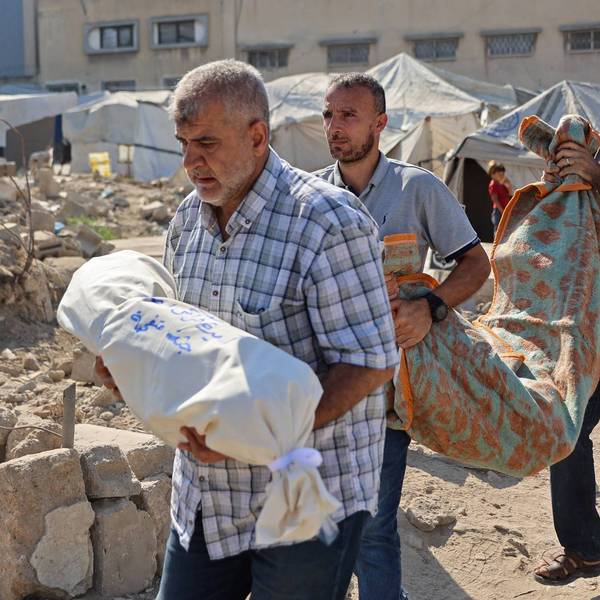
Israel has become increasingly isolated on the world stage since launching its devastating assault on Gaza in response to the Hamas-led attack on October 7. In addition to killing and injuring over 100,000 Palestinians in less than six months, Israeli forces have displaced most of the besieged enclave's 2.3 million residents and severely restricted the flow of humanitarian aid—causing people to starve to death.
South Africa is leading a case against Israel at the U.N.'s International Court of Justice, which has found that Israel is plausibly committing genocide in Hamas-governed Gaza. Governments are under mounting pressure to stop sending weapons to Israel.
After vetoing three Security Council resolutions calling for a cease-fire throughout the war, the United States—which gives Israel billions of dollars in annual military aid—finally abstained last week, allowing one to pass while downplaying its significance.
This country and this world are at a monumental crossroads. US voters have an opportunity to beat back the forces of fascism and confront the billionaires who are rigging the economy, our media system, and our democracy, making it increasingly impossible for ordinary people to get by. We’re not just talking about the election. We’re talking about what must be done once these fascist elements are vanquished from power. We need a bolder set of solutions than what either major party has so far been willing to offer and a working-class movement ready to fight like hell for it. Trump didn't emerge from nowhere. The conditions that fueled MAGA authoritarianism were created by decades of radical neoliberal economic policies and a corrupt political system dominated by corporate interests. They slashed taxes on the super-rich, promising that the benefits would trickle down. They said giveaways to the corporate titans would make life more affordable for the rest of us. It was all bullshit. And when a bitter, betrayed populace searches for someone to blame, right-wing demagogues have little trouble finding scapegoats. People know when they're being lied to, but you won't hear any of this from the corporate media. Only independent journalism—powered and funded by people who believe in building a better world—can deliver truly trustworthy daily news. If you share our vision, please contribute whatever you can to sustain our work. |
As the official death toll from Israel's assault on the Gaza Strip approached 33,000 on Tuesday, Palestinians renewed their yearslong effort to have Palestine recognized as a United Nations member state.
Thanks to a 2012 resolution, Palestine can currently participate in the sessions and work of the U.N. General Assembly as a nonmember observer state and maintain a mission at the global organization's headquarters.
On Tuesday, Riyad Mansour, the Palestinian Authority's ambassador to the United Nations, sent a short letter to U.N. Secretary-General António Guterres requesting that the Security Council review Palestine's pending membership application from 2011.
The letter came after the ambassador told Reuters on Monday that "the intention is to put the application to a vote in the Security Council this month"—specifically, at an April 18 ministerial meeting.
The chairs of the Arab Group, Organization of Islamic Cooperation Group, and Coordinating Bureau of the Non-Aligned Movement also wrote to Guterres as well as the presidents of the Security Council and General Assembly on Tuesday to support the application and highlight that 140 U.N. member states recognize Palestine.
As Reuters detailed:
An application to become a full U.N. member needs to be approved by the Security Council—where the United States can cast a veto—and then at least two-thirds of the 193-member General Assembly.
The U.S. mission to the United Nations did not immediately respond to a request for comment.
Israel's U.N. Ambassador Gilad Erdan said that the Palestinian Authority had not met the required criteria for statehood in its 2011 bid for full U.N. membership and "has only moved further from the goals it should achieve since."
"In addition, whoever supports recognizing a Palestinian state at such a time not only gives a prize to terror, but also backs unilateral steps which are contradictory to the agreed upon principle of direct negotiations," Erdan said.
Israel has become increasingly isolated on the world stage since launching its devastating assault on Gaza in response to the Hamas-led attack on October 7. In addition to killing and injuring over 100,000 Palestinians in less than six months, Israeli forces have displaced most of the besieged enclave's 2.3 million residents and severely restricted the flow of humanitarian aid—causing people to starve to death.
South Africa is leading a case against Israel at the U.N.'s International Court of Justice, which has found that Israel is plausibly committing genocide in Hamas-governed Gaza. Governments are under mounting pressure to stop sending weapons to Israel.
After vetoing three Security Council resolutions calling for a cease-fire throughout the war, the United States—which gives Israel billions of dollars in annual military aid—finally abstained last week, allowing one to pass while downplaying its significance.