SUBSCRIBE TO OUR FREE NEWSLETTER
Daily news & progressive opinion—funded by the people, not the corporations—delivered straight to your inbox.
5
#000000
#FFFFFF
To donate by check, phone, or other method, see our More Ways to Give page.
Daily news & progressive opinion—funded by the people, not the corporations—delivered straight to your inbox.
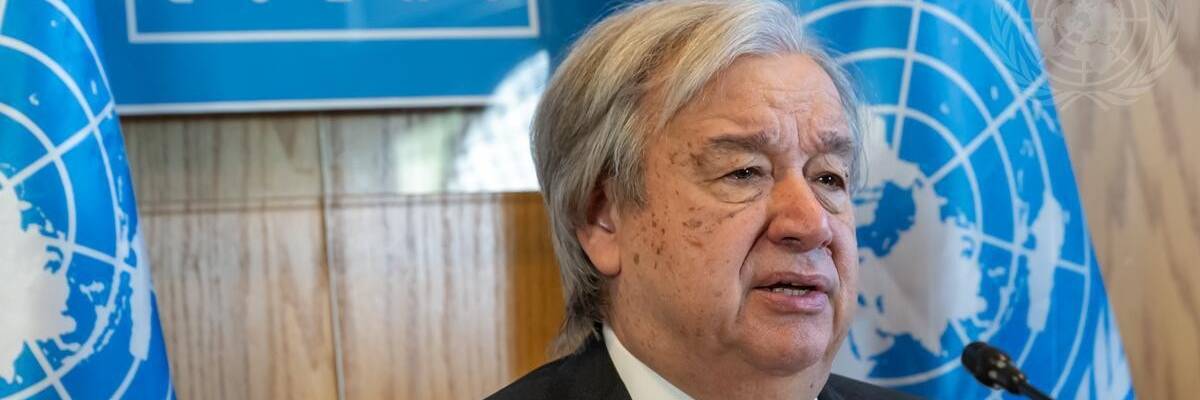
United Nations Secretary-General António Guterres delivers remarks to the virtual Group of 20 summit while in Chile on November 21, 2023.
"Facing a severe risk of collapse of the humanitarian system in Gaza, I urge the council to help avert a humanitarian catastrophe and appeal for a humanitarian cease-fire to be declared."
With over 16,000 Palestinians dead just two months into Israel's war on the Gaza Strip, United Nations Secretary-General António Guterres on Wednesday demanded immediate action by the U.N. Security Council.
For the first time since becoming secretary-general nearly seven years ago, Guterres invoked Article 99, a rarely used section of the U.N. Charter empowering him to bring to the attention of the council "any matter which in his opinion may threaten the maintenance of international peace and security."
U.N. spokesperson Stéphane Dujarric said that Guterres was invoking Article 99 "given the scale of the loss of human life in Gaza and Israel, in such a short amount of time."
"I think it's arguably the most important invocation," Dujarric told reporters at U.N. headquarters, "in my opinion, the most powerful tool that he has."
"The international community has a responsibility to use all its influence to prevent further escalation and end this crisis."
Guterres wrote to José Javier De la Gasca Lopez Domínguez, the Ecuadorian president of the Security Council, that "more than eight weeks of hostilities in Gaza and Israel have created appalling human suffering, physical destruction and collective trauma across Israel and the occupied Palestinian territory."
The U.N. chief reaffirmed his condemnation of the October 7 Hamas-led attack on Israel—in which around 1,200 people were killed and over 200 others were captured—that led to the war. He called accounts of sexual violence "appalling" and stressed that the remaining hostages "must be immediately and unconditionally released."
He also emphasized that "civilians throughout Gaza face grave danger," with the Israeli airstrikes and raids damaging more than half of all homes and displacing about 80% of the 2.3 million residents. Over a million of them have sought shelter at U.N. facilities, "creating overcrowded, undignified, and unhygienic conditions," while others "find themselves on the street."
"The healthcare system in Gaza is collapsing," he noted, pointing out that only 14 of 36 hospitals are operating at all. "I expect public order to completely break down soon due to the desperate conditions, rendering even limited humanitarian assistance impossible. An even worse situation could unfold, including epidemic diseases and increased pressure for mass displacement into neighboring countries."
Already, conditions in Gaza are making "it impossible for meaningful humanitarian operations to be conducted," Guterres added. "The capacity of the United Nations and its humanitarian partners has been decimated by supply shortages, lack of fuel, interrupted communications, and growing insecurity."
"The situation is fast deteriorating into a catastrophe with potentially irreversible implications for Palestinians as a whole and for peace and security in the region. Such an outcome must be avoided at all cost," the U.N. leader warned. "The international community has a responsibility to use all its influence to prevent further escalation and end this crisis."
"I urge the members of the Security Council to press to avert a humanitarian catastrophe," he wrote. "I reiterate my appeal for a humanitarian cease-fire to be declared. This is urgent. The civilian population must be spared from greater harm."
The United States—a supporter of Israel's war and one of the U.N. Security Council's five permanent members—vetoed a mid-October resolution condemning violence against civilians in Israel and Gaza and urging "humanitarian pauses" for aid delivery.
Roughly a month later, the Security Council approved a Gaza resolution that calls on all parties to abide by their obligations under international law and advocates for "urgent and extended humanitarian pauses and corridors."
Dr. Christos Christou, international president of Médecins Sans Frontières, or Doctors Without Borders, said at the time that "the unacceptably jumbled and sluggish process finally led to the adoption of a text that does not come close to reflecting the severity of the humanitarian catastrophe in Gaza."
Dear Common Dreams reader, It’s been nearly 30 years since I co-founded Common Dreams with my late wife, Lina Newhouser. We had the radical notion that journalism should serve the public good, not corporate profits. It was clear to us from the outset what it would take to build such a project. No paid advertisements. No corporate sponsors. No millionaire publisher telling us what to think or do. Many people said we wouldn't last a year, but we proved those doubters wrong. Together with a tremendous team of journalists and dedicated staff, we built an independent media outlet free from the constraints of profits and corporate control. Our mission has always been simple: To inform. To inspire. To ignite change for the common good. Building Common Dreams was not easy. Our survival was never guaranteed. When you take on the most powerful forces—Wall Street greed, fossil fuel industry destruction, Big Tech lobbyists, and uber-rich oligarchs who have spent billions upon billions rigging the economy and democracy in their favor—the only bulwark you have is supporters who believe in your work. But here’s the urgent message from me today. It's never been this bad out there. And it's never been this hard to keep us going. At the very moment Common Dreams is most needed, the threats we face are intensifying. We need your support now more than ever. We don't accept corporate advertising and never will. We don't have a paywall because we don't think people should be blocked from critical news based on their ability to pay. Everything we do is funded by the donations of readers like you. When everyone does the little they can afford, we are strong. But if that support retreats or dries up, so do we. Will you donate now to make sure Common Dreams not only survives but thrives? —Craig Brown, Co-founder |
With over 16,000 Palestinians dead just two months into Israel's war on the Gaza Strip, United Nations Secretary-General António Guterres on Wednesday demanded immediate action by the U.N. Security Council.
For the first time since becoming secretary-general nearly seven years ago, Guterres invoked Article 99, a rarely used section of the U.N. Charter empowering him to bring to the attention of the council "any matter which in his opinion may threaten the maintenance of international peace and security."
U.N. spokesperson Stéphane Dujarric said that Guterres was invoking Article 99 "given the scale of the loss of human life in Gaza and Israel, in such a short amount of time."
"I think it's arguably the most important invocation," Dujarric told reporters at U.N. headquarters, "in my opinion, the most powerful tool that he has."
"The international community has a responsibility to use all its influence to prevent further escalation and end this crisis."
Guterres wrote to José Javier De la Gasca Lopez Domínguez, the Ecuadorian president of the Security Council, that "more than eight weeks of hostilities in Gaza and Israel have created appalling human suffering, physical destruction and collective trauma across Israel and the occupied Palestinian territory."
The U.N. chief reaffirmed his condemnation of the October 7 Hamas-led attack on Israel—in which around 1,200 people were killed and over 200 others were captured—that led to the war. He called accounts of sexual violence "appalling" and stressed that the remaining hostages "must be immediately and unconditionally released."
He also emphasized that "civilians throughout Gaza face grave danger," with the Israeli airstrikes and raids damaging more than half of all homes and displacing about 80% of the 2.3 million residents. Over a million of them have sought shelter at U.N. facilities, "creating overcrowded, undignified, and unhygienic conditions," while others "find themselves on the street."
"The healthcare system in Gaza is collapsing," he noted, pointing out that only 14 of 36 hospitals are operating at all. "I expect public order to completely break down soon due to the desperate conditions, rendering even limited humanitarian assistance impossible. An even worse situation could unfold, including epidemic diseases and increased pressure for mass displacement into neighboring countries."
Already, conditions in Gaza are making "it impossible for meaningful humanitarian operations to be conducted," Guterres added. "The capacity of the United Nations and its humanitarian partners has been decimated by supply shortages, lack of fuel, interrupted communications, and growing insecurity."
"The situation is fast deteriorating into a catastrophe with potentially irreversible implications for Palestinians as a whole and for peace and security in the region. Such an outcome must be avoided at all cost," the U.N. leader warned. "The international community has a responsibility to use all its influence to prevent further escalation and end this crisis."
"I urge the members of the Security Council to press to avert a humanitarian catastrophe," he wrote. "I reiterate my appeal for a humanitarian cease-fire to be declared. This is urgent. The civilian population must be spared from greater harm."
The United States—a supporter of Israel's war and one of the U.N. Security Council's five permanent members—vetoed a mid-October resolution condemning violence against civilians in Israel and Gaza and urging "humanitarian pauses" for aid delivery.
Roughly a month later, the Security Council approved a Gaza resolution that calls on all parties to abide by their obligations under international law and advocates for "urgent and extended humanitarian pauses and corridors."
Dr. Christos Christou, international president of Médecins Sans Frontières, or Doctors Without Borders, said at the time that "the unacceptably jumbled and sluggish process finally led to the adoption of a text that does not come close to reflecting the severity of the humanitarian catastrophe in Gaza."
With over 16,000 Palestinians dead just two months into Israel's war on the Gaza Strip, United Nations Secretary-General António Guterres on Wednesday demanded immediate action by the U.N. Security Council.
For the first time since becoming secretary-general nearly seven years ago, Guterres invoked Article 99, a rarely used section of the U.N. Charter empowering him to bring to the attention of the council "any matter which in his opinion may threaten the maintenance of international peace and security."
U.N. spokesperson Stéphane Dujarric said that Guterres was invoking Article 99 "given the scale of the loss of human life in Gaza and Israel, in such a short amount of time."
"I think it's arguably the most important invocation," Dujarric told reporters at U.N. headquarters, "in my opinion, the most powerful tool that he has."
"The international community has a responsibility to use all its influence to prevent further escalation and end this crisis."
Guterres wrote to José Javier De la Gasca Lopez Domínguez, the Ecuadorian president of the Security Council, that "more than eight weeks of hostilities in Gaza and Israel have created appalling human suffering, physical destruction and collective trauma across Israel and the occupied Palestinian territory."
The U.N. chief reaffirmed his condemnation of the October 7 Hamas-led attack on Israel—in which around 1,200 people were killed and over 200 others were captured—that led to the war. He called accounts of sexual violence "appalling" and stressed that the remaining hostages "must be immediately and unconditionally released."
He also emphasized that "civilians throughout Gaza face grave danger," with the Israeli airstrikes and raids damaging more than half of all homes and displacing about 80% of the 2.3 million residents. Over a million of them have sought shelter at U.N. facilities, "creating overcrowded, undignified, and unhygienic conditions," while others "find themselves on the street."
"The healthcare system in Gaza is collapsing," he noted, pointing out that only 14 of 36 hospitals are operating at all. "I expect public order to completely break down soon due to the desperate conditions, rendering even limited humanitarian assistance impossible. An even worse situation could unfold, including epidemic diseases and increased pressure for mass displacement into neighboring countries."
Already, conditions in Gaza are making "it impossible for meaningful humanitarian operations to be conducted," Guterres added. "The capacity of the United Nations and its humanitarian partners has been decimated by supply shortages, lack of fuel, interrupted communications, and growing insecurity."
"The situation is fast deteriorating into a catastrophe with potentially irreversible implications for Palestinians as a whole and for peace and security in the region. Such an outcome must be avoided at all cost," the U.N. leader warned. "The international community has a responsibility to use all its influence to prevent further escalation and end this crisis."
"I urge the members of the Security Council to press to avert a humanitarian catastrophe," he wrote. "I reiterate my appeal for a humanitarian cease-fire to be declared. This is urgent. The civilian population must be spared from greater harm."
The United States—a supporter of Israel's war and one of the U.N. Security Council's five permanent members—vetoed a mid-October resolution condemning violence against civilians in Israel and Gaza and urging "humanitarian pauses" for aid delivery.
Roughly a month later, the Security Council approved a Gaza resolution that calls on all parties to abide by their obligations under international law and advocates for "urgent and extended humanitarian pauses and corridors."
Dr. Christos Christou, international president of Médecins Sans Frontières, or Doctors Without Borders, said at the time that "the unacceptably jumbled and sluggish process finally led to the adoption of a text that does not come close to reflecting the severity of the humanitarian catastrophe in Gaza."