SUBSCRIBE TO OUR FREE NEWSLETTER
Daily news & progressive opinion—funded by the people, not the corporations—delivered straight to your inbox.
5
#000000
#FFFFFF
To donate by check, phone, or other method, see our More Ways to Give page.
Daily news & progressive opinion—funded by the people, not the corporations—delivered straight to your inbox.

Pope Francis delivered a Sunday Angelus blessing from the window of his studio overlooking St. Peter's Square on January 12, 2025 in Vatican City.
"Will the millions who will mourn his death these coming days respect this wish of his? Will they care for Gazans and Palestinians the way he did?"
The Vatican announced Monday that Pope Francis has died at the age of 88, hours after he appeared at an Easter mass and appealed for an end to Israel's war on the Gaza Strip.
The pope's Easter address, read aloud by Archbishop Diego Ravelli, decried the "terrible conflict" in Gaza that "continues to cause death and destruction and to create a dramatic and deplorable humanitarian situation."
"I appeal to the warring parties: call a cease-fire, release the hostages, and come to the aid of a starving people that aspires to a future of peace!" said the message from the pope, an outspoken opponent of military conflict and war profiteers, climate destruction, and runaway economic inequality.
"In the face of the cruelty of conflicts that involve defenceless civilians and attack schools, hospitals, and humanitarian workers, we cannot allow ourselves to forget that it is not targets that are struck, but persons, each possessed of a soul and human dignity," the pope's address continued.
News of Pope Francis' death came after a bout with double pneumonia left him hospitalized for more than a month. The Vatican did not specify a cause of death in its announcement.
The Nation's John Nichols wrote Sunday that Pope Francis' calls for peace have made him "arguably the most consistent high-profile defender of the humanity of the Palestinian people during a period when the Israeli assault on Gaza has been pursued with relentless violence."
Nichols continued:
With a boldness and specificity that has often sparked controversy, this pope has challenged economic injustice, racism, environmental neglect, militarism, and the abuses of new technologies that increase inequality. He has faced his share of criticism, not just from conservatives who disapprove of his views but also from reformers who sincerely wish that he would do more to modernize the church. Yet, in a time of too much indifference and impunity, this pope has remained uniquely engaged with the embattled regions that political and media elites neglect or abandon.
That's been especially true when it comes to Gaza, where Pope Francis has long argued for cease-fires, arms blockades, aid convoys, and a diplomatic urgency that recognizes that Palestinians and Israelis are "fraternal peoples [who] have the right to live in peace."
In a tribute to Pope Francis, Palestinian theologian Munther Isaac wrote Monday that "he conveyed true compassion to Palestinians, most notably to those in Gaza during this genocide."
"The pope left our world today, and the occupation and the wall remained. Even worse, he left our world while a genocide continues to unfold," Isaac wrote, pointing to the pontiff's call for a thorough international investigation of Israel's assault on Gaza.
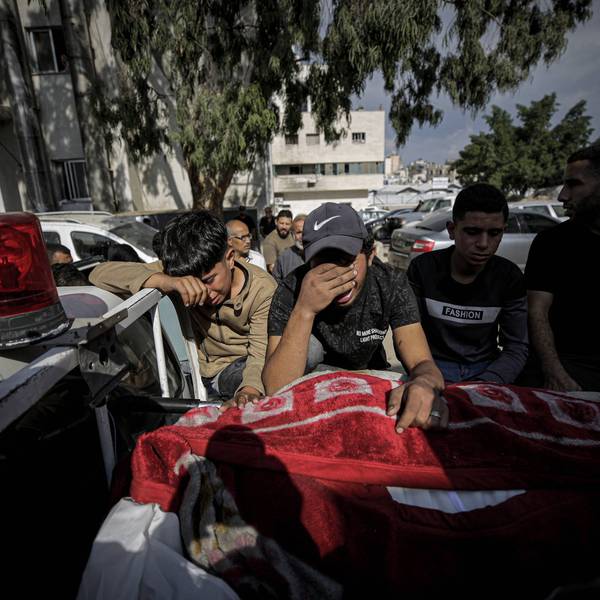
"Today I wonder: Will the millions who will mourn his death these coming days respect this wish of his?" Isaac asked. "Will they care for Gazans and Palestinians the way he did?"
This country and this world are at a monumental crossroads. US voters have an opportunity to beat back the forces of fascism and confront the billionaires who are rigging the economy, our media system, and our democracy, making it increasingly impossible for ordinary people to get by. We’re not just talking about the election. We’re talking about what must be done once these fascist elements are vanquished from power. We need a bolder set of solutions than what either major party has so far been willing to offer and a working-class movement ready to fight like hell for it. Trump didn't emerge from nowhere. The conditions that fueled MAGA authoritarianism were created by decades of radical neoliberal economic policies and a corrupt political system dominated by corporate interests. They slashed taxes on the super-rich, promising that the benefits would trickle down. They said giveaways to the corporate titans would make life more affordable for the rest of us. It was all bullshit. And when a bitter, betrayed populace searches for someone to blame, right-wing demagogues have little trouble finding scapegoats. People know when they're being lied to, but you won't hear any of this from the corporate media. Only independent journalism—powered and funded by people who believe in building a better world—can deliver truly trustworthy daily news. If you share our vision, please contribute whatever you can to sustain our work. |
The Vatican announced Monday that Pope Francis has died at the age of 88, hours after he appeared at an Easter mass and appealed for an end to Israel's war on the Gaza Strip.
The pope's Easter address, read aloud by Archbishop Diego Ravelli, decried the "terrible conflict" in Gaza that "continues to cause death and destruction and to create a dramatic and deplorable humanitarian situation."
"I appeal to the warring parties: call a cease-fire, release the hostages, and come to the aid of a starving people that aspires to a future of peace!" said the message from the pope, an outspoken opponent of military conflict and war profiteers, climate destruction, and runaway economic inequality.
"In the face of the cruelty of conflicts that involve defenceless civilians and attack schools, hospitals, and humanitarian workers, we cannot allow ourselves to forget that it is not targets that are struck, but persons, each possessed of a soul and human dignity," the pope's address continued.
News of Pope Francis' death came after a bout with double pneumonia left him hospitalized for more than a month. The Vatican did not specify a cause of death in its announcement.
The Nation's John Nichols wrote Sunday that Pope Francis' calls for peace have made him "arguably the most consistent high-profile defender of the humanity of the Palestinian people during a period when the Israeli assault on Gaza has been pursued with relentless violence."
Nichols continued:
With a boldness and specificity that has often sparked controversy, this pope has challenged economic injustice, racism, environmental neglect, militarism, and the abuses of new technologies that increase inequality. He has faced his share of criticism, not just from conservatives who disapprove of his views but also from reformers who sincerely wish that he would do more to modernize the church. Yet, in a time of too much indifference and impunity, this pope has remained uniquely engaged with the embattled regions that political and media elites neglect or abandon.
That's been especially true when it comes to Gaza, where Pope Francis has long argued for cease-fires, arms blockades, aid convoys, and a diplomatic urgency that recognizes that Palestinians and Israelis are "fraternal peoples [who] have the right to live in peace."
In a tribute to Pope Francis, Palestinian theologian Munther Isaac wrote Monday that "he conveyed true compassion to Palestinians, most notably to those in Gaza during this genocide."
"The pope left our world today, and the occupation and the wall remained. Even worse, he left our world while a genocide continues to unfold," Isaac wrote, pointing to the pontiff's call for a thorough international investigation of Israel's assault on Gaza.
"Today I wonder: Will the millions who will mourn his death these coming days respect this wish of his?" Isaac asked. "Will they care for Gazans and Palestinians the way he did?"