SUBSCRIBE TO OUR FREE NEWSLETTER
Daily news & progressive opinion—funded by the people, not the corporations—delivered straight to your inbox.
5
#000000
#FFFFFF
To donate by check, phone, or other method, see our More Ways to Give page.
Daily news & progressive opinion—funded by the people, not the corporations—delivered straight to your inbox.
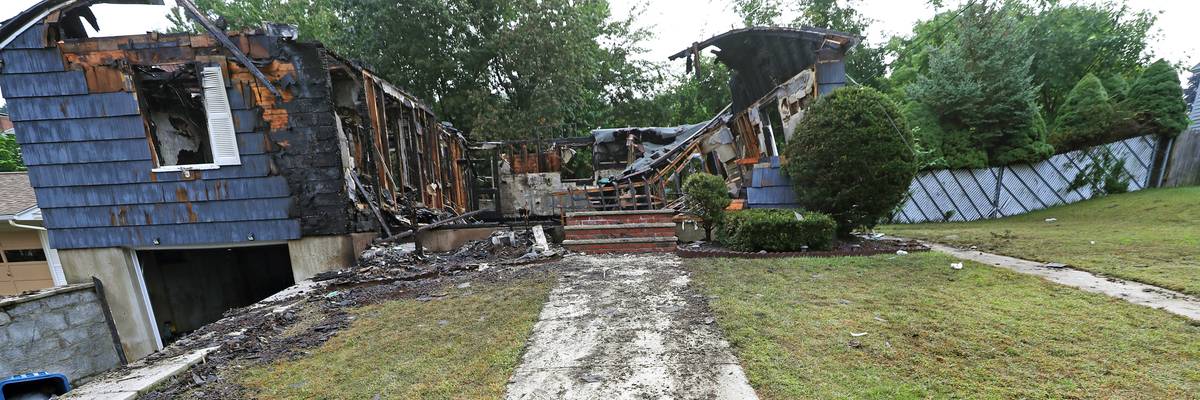
A walkway and front steps lead to a destroyed home on Jefferson Street in Lawrence, Massachusetts in the aftermath of a series of fires and gas explosions on Sep. 14, 2018.
"Federal regulators should have all the tools they need to hold bad actors accountable—not be held hostage by industry interests," said Sen. Ed Markey.
Marking the fifth anniversary of deadly gas line explosions in Merrimack Valley, Massachusetts on Wednesday, U.S. Sen. Ed Markey introduced legislation that would hold pipeline companies criminally liable for wrongdoing that leads to such disasters.
The Penalizing and Improving Prevention of Emergencies (PIPE) Act, said the Massachusetts Democrat, would "close loopholes and lift barriers so the U.S. Department of Transportation's Pipeline and Hazardous Materials Administration (PHMSA) can better protect communities from pipeline accidents and disasters and ensure companies are held accountable."
The National Safety Transportation Board found in 2019 after a yearlong investigation that "weak engineering management" by Columbia Gas of Massachusetts led to the "abandonment of a cast iron main" gas line, as well as over-pressurization of the gas distribution system serving the towns of Lawrence, Andover, and North Andover.
More than a year after the disaster, Markey—a key congressional advocate of rapidly shifty from gas and other fossil fuels to renewable energy—said the company "cut corners on safety and families in the Merrimack Valley paid the price."
The explosions that resulted from Columbia Gas' mismanagement caused numerous fires across the three towns, including one that brought down a chimney on top of a car, killing 18-year-old Leonel Rondon.
At least 22 others were hospitalized, more than 130 homes and other buildings were damaged, and 50,000 people had to be evacuated as a state of emergency was declared in the region.
"The Merrimack Valley is still healing. The family of Leonel Rondon is still grieving," said Markey on Wednesday. "We must continue making progress by delivering stronger protections and allowing our federal regulators to make swift, effective safety standards. Federal regulators should have all the tools they need to hold bad actors accountable—not be held hostage by industry interests."
The senator noted in a video message on social media that Columbia Gas was ordered to pay $53 million in connection with the gas explosions—the largest-ever criminal penalty imposed under the Pipeline Safety Act—but said the fine "was still nothing compared to the price paid by our communities."
According to Markey's office, the PIPE Act would:
The legislation was supported by consumer watchdog Public Citizen, whose energy program director Tyson Slocum said the group was "proud to endorse legislation that helps protect communities from pipeline dangers, including increasing financial penalties for pipeline operators that violate the law."
Democrats in Congress have long advocated for a stronger PHMSA, but industry lobbyists have aggressively pushed to weaken legislation aimed at authorizing the agency to impose stricter safety regulations.
As a result, said Bill Caram, executive director of the Pipeline Safety Trust on Wednesday, "for too long Congress has hamstrung PHMSA from being the regulator it needs to be by preventing certain rules from applying to existing pipelines, forcing regulations through two separate and burdensome cost-benefit requirements, and limiting civil penalties to meaningless amounts."
"Because of Congress' meddling, we are not making progress on long-term trends of pipeline failures," Caram said. "This bill would address these systemic weaknesses and enact commonsense improvements, like making it illegal to spill large amounts of oil. This bill finally gives PHMSA more freedom to enact rules to begin making a difference on pipeline safety."
The proposed legislation from Markey follows new federal safety regulations announced by the U.S. Department of Transportation last month.
Dear Common Dreams reader, It’s been nearly 30 years since I co-founded Common Dreams with my late wife, Lina Newhouser. We had the radical notion that journalism should serve the public good, not corporate profits. It was clear to us from the outset what it would take to build such a project. No paid advertisements. No corporate sponsors. No millionaire publisher telling us what to think or do. Many people said we wouldn't last a year, but we proved those doubters wrong. Together with a tremendous team of journalists and dedicated staff, we built an independent media outlet free from the constraints of profits and corporate control. Our mission has always been simple: To inform. To inspire. To ignite change for the common good. Building Common Dreams was not easy. Our survival was never guaranteed. When you take on the most powerful forces—Wall Street greed, fossil fuel industry destruction, Big Tech lobbyists, and uber-rich oligarchs who have spent billions upon billions rigging the economy and democracy in their favor—the only bulwark you have is supporters who believe in your work. But here’s the urgent message from me today. It's never been this bad out there. And it's never been this hard to keep us going. At the very moment Common Dreams is most needed, the threats we face are intensifying. We need your support now more than ever. We don't accept corporate advertising and never will. We don't have a paywall because we don't think people should be blocked from critical news based on their ability to pay. Everything we do is funded by the donations of readers like you. When everyone does the little they can afford, we are strong. But if that support retreats or dries up, so do we. Will you donate now to make sure Common Dreams not only survives but thrives? —Craig Brown, Co-founder |
Marking the fifth anniversary of deadly gas line explosions in Merrimack Valley, Massachusetts on Wednesday, U.S. Sen. Ed Markey introduced legislation that would hold pipeline companies criminally liable for wrongdoing that leads to such disasters.
The Penalizing and Improving Prevention of Emergencies (PIPE) Act, said the Massachusetts Democrat, would "close loopholes and lift barriers so the U.S. Department of Transportation's Pipeline and Hazardous Materials Administration (PHMSA) can better protect communities from pipeline accidents and disasters and ensure companies are held accountable."
The National Safety Transportation Board found in 2019 after a yearlong investigation that "weak engineering management" by Columbia Gas of Massachusetts led to the "abandonment of a cast iron main" gas line, as well as over-pressurization of the gas distribution system serving the towns of Lawrence, Andover, and North Andover.
More than a year after the disaster, Markey—a key congressional advocate of rapidly shifty from gas and other fossil fuels to renewable energy—said the company "cut corners on safety and families in the Merrimack Valley paid the price."
The explosions that resulted from Columbia Gas' mismanagement caused numerous fires across the three towns, including one that brought down a chimney on top of a car, killing 18-year-old Leonel Rondon.
At least 22 others were hospitalized, more than 130 homes and other buildings were damaged, and 50,000 people had to be evacuated as a state of emergency was declared in the region.
"The Merrimack Valley is still healing. The family of Leonel Rondon is still grieving," said Markey on Wednesday. "We must continue making progress by delivering stronger protections and allowing our federal regulators to make swift, effective safety standards. Federal regulators should have all the tools they need to hold bad actors accountable—not be held hostage by industry interests."
The senator noted in a video message on social media that Columbia Gas was ordered to pay $53 million in connection with the gas explosions—the largest-ever criminal penalty imposed under the Pipeline Safety Act—but said the fine "was still nothing compared to the price paid by our communities."
According to Markey's office, the PIPE Act would:
The legislation was supported by consumer watchdog Public Citizen, whose energy program director Tyson Slocum said the group was "proud to endorse legislation that helps protect communities from pipeline dangers, including increasing financial penalties for pipeline operators that violate the law."
Democrats in Congress have long advocated for a stronger PHMSA, but industry lobbyists have aggressively pushed to weaken legislation aimed at authorizing the agency to impose stricter safety regulations.
As a result, said Bill Caram, executive director of the Pipeline Safety Trust on Wednesday, "for too long Congress has hamstrung PHMSA from being the regulator it needs to be by preventing certain rules from applying to existing pipelines, forcing regulations through two separate and burdensome cost-benefit requirements, and limiting civil penalties to meaningless amounts."
"Because of Congress' meddling, we are not making progress on long-term trends of pipeline failures," Caram said. "This bill would address these systemic weaknesses and enact commonsense improvements, like making it illegal to spill large amounts of oil. This bill finally gives PHMSA more freedom to enact rules to begin making a difference on pipeline safety."
The proposed legislation from Markey follows new federal safety regulations announced by the U.S. Department of Transportation last month.
Marking the fifth anniversary of deadly gas line explosions in Merrimack Valley, Massachusetts on Wednesday, U.S. Sen. Ed Markey introduced legislation that would hold pipeline companies criminally liable for wrongdoing that leads to such disasters.
The Penalizing and Improving Prevention of Emergencies (PIPE) Act, said the Massachusetts Democrat, would "close loopholes and lift barriers so the U.S. Department of Transportation's Pipeline and Hazardous Materials Administration (PHMSA) can better protect communities from pipeline accidents and disasters and ensure companies are held accountable."
The National Safety Transportation Board found in 2019 after a yearlong investigation that "weak engineering management" by Columbia Gas of Massachusetts led to the "abandonment of a cast iron main" gas line, as well as over-pressurization of the gas distribution system serving the towns of Lawrence, Andover, and North Andover.
More than a year after the disaster, Markey—a key congressional advocate of rapidly shifty from gas and other fossil fuels to renewable energy—said the company "cut corners on safety and families in the Merrimack Valley paid the price."
The explosions that resulted from Columbia Gas' mismanagement caused numerous fires across the three towns, including one that brought down a chimney on top of a car, killing 18-year-old Leonel Rondon.
At least 22 others were hospitalized, more than 130 homes and other buildings were damaged, and 50,000 people had to be evacuated as a state of emergency was declared in the region.
"The Merrimack Valley is still healing. The family of Leonel Rondon is still grieving," said Markey on Wednesday. "We must continue making progress by delivering stronger protections and allowing our federal regulators to make swift, effective safety standards. Federal regulators should have all the tools they need to hold bad actors accountable—not be held hostage by industry interests."
The senator noted in a video message on social media that Columbia Gas was ordered to pay $53 million in connection with the gas explosions—the largest-ever criminal penalty imposed under the Pipeline Safety Act—but said the fine "was still nothing compared to the price paid by our communities."
According to Markey's office, the PIPE Act would:
The legislation was supported by consumer watchdog Public Citizen, whose energy program director Tyson Slocum said the group was "proud to endorse legislation that helps protect communities from pipeline dangers, including increasing financial penalties for pipeline operators that violate the law."
Democrats in Congress have long advocated for a stronger PHMSA, but industry lobbyists have aggressively pushed to weaken legislation aimed at authorizing the agency to impose stricter safety regulations.
As a result, said Bill Caram, executive director of the Pipeline Safety Trust on Wednesday, "for too long Congress has hamstrung PHMSA from being the regulator it needs to be by preventing certain rules from applying to existing pipelines, forcing regulations through two separate and burdensome cost-benefit requirements, and limiting civil penalties to meaningless amounts."
"Because of Congress' meddling, we are not making progress on long-term trends of pipeline failures," Caram said. "This bill would address these systemic weaknesses and enact commonsense improvements, like making it illegal to spill large amounts of oil. This bill finally gives PHMSA more freedom to enact rules to begin making a difference on pipeline safety."
The proposed legislation from Markey follows new federal safety regulations announced by the U.S. Department of Transportation last month.