SUBSCRIBE TO OUR FREE NEWSLETTER
Daily news & progressive opinion—funded by the people, not the corporations—delivered straight to your inbox.
5
#000000
#FFFFFF
To donate by check, phone, or other method, see our More Ways to Give page.
Daily news & progressive opinion—funded by the people, not the corporations—delivered straight to your inbox.
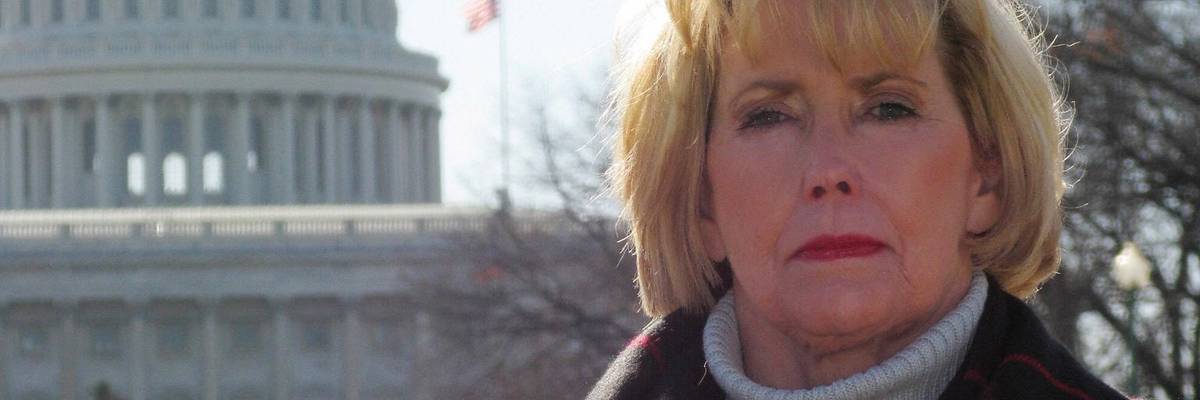
Lilly Ledbetter is seen on January 25, 2008 in front of the U.S. Capitol in Washington, D.C.
"Let's honor her by continuing to challenge discrimination in all forms—and finally closing the wage gap."
Labor unions and women's advocacy groups on Monday paid tribute to Lilly Ledbetter, the former Goodyear employee whose fight for equal pay made it all the way to the U.S. Supreme Court and Congress, after her death at the age of 86—with economic justice advocates hailing Ledbetter as "an icon."
"Lilly Ledbetter simply wanted to be paid the same as her male Goodyear co-workers," said the American Federation of Labor and Congress of Industrial Organizations (AFL-CIO) on social media. But to workers who have benefited from the Lilly Ledbetter Fair Pay Act of 2009, added the union, "she was a true hero."
Ledbetter began working at Goodyear Tire and Rubber Company in Gadsden, Alabama in 1979, and was initially paid equally to her male counterparts.
But in 1998 she discovered that her compensation had dropped "way out of line" with that of the men who worked alongside her, after someone sent her an anonymous note.
"I felt humiliated. I felt degraded. I had to sort of get my composure back to go ahead to perform my job and then, the first day off, I went to Birmingham, Alabama and filed a charge with the [Equal Employment Opportunity Commission]," Ledbetter told NPR in 2009.
In 1999, she filed a lawsuit against her employer, and four years later a federal court in Alabama awarded her $3.8 million—a sum that was reduced to a $300,000 cap and $60,000 in back pay.
The case was later appealed and proceeded to the U.S. Supreme Court, which ruled in favor of Goodyear in 2007, with five of the nine justices agreeing that Ledbetter had filed her lawsuit too late after Goodyear's initial decision to pay her less than her male colleagues.
But in 2009, Ledbetter stood with then-President Barack Obama as he signed the Lilly Ledbetter Fair Pay Act, which gives people more time to file charges regarding unfair pay and affirms that each inequitable paycheck is a violation of the law, an assertion the Supreme Court had rejected.
U.S. Sen. Ed Markey (D-Mass.) called on Americans to "honor her legacy by never ceasing in our pursuit of equality and justice for all."
Fatima Goss Graves, president and CEO of the National Women's Law Center, noted that after Ledbetter's legal case concluded, "she never gave up the fight to push for equal pay and fairness for everyone who came after her."
"It would have been easy for Lilly to quietly ease into retirement in Alabama after the Supreme Court held that there was no remedy to the decades of pay discrimination that she faced," said Goss Graves. "But Lilly was not built for the easy road. She shared her story because she knew that her experience of being undervalued and shortchanged on the job was the same story that working women of all ages across America shared, whether they had ever heard of the wage gap or not."
"Even into her 80s, Lilly never hesitated to hop on planes to speak to women across the country about why they must actively fight for wage equality," Goss Graves added.
Ledbetter also stood with Obama in the White House in 2014 when he signed two fair pay executive orders, one barring federal contractors from retaliating against workers who discuss their salaries and one instructing the Labor Department to collect data on pay for men and women who work for federal contractors.
Noreen Farrell, executive director of Equal Rights Advocates (ERA), said Ledbetter "leaves behind a legacy that fuels our ongoing fight against pay discrimination, exploitation, and those who would delay progress towards wage justice for all."
Farrell added that with women—particularly women of color—still earning an average of 82 cents for every dollar men earn in the U.S., "the fight for pay equity is far from over."
"We urge the passage of the Paycheck Fairness Act and the implementation of comprehensive pay transparency measures at the federal level," said Farrell.
The Paycheck Fairness Act would add protections to the Equal Pay Act of 1963 and the Fair Labor Standards Act of 1938 to eliminate gender-based wage disparities.
"Lilly Ledbetter's courageous fight for fair pay made history and opened a new future for millions of women," said Rep. Sara Jacobs (D-Calif.). "Let's honor her by continuing to challenge discrimination in all forms—and finally closing the wage gap."
Dear Common Dreams reader, It’s been nearly 30 years since I co-founded Common Dreams with my late wife, Lina Newhouser. We had the radical notion that journalism should serve the public good, not corporate profits. It was clear to us from the outset what it would take to build such a project. No paid advertisements. No corporate sponsors. No millionaire publisher telling us what to think or do. Many people said we wouldn't last a year, but we proved those doubters wrong. Together with a tremendous team of journalists and dedicated staff, we built an independent media outlet free from the constraints of profits and corporate control. Our mission has always been simple: To inform. To inspire. To ignite change for the common good. Building Common Dreams was not easy. Our survival was never guaranteed. When you take on the most powerful forces—Wall Street greed, fossil fuel industry destruction, Big Tech lobbyists, and uber-rich oligarchs who have spent billions upon billions rigging the economy and democracy in their favor—the only bulwark you have is supporters who believe in your work. But here’s the urgent message from me today. It's never been this bad out there. And it's never been this hard to keep us going. At the very moment Common Dreams is most needed, the threats we face are intensifying. We need your support now more than ever. We don't accept corporate advertising and never will. We don't have a paywall because we don't think people should be blocked from critical news based on their ability to pay. Everything we do is funded by the donations of readers like you. When everyone does the little they can afford, we are strong. But if that support retreats or dries up, so do we. Will you donate now to make sure Common Dreams not only survives but thrives? —Craig Brown, Co-founder |
Labor unions and women's advocacy groups on Monday paid tribute to Lilly Ledbetter, the former Goodyear employee whose fight for equal pay made it all the way to the U.S. Supreme Court and Congress, after her death at the age of 86—with economic justice advocates hailing Ledbetter as "an icon."
"Lilly Ledbetter simply wanted to be paid the same as her male Goodyear co-workers," said the American Federation of Labor and Congress of Industrial Organizations (AFL-CIO) on social media. But to workers who have benefited from the Lilly Ledbetter Fair Pay Act of 2009, added the union, "she was a true hero."
Ledbetter began working at Goodyear Tire and Rubber Company in Gadsden, Alabama in 1979, and was initially paid equally to her male counterparts.
But in 1998 she discovered that her compensation had dropped "way out of line" with that of the men who worked alongside her, after someone sent her an anonymous note.
"I felt humiliated. I felt degraded. I had to sort of get my composure back to go ahead to perform my job and then, the first day off, I went to Birmingham, Alabama and filed a charge with the [Equal Employment Opportunity Commission]," Ledbetter told NPR in 2009.
In 1999, she filed a lawsuit against her employer, and four years later a federal court in Alabama awarded her $3.8 million—a sum that was reduced to a $300,000 cap and $60,000 in back pay.
The case was later appealed and proceeded to the U.S. Supreme Court, which ruled in favor of Goodyear in 2007, with five of the nine justices agreeing that Ledbetter had filed her lawsuit too late after Goodyear's initial decision to pay her less than her male colleagues.
But in 2009, Ledbetter stood with then-President Barack Obama as he signed the Lilly Ledbetter Fair Pay Act, which gives people more time to file charges regarding unfair pay and affirms that each inequitable paycheck is a violation of the law, an assertion the Supreme Court had rejected.
U.S. Sen. Ed Markey (D-Mass.) called on Americans to "honor her legacy by never ceasing in our pursuit of equality and justice for all."
Fatima Goss Graves, president and CEO of the National Women's Law Center, noted that after Ledbetter's legal case concluded, "she never gave up the fight to push for equal pay and fairness for everyone who came after her."
"It would have been easy for Lilly to quietly ease into retirement in Alabama after the Supreme Court held that there was no remedy to the decades of pay discrimination that she faced," said Goss Graves. "But Lilly was not built for the easy road. She shared her story because she knew that her experience of being undervalued and shortchanged on the job was the same story that working women of all ages across America shared, whether they had ever heard of the wage gap or not."
"Even into her 80s, Lilly never hesitated to hop on planes to speak to women across the country about why they must actively fight for wage equality," Goss Graves added.
Ledbetter also stood with Obama in the White House in 2014 when he signed two fair pay executive orders, one barring federal contractors from retaliating against workers who discuss their salaries and one instructing the Labor Department to collect data on pay for men and women who work for federal contractors.
Noreen Farrell, executive director of Equal Rights Advocates (ERA), said Ledbetter "leaves behind a legacy that fuels our ongoing fight against pay discrimination, exploitation, and those who would delay progress towards wage justice for all."
Farrell added that with women—particularly women of color—still earning an average of 82 cents for every dollar men earn in the U.S., "the fight for pay equity is far from over."
"We urge the passage of the Paycheck Fairness Act and the implementation of comprehensive pay transparency measures at the federal level," said Farrell.
The Paycheck Fairness Act would add protections to the Equal Pay Act of 1963 and the Fair Labor Standards Act of 1938 to eliminate gender-based wage disparities.
"Lilly Ledbetter's courageous fight for fair pay made history and opened a new future for millions of women," said Rep. Sara Jacobs (D-Calif.). "Let's honor her by continuing to challenge discrimination in all forms—and finally closing the wage gap."
Labor unions and women's advocacy groups on Monday paid tribute to Lilly Ledbetter, the former Goodyear employee whose fight for equal pay made it all the way to the U.S. Supreme Court and Congress, after her death at the age of 86—with economic justice advocates hailing Ledbetter as "an icon."
"Lilly Ledbetter simply wanted to be paid the same as her male Goodyear co-workers," said the American Federation of Labor and Congress of Industrial Organizations (AFL-CIO) on social media. But to workers who have benefited from the Lilly Ledbetter Fair Pay Act of 2009, added the union, "she was a true hero."
Ledbetter began working at Goodyear Tire and Rubber Company in Gadsden, Alabama in 1979, and was initially paid equally to her male counterparts.
But in 1998 she discovered that her compensation had dropped "way out of line" with that of the men who worked alongside her, after someone sent her an anonymous note.
"I felt humiliated. I felt degraded. I had to sort of get my composure back to go ahead to perform my job and then, the first day off, I went to Birmingham, Alabama and filed a charge with the [Equal Employment Opportunity Commission]," Ledbetter told NPR in 2009.
In 1999, she filed a lawsuit against her employer, and four years later a federal court in Alabama awarded her $3.8 million—a sum that was reduced to a $300,000 cap and $60,000 in back pay.
The case was later appealed and proceeded to the U.S. Supreme Court, which ruled in favor of Goodyear in 2007, with five of the nine justices agreeing that Ledbetter had filed her lawsuit too late after Goodyear's initial decision to pay her less than her male colleagues.
But in 2009, Ledbetter stood with then-President Barack Obama as he signed the Lilly Ledbetter Fair Pay Act, which gives people more time to file charges regarding unfair pay and affirms that each inequitable paycheck is a violation of the law, an assertion the Supreme Court had rejected.
U.S. Sen. Ed Markey (D-Mass.) called on Americans to "honor her legacy by never ceasing in our pursuit of equality and justice for all."
Fatima Goss Graves, president and CEO of the National Women's Law Center, noted that after Ledbetter's legal case concluded, "she never gave up the fight to push for equal pay and fairness for everyone who came after her."
"It would have been easy for Lilly to quietly ease into retirement in Alabama after the Supreme Court held that there was no remedy to the decades of pay discrimination that she faced," said Goss Graves. "But Lilly was not built for the easy road. She shared her story because she knew that her experience of being undervalued and shortchanged on the job was the same story that working women of all ages across America shared, whether they had ever heard of the wage gap or not."
"Even into her 80s, Lilly never hesitated to hop on planes to speak to women across the country about why they must actively fight for wage equality," Goss Graves added.
Ledbetter also stood with Obama in the White House in 2014 when he signed two fair pay executive orders, one barring federal contractors from retaliating against workers who discuss their salaries and one instructing the Labor Department to collect data on pay for men and women who work for federal contractors.
Noreen Farrell, executive director of Equal Rights Advocates (ERA), said Ledbetter "leaves behind a legacy that fuels our ongoing fight against pay discrimination, exploitation, and those who would delay progress towards wage justice for all."
Farrell added that with women—particularly women of color—still earning an average of 82 cents for every dollar men earn in the U.S., "the fight for pay equity is far from over."
"We urge the passage of the Paycheck Fairness Act and the implementation of comprehensive pay transparency measures at the federal level," said Farrell.
The Paycheck Fairness Act would add protections to the Equal Pay Act of 1963 and the Fair Labor Standards Act of 1938 to eliminate gender-based wage disparities.
"Lilly Ledbetter's courageous fight for fair pay made history and opened a new future for millions of women," said Rep. Sara Jacobs (D-Calif.). "Let's honor her by continuing to challenge discrimination in all forms—and finally closing the wage gap."