SUBSCRIBE TO OUR FREE NEWSLETTER
Daily news & progressive opinion—funded by the people, not the corporations—delivered straight to your inbox.
5
#000000
#FFFFFF
To donate by check, phone, or other method, see our More Ways to Give page.
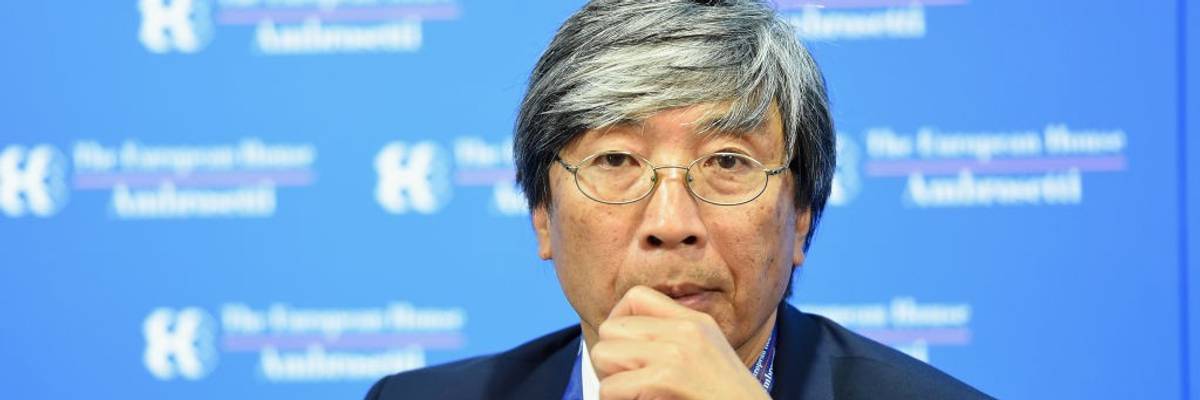
The editorials editor of The Los Angeles Times, one of the most-circulated newspapers in the United States, announced her resignation Thursday over the billionaire owner's decision to block a proposed endorsement of Democratic nominee Kamala Harris in the high-stakes 2024 contest that's less than two weeks away.
Mariel Garza, who spent nearly a decade on the Times' editorial board, handed in her resignation letter days after Semafor reported that Patrick Soon-Shiong—the newspaper's owner—vetoed the editorial board's plan to endorse Harris.
The editorial board endorsed President Joe Biden over Donald Trump—the current Republican nominee—in 2020 and has endorsed the Democratic nominee in every presidential contest since 2008.
In her resignation letter to executive editor Terry Tang, Garza wrote that the decision not to endorse a presidential candidate in what the editorial board recently described as potentially "the most consequential election in a generation" makes the paper "look craven and hypocritical, maybe even a bit sexist and racist."
"How could we spend eight years railing against Trump and the danger his leadership poses to the country and then fail to endorse the perfectly decent Democrat challenger—who we previously endorsed for the U.S. Senate?" Garza asked. "The non-endorsement undermines the integrity of the editorial board and every single endorsement we make, down to school board races. People will justifiably wonder if each endorsement was a decision made by a group of journalists after extensive research and discussion, or through decree by the owner."
Garza continued:
Seven years ago, the editorial board wrote this in its series about Donald Trump "Our Dishonest President": "Men and women of conscience can no longer withhold judgment. Trump's erratic nature and his impulsive, demagogic style endanger us all."
I still believe that's true.
In these dangerous times, staying silent isn't just indifference, it is complicity. I'm standing up by stepping down from the editorial board. Please accept this as my formal resignation, effective immediately.
In an interview with Columbia Journalism Review, Garza said she resigned because she wanted to "make it clear that I am not okay with us being silent," echoing her letter.
"In dangerous times, honest people need to stand up," Garza added. "This is how I’m standing up."
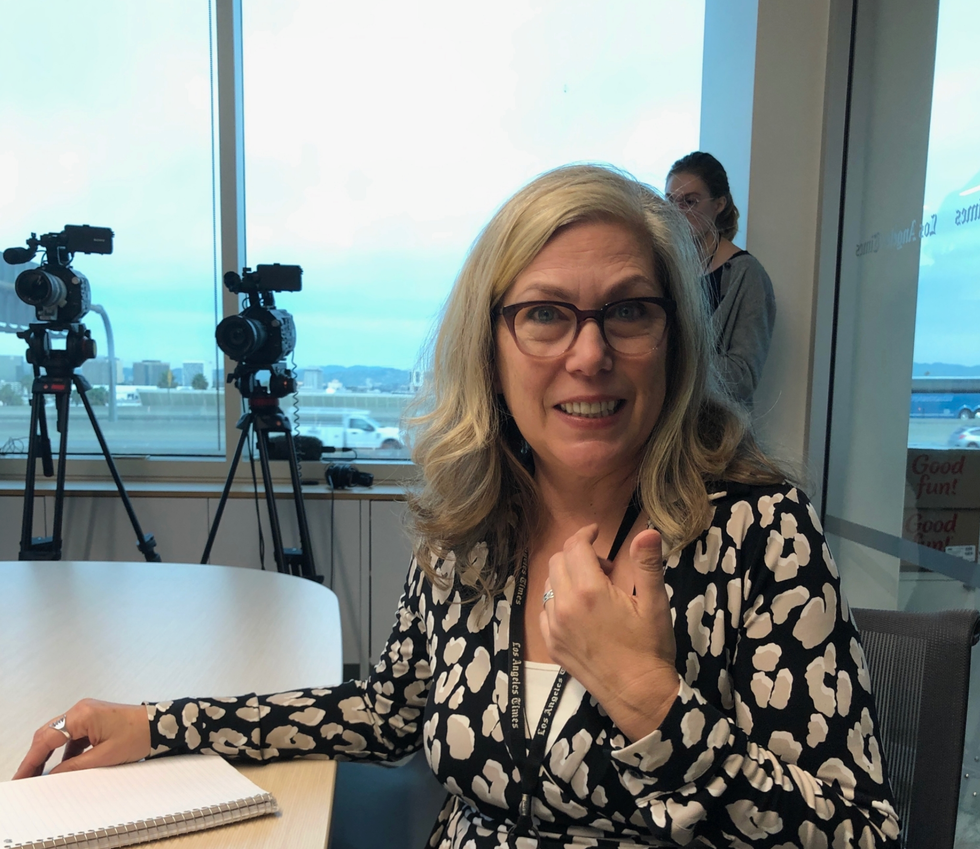 Mariel Garza resigned this week as editorials editor of The Los Angeles Times. (Photo via Columbia Journalism Review)
Semafor reported earlier this week that the newspaper's decision not to endorse in the November 5 presidential contest came directly from Soon-Shiong, who made his fortune in the healthcare industry. Soon-Shiong bought the paper for $500 million in 2018.
"It wouldn't be the first time since he bought the paper in 2018 that owner Dr. Patrick Soon-Shiong had overruled the wishes of the paper's editorial board," Semafor's Max Tani noted. "In 2020, the paper met with Democratic candidates for president for interviews with the intention of making a pick in the race. But after deciding to endorse Elizabeth Warren in the Democratic presidential primary, at the last minute Soon-Shiong overruled its leadership and said there would be no endorsement in the primary race (the paper endorsed Joe Biden in the general election)."
Facing backlash over the non-endorsement, Soon-Shiong wrote in a social media post Wednesday evening that the paper's editorial board was "provided the opportunity to draft a factual analysis of all the POSITIVE AND NEGATIVE policies by EACH candidate during their tenures at the White House, and how these policies affected the nation"—which, as critics noted in response, is not the purpose of an editorial.
"In addition, the board was asked to provide their understanding of the policies and plans enunciated by the candidates during this campaign and its potential effect on the nation in the next four years," Soon-Shiong continued. "In this way, with this clear and non-partisan information side-by-side, our readers could decide who would be worthy of being president for the next four years."
John Mecklin, editor-in-chief of the Bulletin of the Atomic Scientists, replied, "I've been a journalist for four decades, and what you just wrote, Dr. Pat Soon-Shiong, is the most clueless, beside-the-point gibberish I've ever seen a media enterprise owner write."
Frederick Deknatel, executive editor of the journal Democracy in Exile, added that "in case there was still any doubt, billionaire owners are not the saviors of journalism."
The editorials editor of The Los Angeles Times, one of the most-circulated newspapers in the United States, announced her resignation Thursday over the billionaire owner's decision to block a proposed endorsement of Democratic nominee Kamala Harris in the high-stakes 2024 contest that's less than two weeks away.
Mariel Garza, who spent nearly a decade on the Times' editorial board, handed in her resignation letter days after Semafor reported that Patrick Soon-Shiong—the newspaper's owner—vetoed the editorial board's plan to endorse Harris.
The editorial board endorsed President Joe Biden over Donald Trump—the current Republican nominee—in 2020 and has endorsed the Democratic nominee in every presidential contest since 2008.
In her resignation letter to executive editor Terry Tang, Garza wrote that the decision not to endorse a presidential candidate in what the editorial board recently described as potentially "the most consequential election in a generation" makes the paper "look craven and hypocritical, maybe even a bit sexist and racist."
"How could we spend eight years railing against Trump and the danger his leadership poses to the country and then fail to endorse the perfectly decent Democrat challenger—who we previously endorsed for the U.S. Senate?" Garza asked. "The non-endorsement undermines the integrity of the editorial board and every single endorsement we make, down to school board races. People will justifiably wonder if each endorsement was a decision made by a group of journalists after extensive research and discussion, or through decree by the owner."
Garza continued:
Seven years ago, the editorial board wrote this in its series about Donald Trump "Our Dishonest President": "Men and women of conscience can no longer withhold judgment. Trump's erratic nature and his impulsive, demagogic style endanger us all."
I still believe that's true.
In these dangerous times, staying silent isn't just indifference, it is complicity. I'm standing up by stepping down from the editorial board. Please accept this as my formal resignation, effective immediately.
In an interview with Columbia Journalism Review, Garza said she resigned because she wanted to "make it clear that I am not okay with us being silent," echoing her letter.
"In dangerous times, honest people need to stand up," Garza added. "This is how I’m standing up."
Mariel Garza resigned this week as editorials editor of The Los Angeles Times. (Photo via Columbia Journalism Review)
Semafor reported earlier this week that the newspaper's decision not to endorse in the November 5 presidential contest came directly from Soon-Shiong, who made his fortune in the healthcare industry. Soon-Shiong bought the paper for $500 million in 2018.
"It wouldn't be the first time since he bought the paper in 2018 that owner Dr. Patrick Soon-Shiong had overruled the wishes of the paper's editorial board," Semafor's Max Tani noted. "In 2020, the paper met with Democratic candidates for president for interviews with the intention of making a pick in the race. But after deciding to endorse Elizabeth Warren in the Democratic presidential primary, at the last minute Soon-Shiong overruled its leadership and said there would be no endorsement in the primary race (the paper endorsed Joe Biden in the general election)."
Facing backlash over the non-endorsement, Soon-Shiong wrote in a social media post Wednesday evening that the paper's editorial board was "provided the opportunity to draft a factual analysis of all the POSITIVE AND NEGATIVE policies by EACH candidate during their tenures at the White House, and how these policies affected the nation"—which, as critics noted in response, is not the purpose of an editorial.
"In addition, the board was asked to provide their understanding of the policies and plans enunciated by the candidates during this campaign and its potential effect on the nation in the next four years," Soon-Shiong continued. "In this way, with this clear and non-partisan information side-by-side, our readers could decide who would be worthy of being president for the next four years."
John Mecklin, editor-in-chief of the Bulletin of the Atomic Scientists, replied, "I've been a journalist for four decades, and what you just wrote, Dr. Pat Soon-Shiong, is the most clueless, beside-the-point gibberish I've ever seen a media enterprise owner write."
Frederick Deknatel, executive editor of the journal Democracy in Exile, added that "in case there was still any doubt, billionaire owners are not the saviors of journalism."
The editorials editor of The Los Angeles Times, one of the most-circulated newspapers in the United States, announced her resignation Thursday over the billionaire owner's decision to block a proposed endorsement of Democratic nominee Kamala Harris in the high-stakes 2024 contest that's less than two weeks away.
Mariel Garza, who spent nearly a decade on the Times' editorial board, handed in her resignation letter days after Semafor reported that Patrick Soon-Shiong—the newspaper's owner—vetoed the editorial board's plan to endorse Harris.
The editorial board endorsed President Joe Biden over Donald Trump—the current Republican nominee—in 2020 and has endorsed the Democratic nominee in every presidential contest since 2008.
In her resignation letter to executive editor Terry Tang, Garza wrote that the decision not to endorse a presidential candidate in what the editorial board recently described as potentially "the most consequential election in a generation" makes the paper "look craven and hypocritical, maybe even a bit sexist and racist."
"How could we spend eight years railing against Trump and the danger his leadership poses to the country and then fail to endorse the perfectly decent Democrat challenger—who we previously endorsed for the U.S. Senate?" Garza asked. "The non-endorsement undermines the integrity of the editorial board and every single endorsement we make, down to school board races. People will justifiably wonder if each endorsement was a decision made by a group of journalists after extensive research and discussion, or through decree by the owner."
Garza continued:
Seven years ago, the editorial board wrote this in its series about Donald Trump "Our Dishonest President": "Men and women of conscience can no longer withhold judgment. Trump's erratic nature and his impulsive, demagogic style endanger us all."
I still believe that's true.
In these dangerous times, staying silent isn't just indifference, it is complicity. I'm standing up by stepping down from the editorial board. Please accept this as my formal resignation, effective immediately.
In an interview with Columbia Journalism Review, Garza said she resigned because she wanted to "make it clear that I am not okay with us being silent," echoing her letter.
"In dangerous times, honest people need to stand up," Garza added. "This is how I’m standing up."
Mariel Garza resigned this week as editorials editor of The Los Angeles Times. (Photo via Columbia Journalism Review)
Semafor reported earlier this week that the newspaper's decision not to endorse in the November 5 presidential contest came directly from Soon-Shiong, who made his fortune in the healthcare industry. Soon-Shiong bought the paper for $500 million in 2018.
"It wouldn't be the first time since he bought the paper in 2018 that owner Dr. Patrick Soon-Shiong had overruled the wishes of the paper's editorial board," Semafor's Max Tani noted. "In 2020, the paper met with Democratic candidates for president for interviews with the intention of making a pick in the race. But after deciding to endorse Elizabeth Warren in the Democratic presidential primary, at the last minute Soon-Shiong overruled its leadership and said there would be no endorsement in the primary race (the paper endorsed Joe Biden in the general election)."
Facing backlash over the non-endorsement, Soon-Shiong wrote in a social media post Wednesday evening that the paper's editorial board was "provided the opportunity to draft a factual analysis of all the POSITIVE AND NEGATIVE policies by EACH candidate during their tenures at the White House, and how these policies affected the nation"—which, as critics noted in response, is not the purpose of an editorial.
"In addition, the board was asked to provide their understanding of the policies and plans enunciated by the candidates during this campaign and its potential effect on the nation in the next four years," Soon-Shiong continued. "In this way, with this clear and non-partisan information side-by-side, our readers could decide who would be worthy of being president for the next four years."
John Mecklin, editor-in-chief of the Bulletin of the Atomic Scientists, replied, "I've been a journalist for four decades, and what you just wrote, Dr. Pat Soon-Shiong, is the most clueless, beside-the-point gibberish I've ever seen a media enterprise owner write."
Frederick Deknatel, executive editor of the journal Democracy in Exile, added that "in case there was still any doubt, billionaire owners are not the saviors of journalism."