SUBSCRIBE TO OUR FREE NEWSLETTER
Daily news & progressive opinion—funded by the people, not the corporations—delivered straight to your inbox.
5
#000000
#FFFFFF
To donate by check, phone, or other method, see our More Ways to Give page.
Daily news & progressive opinion—funded by the people, not the corporations—delivered straight to your inbox.
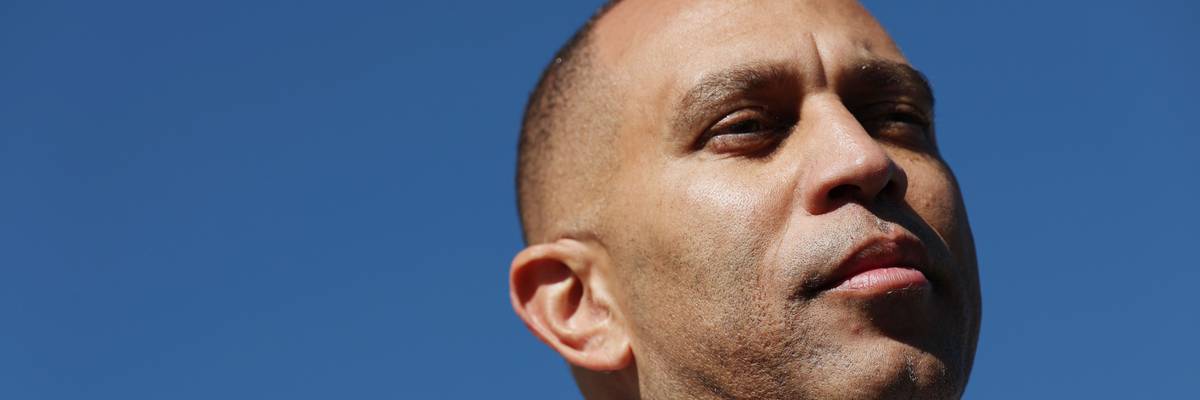
US Minority Leader Hakeem Jeffries (D-NY) speaks to reporters outside the US Capitol on October 16, 2025, in Washington, DC.
Journalist Prem Thakker said Jeffries' endorsement, given less than a day before early voting in New York's mayoral election is set to open, had "the enthusiasm of a pout and crossed arms."
After waiting exactly four months, the top US House Democrat, Hakeem Jeffries, finally endorsed his party's nominee, Zohran Mamdani, for mayor of his home city of New York on Friday.
The long-awaited endorsement from Jeffries (D-NY), the House minority leader whose district Mamdani carried by double digits during June's Democratic primary, came just a day before early voting was set to begin.
It follows months of criticism from progressives, who questioned why the Democratic leader was so hesitant to throw his weight behind one of the party's rising stars, who is predicted to romp his opponents, former New York Gov. Andrew Cuomo (I) and Guardian Angels founder Curtis Sliwa (R), in next month's general election.
When the endorsement finally appeared in the New York Times on Friday, many noticed it was hardly ringing, instead seeming to talk around a direct statement of support for Mamdani.
"I deeply respect the will of the primary voters and the young people who have been inspired to participate in the electoral process," Jeffries' statement began. He then acknowledged that Mamdani, as well as the Democratic nominees for comptroller, Mark Levine, and public advocate, Jumanee Williams, "won their nominations... in a free and fair election."
"In that spirit," Jeffries said, "I support him and the entire citywide Democratic ticket in the general election."
Jeffries did credit Mamdani for his promises to focus on New York's "affordability crisis" and on "keeping every New Yorker safe." He also mentioned that this included "the Jewish community that has confronted a startling rise in antisemitic incidents.
This is a notable point to make about Mamdani who—despite his strong base of support among Jewish voters and leaders like Comptroller Brad Lander—has been smeared as an antisemite relentlessly by his opponents, and some other Democrats, over his criticisms of Israel.
However, Jeffries later emphasized that he and Mamdani had "areas of principled disagreement." Though he did not specify what they were in his endorsement, he said earlier this week that he had "privately communicated some of my concerns with respect to some of the views that he's expressed in terms of foreign policy."
Nevertheless, he said in his endorsement that "the stakes are existential" because of the abuses by President Donald Trump.
"In this environment, we have a clear obligation to push back against the national nightmare being visited on the American people by Republican extremism," Jeffries said. "Donald Trump must be given no space to haunt the people of New York City. I endorse the Democratic ticket."
The endorsement was not well-received by progressive commentators, who saw it as a cynical last-second triangulation.
"The backing of the national Democratic leader is valuable—but may have come too late to make any real difference," said New Republic writer Ellie Quinlan Houghtaling. "Jeffries... made the decision only after months of mounting pressure. And even in the hours preceding the announcement of his public support, Jeffries appeared uncertain as to whether he would ultimately back the Democratic socialist, a party he has spent years criticizing."
She noted that in a CNBC interview earlier on Friday, Jeffries endorsed Mamdani's affordability agenda but sidestepped supporting him, leading to a befuddling exchange with anchor Joe Kernen.
"You're easing in? A = B = C. That's what he stands for, therefore, you're endorsing Mamdani?" Kernen asked.
Jeffries said: "No, that's not what, that's not what I'm saying, that's not what I'm saying."
Independent journalist Ken Klippenstein wrote on X that the endorsement Jeffries eventually gave Mamdani "is the most passive-aggressive one I've ever seen."
Prem Thakker of Zeteo said it had "the enthusiasm of a pout and crossed arms" and "sounds more like a concession speech."
Dear Common Dreams reader, It’s been nearly 30 years since I co-founded Common Dreams with my late wife, Lina Newhouser. We had the radical notion that journalism should serve the public good, not corporate profits. It was clear to us from the outset what it would take to build such a project. No paid advertisements. No corporate sponsors. No millionaire publisher telling us what to think or do. Many people said we wouldn't last a year, but we proved those doubters wrong. Together with a tremendous team of journalists and dedicated staff, we built an independent media outlet free from the constraints of profits and corporate control. Our mission has always been simple: To inform. To inspire. To ignite change for the common good. Building Common Dreams was not easy. Our survival was never guaranteed. When you take on the most powerful forces—Wall Street greed, fossil fuel industry destruction, Big Tech lobbyists, and uber-rich oligarchs who have spent billions upon billions rigging the economy and democracy in their favor—the only bulwark you have is supporters who believe in your work. But here’s the urgent message from me today. It's never been this bad out there. And it's never been this hard to keep us going. At the very moment Common Dreams is most needed, the threats we face are intensifying. We need your support now more than ever. We don't accept corporate advertising and never will. We don't have a paywall because we don't think people should be blocked from critical news based on their ability to pay. Everything we do is funded by the donations of readers like you. When everyone does the little they can afford, we are strong. But if that support retreats or dries up, so do we. Will you donate now to make sure Common Dreams not only survives but thrives? —Craig Brown, Co-founder |
After waiting exactly four months, the top US House Democrat, Hakeem Jeffries, finally endorsed his party's nominee, Zohran Mamdani, for mayor of his home city of New York on Friday.
The long-awaited endorsement from Jeffries (D-NY), the House minority leader whose district Mamdani carried by double digits during June's Democratic primary, came just a day before early voting was set to begin.
It follows months of criticism from progressives, who questioned why the Democratic leader was so hesitant to throw his weight behind one of the party's rising stars, who is predicted to romp his opponents, former New York Gov. Andrew Cuomo (I) and Guardian Angels founder Curtis Sliwa (R), in next month's general election.
When the endorsement finally appeared in the New York Times on Friday, many noticed it was hardly ringing, instead seeming to talk around a direct statement of support for Mamdani.
"I deeply respect the will of the primary voters and the young people who have been inspired to participate in the electoral process," Jeffries' statement began. He then acknowledged that Mamdani, as well as the Democratic nominees for comptroller, Mark Levine, and public advocate, Jumanee Williams, "won their nominations... in a free and fair election."
"In that spirit," Jeffries said, "I support him and the entire citywide Democratic ticket in the general election."
Jeffries did credit Mamdani for his promises to focus on New York's "affordability crisis" and on "keeping every New Yorker safe." He also mentioned that this included "the Jewish community that has confronted a startling rise in antisemitic incidents.
This is a notable point to make about Mamdani who—despite his strong base of support among Jewish voters and leaders like Comptroller Brad Lander—has been smeared as an antisemite relentlessly by his opponents, and some other Democrats, over his criticisms of Israel.
However, Jeffries later emphasized that he and Mamdani had "areas of principled disagreement." Though he did not specify what they were in his endorsement, he said earlier this week that he had "privately communicated some of my concerns with respect to some of the views that he's expressed in terms of foreign policy."
Nevertheless, he said in his endorsement that "the stakes are existential" because of the abuses by President Donald Trump.
"In this environment, we have a clear obligation to push back against the national nightmare being visited on the American people by Republican extremism," Jeffries said. "Donald Trump must be given no space to haunt the people of New York City. I endorse the Democratic ticket."
The endorsement was not well-received by progressive commentators, who saw it as a cynical last-second triangulation.
"The backing of the national Democratic leader is valuable—but may have come too late to make any real difference," said New Republic writer Ellie Quinlan Houghtaling. "Jeffries... made the decision only after months of mounting pressure. And even in the hours preceding the announcement of his public support, Jeffries appeared uncertain as to whether he would ultimately back the Democratic socialist, a party he has spent years criticizing."
She noted that in a CNBC interview earlier on Friday, Jeffries endorsed Mamdani's affordability agenda but sidestepped supporting him, leading to a befuddling exchange with anchor Joe Kernen.
"You're easing in? A = B = C. That's what he stands for, therefore, you're endorsing Mamdani?" Kernen asked.
Jeffries said: "No, that's not what, that's not what I'm saying, that's not what I'm saying."
Independent journalist Ken Klippenstein wrote on X that the endorsement Jeffries eventually gave Mamdani "is the most passive-aggressive one I've ever seen."
Prem Thakker of Zeteo said it had "the enthusiasm of a pout and crossed arms" and "sounds more like a concession speech."
After waiting exactly four months, the top US House Democrat, Hakeem Jeffries, finally endorsed his party's nominee, Zohran Mamdani, for mayor of his home city of New York on Friday.
The long-awaited endorsement from Jeffries (D-NY), the House minority leader whose district Mamdani carried by double digits during June's Democratic primary, came just a day before early voting was set to begin.
It follows months of criticism from progressives, who questioned why the Democratic leader was so hesitant to throw his weight behind one of the party's rising stars, who is predicted to romp his opponents, former New York Gov. Andrew Cuomo (I) and Guardian Angels founder Curtis Sliwa (R), in next month's general election.
When the endorsement finally appeared in the New York Times on Friday, many noticed it was hardly ringing, instead seeming to talk around a direct statement of support for Mamdani.
"I deeply respect the will of the primary voters and the young people who have been inspired to participate in the electoral process," Jeffries' statement began. He then acknowledged that Mamdani, as well as the Democratic nominees for comptroller, Mark Levine, and public advocate, Jumanee Williams, "won their nominations... in a free and fair election."
"In that spirit," Jeffries said, "I support him and the entire citywide Democratic ticket in the general election."
Jeffries did credit Mamdani for his promises to focus on New York's "affordability crisis" and on "keeping every New Yorker safe." He also mentioned that this included "the Jewish community that has confronted a startling rise in antisemitic incidents.
This is a notable point to make about Mamdani who—despite his strong base of support among Jewish voters and leaders like Comptroller Brad Lander—has been smeared as an antisemite relentlessly by his opponents, and some other Democrats, over his criticisms of Israel.
However, Jeffries later emphasized that he and Mamdani had "areas of principled disagreement." Though he did not specify what they were in his endorsement, he said earlier this week that he had "privately communicated some of my concerns with respect to some of the views that he's expressed in terms of foreign policy."
Nevertheless, he said in his endorsement that "the stakes are existential" because of the abuses by President Donald Trump.
"In this environment, we have a clear obligation to push back against the national nightmare being visited on the American people by Republican extremism," Jeffries said. "Donald Trump must be given no space to haunt the people of New York City. I endorse the Democratic ticket."
The endorsement was not well-received by progressive commentators, who saw it as a cynical last-second triangulation.
"The backing of the national Democratic leader is valuable—but may have come too late to make any real difference," said New Republic writer Ellie Quinlan Houghtaling. "Jeffries... made the decision only after months of mounting pressure. And even in the hours preceding the announcement of his public support, Jeffries appeared uncertain as to whether he would ultimately back the Democratic socialist, a party he has spent years criticizing."
She noted that in a CNBC interview earlier on Friday, Jeffries endorsed Mamdani's affordability agenda but sidestepped supporting him, leading to a befuddling exchange with anchor Joe Kernen.
"You're easing in? A = B = C. That's what he stands for, therefore, you're endorsing Mamdani?" Kernen asked.
Jeffries said: "No, that's not what, that's not what I'm saying, that's not what I'm saying."
Independent journalist Ken Klippenstein wrote on X that the endorsement Jeffries eventually gave Mamdani "is the most passive-aggressive one I've ever seen."
Prem Thakker of Zeteo said it had "the enthusiasm of a pout and crossed arms" and "sounds more like a concession speech."