SUBSCRIBE TO OUR FREE NEWSLETTER
Daily news & progressive opinion—funded by the people, not the corporations—delivered straight to your inbox.
5
#000000
#FFFFFF
To donate by check, phone, or other method, see our More Ways to Give page.
Daily news & progressive opinion—funded by the people, not the corporations—delivered straight to your inbox.
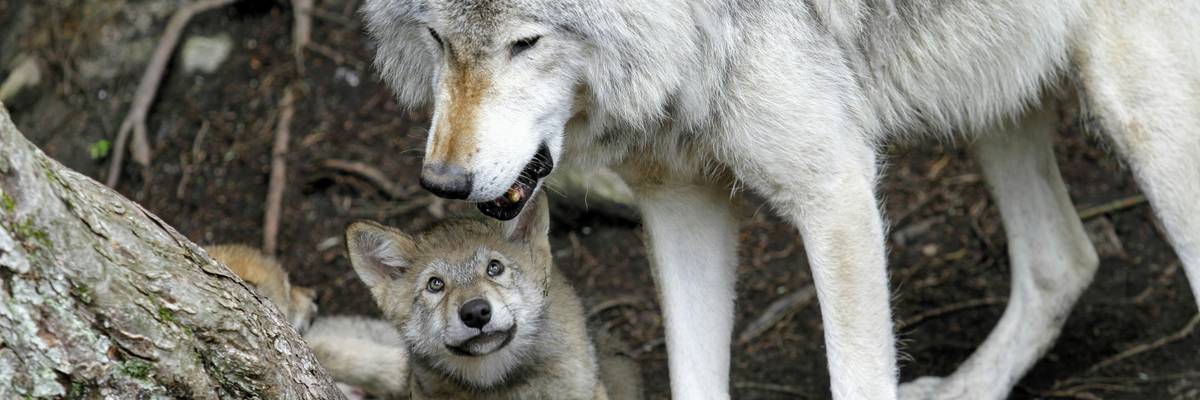
"The Fish and Wildlife Service is thumbing its nose at the Endangered Species Act and letting wolf-hating states sabotage decades of recovery efforts," said one conservation leader.
A pair of conservation coalitions on Monday made good on their threats to sue the U.S. government over its denial of federal protections for gray wolves in the northern Rocky Mountains, where state killing regimes "put wolves at obvious risk of extinction in the foreseeable future."
The organizations filed notices of their plans for the lawsuits in early February, after the U.S. Fish and Wildlife Service (FWS) determined that Endangered Species Act protections for the region's wolves were "not warranted." The Interior Department agency could have prevented the suits in the U.S. District Court for the District of Montana by reversing its decision within 60 days but refused to do so.
"The Biden administration and its Fish and Wildlife Service are complicit in the horrific war on wolves being waged by the states of Idaho, Wyoming, and Montana," declared George Nickas, executive director of Wilderness Watch, one of 10 organizations represented by the Western Environmental Law Center (WELC).
"Idaho is fighting to open airstrips all over the backcountry, including in designated wilderness, to get more hunters to wipe out wolves in their most remote hideouts," Nickas noted. "Montana is resorting to night hunting and shooting over bait and Wyoming has simply declared an open season."
"These states are destroying wolf families in the northern Rockies and cruelly driving them to functional extinction via bounties, wanton shooting, trapping, snaring, even running over them with snowmobiles."
Brooks Fahy, executive director of Predator Defense, another WELC group, pointed out that "these states are destroying wolf families in the northern Rockies and cruelly driving them to functional extinction via bounties, wanton shooting, trapping, snaring, even running over them with snowmobiles. They have clearly demonstrated they are incapable of managing wolves, only of killing them."
KC York, founder and president of Trap Free Montana, also represented by WELC, said that "Montana, Idaho, and Wyoming know that they were let off the hook in their brutal and unethical destruction of wolves even acknowledged as such by the service."
"They set the stage for other states to follow," York warned. "We are already witnessing the disturbing onset of giving the fox the key to the hen house and abandoning the farm. The maltreatment is now destined to worsen for these wolves and other indiscriminate species, through overt, deceptive, well-orchestrated, secretive, and legal actions."
The other organizations in the WELC coalition are Alliance for the Wild Rockies, Friends of the Clearwater, International Wildlife Coexistence Network, Nimiipuu Protecting Our Environment, Protect the Wolves, Western Watersheds Project, and WildEarth Guardians.
The second lawsuit is spearheaded by the Center for Biological Diversity, Humane Society of the United States, Humane Society Legislative Fund, and Sierra Club, whose leaders took aim at the same three states for their wolf-killing schemes.
"The states of Montana, Idaho, and Wyoming act like it's 1880 with the most radical and unethical methods to kill as many wolves as possible in an effort to manage for bare minimum numbers," said Sierra Club northern Rockies field organizer Nick Gevock. "This kind of management is disgraceful, it's unnecessary, and it sets back wolf conservation decades, and the American people are not going to stand by and allow it to happen."
"Rather than allow states to cater to trophy hunters, trappers, and ranchers, the agency must ensure the preservation of wolves."
Margie Robinson, staff attorney for wildlife at the Humane Society of the United States, stressed that "under the Endangered Species Act, the U.S. Fish and Wildlife Service cannot ignore crucial scientific findings. Rather than allow states to cater to trophy hunters, trappers, and ranchers, the agency must ensure the preservation of wolves—who are vital to ensuring healthy ecosystems—for generations to come."
The Center for Biological Diversity's carnivore conservation program director, Collette Adkins, was optimistic about her coalition's chances based on previous legal battles, saying that "we're back in court to save the wolves and we'll win again."
"The Fish and Wildlife Service is thumbing its nose at the Endangered Species Act and letting wolf-hating states sabotage decades of recovery efforts," Adkins added. "It's heartbreaking and it has to stop."
Dear Common Dreams reader, It’s been nearly 30 years since I co-founded Common Dreams with my late wife, Lina Newhouser. We had the radical notion that journalism should serve the public good, not corporate profits. It was clear to us from the outset what it would take to build such a project. No paid advertisements. No corporate sponsors. No millionaire publisher telling us what to think or do. Many people said we wouldn't last a year, but we proved those doubters wrong. Together with a tremendous team of journalists and dedicated staff, we built an independent media outlet free from the constraints of profits and corporate control. Our mission has always been simple: To inform. To inspire. To ignite change for the common good. Building Common Dreams was not easy. Our survival was never guaranteed. When you take on the most powerful forces—Wall Street greed, fossil fuel industry destruction, Big Tech lobbyists, and uber-rich oligarchs who have spent billions upon billions rigging the economy and democracy in their favor—the only bulwark you have is supporters who believe in your work. But here’s the urgent message from me today. It's never been this bad out there. And it's never been this hard to keep us going. At the very moment Common Dreams is most needed, the threats we face are intensifying. We need your support now more than ever. We don't accept corporate advertising and never will. We don't have a paywall because we don't think people should be blocked from critical news based on their ability to pay. Everything we do is funded by the donations of readers like you. When everyone does the little they can afford, we are strong. But if that support retreats or dries up, so do we. Will you donate now to make sure Common Dreams not only survives but thrives? —Craig Brown, Co-founder |
A pair of conservation coalitions on Monday made good on their threats to sue the U.S. government over its denial of federal protections for gray wolves in the northern Rocky Mountains, where state killing regimes "put wolves at obvious risk of extinction in the foreseeable future."
The organizations filed notices of their plans for the lawsuits in early February, after the U.S. Fish and Wildlife Service (FWS) determined that Endangered Species Act protections for the region's wolves were "not warranted." The Interior Department agency could have prevented the suits in the U.S. District Court for the District of Montana by reversing its decision within 60 days but refused to do so.
"The Biden administration and its Fish and Wildlife Service are complicit in the horrific war on wolves being waged by the states of Idaho, Wyoming, and Montana," declared George Nickas, executive director of Wilderness Watch, one of 10 organizations represented by the Western Environmental Law Center (WELC).
"Idaho is fighting to open airstrips all over the backcountry, including in designated wilderness, to get more hunters to wipe out wolves in their most remote hideouts," Nickas noted. "Montana is resorting to night hunting and shooting over bait and Wyoming has simply declared an open season."
"These states are destroying wolf families in the northern Rockies and cruelly driving them to functional extinction via bounties, wanton shooting, trapping, snaring, even running over them with snowmobiles."
Brooks Fahy, executive director of Predator Defense, another WELC group, pointed out that "these states are destroying wolf families in the northern Rockies and cruelly driving them to functional extinction via bounties, wanton shooting, trapping, snaring, even running over them with snowmobiles. They have clearly demonstrated they are incapable of managing wolves, only of killing them."
KC York, founder and president of Trap Free Montana, also represented by WELC, said that "Montana, Idaho, and Wyoming know that they were let off the hook in their brutal and unethical destruction of wolves even acknowledged as such by the service."
"They set the stage for other states to follow," York warned. "We are already witnessing the disturbing onset of giving the fox the key to the hen house and abandoning the farm. The maltreatment is now destined to worsen for these wolves and other indiscriminate species, through overt, deceptive, well-orchestrated, secretive, and legal actions."
The other organizations in the WELC coalition are Alliance for the Wild Rockies, Friends of the Clearwater, International Wildlife Coexistence Network, Nimiipuu Protecting Our Environment, Protect the Wolves, Western Watersheds Project, and WildEarth Guardians.
The second lawsuit is spearheaded by the Center for Biological Diversity, Humane Society of the United States, Humane Society Legislative Fund, and Sierra Club, whose leaders took aim at the same three states for their wolf-killing schemes.
"The states of Montana, Idaho, and Wyoming act like it's 1880 with the most radical and unethical methods to kill as many wolves as possible in an effort to manage for bare minimum numbers," said Sierra Club northern Rockies field organizer Nick Gevock. "This kind of management is disgraceful, it's unnecessary, and it sets back wolf conservation decades, and the American people are not going to stand by and allow it to happen."
"Rather than allow states to cater to trophy hunters, trappers, and ranchers, the agency must ensure the preservation of wolves."
Margie Robinson, staff attorney for wildlife at the Humane Society of the United States, stressed that "under the Endangered Species Act, the U.S. Fish and Wildlife Service cannot ignore crucial scientific findings. Rather than allow states to cater to trophy hunters, trappers, and ranchers, the agency must ensure the preservation of wolves—who are vital to ensuring healthy ecosystems—for generations to come."
The Center for Biological Diversity's carnivore conservation program director, Collette Adkins, was optimistic about her coalition's chances based on previous legal battles, saying that "we're back in court to save the wolves and we'll win again."
"The Fish and Wildlife Service is thumbing its nose at the Endangered Species Act and letting wolf-hating states sabotage decades of recovery efforts," Adkins added. "It's heartbreaking and it has to stop."
A pair of conservation coalitions on Monday made good on their threats to sue the U.S. government over its denial of federal protections for gray wolves in the northern Rocky Mountains, where state killing regimes "put wolves at obvious risk of extinction in the foreseeable future."
The organizations filed notices of their plans for the lawsuits in early February, after the U.S. Fish and Wildlife Service (FWS) determined that Endangered Species Act protections for the region's wolves were "not warranted." The Interior Department agency could have prevented the suits in the U.S. District Court for the District of Montana by reversing its decision within 60 days but refused to do so.
"The Biden administration and its Fish and Wildlife Service are complicit in the horrific war on wolves being waged by the states of Idaho, Wyoming, and Montana," declared George Nickas, executive director of Wilderness Watch, one of 10 organizations represented by the Western Environmental Law Center (WELC).
"Idaho is fighting to open airstrips all over the backcountry, including in designated wilderness, to get more hunters to wipe out wolves in their most remote hideouts," Nickas noted. "Montana is resorting to night hunting and shooting over bait and Wyoming has simply declared an open season."
"These states are destroying wolf families in the northern Rockies and cruelly driving them to functional extinction via bounties, wanton shooting, trapping, snaring, even running over them with snowmobiles."
Brooks Fahy, executive director of Predator Defense, another WELC group, pointed out that "these states are destroying wolf families in the northern Rockies and cruelly driving them to functional extinction via bounties, wanton shooting, trapping, snaring, even running over them with snowmobiles. They have clearly demonstrated they are incapable of managing wolves, only of killing them."
KC York, founder and president of Trap Free Montana, also represented by WELC, said that "Montana, Idaho, and Wyoming know that they were let off the hook in their brutal and unethical destruction of wolves even acknowledged as such by the service."
"They set the stage for other states to follow," York warned. "We are already witnessing the disturbing onset of giving the fox the key to the hen house and abandoning the farm. The maltreatment is now destined to worsen for these wolves and other indiscriminate species, through overt, deceptive, well-orchestrated, secretive, and legal actions."
The other organizations in the WELC coalition are Alliance for the Wild Rockies, Friends of the Clearwater, International Wildlife Coexistence Network, Nimiipuu Protecting Our Environment, Protect the Wolves, Western Watersheds Project, and WildEarth Guardians.
The second lawsuit is spearheaded by the Center for Biological Diversity, Humane Society of the United States, Humane Society Legislative Fund, and Sierra Club, whose leaders took aim at the same three states for their wolf-killing schemes.
"The states of Montana, Idaho, and Wyoming act like it's 1880 with the most radical and unethical methods to kill as many wolves as possible in an effort to manage for bare minimum numbers," said Sierra Club northern Rockies field organizer Nick Gevock. "This kind of management is disgraceful, it's unnecessary, and it sets back wolf conservation decades, and the American people are not going to stand by and allow it to happen."
"Rather than allow states to cater to trophy hunters, trappers, and ranchers, the agency must ensure the preservation of wolves."
Margie Robinson, staff attorney for wildlife at the Humane Society of the United States, stressed that "under the Endangered Species Act, the U.S. Fish and Wildlife Service cannot ignore crucial scientific findings. Rather than allow states to cater to trophy hunters, trappers, and ranchers, the agency must ensure the preservation of wolves—who are vital to ensuring healthy ecosystems—for generations to come."
The Center for Biological Diversity's carnivore conservation program director, Collette Adkins, was optimistic about her coalition's chances based on previous legal battles, saying that "we're back in court to save the wolves and we'll win again."
"The Fish and Wildlife Service is thumbing its nose at the Endangered Species Act and letting wolf-hating states sabotage decades of recovery efforts," Adkins added. "It's heartbreaking and it has to stop."