SUBSCRIBE TO OUR FREE NEWSLETTER
Daily news & progressive opinion—funded by the people, not the corporations—delivered straight to your inbox.
5
#000000
#FFFFFF
To donate by check, phone, or other method, see our More Ways to Give page.


Daily news & progressive opinion—funded by the people, not the corporations—delivered straight to your inbox.

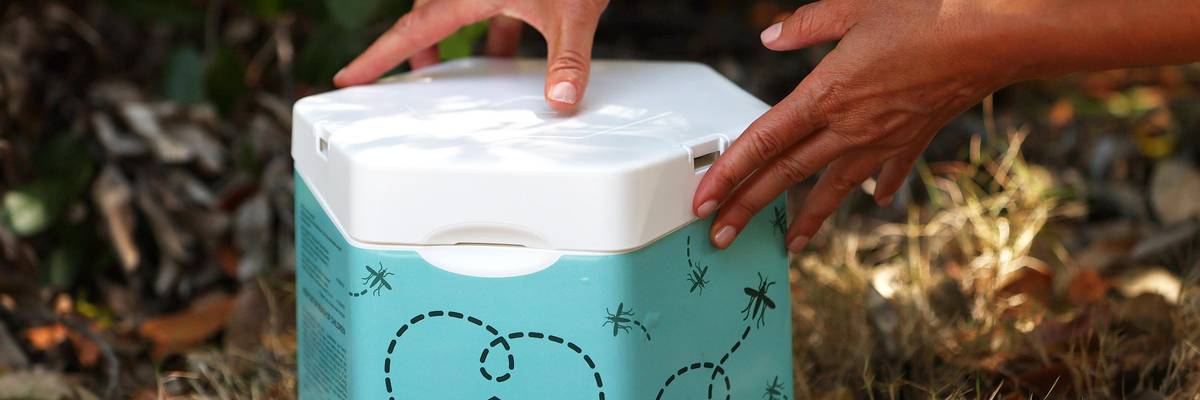
An employee of biotech firm Oxitec shows off a box from where genetically engineered Aedes aegypti mosquitoes are being released on June 9, 2021 in Marathon, Florida.
"All Californians should be relieved that this permit request has been withdrawn for the foreseeable future," said one Friends of the Earth project manager.
In what green groups on Friday called "a victory for environmentalists, scientists, and vulnerable agricultural communities across California," state officials announced a day earlier that a controversial release of genetically engineered mosquitoes in the Central Valley has been suspended.
The California Department of Pesticide Regulation (DPR) said Thursday that Oxitec, a U.S.-owned, U.K.-based biotechnology company that develops genetically engineered (GE) insects, withdrew a research authorization application to conduct a field pilot test of a new type of Aedes aegypti, a mosquito species that in its natural form can spread dengue fever, chikungunya, Zika fever, Mayaro and yellow fever viruses, and other disease agents.
Oxitec, which touts its GE mosquitoes as "an alternative to the use of conventional pesticides," planned to study the insects' efficacy at reducing the current Aedes aegypti population in Tulare County.
"The withdrawal of Oxitec's application is a victory for California residents and wild species," Rebecca Spector, West Coast director at Center for Food Safety, said in a statement. "This withdrawal is in line with leaders from our state Legislature who demanded a more comprehensive review of the impacts of these genetically engineered mosquitoes before the approval of this permit."
According to the environmental group Friends of the Earth (FOE), which opposed what it called a "risky insect mass release":
The withdrawal of the biotech corporation Oxitec's request halts the controversial proposed release of billions of genetically engineered insects. Scientists and other experts in the field have raised concerns about Oxitec's proposal to release genetically engineered mosquitoes due to inadequate scientific review and lack of appropriate and relevant regulations, pressuring the company to disclose data critical to assessing potential public health and environmental impacts...
In separate letters to DPR earlier this year, scientists and legislators urged DPR to deny the Oxitec permit because of concerns about risks posed to human health, wildlife, and vulnerable ecosystems, and the lack of regulations to control billions of genetically engineered mosquitoes released into an open-air environment.
"All Californians should be relieved that this permit request has been withdrawn for the foreseeable future," FOE senior project manager Dana Perls said in a statement. "Significant scientific research on genetically engineered mosquitoes is still needed to understand the potential public health and environmental threats associated with the release of this novel genetically engineered insect."
Last November, California state Assemblymember Laura Friedman (D-44) said that "there are too many unknown factors when it comes to how [GE mosquitoes] could affect our biodiversity in the long run, including how this might influence populations of birds, bats, fish species, and other insects."
An unusually wet winter and subsequent spring snow melt and flooding have led to elevated levels of standing water and ideal breeding conditions for mosquitoes, leaving Central Valley officials worried about the spread of diseases.
"It's kind of unprecedented, the level of probably mosquito production we're gonna see this year with all the water," Michael Cavanagh, district manager of Kings Mosquito Abatement District, told KFSN. "So there's a natural link, I think, to potential disease transmission, the West Nile virus and some of the other diseases that mosquitoes carry."

Dear Common Dreams reader, It’s been nearly 30 years since I co-founded Common Dreams with my late wife, Lina Newhouser. We had the radical notion that journalism should serve the public good, not corporate profits. It was clear to us from the outset what it would take to build such a project. No paid advertisements. No corporate sponsors. No millionaire publisher telling us what to think or do. Many people said we wouldn't last a year, but we proved those doubters wrong. Together with a tremendous team of journalists and dedicated staff, we built an independent media outlet free from the constraints of profits and corporate control. Our mission has always been simple: To inform. To inspire. To ignite change for the common good. Building Common Dreams was not easy. Our survival was never guaranteed. When you take on the most powerful forces—Wall Street greed, fossil fuel industry destruction, Big Tech lobbyists, and uber-rich oligarchs who have spent billions upon billions rigging the economy and democracy in their favor—the only bulwark you have is supporters who believe in your work. But here’s the urgent message from me today. It's never been this bad out there. And it's never been this hard to keep us going. At the very moment Common Dreams is most needed, the threats we face are intensifying. We need your support now more than ever. We don't accept corporate advertising and never will. We don't have a paywall because we don't think people should be blocked from critical news based on their ability to pay. Everything we do is funded by the donations of readers like you. When everyone does the little they can afford, we are strong. But if that support retreats or dries up, so do we. Will you donate now to make sure Common Dreams not only survives but thrives? —Craig Brown, Co-founder |
In what green groups on Friday called "a victory for environmentalists, scientists, and vulnerable agricultural communities across California," state officials announced a day earlier that a controversial release of genetically engineered mosquitoes in the Central Valley has been suspended.
The California Department of Pesticide Regulation (DPR) said Thursday that Oxitec, a U.S.-owned, U.K.-based biotechnology company that develops genetically engineered (GE) insects, withdrew a research authorization application to conduct a field pilot test of a new type of Aedes aegypti, a mosquito species that in its natural form can spread dengue fever, chikungunya, Zika fever, Mayaro and yellow fever viruses, and other disease agents.
Oxitec, which touts its GE mosquitoes as "an alternative to the use of conventional pesticides," planned to study the insects' efficacy at reducing the current Aedes aegypti population in Tulare County.
"The withdrawal of Oxitec's application is a victory for California residents and wild species," Rebecca Spector, West Coast director at Center for Food Safety, said in a statement. "This withdrawal is in line with leaders from our state Legislature who demanded a more comprehensive review of the impacts of these genetically engineered mosquitoes before the approval of this permit."
According to the environmental group Friends of the Earth (FOE), which opposed what it called a "risky insect mass release":
The withdrawal of the biotech corporation Oxitec's request halts the controversial proposed release of billions of genetically engineered insects. Scientists and other experts in the field have raised concerns about Oxitec's proposal to release genetically engineered mosquitoes due to inadequate scientific review and lack of appropriate and relevant regulations, pressuring the company to disclose data critical to assessing potential public health and environmental impacts...
In separate letters to DPR earlier this year, scientists and legislators urged DPR to deny the Oxitec permit because of concerns about risks posed to human health, wildlife, and vulnerable ecosystems, and the lack of regulations to control billions of genetically engineered mosquitoes released into an open-air environment.
"All Californians should be relieved that this permit request has been withdrawn for the foreseeable future," FOE senior project manager Dana Perls said in a statement. "Significant scientific research on genetically engineered mosquitoes is still needed to understand the potential public health and environmental threats associated with the release of this novel genetically engineered insect."
Last November, California state Assemblymember Laura Friedman (D-44) said that "there are too many unknown factors when it comes to how [GE mosquitoes] could affect our biodiversity in the long run, including how this might influence populations of birds, bats, fish species, and other insects."
An unusually wet winter and subsequent spring snow melt and flooding have led to elevated levels of standing water and ideal breeding conditions for mosquitoes, leaving Central Valley officials worried about the spread of diseases.
"It's kind of unprecedented, the level of probably mosquito production we're gonna see this year with all the water," Michael Cavanagh, district manager of Kings Mosquito Abatement District, told KFSN. "So there's a natural link, I think, to potential disease transmission, the West Nile virus and some of the other diseases that mosquitoes carry."

In what green groups on Friday called "a victory for environmentalists, scientists, and vulnerable agricultural communities across California," state officials announced a day earlier that a controversial release of genetically engineered mosquitoes in the Central Valley has been suspended.
The California Department of Pesticide Regulation (DPR) said Thursday that Oxitec, a U.S.-owned, U.K.-based biotechnology company that develops genetically engineered (GE) insects, withdrew a research authorization application to conduct a field pilot test of a new type of Aedes aegypti, a mosquito species that in its natural form can spread dengue fever, chikungunya, Zika fever, Mayaro and yellow fever viruses, and other disease agents.
Oxitec, which touts its GE mosquitoes as "an alternative to the use of conventional pesticides," planned to study the insects' efficacy at reducing the current Aedes aegypti population in Tulare County.
"The withdrawal of Oxitec's application is a victory for California residents and wild species," Rebecca Spector, West Coast director at Center for Food Safety, said in a statement. "This withdrawal is in line with leaders from our state Legislature who demanded a more comprehensive review of the impacts of these genetically engineered mosquitoes before the approval of this permit."
According to the environmental group Friends of the Earth (FOE), which opposed what it called a "risky insect mass release":
The withdrawal of the biotech corporation Oxitec's request halts the controversial proposed release of billions of genetically engineered insects. Scientists and other experts in the field have raised concerns about Oxitec's proposal to release genetically engineered mosquitoes due to inadequate scientific review and lack of appropriate and relevant regulations, pressuring the company to disclose data critical to assessing potential public health and environmental impacts...
In separate letters to DPR earlier this year, scientists and legislators urged DPR to deny the Oxitec permit because of concerns about risks posed to human health, wildlife, and vulnerable ecosystems, and the lack of regulations to control billions of genetically engineered mosquitoes released into an open-air environment.
"All Californians should be relieved that this permit request has been withdrawn for the foreseeable future," FOE senior project manager Dana Perls said in a statement. "Significant scientific research on genetically engineered mosquitoes is still needed to understand the potential public health and environmental threats associated with the release of this novel genetically engineered insect."
Last November, California state Assemblymember Laura Friedman (D-44) said that "there are too many unknown factors when it comes to how [GE mosquitoes] could affect our biodiversity in the long run, including how this might influence populations of birds, bats, fish species, and other insects."
An unusually wet winter and subsequent spring snow melt and flooding have led to elevated levels of standing water and ideal breeding conditions for mosquitoes, leaving Central Valley officials worried about the spread of diseases.
"It's kind of unprecedented, the level of probably mosquito production we're gonna see this year with all the water," Michael Cavanagh, district manager of Kings Mosquito Abatement District, told KFSN. "So there's a natural link, I think, to potential disease transmission, the West Nile virus and some of the other diseases that mosquitoes carry."