SUBSCRIBE TO OUR FREE NEWSLETTER
Daily news & progressive opinion—funded by the people, not the corporations—delivered straight to your inbox.
5
#000000
#FFFFFF
To donate by check, phone, or other method, see our More Ways to Give page.
Daily news & progressive opinion—funded by the people, not the corporations—delivered straight to your inbox.
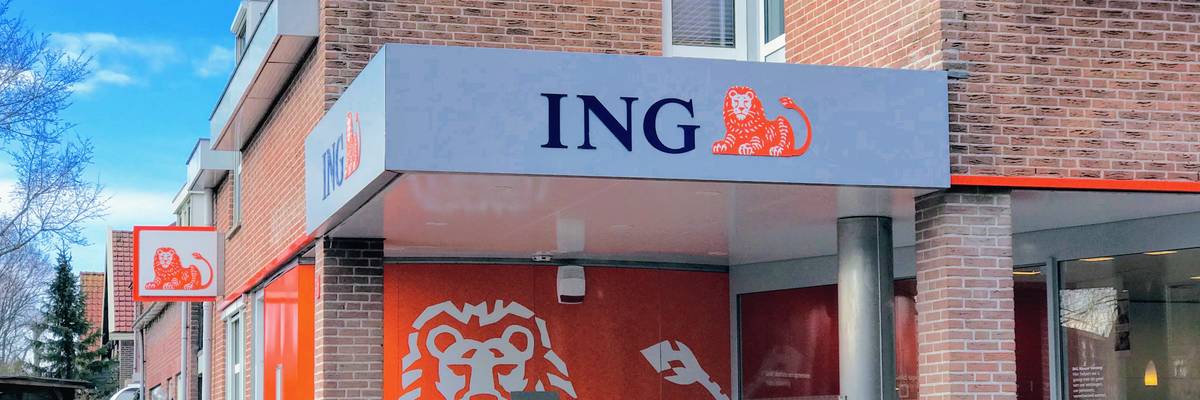
An ING bank is pictured in Nieuw-Vennep, the Netherlands.
"Whether you are drilling for oil yourself, or have paid for the drill, in both cases you are contributing to and bear responsibility for the climate crisis we are currently experiencing," one campaigner said of the suit against the Dutch banking giant.
Friends of the Earth Netherlands, which won a historic climate case against Shell in 2021, announced a new lawsuit on Friday against ING, the country's largest bank.
The environmental group, known as Milieudefensie in Dutch, is demanding that the bank bring its climate policy in line with the Paris agreement goal of limiting global warming to 1.5°C, slash its carbon dioxide emissions by 48% of 2019 levels by 2030 and its carbon-dioxide equivalent emissions by 43%, take measures to ensure its clients are not destroying the Earth, and begin a dialogue with Milieudefensie about meeting these demands.
"The bank finances oil and gas companies, deforestation, and heavy industry, all of which add to the climate crisis," Milieudefensie director Donald Pols said in a statement. "Whether you are drilling for oil yourself, or have paid for the drill, in both cases you are contributing to and bear responsibility for the climate crisis we are currently experiencing."
In 2022, ING emitted at least 61 megatons of climate pollution, more than Ghana, Switzerland, or Sweden. Almost all of ING's emissions come through the companies it invests in and does business with, and it emits more than any other bank in the Netherlands.
"He who pays the piper calls the tune. Due to ING's financing of, e.g., oil and gas companies, ING is the banker of the climate crisis," Pols said.
In a letter to ING, Milieudefensie outlined several steps the bank should take to reduce the climate footprint of its investments. These included requiring all clients to develop a Paris-compliant climate plan and refusing large clients that don't develop one within a year, requiring all fossil fuel clients to stop expanding fossil fuels and develop a plan to phase them out entirely, and cutting ties with clients who refuse after one year.
"Large polluters like ING and Shell have to seriously get to work."
In the letter, Miliedefensie said that ING had eight weeks from Friday to respond to its demands.
"If ING does not present a positive answer to Milieudefensie's claims within the requested period of time, Milieudefensie will assume that ING is unwilling to comply with this request," the group wrote in the letter. "Milieudefensie will in such case see no other option than to issue summons against ING with the goal of obtaining a court order instructing ING to take the aforementioned measures."
The environmental group said that the legal argument behind its victory against Shell would also apply against ING, namely that large corporations must comply with the Paris agreement.
"Since the climate agreements in Paris, it is clear what the world needs to do: reduce the CO2 emissions to limit the warming of the Earth to 1.5°C," the group's attorney Roger Cox said in a statement. "This means that large polluters like ING and Shell have to seriously get to work. It is evident that they are not doing enough, and I am therefore confident that we will win this case too."
While ING has made some progress on its internal climate goals, Mileudefensie believes it is not moving fast enough, as it plans to continue funding oil and gas projects through 2040 and has not set any goals for reducing its total emissions.
"We young people are not in charge, but companies like ING, with their fossil fuel financing, are helping to ruin our world and future," Winnie Oussoren, a 21-year-old who chairs Young Friends of the Earth Netherlands, said in a statement.
Dear Common Dreams reader, It’s been nearly 30 years since I co-founded Common Dreams with my late wife, Lina Newhouser. We had the radical notion that journalism should serve the public good, not corporate profits. It was clear to us from the outset what it would take to build such a project. No paid advertisements. No corporate sponsors. No millionaire publisher telling us what to think or do. Many people said we wouldn't last a year, but we proved those doubters wrong. Together with a tremendous team of journalists and dedicated staff, we built an independent media outlet free from the constraints of profits and corporate control. Our mission has always been simple: To inform. To inspire. To ignite change for the common good. Building Common Dreams was not easy. Our survival was never guaranteed. When you take on the most powerful forces—Wall Street greed, fossil fuel industry destruction, Big Tech lobbyists, and uber-rich oligarchs who have spent billions upon billions rigging the economy and democracy in their favor—the only bulwark you have is supporters who believe in your work. But here’s the urgent message from me today. It's never been this bad out there. And it's never been this hard to keep us going. At the very moment Common Dreams is most needed, the threats we face are intensifying. We need your support now more than ever. We don't accept corporate advertising and never will. We don't have a paywall because we don't think people should be blocked from critical news based on their ability to pay. Everything we do is funded by the donations of readers like you. When everyone does the little they can afford, we are strong. But if that support retreats or dries up, so do we. Will you donate now to make sure Common Dreams not only survives but thrives? —Craig Brown, Co-founder |
Friends of the Earth Netherlands, which won a historic climate case against Shell in 2021, announced a new lawsuit on Friday against ING, the country's largest bank.
The environmental group, known as Milieudefensie in Dutch, is demanding that the bank bring its climate policy in line with the Paris agreement goal of limiting global warming to 1.5°C, slash its carbon dioxide emissions by 48% of 2019 levels by 2030 and its carbon-dioxide equivalent emissions by 43%, take measures to ensure its clients are not destroying the Earth, and begin a dialogue with Milieudefensie about meeting these demands.
"The bank finances oil and gas companies, deforestation, and heavy industry, all of which add to the climate crisis," Milieudefensie director Donald Pols said in a statement. "Whether you are drilling for oil yourself, or have paid for the drill, in both cases you are contributing to and bear responsibility for the climate crisis we are currently experiencing."
In 2022, ING emitted at least 61 megatons of climate pollution, more than Ghana, Switzerland, or Sweden. Almost all of ING's emissions come through the companies it invests in and does business with, and it emits more than any other bank in the Netherlands.
"He who pays the piper calls the tune. Due to ING's financing of, e.g., oil and gas companies, ING is the banker of the climate crisis," Pols said.
In a letter to ING, Milieudefensie outlined several steps the bank should take to reduce the climate footprint of its investments. These included requiring all clients to develop a Paris-compliant climate plan and refusing large clients that don't develop one within a year, requiring all fossil fuel clients to stop expanding fossil fuels and develop a plan to phase them out entirely, and cutting ties with clients who refuse after one year.
"Large polluters like ING and Shell have to seriously get to work."
In the letter, Miliedefensie said that ING had eight weeks from Friday to respond to its demands.
"If ING does not present a positive answer to Milieudefensie's claims within the requested period of time, Milieudefensie will assume that ING is unwilling to comply with this request," the group wrote in the letter. "Milieudefensie will in such case see no other option than to issue summons against ING with the goal of obtaining a court order instructing ING to take the aforementioned measures."
The environmental group said that the legal argument behind its victory against Shell would also apply against ING, namely that large corporations must comply with the Paris agreement.
"Since the climate agreements in Paris, it is clear what the world needs to do: reduce the CO2 emissions to limit the warming of the Earth to 1.5°C," the group's attorney Roger Cox said in a statement. "This means that large polluters like ING and Shell have to seriously get to work. It is evident that they are not doing enough, and I am therefore confident that we will win this case too."
While ING has made some progress on its internal climate goals, Mileudefensie believes it is not moving fast enough, as it plans to continue funding oil and gas projects through 2040 and has not set any goals for reducing its total emissions.
"We young people are not in charge, but companies like ING, with their fossil fuel financing, are helping to ruin our world and future," Winnie Oussoren, a 21-year-old who chairs Young Friends of the Earth Netherlands, said in a statement.
Friends of the Earth Netherlands, which won a historic climate case against Shell in 2021, announced a new lawsuit on Friday against ING, the country's largest bank.
The environmental group, known as Milieudefensie in Dutch, is demanding that the bank bring its climate policy in line with the Paris agreement goal of limiting global warming to 1.5°C, slash its carbon dioxide emissions by 48% of 2019 levels by 2030 and its carbon-dioxide equivalent emissions by 43%, take measures to ensure its clients are not destroying the Earth, and begin a dialogue with Milieudefensie about meeting these demands.
"The bank finances oil and gas companies, deforestation, and heavy industry, all of which add to the climate crisis," Milieudefensie director Donald Pols said in a statement. "Whether you are drilling for oil yourself, or have paid for the drill, in both cases you are contributing to and bear responsibility for the climate crisis we are currently experiencing."
In 2022, ING emitted at least 61 megatons of climate pollution, more than Ghana, Switzerland, or Sweden. Almost all of ING's emissions come through the companies it invests in and does business with, and it emits more than any other bank in the Netherlands.
"He who pays the piper calls the tune. Due to ING's financing of, e.g., oil and gas companies, ING is the banker of the climate crisis," Pols said.
In a letter to ING, Milieudefensie outlined several steps the bank should take to reduce the climate footprint of its investments. These included requiring all clients to develop a Paris-compliant climate plan and refusing large clients that don't develop one within a year, requiring all fossil fuel clients to stop expanding fossil fuels and develop a plan to phase them out entirely, and cutting ties with clients who refuse after one year.
"Large polluters like ING and Shell have to seriously get to work."
In the letter, Miliedefensie said that ING had eight weeks from Friday to respond to its demands.
"If ING does not present a positive answer to Milieudefensie's claims within the requested period of time, Milieudefensie will assume that ING is unwilling to comply with this request," the group wrote in the letter. "Milieudefensie will in such case see no other option than to issue summons against ING with the goal of obtaining a court order instructing ING to take the aforementioned measures."
The environmental group said that the legal argument behind its victory against Shell would also apply against ING, namely that large corporations must comply with the Paris agreement.
"Since the climate agreements in Paris, it is clear what the world needs to do: reduce the CO2 emissions to limit the warming of the Earth to 1.5°C," the group's attorney Roger Cox said in a statement. "This means that large polluters like ING and Shell have to seriously get to work. It is evident that they are not doing enough, and I am therefore confident that we will win this case too."
While ING has made some progress on its internal climate goals, Mileudefensie believes it is not moving fast enough, as it plans to continue funding oil and gas projects through 2040 and has not set any goals for reducing its total emissions.
"We young people are not in charge, but companies like ING, with their fossil fuel financing, are helping to ruin our world and future," Winnie Oussoren, a 21-year-old who chairs Young Friends of the Earth Netherlands, said in a statement.