

SUBSCRIBE TO OUR FREE NEWSLETTER
Daily news & progressive opinion—funded by the people, not the corporations—delivered straight to your inbox.
5
#000000
#FFFFFF
To donate by check, phone, or other method, see our More Ways to Give page.
Daily news & progressive opinion—funded by the people, not the corporations—delivered straight to your inbox.
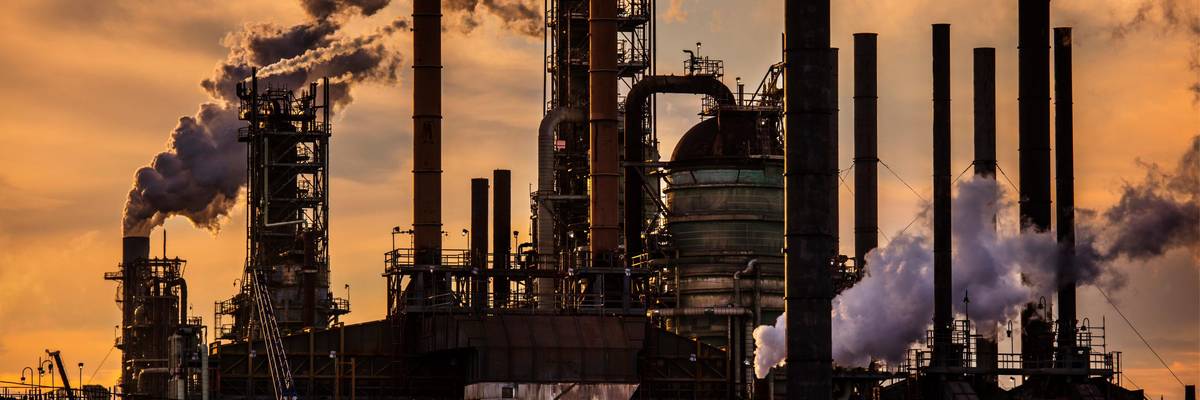
An ExxonMobil oil refinery is pictured in Baton Rouge, Louisiana.
"Given Exxon's preference to fight a battle in court rather than allow shareholders the freedom of a vote at its annual meeting, we decided to withdraw the climate proposal," said the head of an activist investor group.
In what one journalist called "big news for shareholder activism" at powerful companies, a climate-focused investor group said Friday it was withdrawing its proposed resolution for more ambitious emissions reductions at ExxonMobil, which had been submitted under federal guidelines for a vote at the oil giant's upcoming annual meeting, following the company's lawsuit filed in right-wing court.
Dutch group Follow This and investment firm Arjuna Capital had planned a shareholder vote on an expansion of Exxon's emissions targets, which would have included "scope 3," requiring the company to reduce emissions produced by those who use its products.
Other fossil fuel companies have adopted targets including scope 3 as well as scopes 1 and 2—emissions from their infrastructure and operations.
Exxon has said it plans to reach net-zero emissions from scopes 1 and 2 by 2050, but made clear last month it had no intention of allowing its investors to decide whether it should broaden that plan.
The company sued in the U.S. District Court for the Northern District of Texas, asking a judge to exclude the climate proposal from its proxy statement and arguing that Follow This and Arjuna have failed to garner enough support in previous votes to resubmit the resolution.
Just over 27% of Exxon shareholders supported the proposal in 2022, while the number dropped to 10.5% last year.
Exxon also said in its court filing that Follow This and Arjuna were "driven by an extreme agenda," despite the fact that nearly half of large companies surveyed by Morning Consult last year said they were prepared to publicly report their scope 3 emissions, which climate advocates have said are key to reducing a company's overall impact on planetary heating.
Follow This did not say specifically why it decided to pull the resolution, but suggested it was not prepared to get involved in a legal battle with Exxon, which reported one of its largest profits of the last decade—$36 billion—in 2023.
"Given Exxon's preference to fight a battle in court rather than allow shareholders the freedom of a vote at its annual meeting, we decided to withdraw the climate proposal. Now that we have withdrawn, the company has no reason to continue the lawsuit," said Mark van Baal, founder of Follow This.
Exxon surprised observers by filing its lawsuit in Texas' Northern District; the company is based in Houston, within the jurisdiction of the state's Southern District.
Some critics posited the choice was made so the case could be heard by right-wing U.S. District Judge Reed O'Connor, who declared the Affordable Care Act unconstitutional in 2018 and blocked married same-sex couples from exercising their rights under the Family Medical Leave Act.
Without even proceeding to trial, Exxon's lawsuit "worked," said Financial Times journalist Tom Wilson.
Pranav Putcha, a sustainable finance researcher at the European University Institute advised shareholders in other powerful companies to "beware."
Arjuna accused Exxon of "silencing investors that voice climate-risk concerns" as climate scientists and energy experts alike warn that fossil fuel extraction must be rapidly phased out to mitigate planetary heating as much as possible.
"Not only is the company sidestepping a critical corporate accountability mechanism that has upheld shareholder freedoms for decades," said Natasha Lamb, chief investment officer at the firm, "this amounts to tactics of intimidation and bullying."
Dear Common Dreams reader, It’s been nearly 30 years since I co-founded Common Dreams with my late wife, Lina Newhouser. We had the radical notion that journalism should serve the public good, not corporate profits. It was clear to us from the outset what it would take to build such a project. No paid advertisements. No corporate sponsors. No millionaire publisher telling us what to think or do. Many people said we wouldn't last a year, but we proved those doubters wrong. Together with a tremendous team of journalists and dedicated staff, we built an independent media outlet free from the constraints of profits and corporate control. Our mission has always been simple: To inform. To inspire. To ignite change for the common good. Building Common Dreams was not easy. Our survival was never guaranteed. When you take on the most powerful forces—Wall Street greed, fossil fuel industry destruction, Big Tech lobbyists, and uber-rich oligarchs who have spent billions upon billions rigging the economy and democracy in their favor—the only bulwark you have is supporters who believe in your work. But here’s the urgent message from me today. It's never been this bad out there. And it's never been this hard to keep us going. At the very moment Common Dreams is most needed, the threats we face are intensifying. We need your support now more than ever. We don't accept corporate advertising and never will. We don't have a paywall because we don't think people should be blocked from critical news based on their ability to pay. Everything we do is funded by the donations of readers like you. When everyone does the little they can afford, we are strong. But if that support retreats or dries up, so do we. Will you donate now to make sure Common Dreams not only survives but thrives? —Craig Brown, Co-founder |
In what one journalist called "big news for shareholder activism" at powerful companies, a climate-focused investor group said Friday it was withdrawing its proposed resolution for more ambitious emissions reductions at ExxonMobil, which had been submitted under federal guidelines for a vote at the oil giant's upcoming annual meeting, following the company's lawsuit filed in right-wing court.
Dutch group Follow This and investment firm Arjuna Capital had planned a shareholder vote on an expansion of Exxon's emissions targets, which would have included "scope 3," requiring the company to reduce emissions produced by those who use its products.
Other fossil fuel companies have adopted targets including scope 3 as well as scopes 1 and 2—emissions from their infrastructure and operations.
Exxon has said it plans to reach net-zero emissions from scopes 1 and 2 by 2050, but made clear last month it had no intention of allowing its investors to decide whether it should broaden that plan.
The company sued in the U.S. District Court for the Northern District of Texas, asking a judge to exclude the climate proposal from its proxy statement and arguing that Follow This and Arjuna have failed to garner enough support in previous votes to resubmit the resolution.
Just over 27% of Exxon shareholders supported the proposal in 2022, while the number dropped to 10.5% last year.
Exxon also said in its court filing that Follow This and Arjuna were "driven by an extreme agenda," despite the fact that nearly half of large companies surveyed by Morning Consult last year said they were prepared to publicly report their scope 3 emissions, which climate advocates have said are key to reducing a company's overall impact on planetary heating.
Follow This did not say specifically why it decided to pull the resolution, but suggested it was not prepared to get involved in a legal battle with Exxon, which reported one of its largest profits of the last decade—$36 billion—in 2023.
"Given Exxon's preference to fight a battle in court rather than allow shareholders the freedom of a vote at its annual meeting, we decided to withdraw the climate proposal. Now that we have withdrawn, the company has no reason to continue the lawsuit," said Mark van Baal, founder of Follow This.
Exxon surprised observers by filing its lawsuit in Texas' Northern District; the company is based in Houston, within the jurisdiction of the state's Southern District.
Some critics posited the choice was made so the case could be heard by right-wing U.S. District Judge Reed O'Connor, who declared the Affordable Care Act unconstitutional in 2018 and blocked married same-sex couples from exercising their rights under the Family Medical Leave Act.
Without even proceeding to trial, Exxon's lawsuit "worked," said Financial Times journalist Tom Wilson.
Pranav Putcha, a sustainable finance researcher at the European University Institute advised shareholders in other powerful companies to "beware."
Arjuna accused Exxon of "silencing investors that voice climate-risk concerns" as climate scientists and energy experts alike warn that fossil fuel extraction must be rapidly phased out to mitigate planetary heating as much as possible.
"Not only is the company sidestepping a critical corporate accountability mechanism that has upheld shareholder freedoms for decades," said Natasha Lamb, chief investment officer at the firm, "this amounts to tactics of intimidation and bullying."
In what one journalist called "big news for shareholder activism" at powerful companies, a climate-focused investor group said Friday it was withdrawing its proposed resolution for more ambitious emissions reductions at ExxonMobil, which had been submitted under federal guidelines for a vote at the oil giant's upcoming annual meeting, following the company's lawsuit filed in right-wing court.
Dutch group Follow This and investment firm Arjuna Capital had planned a shareholder vote on an expansion of Exxon's emissions targets, which would have included "scope 3," requiring the company to reduce emissions produced by those who use its products.
Other fossil fuel companies have adopted targets including scope 3 as well as scopes 1 and 2—emissions from their infrastructure and operations.
Exxon has said it plans to reach net-zero emissions from scopes 1 and 2 by 2050, but made clear last month it had no intention of allowing its investors to decide whether it should broaden that plan.
The company sued in the U.S. District Court for the Northern District of Texas, asking a judge to exclude the climate proposal from its proxy statement and arguing that Follow This and Arjuna have failed to garner enough support in previous votes to resubmit the resolution.
Just over 27% of Exxon shareholders supported the proposal in 2022, while the number dropped to 10.5% last year.
Exxon also said in its court filing that Follow This and Arjuna were "driven by an extreme agenda," despite the fact that nearly half of large companies surveyed by Morning Consult last year said they were prepared to publicly report their scope 3 emissions, which climate advocates have said are key to reducing a company's overall impact on planetary heating.
Follow This did not say specifically why it decided to pull the resolution, but suggested it was not prepared to get involved in a legal battle with Exxon, which reported one of its largest profits of the last decade—$36 billion—in 2023.
"Given Exxon's preference to fight a battle in court rather than allow shareholders the freedom of a vote at its annual meeting, we decided to withdraw the climate proposal. Now that we have withdrawn, the company has no reason to continue the lawsuit," said Mark van Baal, founder of Follow This.
Exxon surprised observers by filing its lawsuit in Texas' Northern District; the company is based in Houston, within the jurisdiction of the state's Southern District.
Some critics posited the choice was made so the case could be heard by right-wing U.S. District Judge Reed O'Connor, who declared the Affordable Care Act unconstitutional in 2018 and blocked married same-sex couples from exercising their rights under the Family Medical Leave Act.
Without even proceeding to trial, Exxon's lawsuit "worked," said Financial Times journalist Tom Wilson.
Pranav Putcha, a sustainable finance researcher at the European University Institute advised shareholders in other powerful companies to "beware."
Arjuna accused Exxon of "silencing investors that voice climate-risk concerns" as climate scientists and energy experts alike warn that fossil fuel extraction must be rapidly phased out to mitigate planetary heating as much as possible.
"Not only is the company sidestepping a critical corporate accountability mechanism that has upheld shareholder freedoms for decades," said Natasha Lamb, chief investment officer at the firm, "this amounts to tactics of intimidation and bullying."

