SUBSCRIBE TO OUR FREE NEWSLETTER
Daily news & progressive opinion—funded by the people, not the corporations—delivered straight to your inbox.
5
#000000
#FFFFFF
To donate by check, phone, or other method, see our More Ways to Give page.
Daily news & progressive opinion—funded by the people, not the corporations—delivered straight to your inbox.
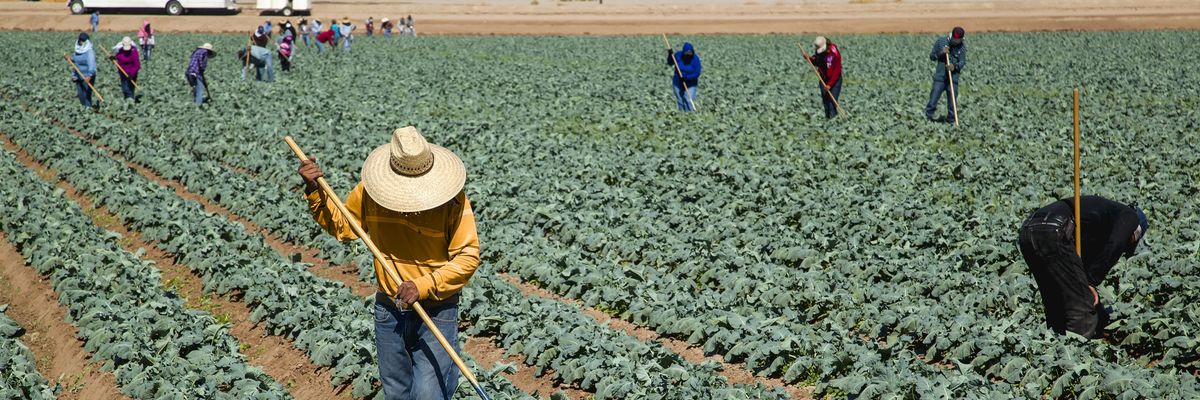
Laborers work in a field of broccoli plants in Dome Valley, Arizona on October 20, 2016.
"DCPA is so dangerous that it needs to be removed from the market immediately," said an EPA official, but advocates said the move was "long overdue."
Taking a rare step to "prevent imminent hazard," the U.S. Environmental Protection Agency on Tuesday issued an emergency order suspending all uses of an herbicide that has been linked to irreversible health risks for unborn babies.
The EPA issued the order after years of pushing AMVAC Chemical Corporation, the sole manufacturer of dimethyl tetrachloroterephthalate, to submit data about the risks posed by the chemical, which is also known as Dacthal and DCPA.
The agency estimated in 2023 that a fetus could be exposed to levels of DCPA four to 20 times greater than the safe limit, if a pregnant person handled products treated with the herbicide.
The chemical is used on crops including broccoli, onions, cabbage, and Brussels sprouts in the U.S., but has been banned since 2009 in the European Union.
Exposed fetuses can suffer effects including low birth weight, impaired brain development and motor skills, and decreased I.Q., according to the agency.
"DCPA is so dangerous that it needs to be removed from the market immediately," Michal Freedhoff, assistant administrator for the EPA's Office of Chemical Safety, said in statement. "In this case, pregnant women who may never even know they were exposed could give birth to babies that experience irreversible lifelong health problems."
"Countless people have been exposed to DCPA while the EPA abdicated its responsibility. The agency should have taken action decades ago, when it first identified the human health risks posed by this toxic crop chemical."
The Environmental Working Group (EWG) called the suspension of DCPA "welcome news," but said it was "long overdue." The group's research found that even though the EPA has collected evidence of DCPA's health risks, up to 200,000 pounds of the herbicide were sprayed on crops in California in some recent years.
"For years, EWG and other public health advocates have warned about the serious risks the weedkiller poses to farmworkers, pregnant people, and other vulnerable populations," said senior toxicologist Alexis Temkin. "Countless people have been exposed to DCPA while the EPA abdicated its responsibility. The agency should have taken action decades ago, when it first identified the human health risks posed by this toxic crop chemical."
Mily Treviño Sauceda, executive director of Alianza Nacional de Campesinas, also known as the National Farmworkers Women's Alliance, said the emergency order was "a great first step that we hope will be in a series of others that are based on listening to farmworkers, protecting our reproductive health, and safeguarding our families."
"Alianza is pleased to see the EPA make this historic decision," she said. "As an organization led by farmworker women, we know intimately the harm that pesticides, including dimethyl tetrachloroterephthalate... can inflict on our bodies and communities."
William Jordan, a volunteer with the Environmental Protection Network and a former deputy director for programs in the EPA's Office of Pesticide Programs, noted that the agency made the emergency order and bypassed the lengthy process of canceling DCPA's approval due to the harm the chemical causes—the first time in 40 years that the EPA has taken the step.
"The Environmental Protection Network endorses the strong regulatory action taken by EPA to address the extraordinary risks to unborn children posed by the use of pesticides containing DCPA," said Jordan. "EPA's order immediately suspending all sales, distribution, and use of DCPA products is the only way to avoid the harm to children that would result from continued use of this dangerous pesticide."
Dear Common Dreams reader, It’s been nearly 30 years since I co-founded Common Dreams with my late wife, Lina Newhouser. We had the radical notion that journalism should serve the public good, not corporate profits. It was clear to us from the outset what it would take to build such a project. No paid advertisements. No corporate sponsors. No millionaire publisher telling us what to think or do. Many people said we wouldn't last a year, but we proved those doubters wrong. Together with a tremendous team of journalists and dedicated staff, we built an independent media outlet free from the constraints of profits and corporate control. Our mission has always been simple: To inform. To inspire. To ignite change for the common good. Building Common Dreams was not easy. Our survival was never guaranteed. When you take on the most powerful forces—Wall Street greed, fossil fuel industry destruction, Big Tech lobbyists, and uber-rich oligarchs who have spent billions upon billions rigging the economy and democracy in their favor—the only bulwark you have is supporters who believe in your work. But here’s the urgent message from me today. It's never been this bad out there. And it's never been this hard to keep us going. At the very moment Common Dreams is most needed, the threats we face are intensifying. We need your support now more than ever. We don't accept corporate advertising and never will. We don't have a paywall because we don't think people should be blocked from critical news based on their ability to pay. Everything we do is funded by the donations of readers like you. When everyone does the little they can afford, we are strong. But if that support retreats or dries up, so do we. Will you donate now to make sure Common Dreams not only survives but thrives? —Craig Brown, Co-founder |
Taking a rare step to "prevent imminent hazard," the U.S. Environmental Protection Agency on Tuesday issued an emergency order suspending all uses of an herbicide that has been linked to irreversible health risks for unborn babies.
The EPA issued the order after years of pushing AMVAC Chemical Corporation, the sole manufacturer of dimethyl tetrachloroterephthalate, to submit data about the risks posed by the chemical, which is also known as Dacthal and DCPA.
The agency estimated in 2023 that a fetus could be exposed to levels of DCPA four to 20 times greater than the safe limit, if a pregnant person handled products treated with the herbicide.
The chemical is used on crops including broccoli, onions, cabbage, and Brussels sprouts in the U.S., but has been banned since 2009 in the European Union.
Exposed fetuses can suffer effects including low birth weight, impaired brain development and motor skills, and decreased I.Q., according to the agency.
"DCPA is so dangerous that it needs to be removed from the market immediately," Michal Freedhoff, assistant administrator for the EPA's Office of Chemical Safety, said in statement. "In this case, pregnant women who may never even know they were exposed could give birth to babies that experience irreversible lifelong health problems."
"Countless people have been exposed to DCPA while the EPA abdicated its responsibility. The agency should have taken action decades ago, when it first identified the human health risks posed by this toxic crop chemical."
The Environmental Working Group (EWG) called the suspension of DCPA "welcome news," but said it was "long overdue." The group's research found that even though the EPA has collected evidence of DCPA's health risks, up to 200,000 pounds of the herbicide were sprayed on crops in California in some recent years.
"For years, EWG and other public health advocates have warned about the serious risks the weedkiller poses to farmworkers, pregnant people, and other vulnerable populations," said senior toxicologist Alexis Temkin. "Countless people have been exposed to DCPA while the EPA abdicated its responsibility. The agency should have taken action decades ago, when it first identified the human health risks posed by this toxic crop chemical."
Mily Treviño Sauceda, executive director of Alianza Nacional de Campesinas, also known as the National Farmworkers Women's Alliance, said the emergency order was "a great first step that we hope will be in a series of others that are based on listening to farmworkers, protecting our reproductive health, and safeguarding our families."
"Alianza is pleased to see the EPA make this historic decision," she said. "As an organization led by farmworker women, we know intimately the harm that pesticides, including dimethyl tetrachloroterephthalate... can inflict on our bodies and communities."
William Jordan, a volunteer with the Environmental Protection Network and a former deputy director for programs in the EPA's Office of Pesticide Programs, noted that the agency made the emergency order and bypassed the lengthy process of canceling DCPA's approval due to the harm the chemical causes—the first time in 40 years that the EPA has taken the step.
"The Environmental Protection Network endorses the strong regulatory action taken by EPA to address the extraordinary risks to unborn children posed by the use of pesticides containing DCPA," said Jordan. "EPA's order immediately suspending all sales, distribution, and use of DCPA products is the only way to avoid the harm to children that would result from continued use of this dangerous pesticide."
Taking a rare step to "prevent imminent hazard," the U.S. Environmental Protection Agency on Tuesday issued an emergency order suspending all uses of an herbicide that has been linked to irreversible health risks for unborn babies.
The EPA issued the order after years of pushing AMVAC Chemical Corporation, the sole manufacturer of dimethyl tetrachloroterephthalate, to submit data about the risks posed by the chemical, which is also known as Dacthal and DCPA.
The agency estimated in 2023 that a fetus could be exposed to levels of DCPA four to 20 times greater than the safe limit, if a pregnant person handled products treated with the herbicide.
The chemical is used on crops including broccoli, onions, cabbage, and Brussels sprouts in the U.S., but has been banned since 2009 in the European Union.
Exposed fetuses can suffer effects including low birth weight, impaired brain development and motor skills, and decreased I.Q., according to the agency.
"DCPA is so dangerous that it needs to be removed from the market immediately," Michal Freedhoff, assistant administrator for the EPA's Office of Chemical Safety, said in statement. "In this case, pregnant women who may never even know they were exposed could give birth to babies that experience irreversible lifelong health problems."
"Countless people have been exposed to DCPA while the EPA abdicated its responsibility. The agency should have taken action decades ago, when it first identified the human health risks posed by this toxic crop chemical."
The Environmental Working Group (EWG) called the suspension of DCPA "welcome news," but said it was "long overdue." The group's research found that even though the EPA has collected evidence of DCPA's health risks, up to 200,000 pounds of the herbicide were sprayed on crops in California in some recent years.
"For years, EWG and other public health advocates have warned about the serious risks the weedkiller poses to farmworkers, pregnant people, and other vulnerable populations," said senior toxicologist Alexis Temkin. "Countless people have been exposed to DCPA while the EPA abdicated its responsibility. The agency should have taken action decades ago, when it first identified the human health risks posed by this toxic crop chemical."
Mily Treviño Sauceda, executive director of Alianza Nacional de Campesinas, also known as the National Farmworkers Women's Alliance, said the emergency order was "a great first step that we hope will be in a series of others that are based on listening to farmworkers, protecting our reproductive health, and safeguarding our families."
"Alianza is pleased to see the EPA make this historic decision," she said. "As an organization led by farmworker women, we know intimately the harm that pesticides, including dimethyl tetrachloroterephthalate... can inflict on our bodies and communities."
William Jordan, a volunteer with the Environmental Protection Network and a former deputy director for programs in the EPA's Office of Pesticide Programs, noted that the agency made the emergency order and bypassed the lengthy process of canceling DCPA's approval due to the harm the chemical causes—the first time in 40 years that the EPA has taken the step.
"The Environmental Protection Network endorses the strong regulatory action taken by EPA to address the extraordinary risks to unborn children posed by the use of pesticides containing DCPA," said Jordan. "EPA's order immediately suspending all sales, distribution, and use of DCPA products is the only way to avoid the harm to children that would result from continued use of this dangerous pesticide."