SUBSCRIBE TO OUR FREE NEWSLETTER
Daily news & progressive opinion—funded by the people, not the corporations—delivered straight to your inbox.
5
#000000
#FFFFFF
To donate by check, phone, or other method, see our More Ways to Give page.
Daily news & progressive opinion—funded by the people, not the corporations—delivered straight to your inbox.
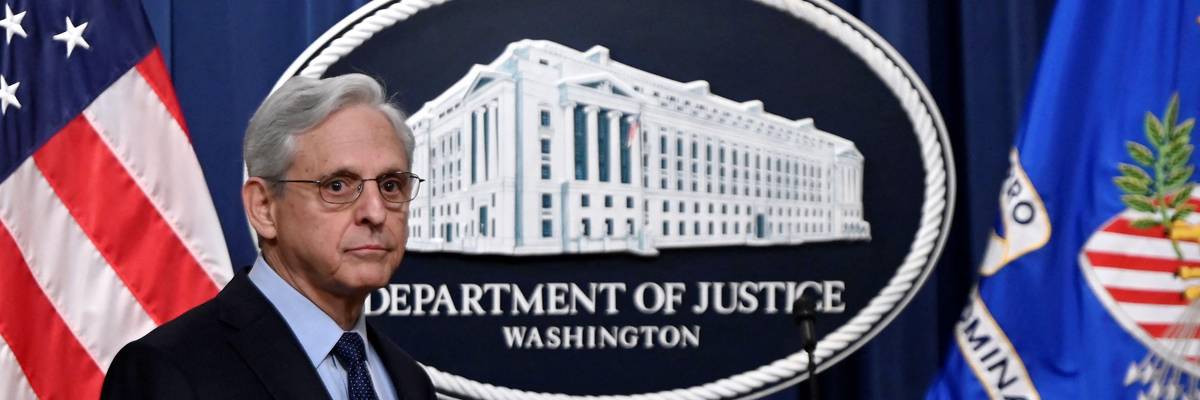
U.S. Attorney General Merrick Garland arrives at a press conference on January 12, 2023.
"The decision to criminally charge a business in contrast to an individual for engaging in white-collar criminal activity is exceedingly rare."
Despite the Biden administration's pledge to crack down on corporate crime, a new analysis of Justice Department data shows that business prosecutions fell to a record low in fiscal year 2022 even as there appeared to be no shortage of wrongdoing—from healthcare fraud to large-scale price gouging.
The Transactional Records Access Clearinghouse (TRAC), a nonprofit data-gathering outfit, noted Thursday that out of the more than 4,000 federal white-collar prosecutions last year, "under 1% or only 31 of these defendants were businesses or corporate entities."
"This is the lowest number of criminal prosecutions of business entities for white-collar offenses since federal prosecutor tracking began for these in FY 2004," TRAC observed. "The decision to criminally charge a business in contrast to an individual for engaging in white-collar criminal activity is exceedingly rare (just 1%)."
TRAC also found that "the prosecution of white-collar offenders in FY 2022 reached a new all-time low since tracking began during the Reagan administration."
While vowing to break with its predecessor and take a tougher stand against corporate crime, the Biden Justice Department has made explicit that its "top priority for corporate criminal enforcement" is "going after individuals" rather than institutions, pointing to the high-profile convictions of Theranos founder Elizabeth Holmes and former JPMorgan traders.
Corporate prosecutions have been plummeting for years under both Republican and Democratic presidents, a trend that experts have attributed in part to the rise of deferred and non-prosecution agreements.
The consumer advocacy group Public Citizen pointed out in a report last year that "over the past two decades, such agreements have become the DOJ's routine method for resolving criminal cases against big corporations."
"Because of the simultaneous trends of declining corporate prosecutions and the DOJ's increased reliance on corporate leniency agreements, the agreements made up over a quarter (26%) of the cases in 2021," the group added. "While this is a decline from 2020's record-high percentage of corporate leniency agreements (32%), it remains extraordinarily high, especially in comparison with two decades ago, when prosecutors entered leniency agreements with corporate criminals only about 1% of the time."
In a separate report published in 2021, Public Citizen identified a number of major U.S. corporations bound by DOJ leniency deals that allowed them to escape criminal prosecution in exchange for reforming their practices. Corporations have often violated such agreements—and faced no consequences for doing so.
Among the corporations currently under DOJ leniency deals that are set to expire this year, according to Public Citizen's report, are Chipotle, Wells Fargo, JPMorgan Chase, Goldman Sachs, and Ticketmaster, the last of which is currently facing a Justice Department antitrust probe.
In a September speech, Deputy Attorney General Lisa Monaco acknowledged the sharp decline in corporate criminal prosecutions in recent years and said the DOJ needs to "do more and move faster."
But critics said the policy changes that Monaco outlined during her address—from incentives for companies to self-report misconduct to a shift away from successive non-prosecution agreements with the same company—are woefully inadequate in the face of widespread corporate abuses.
“Corporate crime—in the form of illegal pollution, fraud, reckless endangerment of consumers and workers, cartels, systematic rip-offs, and more—remains rampant, but corporate criminal prosecutions are at historically low levels," Public Citizen president Robert Weissman said at the time. "It's time to end leniency deals for corporate wrongdoers. Corporations are the ultimate rational actors: If they know the costs of breaking the law are worth it for expected monetary gain, then they will break the law—irrespective of the societal damage."
Dear Common Dreams reader, It’s been nearly 30 years since I co-founded Common Dreams with my late wife, Lina Newhouser. We had the radical notion that journalism should serve the public good, not corporate profits. It was clear to us from the outset what it would take to build such a project. No paid advertisements. No corporate sponsors. No millionaire publisher telling us what to think or do. Many people said we wouldn't last a year, but we proved those doubters wrong. Together with a tremendous team of journalists and dedicated staff, we built an independent media outlet free from the constraints of profits and corporate control. Our mission has always been simple: To inform. To inspire. To ignite change for the common good. Building Common Dreams was not easy. Our survival was never guaranteed. When you take on the most powerful forces—Wall Street greed, fossil fuel industry destruction, Big Tech lobbyists, and uber-rich oligarchs who have spent billions upon billions rigging the economy and democracy in their favor—the only bulwark you have is supporters who believe in your work. But here’s the urgent message from me today. It's never been this bad out there. And it's never been this hard to keep us going. At the very moment Common Dreams is most needed, the threats we face are intensifying. We need your support now more than ever. We don't accept corporate advertising and never will. We don't have a paywall because we don't think people should be blocked from critical news based on their ability to pay. Everything we do is funded by the donations of readers like you. When everyone does the little they can afford, we are strong. But if that support retreats or dries up, so do we. Will you donate now to make sure Common Dreams not only survives but thrives? —Craig Brown, Co-founder |
Despite the Biden administration's pledge to crack down on corporate crime, a new analysis of Justice Department data shows that business prosecutions fell to a record low in fiscal year 2022 even as there appeared to be no shortage of wrongdoing—from healthcare fraud to large-scale price gouging.
The Transactional Records Access Clearinghouse (TRAC), a nonprofit data-gathering outfit, noted Thursday that out of the more than 4,000 federal white-collar prosecutions last year, "under 1% or only 31 of these defendants were businesses or corporate entities."
"This is the lowest number of criminal prosecutions of business entities for white-collar offenses since federal prosecutor tracking began for these in FY 2004," TRAC observed. "The decision to criminally charge a business in contrast to an individual for engaging in white-collar criminal activity is exceedingly rare (just 1%)."
TRAC also found that "the prosecution of white-collar offenders in FY 2022 reached a new all-time low since tracking began during the Reagan administration."
While vowing to break with its predecessor and take a tougher stand against corporate crime, the Biden Justice Department has made explicit that its "top priority for corporate criminal enforcement" is "going after individuals" rather than institutions, pointing to the high-profile convictions of Theranos founder Elizabeth Holmes and former JPMorgan traders.
Corporate prosecutions have been plummeting for years under both Republican and Democratic presidents, a trend that experts have attributed in part to the rise of deferred and non-prosecution agreements.
The consumer advocacy group Public Citizen pointed out in a report last year that "over the past two decades, such agreements have become the DOJ's routine method for resolving criminal cases against big corporations."
"Because of the simultaneous trends of declining corporate prosecutions and the DOJ's increased reliance on corporate leniency agreements, the agreements made up over a quarter (26%) of the cases in 2021," the group added. "While this is a decline from 2020's record-high percentage of corporate leniency agreements (32%), it remains extraordinarily high, especially in comparison with two decades ago, when prosecutors entered leniency agreements with corporate criminals only about 1% of the time."
In a separate report published in 2021, Public Citizen identified a number of major U.S. corporations bound by DOJ leniency deals that allowed them to escape criminal prosecution in exchange for reforming their practices. Corporations have often violated such agreements—and faced no consequences for doing so.
Among the corporations currently under DOJ leniency deals that are set to expire this year, according to Public Citizen's report, are Chipotle, Wells Fargo, JPMorgan Chase, Goldman Sachs, and Ticketmaster, the last of which is currently facing a Justice Department antitrust probe.
In a September speech, Deputy Attorney General Lisa Monaco acknowledged the sharp decline in corporate criminal prosecutions in recent years and said the DOJ needs to "do more and move faster."
But critics said the policy changes that Monaco outlined during her address—from incentives for companies to self-report misconduct to a shift away from successive non-prosecution agreements with the same company—are woefully inadequate in the face of widespread corporate abuses.
“Corporate crime—in the form of illegal pollution, fraud, reckless endangerment of consumers and workers, cartels, systematic rip-offs, and more—remains rampant, but corporate criminal prosecutions are at historically low levels," Public Citizen president Robert Weissman said at the time. "It's time to end leniency deals for corporate wrongdoers. Corporations are the ultimate rational actors: If they know the costs of breaking the law are worth it for expected monetary gain, then they will break the law—irrespective of the societal damage."
Despite the Biden administration's pledge to crack down on corporate crime, a new analysis of Justice Department data shows that business prosecutions fell to a record low in fiscal year 2022 even as there appeared to be no shortage of wrongdoing—from healthcare fraud to large-scale price gouging.
The Transactional Records Access Clearinghouse (TRAC), a nonprofit data-gathering outfit, noted Thursday that out of the more than 4,000 federal white-collar prosecutions last year, "under 1% or only 31 of these defendants were businesses or corporate entities."
"This is the lowest number of criminal prosecutions of business entities for white-collar offenses since federal prosecutor tracking began for these in FY 2004," TRAC observed. "The decision to criminally charge a business in contrast to an individual for engaging in white-collar criminal activity is exceedingly rare (just 1%)."
TRAC also found that "the prosecution of white-collar offenders in FY 2022 reached a new all-time low since tracking began during the Reagan administration."
While vowing to break with its predecessor and take a tougher stand against corporate crime, the Biden Justice Department has made explicit that its "top priority for corporate criminal enforcement" is "going after individuals" rather than institutions, pointing to the high-profile convictions of Theranos founder Elizabeth Holmes and former JPMorgan traders.
Corporate prosecutions have been plummeting for years under both Republican and Democratic presidents, a trend that experts have attributed in part to the rise of deferred and non-prosecution agreements.
The consumer advocacy group Public Citizen pointed out in a report last year that "over the past two decades, such agreements have become the DOJ's routine method for resolving criminal cases against big corporations."
"Because of the simultaneous trends of declining corporate prosecutions and the DOJ's increased reliance on corporate leniency agreements, the agreements made up over a quarter (26%) of the cases in 2021," the group added. "While this is a decline from 2020's record-high percentage of corporate leniency agreements (32%), it remains extraordinarily high, especially in comparison with two decades ago, when prosecutors entered leniency agreements with corporate criminals only about 1% of the time."
In a separate report published in 2021, Public Citizen identified a number of major U.S. corporations bound by DOJ leniency deals that allowed them to escape criminal prosecution in exchange for reforming their practices. Corporations have often violated such agreements—and faced no consequences for doing so.
Among the corporations currently under DOJ leniency deals that are set to expire this year, according to Public Citizen's report, are Chipotle, Wells Fargo, JPMorgan Chase, Goldman Sachs, and Ticketmaster, the last of which is currently facing a Justice Department antitrust probe.
In a September speech, Deputy Attorney General Lisa Monaco acknowledged the sharp decline in corporate criminal prosecutions in recent years and said the DOJ needs to "do more and move faster."
But critics said the policy changes that Monaco outlined during her address—from incentives for companies to self-report misconduct to a shift away from successive non-prosecution agreements with the same company—are woefully inadequate in the face of widespread corporate abuses.
“Corporate crime—in the form of illegal pollution, fraud, reckless endangerment of consumers and workers, cartels, systematic rip-offs, and more—remains rampant, but corporate criminal prosecutions are at historically low levels," Public Citizen president Robert Weissman said at the time. "It's time to end leniency deals for corporate wrongdoers. Corporations are the ultimate rational actors: If they know the costs of breaking the law are worth it for expected monetary gain, then they will break the law—irrespective of the societal damage."