SUBSCRIBE TO OUR FREE NEWSLETTER
Daily news & progressive opinion—funded by the people, not the corporations—delivered straight to your inbox.
5
#000000
#FFFFFF
To donate by check, phone, or other method, see our More Ways to Give page.
Daily news & progressive opinion—funded by the people, not the corporations—delivered straight to your inbox.
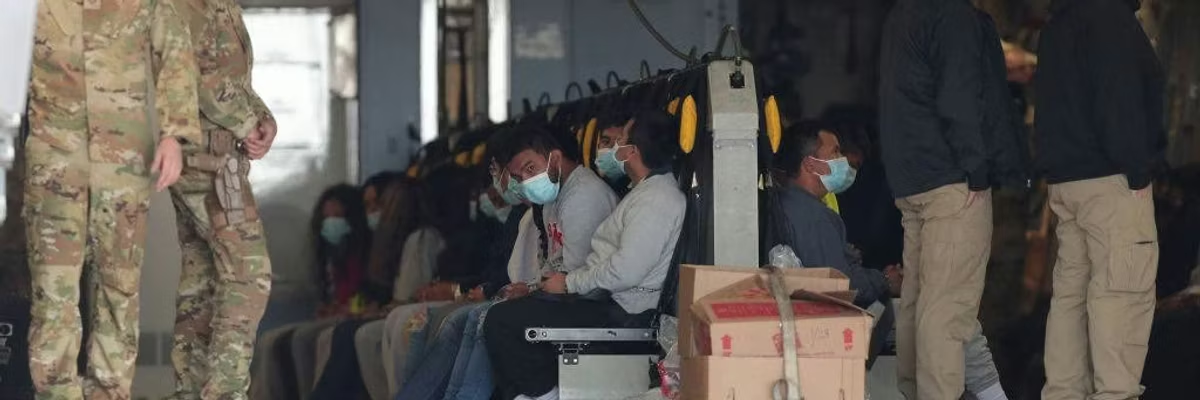
80 migrants from Guatemala are deported to their country with a United States military plane at the Fort Bliss facility in El Paso, Texas on January 30, 2025.
"The US government should shut it down, conduct independent investigations into all abuses and deaths in custody, and put an end to mass deportations and mandatory immigration detention."
The ACLU and Human Rights Watch on Wednesday released a joint report documenting abusive treatment of immigrants at the largest immigration detention facility in the US.
The groups' report focuses on Camp East Montana, located on Fort Bliss in El Paso, Texas, which can hold up to 5,000 detainees.
In total, the groups interviewed 71 detainees at the facility, along with four family members of detainees, and five legal service providers.
According to the report, people detained at Camp East Montana have suffered from "conditions of confinement that amounted to enforced disappearance, cruel, degrading and inhuman treatment, excessive use of force including one extrajudicial killing, life-threatening medical neglect, barriers to legal representation, and coercive third-country removals."
Detainees said that the camp's unsanitary conditions—which the report says include "overcrowded housing areas, bathrooms covered in feces and urine, and living quarters flooded with dirty water and dust"—have led them to develop infections and other health complications for which they have been regularly refused treatment.
One woman who spoke with investigators said that she is now at risk of permanent blindness after guards and nurses denied her request for emergency medical care, the report notes.
A Honduran immigrant identified as "Ismael M," who was detained at the camp for over five months, told investigators that conditions there were so terrible that he often had suicidal thoughts.
"I’ve gone a month without seeing the sun," said Ismael. "I am forced to live in filth... I have been taken from my family, from my home, and I know that no matter how long they keep me here, they will end up deporting me. I'm so afraid I will get killed once I am sent back. That is why I left."
Detainees also described regular beatings by guards at the facility.
A Cuban detainee identified as "Ricardo H" told investigators that he was beaten by guards simply for demanding to be fed.
"I didn’t get breakfast that day," Ricardo explained. "Our lunch is usually distributed at noon. By 1:30 pm the guards had not handed our meals out. Our meals were ready, the guards placed the food cart in front of us and were refusing to serve it. I protested verbally, I told them I was hungry and that I was human. I needed food. They ignored me so I kicked the metal door out of desperation."
This led to several officers opening his cell and beating him, he said.
"A lieutenant grabbed me by the shirt and slammed me to the ground," he said. "Six officers restrained me with my face down. I still have severe pain in my ear and in my right collarbone. They also stomped on my neck."
A Venezuelan detainee identified as "Armando G" said that he was beaten by guards after he went on hunger strike to protest food that he said was "not nourishing and was making us sick."
"I was tackled to the ground by seven guards," said Armando. "One of them was choking me, another pulled my hair and slammed my head on the ground. They were dragging me on the ground like a rag doll."
Angélica César, Aryeh Neier Fellow at Human Rights Watch and the ACLU, said the groups' report shows the camp is "a human rights disaster."
"The US government should shut it down," said César, "conduct independent investigations into all abuses and deaths in custody, and put an end to mass deportations and mandatory immigration detention."
Dear Common Dreams reader, It’s been nearly 30 years since I co-founded Common Dreams with my late wife, Lina Newhouser. We had the radical notion that journalism should serve the public good, not corporate profits. It was clear to us from the outset what it would take to build such a project. No paid advertisements. No corporate sponsors. No millionaire publisher telling us what to think or do. Many people said we wouldn't last a year, but we proved those doubters wrong. Together with a tremendous team of journalists and dedicated staff, we built an independent media outlet free from the constraints of profits and corporate control. Our mission has always been simple: To inform. To inspire. To ignite change for the common good. Building Common Dreams was not easy. Our survival was never guaranteed. When you take on the most powerful forces—Wall Street greed, fossil fuel industry destruction, Big Tech lobbyists, and uber-rich oligarchs who have spent billions upon billions rigging the economy and democracy in their favor—the only bulwark you have is supporters who believe in your work. But here’s the urgent message from me today. It's never been this bad out there. And it's never been this hard to keep us going. At the very moment Common Dreams is most needed, the threats we face are intensifying. We need your support now more than ever. We don't accept corporate advertising and never will. We don't have a paywall because we don't think people should be blocked from critical news based on their ability to pay. Everything we do is funded by the donations of readers like you. When everyone does the little they can afford, we are strong. But if that support retreats or dries up, so do we. Will you donate now to make sure Common Dreams not only survives but thrives? —Craig Brown, Co-founder |
The ACLU and Human Rights Watch on Wednesday released a joint report documenting abusive treatment of immigrants at the largest immigration detention facility in the US.
The groups' report focuses on Camp East Montana, located on Fort Bliss in El Paso, Texas, which can hold up to 5,000 detainees.
In total, the groups interviewed 71 detainees at the facility, along with four family members of detainees, and five legal service providers.
According to the report, people detained at Camp East Montana have suffered from "conditions of confinement that amounted to enforced disappearance, cruel, degrading and inhuman treatment, excessive use of force including one extrajudicial killing, life-threatening medical neglect, barriers to legal representation, and coercive third-country removals."
Detainees said that the camp's unsanitary conditions—which the report says include "overcrowded housing areas, bathrooms covered in feces and urine, and living quarters flooded with dirty water and dust"—have led them to develop infections and other health complications for which they have been regularly refused treatment.
One woman who spoke with investigators said that she is now at risk of permanent blindness after guards and nurses denied her request for emergency medical care, the report notes.
A Honduran immigrant identified as "Ismael M," who was detained at the camp for over five months, told investigators that conditions there were so terrible that he often had suicidal thoughts.
"I’ve gone a month without seeing the sun," said Ismael. "I am forced to live in filth... I have been taken from my family, from my home, and I know that no matter how long they keep me here, they will end up deporting me. I'm so afraid I will get killed once I am sent back. That is why I left."
Detainees also described regular beatings by guards at the facility.
A Cuban detainee identified as "Ricardo H" told investigators that he was beaten by guards simply for demanding to be fed.
"I didn’t get breakfast that day," Ricardo explained. "Our lunch is usually distributed at noon. By 1:30 pm the guards had not handed our meals out. Our meals were ready, the guards placed the food cart in front of us and were refusing to serve it. I protested verbally, I told them I was hungry and that I was human. I needed food. They ignored me so I kicked the metal door out of desperation."
This led to several officers opening his cell and beating him, he said.
"A lieutenant grabbed me by the shirt and slammed me to the ground," he said. "Six officers restrained me with my face down. I still have severe pain in my ear and in my right collarbone. They also stomped on my neck."
A Venezuelan detainee identified as "Armando G" said that he was beaten by guards after he went on hunger strike to protest food that he said was "not nourishing and was making us sick."
"I was tackled to the ground by seven guards," said Armando. "One of them was choking me, another pulled my hair and slammed my head on the ground. They were dragging me on the ground like a rag doll."
Angélica César, Aryeh Neier Fellow at Human Rights Watch and the ACLU, said the groups' report shows the camp is "a human rights disaster."
"The US government should shut it down," said César, "conduct independent investigations into all abuses and deaths in custody, and put an end to mass deportations and mandatory immigration detention."
The ACLU and Human Rights Watch on Wednesday released a joint report documenting abusive treatment of immigrants at the largest immigration detention facility in the US.
The groups' report focuses on Camp East Montana, located on Fort Bliss in El Paso, Texas, which can hold up to 5,000 detainees.
In total, the groups interviewed 71 detainees at the facility, along with four family members of detainees, and five legal service providers.
According to the report, people detained at Camp East Montana have suffered from "conditions of confinement that amounted to enforced disappearance, cruel, degrading and inhuman treatment, excessive use of force including one extrajudicial killing, life-threatening medical neglect, barriers to legal representation, and coercive third-country removals."
Detainees said that the camp's unsanitary conditions—which the report says include "overcrowded housing areas, bathrooms covered in feces and urine, and living quarters flooded with dirty water and dust"—have led them to develop infections and other health complications for which they have been regularly refused treatment.
One woman who spoke with investigators said that she is now at risk of permanent blindness after guards and nurses denied her request for emergency medical care, the report notes.
A Honduran immigrant identified as "Ismael M," who was detained at the camp for over five months, told investigators that conditions there were so terrible that he often had suicidal thoughts.
"I’ve gone a month without seeing the sun," said Ismael. "I am forced to live in filth... I have been taken from my family, from my home, and I know that no matter how long they keep me here, they will end up deporting me. I'm so afraid I will get killed once I am sent back. That is why I left."
Detainees also described regular beatings by guards at the facility.
A Cuban detainee identified as "Ricardo H" told investigators that he was beaten by guards simply for demanding to be fed.
"I didn’t get breakfast that day," Ricardo explained. "Our lunch is usually distributed at noon. By 1:30 pm the guards had not handed our meals out. Our meals were ready, the guards placed the food cart in front of us and were refusing to serve it. I protested verbally, I told them I was hungry and that I was human. I needed food. They ignored me so I kicked the metal door out of desperation."
This led to several officers opening his cell and beating him, he said.
"A lieutenant grabbed me by the shirt and slammed me to the ground," he said. "Six officers restrained me with my face down. I still have severe pain in my ear and in my right collarbone. They also stomped on my neck."
A Venezuelan detainee identified as "Armando G" said that he was beaten by guards after he went on hunger strike to protest food that he said was "not nourishing and was making us sick."
"I was tackled to the ground by seven guards," said Armando. "One of them was choking me, another pulled my hair and slammed my head on the ground. They were dragging me on the ground like a rag doll."
Angélica César, Aryeh Neier Fellow at Human Rights Watch and the ACLU, said the groups' report shows the camp is "a human rights disaster."
"The US government should shut it down," said César, "conduct independent investigations into all abuses and deaths in custody, and put an end to mass deportations and mandatory immigration detention."