

SUBSCRIBE TO OUR FREE NEWSLETTER
Daily news & progressive opinion—funded by the people, not the corporations—delivered straight to your inbox.
5
#000000
#FFFFFF
To donate by check, phone, or other method, see our More Ways to Give page.
Daily news & progressive opinion—funded by the people, not the corporations—delivered straight to your inbox.
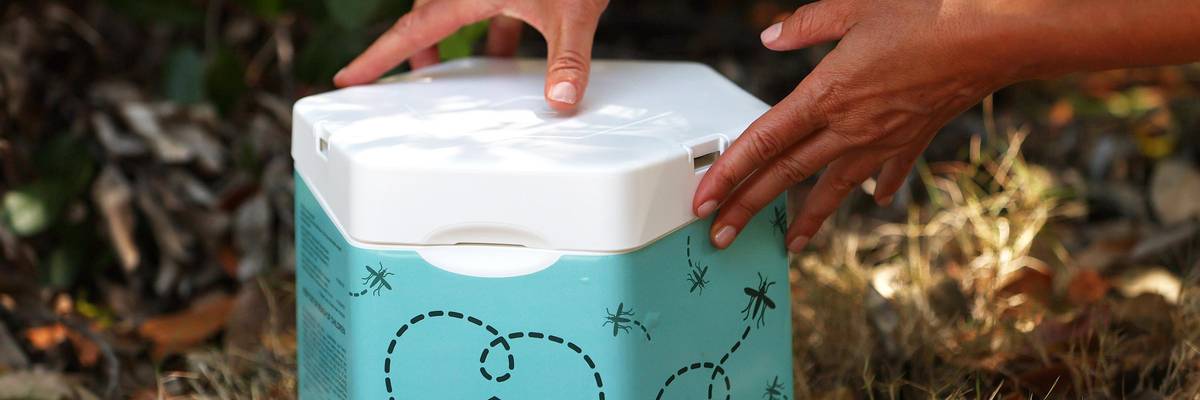
An employee of biotech firm Oxitec shows off a box from where genetically engineered Aedes aegypti mosquitoes are being released on June 9, 2021 in Marathon, Florida. (Photo: Joe Raedle/Getty Images)
As environmental advocates call on regulators to "lead with sound science" regarding the proposed release of thousands of genetically engineered mosquitoes on a weekly basis in central California, eight Democratic lawmakers on Thursday demanded that officials reject the proposal without an in-depth review of its potential impacts.
Biotech company Oxitec aims to make California the second state--after Florida--to have an experimental release of its genetically engineered (GE) mosquitoes, and has applied for a permit to conduct research with its product at 48 test sites in Tulare County. The experimental release would target the mosquito species Aedes aegypti and aim to reduce its population in Tulare County.
"Significant scientific research is still needed to understand the potential public health and environmental concerns associated with the release of this novel insect prior to any approval."
According to the California Department of Pesticide Regulation (DPR), which can approve or deny the research authorization, between 5,000 and 30,000 GE mosquitoes would be released on a weekly basis at each site and the permit would be effective through April 30, 2024.
While Oxitec has previously highlighted the U.S. Environmental Protection Agency's conclusion that such releases don't adversely affect humans or the environment, the California lawmakers said in a letter to the DPR that a review of the proposal by the EPA is not sufficient.
"Significant scientific research is still needed to understand the potential public health and environmental concerns associated with the release of this novel insect prior to any approval," wrote the legislators. "It is our understanding that while the U.S. EPA did approve the GE mosquitoes to be released in California, the agency did not conduct a thorough scientific review of the impacts of this insect on public health or the environment. California must require more and better information prior to any approval."
The lawmakers suggested the DPR conduct a public review of data from Florida regarding the state's experimental release of GE mosquitoes, hold public meetings where community members can express concerns and hear from independent experts, and establish an independent scientific advisory panel to review Oxitec's proposal.
"Before we permit the use of genetically engineered mosquitoes, the California Department of Pesticide Regulation should provide for clear rules and a review of public health and environmental risks of releasing the insects in a public process," said Assemblymember Laura Friedman, who represents Glendale. "There are too many unknown factors when it comes to how it could affect our biodiversity in the long run, including how this might influence populations of birds, bats, fish species, and other insects."
Rebecca Spector, West Coast director at the Center for Food Safety, applauded the legislators for "taking action to protect public health and the environment from the unknown impacts of GE mosquitoes."
"They rightfully are asking DPR to conduct a more comprehensive review and public meetings for residents that will be impacted, before approving this permit," said Spector.
Angel Garcia, a Tulare County resident who is co-director of Californians for Pesticide Reform, called the push to conduct the experiment "an environmental justice issue."
"Tulare County residents are already impacted by some of the worst pollution problems, and climate change has already exacerbated environmental destruction, economic and social inequity," said Garcia. "People have not consented to being part of this open-air biopesticide experiment."
Dear Common Dreams reader, It’s been nearly 30 years since I co-founded Common Dreams with my late wife, Lina Newhouser. We had the radical notion that journalism should serve the public good, not corporate profits. It was clear to us from the outset what it would take to build such a project. No paid advertisements. No corporate sponsors. No millionaire publisher telling us what to think or do. Many people said we wouldn't last a year, but we proved those doubters wrong. Together with a tremendous team of journalists and dedicated staff, we built an independent media outlet free from the constraints of profits and corporate control. Our mission has always been simple: To inform. To inspire. To ignite change for the common good. Building Common Dreams was not easy. Our survival was never guaranteed. When you take on the most powerful forces—Wall Street greed, fossil fuel industry destruction, Big Tech lobbyists, and uber-rich oligarchs who have spent billions upon billions rigging the economy and democracy in their favor—the only bulwark you have is supporters who believe in your work. But here’s the urgent message from me today. It's never been this bad out there. And it's never been this hard to keep us going. At the very moment Common Dreams is most needed, the threats we face are intensifying. We need your support now more than ever. We don't accept corporate advertising and never will. We don't have a paywall because we don't think people should be blocked from critical news based on their ability to pay. Everything we do is funded by the donations of readers like you. When everyone does the little they can afford, we are strong. But if that support retreats or dries up, so do we. Will you donate now to make sure Common Dreams not only survives but thrives? —Craig Brown, Co-founder |
As environmental advocates call on regulators to "lead with sound science" regarding the proposed release of thousands of genetically engineered mosquitoes on a weekly basis in central California, eight Democratic lawmakers on Thursday demanded that officials reject the proposal without an in-depth review of its potential impacts.
Biotech company Oxitec aims to make California the second state--after Florida--to have an experimental release of its genetically engineered (GE) mosquitoes, and has applied for a permit to conduct research with its product at 48 test sites in Tulare County. The experimental release would target the mosquito species Aedes aegypti and aim to reduce its population in Tulare County.
"Significant scientific research is still needed to understand the potential public health and environmental concerns associated with the release of this novel insect prior to any approval."
According to the California Department of Pesticide Regulation (DPR), which can approve or deny the research authorization, between 5,000 and 30,000 GE mosquitoes would be released on a weekly basis at each site and the permit would be effective through April 30, 2024.
While Oxitec has previously highlighted the U.S. Environmental Protection Agency's conclusion that such releases don't adversely affect humans or the environment, the California lawmakers said in a letter to the DPR that a review of the proposal by the EPA is not sufficient.
"Significant scientific research is still needed to understand the potential public health and environmental concerns associated with the release of this novel insect prior to any approval," wrote the legislators. "It is our understanding that while the U.S. EPA did approve the GE mosquitoes to be released in California, the agency did not conduct a thorough scientific review of the impacts of this insect on public health or the environment. California must require more and better information prior to any approval."
The lawmakers suggested the DPR conduct a public review of data from Florida regarding the state's experimental release of GE mosquitoes, hold public meetings where community members can express concerns and hear from independent experts, and establish an independent scientific advisory panel to review Oxitec's proposal.
"Before we permit the use of genetically engineered mosquitoes, the California Department of Pesticide Regulation should provide for clear rules and a review of public health and environmental risks of releasing the insects in a public process," said Assemblymember Laura Friedman, who represents Glendale. "There are too many unknown factors when it comes to how it could affect our biodiversity in the long run, including how this might influence populations of birds, bats, fish species, and other insects."
Rebecca Spector, West Coast director at the Center for Food Safety, applauded the legislators for "taking action to protect public health and the environment from the unknown impacts of GE mosquitoes."
"They rightfully are asking DPR to conduct a more comprehensive review and public meetings for residents that will be impacted, before approving this permit," said Spector.
Angel Garcia, a Tulare County resident who is co-director of Californians for Pesticide Reform, called the push to conduct the experiment "an environmental justice issue."
"Tulare County residents are already impacted by some of the worst pollution problems, and climate change has already exacerbated environmental destruction, economic and social inequity," said Garcia. "People have not consented to being part of this open-air biopesticide experiment."
As environmental advocates call on regulators to "lead with sound science" regarding the proposed release of thousands of genetically engineered mosquitoes on a weekly basis in central California, eight Democratic lawmakers on Thursday demanded that officials reject the proposal without an in-depth review of its potential impacts.
Biotech company Oxitec aims to make California the second state--after Florida--to have an experimental release of its genetically engineered (GE) mosquitoes, and has applied for a permit to conduct research with its product at 48 test sites in Tulare County. The experimental release would target the mosquito species Aedes aegypti and aim to reduce its population in Tulare County.
"Significant scientific research is still needed to understand the potential public health and environmental concerns associated with the release of this novel insect prior to any approval."
According to the California Department of Pesticide Regulation (DPR), which can approve or deny the research authorization, between 5,000 and 30,000 GE mosquitoes would be released on a weekly basis at each site and the permit would be effective through April 30, 2024.
While Oxitec has previously highlighted the U.S. Environmental Protection Agency's conclusion that such releases don't adversely affect humans or the environment, the California lawmakers said in a letter to the DPR that a review of the proposal by the EPA is not sufficient.
"Significant scientific research is still needed to understand the potential public health and environmental concerns associated with the release of this novel insect prior to any approval," wrote the legislators. "It is our understanding that while the U.S. EPA did approve the GE mosquitoes to be released in California, the agency did not conduct a thorough scientific review of the impacts of this insect on public health or the environment. California must require more and better information prior to any approval."
The lawmakers suggested the DPR conduct a public review of data from Florida regarding the state's experimental release of GE mosquitoes, hold public meetings where community members can express concerns and hear from independent experts, and establish an independent scientific advisory panel to review Oxitec's proposal.
"Before we permit the use of genetically engineered mosquitoes, the California Department of Pesticide Regulation should provide for clear rules and a review of public health and environmental risks of releasing the insects in a public process," said Assemblymember Laura Friedman, who represents Glendale. "There are too many unknown factors when it comes to how it could affect our biodiversity in the long run, including how this might influence populations of birds, bats, fish species, and other insects."
Rebecca Spector, West Coast director at the Center for Food Safety, applauded the legislators for "taking action to protect public health and the environment from the unknown impacts of GE mosquitoes."
"They rightfully are asking DPR to conduct a more comprehensive review and public meetings for residents that will be impacted, before approving this permit," said Spector.
Angel Garcia, a Tulare County resident who is co-director of Californians for Pesticide Reform, called the push to conduct the experiment "an environmental justice issue."
"Tulare County residents are already impacted by some of the worst pollution problems, and climate change has already exacerbated environmental destruction, economic and social inequity," said Garcia. "People have not consented to being part of this open-air biopesticide experiment."

