SUBSCRIBE TO OUR FREE NEWSLETTER
Daily news & progressive opinion—funded by the people, not the corporations—delivered straight to your inbox.
5
#000000
#FFFFFF
To donate by check, phone, or other method, see our More Ways to Give page.
Daily news & progressive opinion—funded by the people, not the corporations—delivered straight to your inbox.
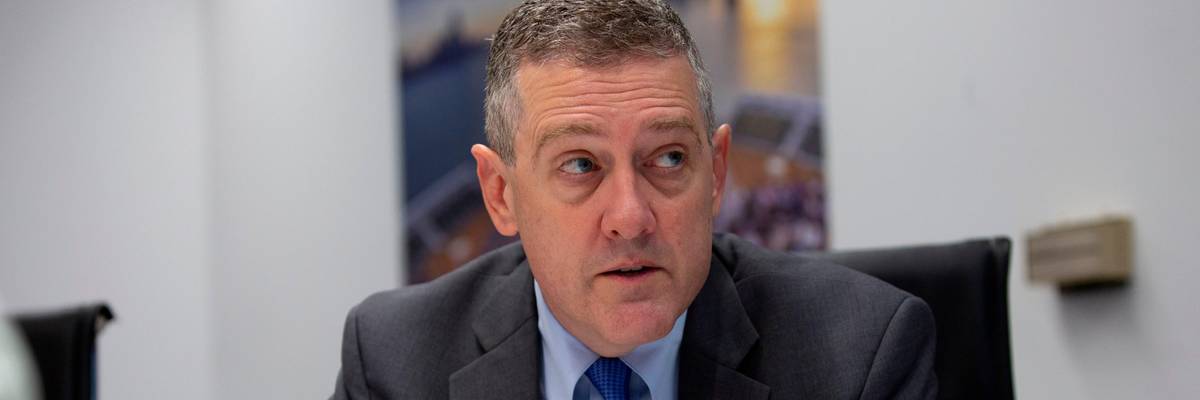
James Bullard, president of the Federal Reserve Bank of St. Louis, speaks during an interview in Washington, D.C, on August 6, 2019. (Photo: Alastair Pike/AFP via Getty Images)
James Bullard, president of the Federal Reserve Bank of St. Louis, came under fire Thursday after The New York Times revealed that he "spoke last Friday at an off-the-record, invitation-only forum held by Citigroup, and open to clients."
"Fed officials are making a mockery of ethics--and Chair Powell is failing to overhaul a culture of corruption."
As Times reporter Jeanna Smialek summarized in a series of tweets about her reporting: "Against Fed rules? Unclear, though we go through them in the story. Bad look? Definitely, a range of people said."
"I wanted to get a sense of whether this kind of private off-record event with bank clients happens a lot and I just don't hear about it, so I called around," Smialek explained. "The overwhelming answer: No."
Narayana Kocherlakota, a former president of the Federal Reserve Bank of Minneapolis, told her that "this is not normal" and with Citi's clients involved, "the optics are terrible."
Brookings Institution senior fellow Norm Eisen similarly said that at first glance, "it's not an ethics violation, but it's not a great look."
The report explains that while the Fed's rules don't bar Bullard from attending such events, comments shared behind closed doors should align with previous public statements, and central bankers should "not provide any profit-making person or organization with a prestige advantage over its competitors."
Jeff Hauser of the watchdog group the Revolving Door Project told Smialek that "Citi is flexing here," showing clients that it can provide "privileged access" to people like Bullard.
"There are few better sources of information on the planet than a member of the Federal Open Market Committee," he said. "Their every utterance is treated as potentially market moving."
In a tweet about the reporting, Hauser took aim at Fed Chair Jerome Powell, saying, "That ongoing indications of ethical lapses continue apace underscores [the project's] view that Powell cannot reform the Federal Reserve."
U.S. Sen. Elizabeth Warren (D-Mass.)--who chairs the Senate Committee on Banking, Housing, and Urban Affairs' economic policy panel and has been a high-profile critic of the Fed's recent interest rate hikes--also called out Powell on Thursday and highlighted that the Bullard revelation follows a recent scandal involving another central banker.
"In the midst of a stock trading scandal, now we learn that Bullard was secretly spilling his views on the economy to [Citi] and their clients," Warren said. "Fed officials are making a mockery of ethics--and Chair Powell is failing to overhaul a culture of corruption."
According to Smialek:
The Federal Reserve Bank of St. Louis called the discussion informal and said Mr. Bullard had participated in the event in the past. It also noted that he had given an interview to Reuters earlier in the day with remarks similar to those he made at the Citi event, and appeared at other forums in Washington on Friday and Saturday. As a result, they said, the public had access to his views.
But a person who attended the speech, who spoke on the condition of anonymity because the forum was meant to be off the record, said Mr. Bullard had also suggested during his comments that based on the historical record, the market gyrations in response to the Fed's moves had been less pronounced than might have been expected given how much rates have increased. No such comments were included in the Reuters article.
After the Times published its report, the St. Louis Fed on Thursday released a lengthy statement about the controversy and an unofficial transcript of Bullard's remarks from the event--which shows he spoke about the market reaction.
"Jim Bullard works hard to maintain the spirit of transparency and active communications to make his views widely known. He shared his views with media before and after the event and covered similar ground in other recent public remarks," the bank said, adding that "we are listening to the commentary around this and will think differently about this in the future."
Dear Common Dreams reader, It’s been nearly 30 years since I co-founded Common Dreams with my late wife, Lina Newhouser. We had the radical notion that journalism should serve the public good, not corporate profits. It was clear to us from the outset what it would take to build such a project. No paid advertisements. No corporate sponsors. No millionaire publisher telling us what to think or do. Many people said we wouldn't last a year, but we proved those doubters wrong. Together with a tremendous team of journalists and dedicated staff, we built an independent media outlet free from the constraints of profits and corporate control. Our mission has always been simple: To inform. To inspire. To ignite change for the common good. Building Common Dreams was not easy. Our survival was never guaranteed. When you take on the most powerful forces—Wall Street greed, fossil fuel industry destruction, Big Tech lobbyists, and uber-rich oligarchs who have spent billions upon billions rigging the economy and democracy in their favor—the only bulwark you have is supporters who believe in your work. But here’s the urgent message from me today. It's never been this bad out there. And it's never been this hard to keep us going. At the very moment Common Dreams is most needed, the threats we face are intensifying. We need your support now more than ever. We don't accept corporate advertising and never will. We don't have a paywall because we don't think people should be blocked from critical news based on their ability to pay. Everything we do is funded by the donations of readers like you. When everyone does the little they can afford, we are strong. But if that support retreats or dries up, so do we. Will you donate now to make sure Common Dreams not only survives but thrives? —Craig Brown, Co-founder |
James Bullard, president of the Federal Reserve Bank of St. Louis, came under fire Thursday after The New York Times revealed that he "spoke last Friday at an off-the-record, invitation-only forum held by Citigroup, and open to clients."
"Fed officials are making a mockery of ethics--and Chair Powell is failing to overhaul a culture of corruption."
As Times reporter Jeanna Smialek summarized in a series of tweets about her reporting: "Against Fed rules? Unclear, though we go through them in the story. Bad look? Definitely, a range of people said."
"I wanted to get a sense of whether this kind of private off-record event with bank clients happens a lot and I just don't hear about it, so I called around," Smialek explained. "The overwhelming answer: No."
Narayana Kocherlakota, a former president of the Federal Reserve Bank of Minneapolis, told her that "this is not normal" and with Citi's clients involved, "the optics are terrible."
Brookings Institution senior fellow Norm Eisen similarly said that at first glance, "it's not an ethics violation, but it's not a great look."
The report explains that while the Fed's rules don't bar Bullard from attending such events, comments shared behind closed doors should align with previous public statements, and central bankers should "not provide any profit-making person or organization with a prestige advantage over its competitors."
Jeff Hauser of the watchdog group the Revolving Door Project told Smialek that "Citi is flexing here," showing clients that it can provide "privileged access" to people like Bullard.
"There are few better sources of information on the planet than a member of the Federal Open Market Committee," he said. "Their every utterance is treated as potentially market moving."
In a tweet about the reporting, Hauser took aim at Fed Chair Jerome Powell, saying, "That ongoing indications of ethical lapses continue apace underscores [the project's] view that Powell cannot reform the Federal Reserve."
U.S. Sen. Elizabeth Warren (D-Mass.)--who chairs the Senate Committee on Banking, Housing, and Urban Affairs' economic policy panel and has been a high-profile critic of the Fed's recent interest rate hikes--also called out Powell on Thursday and highlighted that the Bullard revelation follows a recent scandal involving another central banker.
"In the midst of a stock trading scandal, now we learn that Bullard was secretly spilling his views on the economy to [Citi] and their clients," Warren said. "Fed officials are making a mockery of ethics--and Chair Powell is failing to overhaul a culture of corruption."
According to Smialek:
The Federal Reserve Bank of St. Louis called the discussion informal and said Mr. Bullard had participated in the event in the past. It also noted that he had given an interview to Reuters earlier in the day with remarks similar to those he made at the Citi event, and appeared at other forums in Washington on Friday and Saturday. As a result, they said, the public had access to his views.
But a person who attended the speech, who spoke on the condition of anonymity because the forum was meant to be off the record, said Mr. Bullard had also suggested during his comments that based on the historical record, the market gyrations in response to the Fed's moves had been less pronounced than might have been expected given how much rates have increased. No such comments were included in the Reuters article.
After the Times published its report, the St. Louis Fed on Thursday released a lengthy statement about the controversy and an unofficial transcript of Bullard's remarks from the event--which shows he spoke about the market reaction.
"Jim Bullard works hard to maintain the spirit of transparency and active communications to make his views widely known. He shared his views with media before and after the event and covered similar ground in other recent public remarks," the bank said, adding that "we are listening to the commentary around this and will think differently about this in the future."
James Bullard, president of the Federal Reserve Bank of St. Louis, came under fire Thursday after The New York Times revealed that he "spoke last Friday at an off-the-record, invitation-only forum held by Citigroup, and open to clients."
"Fed officials are making a mockery of ethics--and Chair Powell is failing to overhaul a culture of corruption."
As Times reporter Jeanna Smialek summarized in a series of tweets about her reporting: "Against Fed rules? Unclear, though we go through them in the story. Bad look? Definitely, a range of people said."
"I wanted to get a sense of whether this kind of private off-record event with bank clients happens a lot and I just don't hear about it, so I called around," Smialek explained. "The overwhelming answer: No."
Narayana Kocherlakota, a former president of the Federal Reserve Bank of Minneapolis, told her that "this is not normal" and with Citi's clients involved, "the optics are terrible."
Brookings Institution senior fellow Norm Eisen similarly said that at first glance, "it's not an ethics violation, but it's not a great look."
The report explains that while the Fed's rules don't bar Bullard from attending such events, comments shared behind closed doors should align with previous public statements, and central bankers should "not provide any profit-making person or organization with a prestige advantage over its competitors."
Jeff Hauser of the watchdog group the Revolving Door Project told Smialek that "Citi is flexing here," showing clients that it can provide "privileged access" to people like Bullard.
"There are few better sources of information on the planet than a member of the Federal Open Market Committee," he said. "Their every utterance is treated as potentially market moving."
In a tweet about the reporting, Hauser took aim at Fed Chair Jerome Powell, saying, "That ongoing indications of ethical lapses continue apace underscores [the project's] view that Powell cannot reform the Federal Reserve."
U.S. Sen. Elizabeth Warren (D-Mass.)--who chairs the Senate Committee on Banking, Housing, and Urban Affairs' economic policy panel and has been a high-profile critic of the Fed's recent interest rate hikes--also called out Powell on Thursday and highlighted that the Bullard revelation follows a recent scandal involving another central banker.
"In the midst of a stock trading scandal, now we learn that Bullard was secretly spilling his views on the economy to [Citi] and their clients," Warren said. "Fed officials are making a mockery of ethics--and Chair Powell is failing to overhaul a culture of corruption."
According to Smialek:
The Federal Reserve Bank of St. Louis called the discussion informal and said Mr. Bullard had participated in the event in the past. It also noted that he had given an interview to Reuters earlier in the day with remarks similar to those he made at the Citi event, and appeared at other forums in Washington on Friday and Saturday. As a result, they said, the public had access to his views.
But a person who attended the speech, who spoke on the condition of anonymity because the forum was meant to be off the record, said Mr. Bullard had also suggested during his comments that based on the historical record, the market gyrations in response to the Fed's moves had been less pronounced than might have been expected given how much rates have increased. No such comments were included in the Reuters article.
After the Times published its report, the St. Louis Fed on Thursday released a lengthy statement about the controversy and an unofficial transcript of Bullard's remarks from the event--which shows he spoke about the market reaction.
"Jim Bullard works hard to maintain the spirit of transparency and active communications to make his views widely known. He shared his views with media before and after the event and covered similar ground in other recent public remarks," the bank said, adding that "we are listening to the commentary around this and will think differently about this in the future."