SUBSCRIBE TO OUR FREE NEWSLETTER
Daily news & progressive opinion—funded by the people, not the corporations—delivered straight to your inbox.
5
#000000
#FFFFFF
To donate by check, phone, or other method, see our More Ways to Give page.

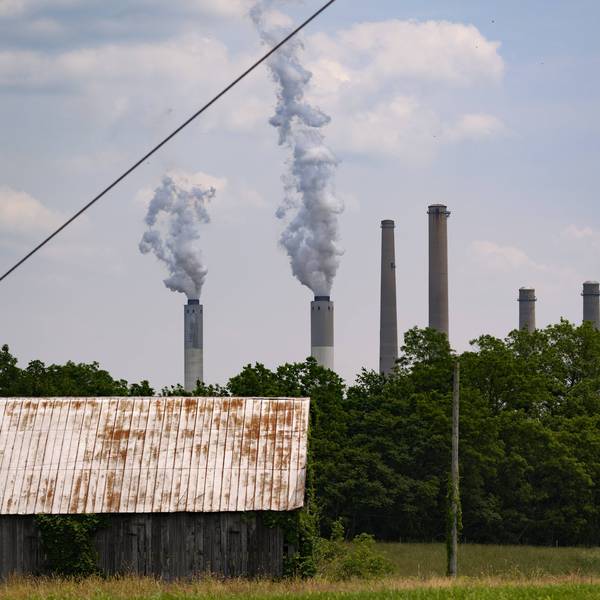
Ahead of a planned Tuesday evening vote on U.S. Sen. Joe Manchin's permitting reform proposal, a new analysis shows that increased fossil fuel pollution resulting from the plan would "wipe out" any possible climate benefits from emissions-reducing projects.
"Striking as they are, these numbers are likely an underestimate of the total emissions the permitting legislation would unlock."
Oil Change International (OCI) found that approving new liquefied natural gas (LNG) export facilities and the Mountain Valley Pipeline (MVP) "could lead to hundreds of millions of additional tons of carbon dioxide equivalent (CO2e) per year."
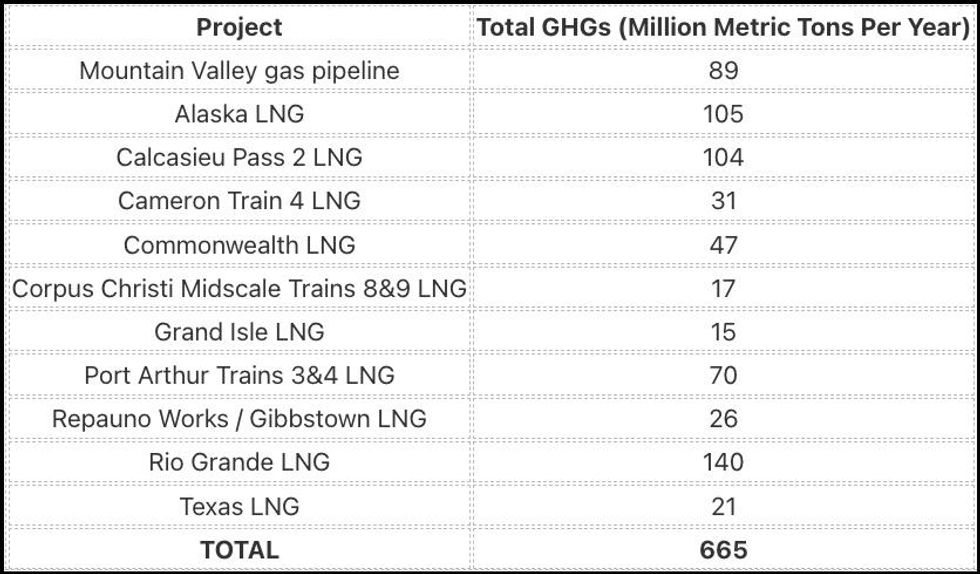
The MVP--which is specifically mentioned in the Energy Independence and Security Act that Manchin (D-W.Va.) unveiled last week--and 10 proposed LNG projects going through the federal permit process would collectively emit 665 million metric tons of CO2e annually, according to OCI.
"This figure is over five times the potential emissions reductions resulting from the construction of 22 transmission line projects that proponents have suggested the bill is supposed to facilitate (119 million metric tons)," the group highlighted, noting that the MVP alone "would negate 75% of that" while the most polluting LNG project would emit more than the estimated savings.
"Striking as they are, these numbers are likely an underestimate of the total emissions the permitting legislation would unlock, because they only include currently proposed fossil fuel projects," OCI added, explaining that if Manchin's measure passes, "fossil fuel companies could be encouraged to propose even more polluting projects, anticipating an easier permitting process thanks to a weakened National Environmental Policy Act (NEPA)."
"A number of members of Congress have suggested that while they oppose the negative impacts of Manchin's proposed legislation on communities and local environments, the bill is worth passing because of the potential climate savings. This analysis directly undercuts that argument," the group concluded. "While more transmission is most certainly needed, the potential benefits from Manchin's dirty deal are hypothetical and undetermined--but the resulting harms are concrete, calculable, and very high."
In a series of tweets on OCI's findings, Fossil Free Media director Jamie Henn pointed out how Manchin's "dirty side deal," as it's come to be known by critics, directly conflicts with the stated goals of the Inflation Reduction Act (IRA) that Manchin only agreed to back in exchange for a vote on the permitting reform.
"This analysis shows that Manchin's dirty deal directly undercuts the potential carbon savings of the IRA by fast-tracking fossil fuel projects currently waiting on permits," said Henn. "I think this data shows that climate hawks should vote *NO* on this dirty deal."
"The climate savings are illusory, the costs are real, and the politics are terrible," he added. "Vote no--and then let's get to work on real changes... together."
The Lever on Tuesday tied the new analysis to its reporting earlier this month that congressional staffers and environmental groups say "they have seen no reliable analyses comprehensively quantifying the climate effects of the initiative to expand oil and gas infrastructure."
Senate Majority Leader Chuck Schumer (D-N.Y.) pushed for the side deal to be included in a must-pass government funding bill but early Tuesday evening Manchin asked him to remove it, signaling that it did not have the votes to pass.
"The fact that emissions projections for Schumer's side deal have not been discussed either in private or in public point to the reality of what's at stake here," Jim Walsh of the group Food and Water Watch told The Lever.
"Schumer and Manchin's deal is not talking about clean energy; it's a fossil fuel payday," he added, noting some details about a draft that leaked before the proposal's release last week. "Any effort to spin that increased pollution as emissions reduction would be just that--spin."
As Henn told the outlet, "Just looking at a couple pipelines and our public lands gives you a sense of how much damage this could do."
This post has been updated to include a request to remove the permitting bill from the stopgap funding legislation.
Ahead of a planned Tuesday evening vote on U.S. Sen. Joe Manchin's permitting reform proposal, a new analysis shows that increased fossil fuel pollution resulting from the plan would "wipe out" any possible climate benefits from emissions-reducing projects.
"Striking as they are, these numbers are likely an underestimate of the total emissions the permitting legislation would unlock."
Oil Change International (OCI) found that approving new liquefied natural gas (LNG) export facilities and the Mountain Valley Pipeline (MVP) "could lead to hundreds of millions of additional tons of carbon dioxide equivalent (CO2e) per year."
The MVP--which is specifically mentioned in the Energy Independence and Security Act that Manchin (D-W.Va.) unveiled last week--and 10 proposed LNG projects going through the federal permit process would collectively emit 665 million metric tons of CO2e annually, according to OCI.
"This figure is over five times the potential emissions reductions resulting from the construction of 22 transmission line projects that proponents have suggested the bill is supposed to facilitate (119 million metric tons)," the group highlighted, noting that the MVP alone "would negate 75% of that" while the most polluting LNG project would emit more than the estimated savings.
"Striking as they are, these numbers are likely an underestimate of the total emissions the permitting legislation would unlock, because they only include currently proposed fossil fuel projects," OCI added, explaining that if Manchin's measure passes, "fossil fuel companies could be encouraged to propose even more polluting projects, anticipating an easier permitting process thanks to a weakened National Environmental Policy Act (NEPA)."
"A number of members of Congress have suggested that while they oppose the negative impacts of Manchin's proposed legislation on communities and local environments, the bill is worth passing because of the potential climate savings. This analysis directly undercuts that argument," the group concluded. "While more transmission is most certainly needed, the potential benefits from Manchin's dirty deal are hypothetical and undetermined--but the resulting harms are concrete, calculable, and very high."
In a series of tweets on OCI's findings, Fossil Free Media director Jamie Henn pointed out how Manchin's "dirty side deal," as it's come to be known by critics, directly conflicts with the stated goals of the Inflation Reduction Act (IRA) that Manchin only agreed to back in exchange for a vote on the permitting reform.
"This analysis shows that Manchin's dirty deal directly undercuts the potential carbon savings of the IRA by fast-tracking fossil fuel projects currently waiting on permits," said Henn. "I think this data shows that climate hawks should vote *NO* on this dirty deal."
"The climate savings are illusory, the costs are real, and the politics are terrible," he added. "Vote no--and then let's get to work on real changes... together."
The Lever on Tuesday tied the new analysis to its reporting earlier this month that congressional staffers and environmental groups say "they have seen no reliable analyses comprehensively quantifying the climate effects of the initiative to expand oil and gas infrastructure."
Senate Majority Leader Chuck Schumer (D-N.Y.) pushed for the side deal to be included in a must-pass government funding bill but early Tuesday evening Manchin asked him to remove it, signaling that it did not have the votes to pass.
"The fact that emissions projections for Schumer's side deal have not been discussed either in private or in public point to the reality of what's at stake here," Jim Walsh of the group Food and Water Watch told The Lever.
"Schumer and Manchin's deal is not talking about clean energy; it's a fossil fuel payday," he added, noting some details about a draft that leaked before the proposal's release last week. "Any effort to spin that increased pollution as emissions reduction would be just that--spin."
As Henn told the outlet, "Just looking at a couple pipelines and our public lands gives you a sense of how much damage this could do."
This post has been updated to include a request to remove the permitting bill from the stopgap funding legislation.
Ahead of a planned Tuesday evening vote on U.S. Sen. Joe Manchin's permitting reform proposal, a new analysis shows that increased fossil fuel pollution resulting from the plan would "wipe out" any possible climate benefits from emissions-reducing projects.
"Striking as they are, these numbers are likely an underestimate of the total emissions the permitting legislation would unlock."
Oil Change International (OCI) found that approving new liquefied natural gas (LNG) export facilities and the Mountain Valley Pipeline (MVP) "could lead to hundreds of millions of additional tons of carbon dioxide equivalent (CO2e) per year."
The MVP--which is specifically mentioned in the Energy Independence and Security Act that Manchin (D-W.Va.) unveiled last week--and 10 proposed LNG projects going through the federal permit process would collectively emit 665 million metric tons of CO2e annually, according to OCI.
"This figure is over five times the potential emissions reductions resulting from the construction of 22 transmission line projects that proponents have suggested the bill is supposed to facilitate (119 million metric tons)," the group highlighted, noting that the MVP alone "would negate 75% of that" while the most polluting LNG project would emit more than the estimated savings.
"Striking as they are, these numbers are likely an underestimate of the total emissions the permitting legislation would unlock, because they only include currently proposed fossil fuel projects," OCI added, explaining that if Manchin's measure passes, "fossil fuel companies could be encouraged to propose even more polluting projects, anticipating an easier permitting process thanks to a weakened National Environmental Policy Act (NEPA)."
"A number of members of Congress have suggested that while they oppose the negative impacts of Manchin's proposed legislation on communities and local environments, the bill is worth passing because of the potential climate savings. This analysis directly undercuts that argument," the group concluded. "While more transmission is most certainly needed, the potential benefits from Manchin's dirty deal are hypothetical and undetermined--but the resulting harms are concrete, calculable, and very high."
In a series of tweets on OCI's findings, Fossil Free Media director Jamie Henn pointed out how Manchin's "dirty side deal," as it's come to be known by critics, directly conflicts with the stated goals of the Inflation Reduction Act (IRA) that Manchin only agreed to back in exchange for a vote on the permitting reform.
"This analysis shows that Manchin's dirty deal directly undercuts the potential carbon savings of the IRA by fast-tracking fossil fuel projects currently waiting on permits," said Henn. "I think this data shows that climate hawks should vote *NO* on this dirty deal."
"The climate savings are illusory, the costs are real, and the politics are terrible," he added. "Vote no--and then let's get to work on real changes... together."
The Lever on Tuesday tied the new analysis to its reporting earlier this month that congressional staffers and environmental groups say "they have seen no reliable analyses comprehensively quantifying the climate effects of the initiative to expand oil and gas infrastructure."
Senate Majority Leader Chuck Schumer (D-N.Y.) pushed for the side deal to be included in a must-pass government funding bill but early Tuesday evening Manchin asked him to remove it, signaling that it did not have the votes to pass.
"The fact that emissions projections for Schumer's side deal have not been discussed either in private or in public point to the reality of what's at stake here," Jim Walsh of the group Food and Water Watch told The Lever.
"Schumer and Manchin's deal is not talking about clean energy; it's a fossil fuel payday," he added, noting some details about a draft that leaked before the proposal's release last week. "Any effort to spin that increased pollution as emissions reduction would be just that--spin."
As Henn told the outlet, "Just looking at a couple pipelines and our public lands gives you a sense of how much damage this could do."
This post has been updated to include a request to remove the permitting bill from the stopgap funding legislation.