SUBSCRIBE TO OUR FREE NEWSLETTER
Daily news & progressive opinion—funded by the people, not the corporations—delivered straight to your inbox.
5
#000000
#FFFFFF
To donate by check, phone, or other method, see our More Ways to Give page.
Daily news & progressive opinion—funded by the people, not the corporations—delivered straight to your inbox.
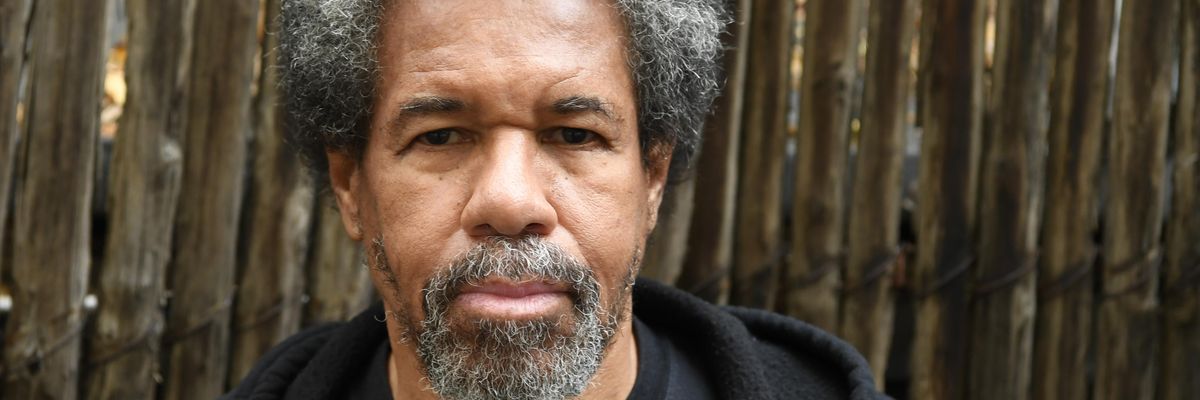
Albert Woodfox, photographed here in 2016, was imprisoned for 43 years in solitary confinement at the Louisiana State Penitentiary. (Photo: Alain Jocard/AFP via Getty Images)
Albert Woodfox, a wrongfully imprisoned Black Panther activist who spent his 43 years in solitary confinement uplifting himself and others before finally being freed in 2019, died Thursday of complications from Covid-19 at age 75.
"Our cells were meant to be death chambers but we turned them into schools, into debate halls."
"With heavy hearts, we write to share that our partner, brother, father, grandfather, comrade, and friend, Albert Woodfox, passed away this morning," Woodfox's family said in a statement. "Whether you know him as Fox, Shaka, Cinque, or Albert--he knew you as family. Please know that your care, compassion, friendship, love, and support have sustained Albert, and comforted him."
The family added that Woodfox was a "liberator" who inspired Americans to "think more deeply about mass incarceration, prison abuse, and racial injustice."
Civil rights attorney and former NAACP Legal Defense and Education Fund president Sherrilyn Ifill called Woodfox "one of the most extraordinary human beings I've ever met."
"He deserved more time to experience his freedom, but what he did with [the] time he had was transformative," she tweeted. "May he rest in eternal peace and power."
Born February 19, 1947 in New Orleans, Woodfox--the oldest of six siblings--admitted to choosing the wrong path in his youth.
"I robbed people, scared them, threatened them, intimidated them. I stole from people who had almost nothing," he wrote in 2019. "My people. Black people."
In 1971, Woodfox was serving a 50-year sentence for armed robbery at the notorious Louisiana State Penitentiary at Angola, a former slave plantation then known as one of America's toughest prisons. That year, he and fellow inmates Herman Wallace and Robert King formed a chapter of the Black Panthers to combat the rampant rape and sex trafficking, violence, and horrific living conditions at the prison. They organized strikes and sit-downs, earning the respect of many of the prison's Black inmates and raising the ire of racist prison officials.
"Our cells were meant to be death chambers but we turned them into schools, into debate halls," Woodfox told The Guardian after his release in 2019. "We used the time to develop the tools that we needed to survive, to be part of society and humanity, rather than becoming bitter and angry and consumed by a thirst for revenge."
On April 17, 1972, Angola guard Brent Miller was stabbed to death at the prison. Woodfox, Herman Wallace, and Robert King--the Angola Three--were immediately charged with the killing and locked up in solitary confinement.
Woodfox was tried and convicted twice for Miller's murder but courts later overturned both convictions. A judge ruled in 2008 that Woodfox was denied due process, citing ineffective legal counsel and questionable evidence in his trials. Woodfox's lawyers also successfully argued that their client's conviction was literally bought by the state, whose case relied heavily upon the testimony of jailhouse informants rewarded for their cooperation.
Woodfox always maintained his innocence, claiming he was wrongfully punished for Miller's murder because of his political activism.
"We dared to resist," he told The Washington Post. "We were very influential."
For four decades, Woodfox would spend 23 hours a day alone in a 6-by-9 foot cell. He read Martin Luther King Jr., Malcolm X, and Nelson Mandela and inspired other inmates to read and fight for their rights.
"We saw some things that was amiss, in prison and out of prison," Robert King told Democracy Now's Amy Goodman in a Friday interview. "And we decided that we could add our little pebble to the pond. And so, Albert... threw the pebble in the pond, knowing that it would create a ripple and knowing that it would eventually create a tsunamic effect... The pebble that he threw in the pond became a ripple, became a wave. And so, this will carry him on into eternity. He won't be forgotten."
In 2008 U.S. District Judge James Brady reversed and vacated Woodfox's conviction and life sentence. However, Louisiana's attorney general at the time, James "Buddy" Caldwell, appealed the ruling to the U.S. 5th Circuit Court of Appeals, which found Brady had acted erroneously.
"I do not have the words to convey the years of mental, emotional, and physical torture I have endured," Woodfox wrote to supporters in 2013. "I ask that for a moment you imagine yourself standing at the edge of nothingness, looking at emptiness. The pain and suffering this isolation causes go beyond mere description."
Legions of lawyers and laypeople, activists, celebrities, and international organizations and individuals rallied behind the Angola Three. King, who spent 29 years in solitary confinement, was freed in 2001 after his conviction was overturned. Wallace was released in October 2013 following more than 41 years in solitary after a federal court ruled he had not received a fair trial. He died three days after leaving prison.
Woodfox, who would have to wait over two more years for his freedom, raised his fist triumphantly as he walked out of prison on February 9, 2016. After 44 years and 10 months behind bars, his spirit was unbroken.
"I can honestly say I've never ever thought of giving up," he told the Innocence Project in 2021. "It never ever came close to breaking my spirit. And that's what solitary confinement is designed for... to break people."
"One of my inspirations was Mr. Nelson Mandela," Woodfox told Democracy Now! days after his release, referring to the South African racial justice activist who spent years of his 27-year imprisonment in solitary confinement before being freed and subsequently elected the country's first post-apartheid president. "You know, I learned from him that if a cause was noble, you could carry the weight of the world on your shoulder."
After his release, Woodfox wrote and published a book, Solitary, a Pulitzer Prize finalist that focused worldwide attention on the practice of prolonged solitary confinement, which is widely recognized as a form of torture. More than 80,000 men, women, and children locked up in U.S. prisons and jails are currently believed to be held in solitary confinement.
Woodfox filled the few years of freedom he enjoyed with activism, educating people in the United States and beyond about the fundamentally flawed U.S. carceral system. He remained an eternal optimist.
"I think what I went through has made me a better man, a better human being," he told the Post. "I've been asked a lot: 'What would I change in my life?' And people are surprised when I say, 'Absolutely nothing.'"
Dear Common Dreams reader, It’s been nearly 30 years since I co-founded Common Dreams with my late wife, Lina Newhouser. We had the radical notion that journalism should serve the public good, not corporate profits. It was clear to us from the outset what it would take to build such a project. No paid advertisements. No corporate sponsors. No millionaire publisher telling us what to think or do. Many people said we wouldn't last a year, but we proved those doubters wrong. Together with a tremendous team of journalists and dedicated staff, we built an independent media outlet free from the constraints of profits and corporate control. Our mission has always been simple: To inform. To inspire. To ignite change for the common good. Building Common Dreams was not easy. Our survival was never guaranteed. When you take on the most powerful forces—Wall Street greed, fossil fuel industry destruction, Big Tech lobbyists, and uber-rich oligarchs who have spent billions upon billions rigging the economy and democracy in their favor—the only bulwark you have is supporters who believe in your work. But here’s the urgent message from me today. It's never been this bad out there. And it's never been this hard to keep us going. At the very moment Common Dreams is most needed, the threats we face are intensifying. We need your support now more than ever. We don't accept corporate advertising and never will. We don't have a paywall because we don't think people should be blocked from critical news based on their ability to pay. Everything we do is funded by the donations of readers like you. When everyone does the little they can afford, we are strong. But if that support retreats or dries up, so do we. Will you donate now to make sure Common Dreams not only survives but thrives? —Craig Brown, Co-founder |
Albert Woodfox, a wrongfully imprisoned Black Panther activist who spent his 43 years in solitary confinement uplifting himself and others before finally being freed in 2019, died Thursday of complications from Covid-19 at age 75.
"Our cells were meant to be death chambers but we turned them into schools, into debate halls."
"With heavy hearts, we write to share that our partner, brother, father, grandfather, comrade, and friend, Albert Woodfox, passed away this morning," Woodfox's family said in a statement. "Whether you know him as Fox, Shaka, Cinque, or Albert--he knew you as family. Please know that your care, compassion, friendship, love, and support have sustained Albert, and comforted him."
The family added that Woodfox was a "liberator" who inspired Americans to "think more deeply about mass incarceration, prison abuse, and racial injustice."
Civil rights attorney and former NAACP Legal Defense and Education Fund president Sherrilyn Ifill called Woodfox "one of the most extraordinary human beings I've ever met."
"He deserved more time to experience his freedom, but what he did with [the] time he had was transformative," she tweeted. "May he rest in eternal peace and power."
Born February 19, 1947 in New Orleans, Woodfox--the oldest of six siblings--admitted to choosing the wrong path in his youth.
"I robbed people, scared them, threatened them, intimidated them. I stole from people who had almost nothing," he wrote in 2019. "My people. Black people."
In 1971, Woodfox was serving a 50-year sentence for armed robbery at the notorious Louisiana State Penitentiary at Angola, a former slave plantation then known as one of America's toughest prisons. That year, he and fellow inmates Herman Wallace and Robert King formed a chapter of the Black Panthers to combat the rampant rape and sex trafficking, violence, and horrific living conditions at the prison. They organized strikes and sit-downs, earning the respect of many of the prison's Black inmates and raising the ire of racist prison officials.
"Our cells were meant to be death chambers but we turned them into schools, into debate halls," Woodfox told The Guardian after his release in 2019. "We used the time to develop the tools that we needed to survive, to be part of society and humanity, rather than becoming bitter and angry and consumed by a thirst for revenge."
On April 17, 1972, Angola guard Brent Miller was stabbed to death at the prison. Woodfox, Herman Wallace, and Robert King--the Angola Three--were immediately charged with the killing and locked up in solitary confinement.
Woodfox was tried and convicted twice for Miller's murder but courts later overturned both convictions. A judge ruled in 2008 that Woodfox was denied due process, citing ineffective legal counsel and questionable evidence in his trials. Woodfox's lawyers also successfully argued that their client's conviction was literally bought by the state, whose case relied heavily upon the testimony of jailhouse informants rewarded for their cooperation.
Woodfox always maintained his innocence, claiming he was wrongfully punished for Miller's murder because of his political activism.
"We dared to resist," he told The Washington Post. "We were very influential."
For four decades, Woodfox would spend 23 hours a day alone in a 6-by-9 foot cell. He read Martin Luther King Jr., Malcolm X, and Nelson Mandela and inspired other inmates to read and fight for their rights.
"We saw some things that was amiss, in prison and out of prison," Robert King told Democracy Now's Amy Goodman in a Friday interview. "And we decided that we could add our little pebble to the pond. And so, Albert... threw the pebble in the pond, knowing that it would create a ripple and knowing that it would eventually create a tsunamic effect... The pebble that he threw in the pond became a ripple, became a wave. And so, this will carry him on into eternity. He won't be forgotten."
In 2008 U.S. District Judge James Brady reversed and vacated Woodfox's conviction and life sentence. However, Louisiana's attorney general at the time, James "Buddy" Caldwell, appealed the ruling to the U.S. 5th Circuit Court of Appeals, which found Brady had acted erroneously.
"I do not have the words to convey the years of mental, emotional, and physical torture I have endured," Woodfox wrote to supporters in 2013. "I ask that for a moment you imagine yourself standing at the edge of nothingness, looking at emptiness. The pain and suffering this isolation causes go beyond mere description."
Legions of lawyers and laypeople, activists, celebrities, and international organizations and individuals rallied behind the Angola Three. King, who spent 29 years in solitary confinement, was freed in 2001 after his conviction was overturned. Wallace was released in October 2013 following more than 41 years in solitary after a federal court ruled he had not received a fair trial. He died three days after leaving prison.
Woodfox, who would have to wait over two more years for his freedom, raised his fist triumphantly as he walked out of prison on February 9, 2016. After 44 years and 10 months behind bars, his spirit was unbroken.
"I can honestly say I've never ever thought of giving up," he told the Innocence Project in 2021. "It never ever came close to breaking my spirit. And that's what solitary confinement is designed for... to break people."
"One of my inspirations was Mr. Nelson Mandela," Woodfox told Democracy Now! days after his release, referring to the South African racial justice activist who spent years of his 27-year imprisonment in solitary confinement before being freed and subsequently elected the country's first post-apartheid president. "You know, I learned from him that if a cause was noble, you could carry the weight of the world on your shoulder."
After his release, Woodfox wrote and published a book, Solitary, a Pulitzer Prize finalist that focused worldwide attention on the practice of prolonged solitary confinement, which is widely recognized as a form of torture. More than 80,000 men, women, and children locked up in U.S. prisons and jails are currently believed to be held in solitary confinement.
Woodfox filled the few years of freedom he enjoyed with activism, educating people in the United States and beyond about the fundamentally flawed U.S. carceral system. He remained an eternal optimist.
"I think what I went through has made me a better man, a better human being," he told the Post. "I've been asked a lot: 'What would I change in my life?' And people are surprised when I say, 'Absolutely nothing.'"
Albert Woodfox, a wrongfully imprisoned Black Panther activist who spent his 43 years in solitary confinement uplifting himself and others before finally being freed in 2019, died Thursday of complications from Covid-19 at age 75.
"Our cells were meant to be death chambers but we turned them into schools, into debate halls."
"With heavy hearts, we write to share that our partner, brother, father, grandfather, comrade, and friend, Albert Woodfox, passed away this morning," Woodfox's family said in a statement. "Whether you know him as Fox, Shaka, Cinque, or Albert--he knew you as family. Please know that your care, compassion, friendship, love, and support have sustained Albert, and comforted him."
The family added that Woodfox was a "liberator" who inspired Americans to "think more deeply about mass incarceration, prison abuse, and racial injustice."
Civil rights attorney and former NAACP Legal Defense and Education Fund president Sherrilyn Ifill called Woodfox "one of the most extraordinary human beings I've ever met."
"He deserved more time to experience his freedom, but what he did with [the] time he had was transformative," she tweeted. "May he rest in eternal peace and power."
Born February 19, 1947 in New Orleans, Woodfox--the oldest of six siblings--admitted to choosing the wrong path in his youth.
"I robbed people, scared them, threatened them, intimidated them. I stole from people who had almost nothing," he wrote in 2019. "My people. Black people."
In 1971, Woodfox was serving a 50-year sentence for armed robbery at the notorious Louisiana State Penitentiary at Angola, a former slave plantation then known as one of America's toughest prisons. That year, he and fellow inmates Herman Wallace and Robert King formed a chapter of the Black Panthers to combat the rampant rape and sex trafficking, violence, and horrific living conditions at the prison. They organized strikes and sit-downs, earning the respect of many of the prison's Black inmates and raising the ire of racist prison officials.
"Our cells were meant to be death chambers but we turned them into schools, into debate halls," Woodfox told The Guardian after his release in 2019. "We used the time to develop the tools that we needed to survive, to be part of society and humanity, rather than becoming bitter and angry and consumed by a thirst for revenge."
On April 17, 1972, Angola guard Brent Miller was stabbed to death at the prison. Woodfox, Herman Wallace, and Robert King--the Angola Three--were immediately charged with the killing and locked up in solitary confinement.
Woodfox was tried and convicted twice for Miller's murder but courts later overturned both convictions. A judge ruled in 2008 that Woodfox was denied due process, citing ineffective legal counsel and questionable evidence in his trials. Woodfox's lawyers also successfully argued that their client's conviction was literally bought by the state, whose case relied heavily upon the testimony of jailhouse informants rewarded for their cooperation.
Woodfox always maintained his innocence, claiming he was wrongfully punished for Miller's murder because of his political activism.
"We dared to resist," he told The Washington Post. "We were very influential."
For four decades, Woodfox would spend 23 hours a day alone in a 6-by-9 foot cell. He read Martin Luther King Jr., Malcolm X, and Nelson Mandela and inspired other inmates to read and fight for their rights.
"We saw some things that was amiss, in prison and out of prison," Robert King told Democracy Now's Amy Goodman in a Friday interview. "And we decided that we could add our little pebble to the pond. And so, Albert... threw the pebble in the pond, knowing that it would create a ripple and knowing that it would eventually create a tsunamic effect... The pebble that he threw in the pond became a ripple, became a wave. And so, this will carry him on into eternity. He won't be forgotten."
In 2008 U.S. District Judge James Brady reversed and vacated Woodfox's conviction and life sentence. However, Louisiana's attorney general at the time, James "Buddy" Caldwell, appealed the ruling to the U.S. 5th Circuit Court of Appeals, which found Brady had acted erroneously.
"I do not have the words to convey the years of mental, emotional, and physical torture I have endured," Woodfox wrote to supporters in 2013. "I ask that for a moment you imagine yourself standing at the edge of nothingness, looking at emptiness. The pain and suffering this isolation causes go beyond mere description."
Legions of lawyers and laypeople, activists, celebrities, and international organizations and individuals rallied behind the Angola Three. King, who spent 29 years in solitary confinement, was freed in 2001 after his conviction was overturned. Wallace was released in October 2013 following more than 41 years in solitary after a federal court ruled he had not received a fair trial. He died three days after leaving prison.
Woodfox, who would have to wait over two more years for his freedom, raised his fist triumphantly as he walked out of prison on February 9, 2016. After 44 years and 10 months behind bars, his spirit was unbroken.
"I can honestly say I've never ever thought of giving up," he told the Innocence Project in 2021. "It never ever came close to breaking my spirit. And that's what solitary confinement is designed for... to break people."
"One of my inspirations was Mr. Nelson Mandela," Woodfox told Democracy Now! days after his release, referring to the South African racial justice activist who spent years of his 27-year imprisonment in solitary confinement before being freed and subsequently elected the country's first post-apartheid president. "You know, I learned from him that if a cause was noble, you could carry the weight of the world on your shoulder."
After his release, Woodfox wrote and published a book, Solitary, a Pulitzer Prize finalist that focused worldwide attention on the practice of prolonged solitary confinement, which is widely recognized as a form of torture. More than 80,000 men, women, and children locked up in U.S. prisons and jails are currently believed to be held in solitary confinement.
Woodfox filled the few years of freedom he enjoyed with activism, educating people in the United States and beyond about the fundamentally flawed U.S. carceral system. He remained an eternal optimist.
"I think what I went through has made me a better man, a better human being," he told the Post. "I've been asked a lot: 'What would I change in my life?' And people are surprised when I say, 'Absolutely nothing.'"