SUBSCRIBE TO OUR FREE NEWSLETTER
Daily news & progressive opinion—funded by the people, not the corporations—delivered straight to your inbox.
5
#000000
#FFFFFF
To donate by check, phone, or other method, see our More Ways to Give page.
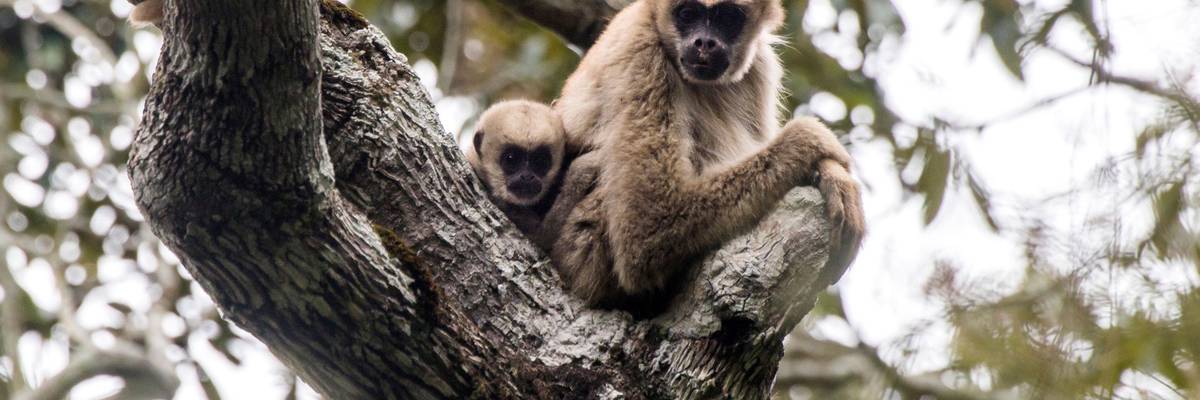
Research revealed Monday that even if global temperatures fall after peaking this century, climate-related risks to wildlife "may remain for decades to centuries."
"Urgent action is needed to ensure we never approach, let alone exceed, the 2degC limit."
The study, published in Philosophical Transactions of the Royal Society B: Biological Sciences, notes that "global average temperatures have already risen by 1.1degC above preindustrial levels and may rise up to 2.1-3.5degC by 2100 unless stronger mitigation action is taken."
The paper highlights that while nations worldwide have committed to the 2015 Paris climate agreement goals of keeping global temperature rise by 2100 "well below" 2degC with the bolder aim of limiting it to 1.5degC, many experts now anticipate an "overshoot" period this century, during which temperatures will exceed those targets before ultimately declining--as long as humanity pursues necessary actions like phasing out fossil fuels.
"We have investigated what will happen to global biodiversity if climate change is only brought under control after a temporary overshoot of the agreed target, to provide evidence that has long been missing from climate change research," explained study co-author Alex Pigot from the Center for Biodiversity and Environment Research at University College London.
"We found that huge numbers of animal species will continue to endure unsafe conditions for decades after the global temperature peak. Even if we collectively manage to reverse global warming before species are irreversibly lost from ecosystems, the ecological disruption caused by unsafe temperatures could well persist for an additional half-century or more," Pigot said. "Urgent action is needed to ensure we never approach, let alone exceed, the 2degC limit."
That message was echoed by lead co-author Joanne Bentley of the African Climate and Development Initiative at the University of Cape Town.
"Our study shows that should we find ourselves overshooting the 2degC global warming target, we could pay dearly in terms of loss of biodiversity, compromising the provision of the ecosystem services that we all rely on for our livelihoods," she said. "Avoiding a temperature overshoot should be a priority, followed by limiting the duration and magnitude of any overshoot."
Related Content

Pigot, Bentley, and other researchers at the University of Cape Town examined more than 30,000 land and sea species around the world under a 2degC temperature overshoot scenario. They found that "for 35% of sites, the period of overshoot for biodiversity exposure is projected to be longer than the global temperature overshoot."
"After first exceeding 2degC in the 2040s, the global warming level returns to 2degC around 2100 (a temperature overshoot of 60 years)," the paper states, "but it takes a further 40 years for global marine and 70 years for global terrestrial biodiversity exposure levels to decline to the same exposure levels as the 2040s--making the duration of exposure for global marine and terrestrial biodiversity 66% and 115% longer, respectively, than the temperature overshoot."
"For many ecosystems, thresholds for irreversible impacts are expected to be exceeded even under a short overshoot duration," the study points out, warning that "regions of uncertain and no return to pre-overshoot levels of exposure mainly include the tropics, especially the Amazon, the tropical African coast, Indian Ocean, Southeast Asia, and the Indo-Pacific."
Lead co-author Andreas Meyer said that "in the Amazon, this could mean replacement of forests with grasslands, and as a consequence, the loss of an important global carbon sink, which would have knock-on effects on multiple ecological and climatic systems as well as our ability to curtail global warming."
Related Content

The paper asserts that "to reduce the risks to biodiversity, it is imperative that rapid and deep emissions cuts are implemented immediately."
Co-author Christopher Trisos issued a similar call to action. As he put it: "Our findings are stark. They should act as a wake-up call that delaying emissions cuts will mean a temperature overshoot that comes at an astronomical cost to nature and humans that unproven negative emission technologies cannot simply reverse."
The paper emphasizes that "the early timing of this mitigation action is critical for reducing long-lasting negative impacts on biodiversity because the magnitude and duration of any temperature overshoot may be grossly underestimated, due to high uncertainty about the feasibility of any large-scale deployment" of carbon dioxide removal (CDR) approaches, which "would likely involve strong trade-offs with biodiversity protection, water security, and agricultural production."
According to Bentley, "It is important to realize that there is no 'silver bullet' solution for mitigating climate change impacts."
"We have to rapidly reduce greenhouse gas emissions," she said. "Many carbon dioxide removal technologies and nature-based solutions, such as afforestation, come with potential negative impacts."
The study comes as world leaders prepare for a December summit to finalize a global biodiversity framework. Advocates across the globe are demanding an ambitious agreement, declaring earlier this month that "the impending extinction of hundreds of thousands of species is a choice and by maintaining the status quo, governments are choosing extinction. This must stop."
Research revealed Monday that even if global temperatures fall after peaking this century, climate-related risks to wildlife "may remain for decades to centuries."
"Urgent action is needed to ensure we never approach, let alone exceed, the 2degC limit."
The study, published in Philosophical Transactions of the Royal Society B: Biological Sciences, notes that "global average temperatures have already risen by 1.1degC above preindustrial levels and may rise up to 2.1-3.5degC by 2100 unless stronger mitigation action is taken."
The paper highlights that while nations worldwide have committed to the 2015 Paris climate agreement goals of keeping global temperature rise by 2100 "well below" 2degC with the bolder aim of limiting it to 1.5degC, many experts now anticipate an "overshoot" period this century, during which temperatures will exceed those targets before ultimately declining--as long as humanity pursues necessary actions like phasing out fossil fuels.
"We have investigated what will happen to global biodiversity if climate change is only brought under control after a temporary overshoot of the agreed target, to provide evidence that has long been missing from climate change research," explained study co-author Alex Pigot from the Center for Biodiversity and Environment Research at University College London.
"We found that huge numbers of animal species will continue to endure unsafe conditions for decades after the global temperature peak. Even if we collectively manage to reverse global warming before species are irreversibly lost from ecosystems, the ecological disruption caused by unsafe temperatures could well persist for an additional half-century or more," Pigot said. "Urgent action is needed to ensure we never approach, let alone exceed, the 2degC limit."
That message was echoed by lead co-author Joanne Bentley of the African Climate and Development Initiative at the University of Cape Town.
"Our study shows that should we find ourselves overshooting the 2degC global warming target, we could pay dearly in terms of loss of biodiversity, compromising the provision of the ecosystem services that we all rely on for our livelihoods," she said. "Avoiding a temperature overshoot should be a priority, followed by limiting the duration and magnitude of any overshoot."
Related Content
Pigot, Bentley, and other researchers at the University of Cape Town examined more than 30,000 land and sea species around the world under a 2degC temperature overshoot scenario. They found that "for 35% of sites, the period of overshoot for biodiversity exposure is projected to be longer than the global temperature overshoot."
"After first exceeding 2degC in the 2040s, the global warming level returns to 2degC around 2100 (a temperature overshoot of 60 years)," the paper states, "but it takes a further 40 years for global marine and 70 years for global terrestrial biodiversity exposure levels to decline to the same exposure levels as the 2040s--making the duration of exposure for global marine and terrestrial biodiversity 66% and 115% longer, respectively, than the temperature overshoot."
"For many ecosystems, thresholds for irreversible impacts are expected to be exceeded even under a short overshoot duration," the study points out, warning that "regions of uncertain and no return to pre-overshoot levels of exposure mainly include the tropics, especially the Amazon, the tropical African coast, Indian Ocean, Southeast Asia, and the Indo-Pacific."
Lead co-author Andreas Meyer said that "in the Amazon, this could mean replacement of forests with grasslands, and as a consequence, the loss of an important global carbon sink, which would have knock-on effects on multiple ecological and climatic systems as well as our ability to curtail global warming."
Related Content
The paper asserts that "to reduce the risks to biodiversity, it is imperative that rapid and deep emissions cuts are implemented immediately."
Co-author Christopher Trisos issued a similar call to action. As he put it: "Our findings are stark. They should act as a wake-up call that delaying emissions cuts will mean a temperature overshoot that comes at an astronomical cost to nature and humans that unproven negative emission technologies cannot simply reverse."
The paper emphasizes that "the early timing of this mitigation action is critical for reducing long-lasting negative impacts on biodiversity because the magnitude and duration of any temperature overshoot may be grossly underestimated, due to high uncertainty about the feasibility of any large-scale deployment" of carbon dioxide removal (CDR) approaches, which "would likely involve strong trade-offs with biodiversity protection, water security, and agricultural production."
According to Bentley, "It is important to realize that there is no 'silver bullet' solution for mitigating climate change impacts."
"We have to rapidly reduce greenhouse gas emissions," she said. "Many carbon dioxide removal technologies and nature-based solutions, such as afforestation, come with potential negative impacts."
The study comes as world leaders prepare for a December summit to finalize a global biodiversity framework. Advocates across the globe are demanding an ambitious agreement, declaring earlier this month that "the impending extinction of hundreds of thousands of species is a choice and by maintaining the status quo, governments are choosing extinction. This must stop."
Research revealed Monday that even if global temperatures fall after peaking this century, climate-related risks to wildlife "may remain for decades to centuries."
"Urgent action is needed to ensure we never approach, let alone exceed, the 2degC limit."
The study, published in Philosophical Transactions of the Royal Society B: Biological Sciences, notes that "global average temperatures have already risen by 1.1degC above preindustrial levels and may rise up to 2.1-3.5degC by 2100 unless stronger mitigation action is taken."
The paper highlights that while nations worldwide have committed to the 2015 Paris climate agreement goals of keeping global temperature rise by 2100 "well below" 2degC with the bolder aim of limiting it to 1.5degC, many experts now anticipate an "overshoot" period this century, during which temperatures will exceed those targets before ultimately declining--as long as humanity pursues necessary actions like phasing out fossil fuels.
"We have investigated what will happen to global biodiversity if climate change is only brought under control after a temporary overshoot of the agreed target, to provide evidence that has long been missing from climate change research," explained study co-author Alex Pigot from the Center for Biodiversity and Environment Research at University College London.
"We found that huge numbers of animal species will continue to endure unsafe conditions for decades after the global temperature peak. Even if we collectively manage to reverse global warming before species are irreversibly lost from ecosystems, the ecological disruption caused by unsafe temperatures could well persist for an additional half-century or more," Pigot said. "Urgent action is needed to ensure we never approach, let alone exceed, the 2degC limit."
That message was echoed by lead co-author Joanne Bentley of the African Climate and Development Initiative at the University of Cape Town.
"Our study shows that should we find ourselves overshooting the 2degC global warming target, we could pay dearly in terms of loss of biodiversity, compromising the provision of the ecosystem services that we all rely on for our livelihoods," she said. "Avoiding a temperature overshoot should be a priority, followed by limiting the duration and magnitude of any overshoot."
Related Content
Pigot, Bentley, and other researchers at the University of Cape Town examined more than 30,000 land and sea species around the world under a 2degC temperature overshoot scenario. They found that "for 35% of sites, the period of overshoot for biodiversity exposure is projected to be longer than the global temperature overshoot."
"After first exceeding 2degC in the 2040s, the global warming level returns to 2degC around 2100 (a temperature overshoot of 60 years)," the paper states, "but it takes a further 40 years for global marine and 70 years for global terrestrial biodiversity exposure levels to decline to the same exposure levels as the 2040s--making the duration of exposure for global marine and terrestrial biodiversity 66% and 115% longer, respectively, than the temperature overshoot."
"For many ecosystems, thresholds for irreversible impacts are expected to be exceeded even under a short overshoot duration," the study points out, warning that "regions of uncertain and no return to pre-overshoot levels of exposure mainly include the tropics, especially the Amazon, the tropical African coast, Indian Ocean, Southeast Asia, and the Indo-Pacific."
Lead co-author Andreas Meyer said that "in the Amazon, this could mean replacement of forests with grasslands, and as a consequence, the loss of an important global carbon sink, which would have knock-on effects on multiple ecological and climatic systems as well as our ability to curtail global warming."
Related Content
The paper asserts that "to reduce the risks to biodiversity, it is imperative that rapid and deep emissions cuts are implemented immediately."
Co-author Christopher Trisos issued a similar call to action. As he put it: "Our findings are stark. They should act as a wake-up call that delaying emissions cuts will mean a temperature overshoot that comes at an astronomical cost to nature and humans that unproven negative emission technologies cannot simply reverse."
The paper emphasizes that "the early timing of this mitigation action is critical for reducing long-lasting negative impacts on biodiversity because the magnitude and duration of any temperature overshoot may be grossly underestimated, due to high uncertainty about the feasibility of any large-scale deployment" of carbon dioxide removal (CDR) approaches, which "would likely involve strong trade-offs with biodiversity protection, water security, and agricultural production."
According to Bentley, "It is important to realize that there is no 'silver bullet' solution for mitigating climate change impacts."
"We have to rapidly reduce greenhouse gas emissions," she said. "Many carbon dioxide removal technologies and nature-based solutions, such as afforestation, come with potential negative impacts."
The study comes as world leaders prepare for a December summit to finalize a global biodiversity framework. Advocates across the globe are demanding an ambitious agreement, declaring earlier this month that "the impending extinction of hundreds of thousands of species is a choice and by maintaining the status quo, governments are choosing extinction. This must stop."