SUBSCRIBE TO OUR FREE NEWSLETTER
Daily news & progressive opinion—funded by the people, not the corporations—delivered straight to your inbox.
5
#000000
#FFFFFF
To donate by check, phone, or other method, see our More Ways to Give page.
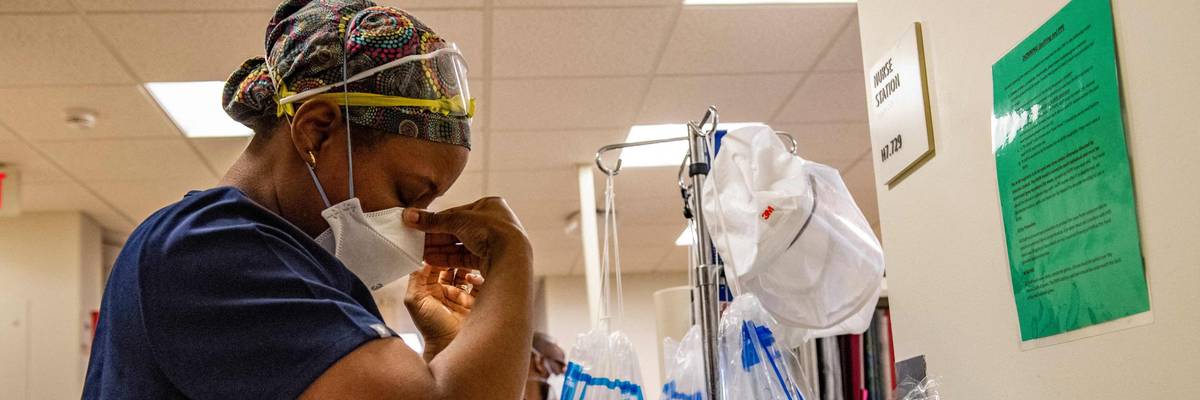
A federal health agency tasked with covering Covid-19 testing and treatment for uninsured Americans officially stopped accepting claims on Wednesday because it is out of funding, a shortfall caused by congressional lawmakers' failure to approve new coronavirus aid.
Martin Kramer, a spokesperson for the Health Resources and Services Administration (HRSA), said in a statement Tuesday that "the lack of funding for Covid-19 needs is having real consequences."
"Congress is poised to repeat what will almost certainly be a deadly mistake: waiting until it's too late before investing in prevention."
"We have begun an orderly shutdown of the program," Kramer said, referring to the HRSA Covid-19 Uninsured Program, which has been reimbursing providers for coronavirus care for the uninsured since the early stages of the pandemic.
Nearly 10% of U.S. residents--around 31 million people--don't have any form of health insurance, according to federal estimates.
The HRSA has also warned in recent days that without a quick infusion of federal funds, it will have to stop accepting coronavirus vaccine reimbursement claims on April 5.
"Federal coverage for Covid-19 treatment and testing for the uninsured ends today. Coverage for vaccine administration for the uninsured ends in about two weeks," Adam Gaffney, a critical care doctor at the Cambridge Health Alliance, lamented on Twitter. "The rationing of Covid-care by ability to pay begins."
The Biden White House has asked for more than $20 billion dollars to purchase fresh supplies of masks, therapeutics, tests, and vaccines and to keep key pandemic response programs running, but Republican lawmakers have questioned the need for additional Covid-19 money and insisted that any funding be repurposed from existing state programs--a non-starter for Democratic lawmakers who warn their states would be hurt by such a scheme.
Disagreements over funding sources ultimately led the Democratic leadership to pull around $16 billion in coronavirus aid from a recent omnibus spending package that contained $782 billion for the U.S. military--$29 billion more than President Joe Biden originally requested.
White House Chief of Staff Ronald Klain insisted Tuesday that the Biden administration is not "turning the page" on the coronavirus pandemic, which is still killing more than 1,000 people per day in the U.S. on average.
"We are keeping businesses and schools open--and reducing hospital and ICU cases--by making vaccines, boosters, treatments, and tests widely available," Klain said. "And we will continue to do so as long as Congress funds this work."
But with dozens of Republicans refusing to support new relief funding, there does not appear to be a path forward for a standalone coronavirus measure in the evenly divided Senate.
"We don't need Covid funding," Rep. Randy Feenstra (R-Iowa.) told The Atlantic, expressing a view common among GOP lawmakers. "Most people would say we're done. We have more issues with inflation than Covid right now."
Vox's Dylan Matthews wrote Tuesday that if the congressional stalemate over Covid-19 funding persists, "the federal effort to halt the virus could effectively be over, even though the pandemic itself clearly isn't."
"That would be a disaster," Matthews added.
According to a February Covid-19 funding table obtained by Politico, more than $45 billion of the $47.8 billion that Congress approved for testing and mitigation in the American Rescue Plan is currently "obligated or being executed," $2.6 billion is already allocated, and "none remains available for new initiatives."
Related Content

For months, public health experts have been urging the Biden administration and Congress to ensure the U.S. is prepared for another wave of coronavirus infections, particularly after the White House rejected such warnings ahead of the holiday Omicron surge.
Fueled by the rapid spread of BA.2--a highly transmissible subvariant of Omicron--Covid-19 cases are currently rising in parts of Europe and Asia.
"We are on the brink of another potential wave," epidemiologist Dr. Eric Feigl-Ding wrote Tuesday.
If Congress doesn't approve funding for treatments, testing, vaccines, and other pandemic response measures, he added, "we are in trouble."
Dr. Leana Wen, a professor at George Washington University's Milken Institute School of Public Health, similarly argued in a Washington Post column earlier this week that "two years into the pandemic, Congress is poised to repeat what will almost certainly be a deadly mistake: waiting until it's too late before investing in prevention."
"We've already seen what happens when we don't prioritize preparedness and prevention," Wen wrote. "Nearly 1 million Americans have already died from Covid-19. How many more must die before Congress heeds the lessons learned?"
A federal health agency tasked with covering Covid-19 testing and treatment for uninsured Americans officially stopped accepting claims on Wednesday because it is out of funding, a shortfall caused by congressional lawmakers' failure to approve new coronavirus aid.
Martin Kramer, a spokesperson for the Health Resources and Services Administration (HRSA), said in a statement Tuesday that "the lack of funding for Covid-19 needs is having real consequences."
"Congress is poised to repeat what will almost certainly be a deadly mistake: waiting until it's too late before investing in prevention."
"We have begun an orderly shutdown of the program," Kramer said, referring to the HRSA Covid-19 Uninsured Program, which has been reimbursing providers for coronavirus care for the uninsured since the early stages of the pandemic.
Nearly 10% of U.S. residents--around 31 million people--don't have any form of health insurance, according to federal estimates.
The HRSA has also warned in recent days that without a quick infusion of federal funds, it will have to stop accepting coronavirus vaccine reimbursement claims on April 5.
"Federal coverage for Covid-19 treatment and testing for the uninsured ends today. Coverage for vaccine administration for the uninsured ends in about two weeks," Adam Gaffney, a critical care doctor at the Cambridge Health Alliance, lamented on Twitter. "The rationing of Covid-care by ability to pay begins."
The Biden White House has asked for more than $20 billion dollars to purchase fresh supplies of masks, therapeutics, tests, and vaccines and to keep key pandemic response programs running, but Republican lawmakers have questioned the need for additional Covid-19 money and insisted that any funding be repurposed from existing state programs--a non-starter for Democratic lawmakers who warn their states would be hurt by such a scheme.
Disagreements over funding sources ultimately led the Democratic leadership to pull around $16 billion in coronavirus aid from a recent omnibus spending package that contained $782 billion for the U.S. military--$29 billion more than President Joe Biden originally requested.
White House Chief of Staff Ronald Klain insisted Tuesday that the Biden administration is not "turning the page" on the coronavirus pandemic, which is still killing more than 1,000 people per day in the U.S. on average.
"We are keeping businesses and schools open--and reducing hospital and ICU cases--by making vaccines, boosters, treatments, and tests widely available," Klain said. "And we will continue to do so as long as Congress funds this work."
But with dozens of Republicans refusing to support new relief funding, there does not appear to be a path forward for a standalone coronavirus measure in the evenly divided Senate.
"We don't need Covid funding," Rep. Randy Feenstra (R-Iowa.) told The Atlantic, expressing a view common among GOP lawmakers. "Most people would say we're done. We have more issues with inflation than Covid right now."
Vox's Dylan Matthews wrote Tuesday that if the congressional stalemate over Covid-19 funding persists, "the federal effort to halt the virus could effectively be over, even though the pandemic itself clearly isn't."
"That would be a disaster," Matthews added.
According to a February Covid-19 funding table obtained by Politico, more than $45 billion of the $47.8 billion that Congress approved for testing and mitigation in the American Rescue Plan is currently "obligated or being executed," $2.6 billion is already allocated, and "none remains available for new initiatives."
Related Content
For months, public health experts have been urging the Biden administration and Congress to ensure the U.S. is prepared for another wave of coronavirus infections, particularly after the White House rejected such warnings ahead of the holiday Omicron surge.
Fueled by the rapid spread of BA.2--a highly transmissible subvariant of Omicron--Covid-19 cases are currently rising in parts of Europe and Asia.
"We are on the brink of another potential wave," epidemiologist Dr. Eric Feigl-Ding wrote Tuesday.
If Congress doesn't approve funding for treatments, testing, vaccines, and other pandemic response measures, he added, "we are in trouble."
Dr. Leana Wen, a professor at George Washington University's Milken Institute School of Public Health, similarly argued in a Washington Post column earlier this week that "two years into the pandemic, Congress is poised to repeat what will almost certainly be a deadly mistake: waiting until it's too late before investing in prevention."
"We've already seen what happens when we don't prioritize preparedness and prevention," Wen wrote. "Nearly 1 million Americans have already died from Covid-19. How many more must die before Congress heeds the lessons learned?"
A federal health agency tasked with covering Covid-19 testing and treatment for uninsured Americans officially stopped accepting claims on Wednesday because it is out of funding, a shortfall caused by congressional lawmakers' failure to approve new coronavirus aid.
Martin Kramer, a spokesperson for the Health Resources and Services Administration (HRSA), said in a statement Tuesday that "the lack of funding for Covid-19 needs is having real consequences."
"Congress is poised to repeat what will almost certainly be a deadly mistake: waiting until it's too late before investing in prevention."
"We have begun an orderly shutdown of the program," Kramer said, referring to the HRSA Covid-19 Uninsured Program, which has been reimbursing providers for coronavirus care for the uninsured since the early stages of the pandemic.
Nearly 10% of U.S. residents--around 31 million people--don't have any form of health insurance, according to federal estimates.
The HRSA has also warned in recent days that without a quick infusion of federal funds, it will have to stop accepting coronavirus vaccine reimbursement claims on April 5.
"Federal coverage for Covid-19 treatment and testing for the uninsured ends today. Coverage for vaccine administration for the uninsured ends in about two weeks," Adam Gaffney, a critical care doctor at the Cambridge Health Alliance, lamented on Twitter. "The rationing of Covid-care by ability to pay begins."
The Biden White House has asked for more than $20 billion dollars to purchase fresh supplies of masks, therapeutics, tests, and vaccines and to keep key pandemic response programs running, but Republican lawmakers have questioned the need for additional Covid-19 money and insisted that any funding be repurposed from existing state programs--a non-starter for Democratic lawmakers who warn their states would be hurt by such a scheme.
Disagreements over funding sources ultimately led the Democratic leadership to pull around $16 billion in coronavirus aid from a recent omnibus spending package that contained $782 billion for the U.S. military--$29 billion more than President Joe Biden originally requested.
White House Chief of Staff Ronald Klain insisted Tuesday that the Biden administration is not "turning the page" on the coronavirus pandemic, which is still killing more than 1,000 people per day in the U.S. on average.
"We are keeping businesses and schools open--and reducing hospital and ICU cases--by making vaccines, boosters, treatments, and tests widely available," Klain said. "And we will continue to do so as long as Congress funds this work."
But with dozens of Republicans refusing to support new relief funding, there does not appear to be a path forward for a standalone coronavirus measure in the evenly divided Senate.
"We don't need Covid funding," Rep. Randy Feenstra (R-Iowa.) told The Atlantic, expressing a view common among GOP lawmakers. "Most people would say we're done. We have more issues with inflation than Covid right now."
Vox's Dylan Matthews wrote Tuesday that if the congressional stalemate over Covid-19 funding persists, "the federal effort to halt the virus could effectively be over, even though the pandemic itself clearly isn't."
"That would be a disaster," Matthews added.
According to a February Covid-19 funding table obtained by Politico, more than $45 billion of the $47.8 billion that Congress approved for testing and mitigation in the American Rescue Plan is currently "obligated or being executed," $2.6 billion is already allocated, and "none remains available for new initiatives."
Related Content
For months, public health experts have been urging the Biden administration and Congress to ensure the U.S. is prepared for another wave of coronavirus infections, particularly after the White House rejected such warnings ahead of the holiday Omicron surge.
Fueled by the rapid spread of BA.2--a highly transmissible subvariant of Omicron--Covid-19 cases are currently rising in parts of Europe and Asia.
"We are on the brink of another potential wave," epidemiologist Dr. Eric Feigl-Ding wrote Tuesday.
If Congress doesn't approve funding for treatments, testing, vaccines, and other pandemic response measures, he added, "we are in trouble."
Dr. Leana Wen, a professor at George Washington University's Milken Institute School of Public Health, similarly argued in a Washington Post column earlier this week that "two years into the pandemic, Congress is poised to repeat what will almost certainly be a deadly mistake: waiting until it's too late before investing in prevention."
"We've already seen what happens when we don't prioritize preparedness and prevention," Wen wrote. "Nearly 1 million Americans have already died from Covid-19. How many more must die before Congress heeds the lessons learned?"