SUBSCRIBE TO OUR FREE NEWSLETTER
Daily news & progressive opinion—funded by the people, not the corporations—delivered straight to your inbox.
5
#000000
#FFFFFF
To donate by check, phone, or other method, see our More Ways to Give page.
Daily news & progressive opinion—funded by the people, not the corporations—delivered straight to your inbox.
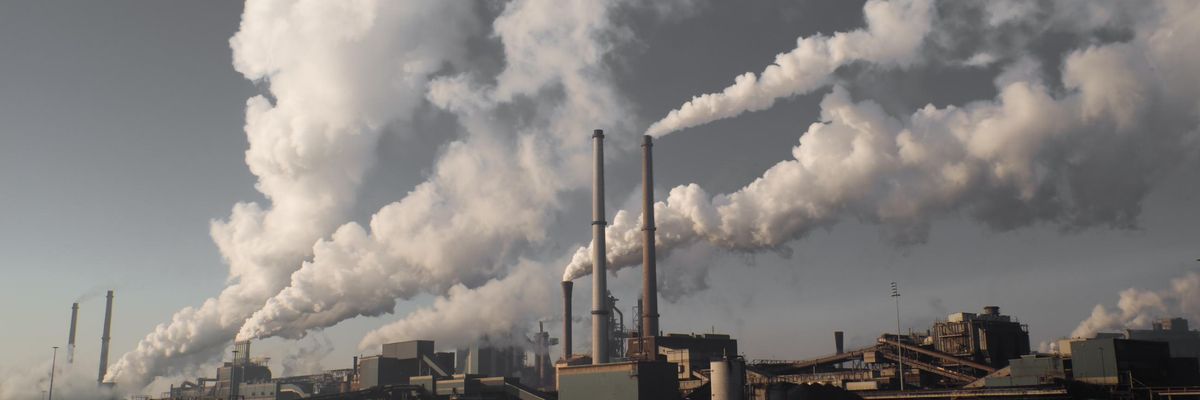
(Photo: rmitsch/Getty Images)
As critics warn the U.S. government is very much on the verge of showing up to next week's U.N. climate summit in Glasgow, Scotland with little or nothing to show in terms of new levels of ambition to reduce its planet-heating emissions, new reporting shows how the fossil fuel industry has ramped up its political spending over recent months in order to diminish any chance of real progress on the issue.
"We can't allow corporate influence to drive public policy. That's the people's job."
A review of campaign finance disclosures published by E&E News on Tuesday showed that oil and gas companies, electric utilities, and other extractive industries all increased their spending from July to September, a crucial period of negotiations in Congress as the Democrats tried to secure major climate provisions in President Joe Biden's signature 'Build Better Better' legislative agenda.
According to E&E News:
While Democrats crafted their proposals like the Clean Electricity Performance Program (CEPP), fees for oil and natural gas companies' methane emissions, and new incentives to buy electric vehicles, the energy industry and its allies were doubling down on their efforts to stop or otherwise influence the policies, according to lobbying disclosures due last week that detailed activity between July and September.
The disclosures showed increases in spending by groups like the American Gas Association, the National Mining Association and the American Petroleum Institute -- organizations that have been harshly critical of parts of the "Build Back Better Act," the Democrats' budget reconciliation package that was initially targeted to be $3.5 trillion but will soon be pared back.
In response to the figures, Jean Su, director of the energy justice program at the Center for Biological Diversity, told E&E that this flood of industry cash goes a long way in explaining the obstruction of lawmakers like Sen. Joe Manchin (D-W.Va.), one of the largest beneficiaries of industry campaign contributions.
"The fossil fuel lobby's grimy fingerprints are all over yet another congressional deadlock on meaningful climate action," said Su t. "Manchin's antics are solely for the benefit of a few obscenely wealthy companies selling polluting products that threaten the entire planet's well-being. As the climate emergency escalates, this lobbying isn't just immoral, it's deadly."
And it's not just the fossil fuel companies. The reporting shows that large corporate lobby groups like the Business Roundtable, which spent $11.8 million, and the National Association of Manufacturers, which spent $3.2 million, increased their lobbying budgets in the latest quarter by a 217% and 185%, respectively, compared to the same time period in 2020.
In addition:
Utilities that lobby federal officials increased their spending too, such as Pacific Gas and Electric Co., with a 33 percent boost to $920,000; NextEra Energy Inc.'s 47 percent increase to $1.29 million; Southern Co.'s 25 percent hike to $2.19 million; and Public Service Enterprise Group Inc.'s $440,000 spending, a 33 percent increase.
Utilities have been heavily involved in negotiations over CEPP, which would incentivize companies to decarbonize their electricity generation mixes each year.
Rep. Pramila Jayapal (D-Wash.), chair of the Congressional Progressive Caucus in the House and among those leading the fight to keep robust climate funding in the overall bill, said the lobbying blitz should be seen as a clear example of industry greed trying to overrule the popular demand from voters who support curbing greenhouse gas emissions and addressing the existential threat of the climate crisis.
" Big Oil and Gas just announced millions in new corporate spending against climate action," tweeted Jayapal later Tuesday night. "We can't allow corporate influence to drive public policy. That's the people's job."
Dear Common Dreams reader, It’s been nearly 30 years since I co-founded Common Dreams with my late wife, Lina Newhouser. We had the radical notion that journalism should serve the public good, not corporate profits. It was clear to us from the outset what it would take to build such a project. No paid advertisements. No corporate sponsors. No millionaire publisher telling us what to think or do. Many people said we wouldn't last a year, but we proved those doubters wrong. Together with a tremendous team of journalists and dedicated staff, we built an independent media outlet free from the constraints of profits and corporate control. Our mission has always been simple: To inform. To inspire. To ignite change for the common good. Building Common Dreams was not easy. Our survival was never guaranteed. When you take on the most powerful forces—Wall Street greed, fossil fuel industry destruction, Big Tech lobbyists, and uber-rich oligarchs who have spent billions upon billions rigging the economy and democracy in their favor—the only bulwark you have is supporters who believe in your work. But here’s the urgent message from me today. It's never been this bad out there. And it's never been this hard to keep us going. At the very moment Common Dreams is most needed, the threats we face are intensifying. We need your support now more than ever. We don't accept corporate advertising and never will. We don't have a paywall because we don't think people should be blocked from critical news based on their ability to pay. Everything we do is funded by the donations of readers like you. When everyone does the little they can afford, we are strong. But if that support retreats or dries up, so do we. Will you donate now to make sure Common Dreams not only survives but thrives? —Craig Brown, Co-founder |
As critics warn the U.S. government is very much on the verge of showing up to next week's U.N. climate summit in Glasgow, Scotland with little or nothing to show in terms of new levels of ambition to reduce its planet-heating emissions, new reporting shows how the fossil fuel industry has ramped up its political spending over recent months in order to diminish any chance of real progress on the issue.
"We can't allow corporate influence to drive public policy. That's the people's job."
A review of campaign finance disclosures published by E&E News on Tuesday showed that oil and gas companies, electric utilities, and other extractive industries all increased their spending from July to September, a crucial period of negotiations in Congress as the Democrats tried to secure major climate provisions in President Joe Biden's signature 'Build Better Better' legislative agenda.
According to E&E News:
While Democrats crafted their proposals like the Clean Electricity Performance Program (CEPP), fees for oil and natural gas companies' methane emissions, and new incentives to buy electric vehicles, the energy industry and its allies were doubling down on their efforts to stop or otherwise influence the policies, according to lobbying disclosures due last week that detailed activity between July and September.
The disclosures showed increases in spending by groups like the American Gas Association, the National Mining Association and the American Petroleum Institute -- organizations that have been harshly critical of parts of the "Build Back Better Act," the Democrats' budget reconciliation package that was initially targeted to be $3.5 trillion but will soon be pared back.
In response to the figures, Jean Su, director of the energy justice program at the Center for Biological Diversity, told E&E that this flood of industry cash goes a long way in explaining the obstruction of lawmakers like Sen. Joe Manchin (D-W.Va.), one of the largest beneficiaries of industry campaign contributions.
"The fossil fuel lobby's grimy fingerprints are all over yet another congressional deadlock on meaningful climate action," said Su t. "Manchin's antics are solely for the benefit of a few obscenely wealthy companies selling polluting products that threaten the entire planet's well-being. As the climate emergency escalates, this lobbying isn't just immoral, it's deadly."
And it's not just the fossil fuel companies. The reporting shows that large corporate lobby groups like the Business Roundtable, which spent $11.8 million, and the National Association of Manufacturers, which spent $3.2 million, increased their lobbying budgets in the latest quarter by a 217% and 185%, respectively, compared to the same time period in 2020.
In addition:
Utilities that lobby federal officials increased their spending too, such as Pacific Gas and Electric Co., with a 33 percent boost to $920,000; NextEra Energy Inc.'s 47 percent increase to $1.29 million; Southern Co.'s 25 percent hike to $2.19 million; and Public Service Enterprise Group Inc.'s $440,000 spending, a 33 percent increase.
Utilities have been heavily involved in negotiations over CEPP, which would incentivize companies to decarbonize their electricity generation mixes each year.
Rep. Pramila Jayapal (D-Wash.), chair of the Congressional Progressive Caucus in the House and among those leading the fight to keep robust climate funding in the overall bill, said the lobbying blitz should be seen as a clear example of industry greed trying to overrule the popular demand from voters who support curbing greenhouse gas emissions and addressing the existential threat of the climate crisis.
" Big Oil and Gas just announced millions in new corporate spending against climate action," tweeted Jayapal later Tuesday night. "We can't allow corporate influence to drive public policy. That's the people's job."
As critics warn the U.S. government is very much on the verge of showing up to next week's U.N. climate summit in Glasgow, Scotland with little or nothing to show in terms of new levels of ambition to reduce its planet-heating emissions, new reporting shows how the fossil fuel industry has ramped up its political spending over recent months in order to diminish any chance of real progress on the issue.
"We can't allow corporate influence to drive public policy. That's the people's job."
A review of campaign finance disclosures published by E&E News on Tuesday showed that oil and gas companies, electric utilities, and other extractive industries all increased their spending from July to September, a crucial period of negotiations in Congress as the Democrats tried to secure major climate provisions in President Joe Biden's signature 'Build Better Better' legislative agenda.
According to E&E News:
While Democrats crafted their proposals like the Clean Electricity Performance Program (CEPP), fees for oil and natural gas companies' methane emissions, and new incentives to buy electric vehicles, the energy industry and its allies were doubling down on their efforts to stop or otherwise influence the policies, according to lobbying disclosures due last week that detailed activity between July and September.
The disclosures showed increases in spending by groups like the American Gas Association, the National Mining Association and the American Petroleum Institute -- organizations that have been harshly critical of parts of the "Build Back Better Act," the Democrats' budget reconciliation package that was initially targeted to be $3.5 trillion but will soon be pared back.
In response to the figures, Jean Su, director of the energy justice program at the Center for Biological Diversity, told E&E that this flood of industry cash goes a long way in explaining the obstruction of lawmakers like Sen. Joe Manchin (D-W.Va.), one of the largest beneficiaries of industry campaign contributions.
"The fossil fuel lobby's grimy fingerprints are all over yet another congressional deadlock on meaningful climate action," said Su t. "Manchin's antics are solely for the benefit of a few obscenely wealthy companies selling polluting products that threaten the entire planet's well-being. As the climate emergency escalates, this lobbying isn't just immoral, it's deadly."
And it's not just the fossil fuel companies. The reporting shows that large corporate lobby groups like the Business Roundtable, which spent $11.8 million, and the National Association of Manufacturers, which spent $3.2 million, increased their lobbying budgets in the latest quarter by a 217% and 185%, respectively, compared to the same time period in 2020.
In addition:
Utilities that lobby federal officials increased their spending too, such as Pacific Gas and Electric Co., with a 33 percent boost to $920,000; NextEra Energy Inc.'s 47 percent increase to $1.29 million; Southern Co.'s 25 percent hike to $2.19 million; and Public Service Enterprise Group Inc.'s $440,000 spending, a 33 percent increase.
Utilities have been heavily involved in negotiations over CEPP, which would incentivize companies to decarbonize their electricity generation mixes each year.
Rep. Pramila Jayapal (D-Wash.), chair of the Congressional Progressive Caucus in the House and among those leading the fight to keep robust climate funding in the overall bill, said the lobbying blitz should be seen as a clear example of industry greed trying to overrule the popular demand from voters who support curbing greenhouse gas emissions and addressing the existential threat of the climate crisis.
" Big Oil and Gas just announced millions in new corporate spending against climate action," tweeted Jayapal later Tuesday night. "We can't allow corporate influence to drive public policy. That's the people's job."