SUBSCRIBE TO OUR FREE NEWSLETTER
Daily news & progressive opinion—funded by the people, not the corporations—delivered straight to your inbox.
5
#000000
#FFFFFF
To donate by check, phone, or other method, see our More Ways to Give page.
Daily news & progressive opinion—funded by the people, not the corporations—delivered straight to your inbox.
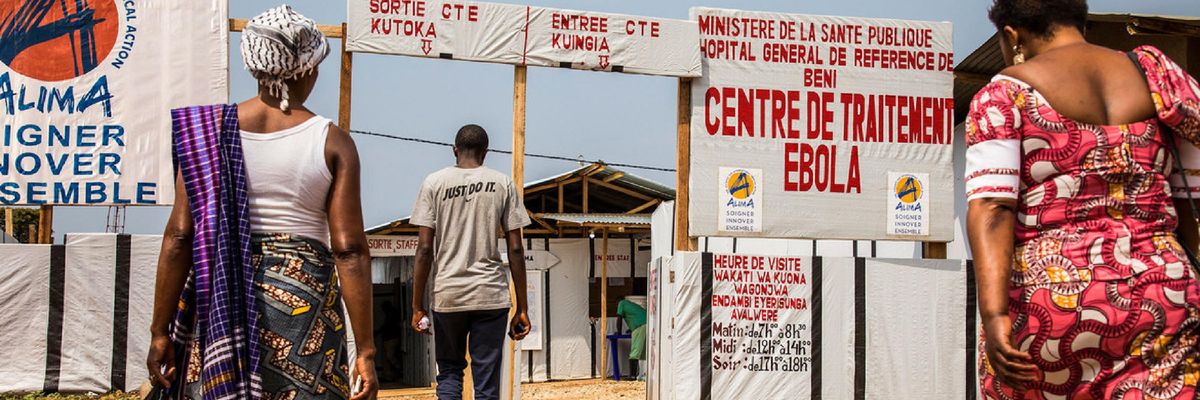
People visit family members at an Ebola treatment center in Congo. (Photo: Vincent Tremeau/World Bank)
An investigation into sexual abuse related to United Nations efforts to contain the Ebola outbreak in Congo found over 80 alleged perpetrators, a quarter of whom were employed by the U.N.'s public health agency, according to a report released Tuesday.
The findings come from a panel commissioned by the World Health Organization (WHO) in response to media reports about abuse claims during the 2018-2020 mission in the African country.
"This is the biggest finding of sexual abuse perpetrated during a single U.N. initiative in one area or one country during the time-bound period of a U.N. response effort," Paula Donovan, co-director of the Code Blue Campaign, which works to end sexual exploitation by U.N. peacekeepers, told the Associated Press. The AP previously reported on some allegations.
According to the panel:
The review team was able to obtain the identity of 83 alleged perpetrators. In 21 cases, the review team was able to establish with certainty that the alleged perpetrators were WHO employees during the response... The alleged perpetrators include both Congolese nationals and foreigners. The majority of the alleged perpetrators were Congolese staff hired on a temporary basis who took advantage of their apparent authority to obtain sexual favors.
Investigators documented nine allegations of rape. The youngest victim was believed to be only 13 years old. Some survivors reported that no protection was used. Six said they experienced miscarriages. Others shared accounts of alleged abusers coercing them into having an abortion.
Allegations of sexual abuse, exploitation, and harassment "were made against WHO doctors, consultants, and senior staff, some national and some international, as well as other medical staff who were deployed by the Ministry of Health and others," the report says.
The report notes allegations were also made against staff in the immunization and risk communication team, people working in human resources, drivers, and security staff. It adds that despite detailed accounts from victims, "the majority of alleged and identified perpetrators have simply denied the facts, even in the presence of corroborating evidence, when they have not simply taken refuge behind the argument of a 'consensual relationship.'"
Sophie Harman, a professor of international politics at Queen Mary University of London, warned that the panel's revelations may be just the beginning, telling the AP that "more cases are bound to come forward across the world."
Harman also called for a shift to focus on helping survivors, which she said requires not only prosecution of perpetrators but also "full accountability on the part of WHO leadership who knew about the rumors and reports, and yet took years to act on this issue."
WHO Director-General Tedros Adhanom Ghebreyesus addressed the findings during a Tuesday press conference to unveil the report, which he said "makes for harrowing reading."
"The first thing I want to say is to the victims and survivors of the sexual exploitation and abuse described in the commission's report," Tedros said. "I'm sorry. I'm sorry for what was done to you by people who were employed by WHO to serve and protect you."
"I'm sorry for the ongoing suffering that these events must cause," he continued. "I'm sorry that you have had to relive them in talking to the commission about your experiences. Thank you for your courage in doing so. What happened to you should never happen to anyone. It is inexcusable."
Tedros said that "as the director-general, I take ultimate responsibility for the behavior of the people we employ, and for any failings in our systems that allowed this behavior," adding that "it is my top priority to ensure that the perpetrators are not excused, but are held to account."
The agency leader pledged that the WHO will take steps to support, protect, and ensure justice for the survivors; address management and staff failures; and reform structures and culture.
Some of those actions include banning identified perpetrators from future employment with the WHO, as well as notifying the broader U.N. system; terminating the contracts of four people identified as perpetrators who were still employed by the agency; and referring allegations of rape to authorities in Congo and, if applicable, the alleged perpetrators' countries.
The conduct described in the report "is a sickening betrayal of the people we serve," said Tedros. "But it's also a betrayal of our colleagues who put themselves in harm's way to serve others, including those who paid the ultimate price, killed by armed groups in North Kivu, while working to protect the health of vulnerable communities from Ebola."
Thanking the commission as well as journalists who previously reported on the abuse, he added that "this is a dark day for WHO--but by shining a light on the failures of individuals and the organization, we hope that the victims feel that their voices have been heard and acted on."
The National Sexual Assault Online Hotline is 1-800-656-HOPE (4673) and a live chat service is available at www.rainn.org. Both offer 24/7, free, and confidential support.
Dear Common Dreams reader, It’s been nearly 30 years since I co-founded Common Dreams with my late wife, Lina Newhouser. We had the radical notion that journalism should serve the public good, not corporate profits. It was clear to us from the outset what it would take to build such a project. No paid advertisements. No corporate sponsors. No millionaire publisher telling us what to think or do. Many people said we wouldn't last a year, but we proved those doubters wrong. Together with a tremendous team of journalists and dedicated staff, we built an independent media outlet free from the constraints of profits and corporate control. Our mission has always been simple: To inform. To inspire. To ignite change for the common good. Building Common Dreams was not easy. Our survival was never guaranteed. When you take on the most powerful forces—Wall Street greed, fossil fuel industry destruction, Big Tech lobbyists, and uber-rich oligarchs who have spent billions upon billions rigging the economy and democracy in their favor—the only bulwark you have is supporters who believe in your work. But here’s the urgent message from me today. It's never been this bad out there. And it's never been this hard to keep us going. At the very moment Common Dreams is most needed, the threats we face are intensifying. We need your support now more than ever. We don't accept corporate advertising and never will. We don't have a paywall because we don't think people should be blocked from critical news based on their ability to pay. Everything we do is funded by the donations of readers like you. When everyone does the little they can afford, we are strong. But if that support retreats or dries up, so do we. Will you donate now to make sure Common Dreams not only survives but thrives? —Craig Brown, Co-founder |
An investigation into sexual abuse related to United Nations efforts to contain the Ebola outbreak in Congo found over 80 alleged perpetrators, a quarter of whom were employed by the U.N.'s public health agency, according to a report released Tuesday.
The findings come from a panel commissioned by the World Health Organization (WHO) in response to media reports about abuse claims during the 2018-2020 mission in the African country.
"This is the biggest finding of sexual abuse perpetrated during a single U.N. initiative in one area or one country during the time-bound period of a U.N. response effort," Paula Donovan, co-director of the Code Blue Campaign, which works to end sexual exploitation by U.N. peacekeepers, told the Associated Press. The AP previously reported on some allegations.
According to the panel:
The review team was able to obtain the identity of 83 alleged perpetrators. In 21 cases, the review team was able to establish with certainty that the alleged perpetrators were WHO employees during the response... The alleged perpetrators include both Congolese nationals and foreigners. The majority of the alleged perpetrators were Congolese staff hired on a temporary basis who took advantage of their apparent authority to obtain sexual favors.
Investigators documented nine allegations of rape. The youngest victim was believed to be only 13 years old. Some survivors reported that no protection was used. Six said they experienced miscarriages. Others shared accounts of alleged abusers coercing them into having an abortion.
Allegations of sexual abuse, exploitation, and harassment "were made against WHO doctors, consultants, and senior staff, some national and some international, as well as other medical staff who were deployed by the Ministry of Health and others," the report says.
The report notes allegations were also made against staff in the immunization and risk communication team, people working in human resources, drivers, and security staff. It adds that despite detailed accounts from victims, "the majority of alleged and identified perpetrators have simply denied the facts, even in the presence of corroborating evidence, when they have not simply taken refuge behind the argument of a 'consensual relationship.'"
Sophie Harman, a professor of international politics at Queen Mary University of London, warned that the panel's revelations may be just the beginning, telling the AP that "more cases are bound to come forward across the world."
Harman also called for a shift to focus on helping survivors, which she said requires not only prosecution of perpetrators but also "full accountability on the part of WHO leadership who knew about the rumors and reports, and yet took years to act on this issue."
WHO Director-General Tedros Adhanom Ghebreyesus addressed the findings during a Tuesday press conference to unveil the report, which he said "makes for harrowing reading."
"The first thing I want to say is to the victims and survivors of the sexual exploitation and abuse described in the commission's report," Tedros said. "I'm sorry. I'm sorry for what was done to you by people who were employed by WHO to serve and protect you."
"I'm sorry for the ongoing suffering that these events must cause," he continued. "I'm sorry that you have had to relive them in talking to the commission about your experiences. Thank you for your courage in doing so. What happened to you should never happen to anyone. It is inexcusable."
Tedros said that "as the director-general, I take ultimate responsibility for the behavior of the people we employ, and for any failings in our systems that allowed this behavior," adding that "it is my top priority to ensure that the perpetrators are not excused, but are held to account."
The agency leader pledged that the WHO will take steps to support, protect, and ensure justice for the survivors; address management and staff failures; and reform structures and culture.
Some of those actions include banning identified perpetrators from future employment with the WHO, as well as notifying the broader U.N. system; terminating the contracts of four people identified as perpetrators who were still employed by the agency; and referring allegations of rape to authorities in Congo and, if applicable, the alleged perpetrators' countries.
The conduct described in the report "is a sickening betrayal of the people we serve," said Tedros. "But it's also a betrayal of our colleagues who put themselves in harm's way to serve others, including those who paid the ultimate price, killed by armed groups in North Kivu, while working to protect the health of vulnerable communities from Ebola."
Thanking the commission as well as journalists who previously reported on the abuse, he added that "this is a dark day for WHO--but by shining a light on the failures of individuals and the organization, we hope that the victims feel that their voices have been heard and acted on."
The National Sexual Assault Online Hotline is 1-800-656-HOPE (4673) and a live chat service is available at www.rainn.org. Both offer 24/7, free, and confidential support.
An investigation into sexual abuse related to United Nations efforts to contain the Ebola outbreak in Congo found over 80 alleged perpetrators, a quarter of whom were employed by the U.N.'s public health agency, according to a report released Tuesday.
The findings come from a panel commissioned by the World Health Organization (WHO) in response to media reports about abuse claims during the 2018-2020 mission in the African country.
"This is the biggest finding of sexual abuse perpetrated during a single U.N. initiative in one area or one country during the time-bound period of a U.N. response effort," Paula Donovan, co-director of the Code Blue Campaign, which works to end sexual exploitation by U.N. peacekeepers, told the Associated Press. The AP previously reported on some allegations.
According to the panel:
The review team was able to obtain the identity of 83 alleged perpetrators. In 21 cases, the review team was able to establish with certainty that the alleged perpetrators were WHO employees during the response... The alleged perpetrators include both Congolese nationals and foreigners. The majority of the alleged perpetrators were Congolese staff hired on a temporary basis who took advantage of their apparent authority to obtain sexual favors.
Investigators documented nine allegations of rape. The youngest victim was believed to be only 13 years old. Some survivors reported that no protection was used. Six said they experienced miscarriages. Others shared accounts of alleged abusers coercing them into having an abortion.
Allegations of sexual abuse, exploitation, and harassment "were made against WHO doctors, consultants, and senior staff, some national and some international, as well as other medical staff who were deployed by the Ministry of Health and others," the report says.
The report notes allegations were also made against staff in the immunization and risk communication team, people working in human resources, drivers, and security staff. It adds that despite detailed accounts from victims, "the majority of alleged and identified perpetrators have simply denied the facts, even in the presence of corroborating evidence, when they have not simply taken refuge behind the argument of a 'consensual relationship.'"
Sophie Harman, a professor of international politics at Queen Mary University of London, warned that the panel's revelations may be just the beginning, telling the AP that "more cases are bound to come forward across the world."
Harman also called for a shift to focus on helping survivors, which she said requires not only prosecution of perpetrators but also "full accountability on the part of WHO leadership who knew about the rumors and reports, and yet took years to act on this issue."
WHO Director-General Tedros Adhanom Ghebreyesus addressed the findings during a Tuesday press conference to unveil the report, which he said "makes for harrowing reading."
"The first thing I want to say is to the victims and survivors of the sexual exploitation and abuse described in the commission's report," Tedros said. "I'm sorry. I'm sorry for what was done to you by people who were employed by WHO to serve and protect you."
"I'm sorry for the ongoing suffering that these events must cause," he continued. "I'm sorry that you have had to relive them in talking to the commission about your experiences. Thank you for your courage in doing so. What happened to you should never happen to anyone. It is inexcusable."
Tedros said that "as the director-general, I take ultimate responsibility for the behavior of the people we employ, and for any failings in our systems that allowed this behavior," adding that "it is my top priority to ensure that the perpetrators are not excused, but are held to account."
The agency leader pledged that the WHO will take steps to support, protect, and ensure justice for the survivors; address management and staff failures; and reform structures and culture.
Some of those actions include banning identified perpetrators from future employment with the WHO, as well as notifying the broader U.N. system; terminating the contracts of four people identified as perpetrators who were still employed by the agency; and referring allegations of rape to authorities in Congo and, if applicable, the alleged perpetrators' countries.
The conduct described in the report "is a sickening betrayal of the people we serve," said Tedros. "But it's also a betrayal of our colleagues who put themselves in harm's way to serve others, including those who paid the ultimate price, killed by armed groups in North Kivu, while working to protect the health of vulnerable communities from Ebola."
Thanking the commission as well as journalists who previously reported on the abuse, he added that "this is a dark day for WHO--but by shining a light on the failures of individuals and the organization, we hope that the victims feel that their voices have been heard and acted on."
The National Sexual Assault Online Hotline is 1-800-656-HOPE (4673) and a live chat service is available at www.rainn.org. Both offer 24/7, free, and confidential support.