

SUBSCRIBE TO OUR FREE NEWSLETTER
Daily news & progressive opinion—funded by the people, not the corporations—delivered straight to your inbox.
5
#000000
#FFFFFF
To donate by check, phone, or other method, see our More Ways to Give page.
Daily news & progressive opinion—funded by the people, not the corporations—delivered straight to your inbox.
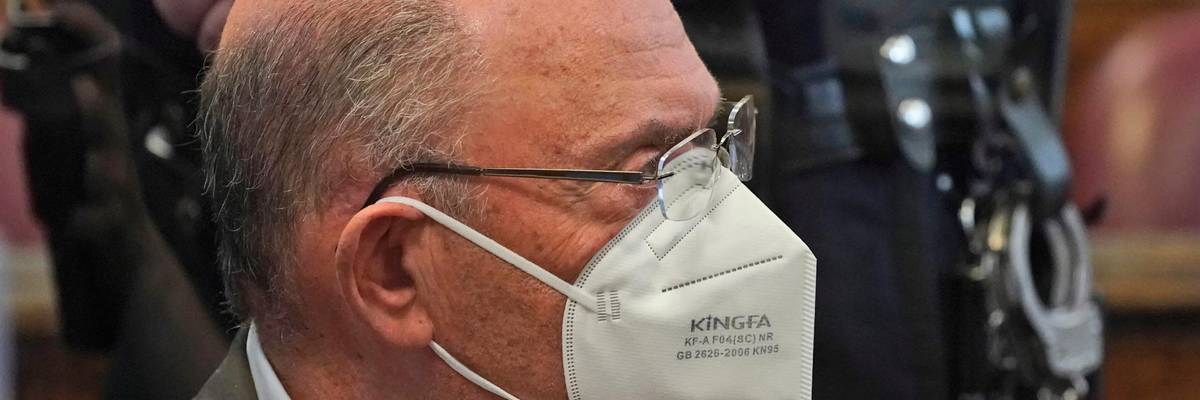
Trump Organization CFO Allen Weisselberg appears in a New York court after turning himself in to authorities on July 1, 2021 in New York City. (Photo: Seth Wenig/Pool/Getty Images)
As longtime Trump Organization chief financial officer Allen Weisselberg was charged Thursday with 15 felony counts in connection with what Manhattan prosecutors called "a sweeping and audacious illegal payments scheme" involving alleged tax fraud and other criminal offenses, legal and other experts weighed in on what the charges mean for other company executives--including former President Donald Trump himself.
Appearing in court Thursday after surrendering to the Manhattan District Attorney's Office, Weisselberg--who pleaded not guilty on all counts--listened as Assistant District Attorney Carey Dunne accused him of a involvement in "a 15-year-long tax fraud scheme involving off-the-books payments."
"This is not a 'standard practice in the business community,' nor was it the act of a rogue or isolated employee," Dunne asserted. "Instead, it was orchestrated by the most senior executives, who were financially benefiting themselves and the company, by getting secret pay raises at the expense of state and federal taxpayers."
As Mother Jones politics reporter Russ Choma explains:
According to the indictment, Weisselberg and the Trump Organization did not report the $1.7 million the company spent on various benefits for Weisselberg as employee compensation. For example, company-covered expenses like the rent on Weisselberg's luxury apartment in a Trump-owned building were listed as "rent expense" instead of as employee compensation, allowing the company to avoid tax withholdings and its own taxes on the compensation. And Weisselberg, the indictment alleges, never disclosed his company-provided perks--which included his car lease, private school tuition for his grandchildren, carpets for his Florida vacation home, and direct payments of as much as $29,000 in cash--on his own tax returns.
In total, prosecutors allege Weisselberg evaded as much as $900,000 in taxes and improperly claimed another $133,000 in tax refunds.
Dunne added that while Weisselberg is allegedly at the center of the criminal scheme, Trump "signed, himself, many of the illegal compensation checks."
Noah Bookbinder, a former federal prosecutor who is now president of Citizens for Responsibility and Ethics in Washington (CREW), said in a statement that "it is hard to overstate how big a deal" Weisselberg's indictment is.
"Criminal charges against corporations are exceedingly rare," Bookbinder explained. "For the Trump Organization and one of its top executives to face 15 counts on a scheme to defraud that goes back at least 15 years is extraordinary. These are serious charges, and they may be just the beginning."
" Donald Trump, both as president and in his private life, has a long record of ignoring the law for his personal benefit," Bookbinder added. "Today's indictment is a much-needed step toward accountability for these abuses, and we hope and trust there will be more accountability to come."
"The message is: 'Allen, this is about you.' That then begs the broader question, what does this mean in terms of what he does next?"
--Rebecca Ricigliano, former prosecutor
There has been considerable speculation about whether Trump will be charged in connection with the alleged scheme. However, some legal experts noted what they believe to be the unlikelihood of such a move absent cooperation by Weisselberg, whose indictment will be the most consequential test of loyalty for an executive described by one former Trump Organization insider as a "soldier" who was "good at doing what Donald wanted him to do."
Nevertheless, in a Thursday CNN interview, Michael Cohen, the disbarred former Trump attorney previously sentenced to three years in prison for crimes related to the ex-president, said securing the cooperation of Weisselberg--who is "not the keystone to the investigation"--isn't a prerequisite for indicting the former president or members of his inner circle.
"I don't want people to think that this case is about Allen Weisselberg," said Cohen. "It is substantially larger in scope than just that aspect. That is but the tip, it's the tip of the iceberg, and there is so much more that's going to be coming."
"There are a multitude of documents in the possession of prosecutors that tie Donald Trump to everything," Cohen added, "because everything went through Donald."
Rebecca Ricigliano, another former federal prosecutor, told CNN that the indictment "reads a lot like classic, old-school fraud" and seemed designed to pressure Weisselberg into turning against Trump.
"This is clearly an assault against Weisselberg," said Ricigliano. "The message is: 'Allen, this is about you.' That then begs the broader question, what does this mean in terms of what he does next?"
Dear Common Dreams reader, It’s been nearly 30 years since I co-founded Common Dreams with my late wife, Lina Newhouser. We had the radical notion that journalism should serve the public good, not corporate profits. It was clear to us from the outset what it would take to build such a project. No paid advertisements. No corporate sponsors. No millionaire publisher telling us what to think or do. Many people said we wouldn't last a year, but we proved those doubters wrong. Together with a tremendous team of journalists and dedicated staff, we built an independent media outlet free from the constraints of profits and corporate control. Our mission has always been simple: To inform. To inspire. To ignite change for the common good. Building Common Dreams was not easy. Our survival was never guaranteed. When you take on the most powerful forces—Wall Street greed, fossil fuel industry destruction, Big Tech lobbyists, and uber-rich oligarchs who have spent billions upon billions rigging the economy and democracy in their favor—the only bulwark you have is supporters who believe in your work. But here’s the urgent message from me today. It's never been this bad out there. And it's never been this hard to keep us going. At the very moment Common Dreams is most needed, the threats we face are intensifying. We need your support now more than ever. We don't accept corporate advertising and never will. We don't have a paywall because we don't think people should be blocked from critical news based on their ability to pay. Everything we do is funded by the donations of readers like you. When everyone does the little they can afford, we are strong. But if that support retreats or dries up, so do we. Will you donate now to make sure Common Dreams not only survives but thrives? —Craig Brown, Co-founder |
As longtime Trump Organization chief financial officer Allen Weisselberg was charged Thursday with 15 felony counts in connection with what Manhattan prosecutors called "a sweeping and audacious illegal payments scheme" involving alleged tax fraud and other criminal offenses, legal and other experts weighed in on what the charges mean for other company executives--including former President Donald Trump himself.
Appearing in court Thursday after surrendering to the Manhattan District Attorney's Office, Weisselberg--who pleaded not guilty on all counts--listened as Assistant District Attorney Carey Dunne accused him of a involvement in "a 15-year-long tax fraud scheme involving off-the-books payments."
"This is not a 'standard practice in the business community,' nor was it the act of a rogue or isolated employee," Dunne asserted. "Instead, it was orchestrated by the most senior executives, who were financially benefiting themselves and the company, by getting secret pay raises at the expense of state and federal taxpayers."
As Mother Jones politics reporter Russ Choma explains:
According to the indictment, Weisselberg and the Trump Organization did not report the $1.7 million the company spent on various benefits for Weisselberg as employee compensation. For example, company-covered expenses like the rent on Weisselberg's luxury apartment in a Trump-owned building were listed as "rent expense" instead of as employee compensation, allowing the company to avoid tax withholdings and its own taxes on the compensation. And Weisselberg, the indictment alleges, never disclosed his company-provided perks--which included his car lease, private school tuition for his grandchildren, carpets for his Florida vacation home, and direct payments of as much as $29,000 in cash--on his own tax returns.
In total, prosecutors allege Weisselberg evaded as much as $900,000 in taxes and improperly claimed another $133,000 in tax refunds.
Dunne added that while Weisselberg is allegedly at the center of the criminal scheme, Trump "signed, himself, many of the illegal compensation checks."
Noah Bookbinder, a former federal prosecutor who is now president of Citizens for Responsibility and Ethics in Washington (CREW), said in a statement that "it is hard to overstate how big a deal" Weisselberg's indictment is.
"Criminal charges against corporations are exceedingly rare," Bookbinder explained. "For the Trump Organization and one of its top executives to face 15 counts on a scheme to defraud that goes back at least 15 years is extraordinary. These are serious charges, and they may be just the beginning."
" Donald Trump, both as president and in his private life, has a long record of ignoring the law for his personal benefit," Bookbinder added. "Today's indictment is a much-needed step toward accountability for these abuses, and we hope and trust there will be more accountability to come."
"The message is: 'Allen, this is about you.' That then begs the broader question, what does this mean in terms of what he does next?"
--Rebecca Ricigliano, former prosecutor
There has been considerable speculation about whether Trump will be charged in connection with the alleged scheme. However, some legal experts noted what they believe to be the unlikelihood of such a move absent cooperation by Weisselberg, whose indictment will be the most consequential test of loyalty for an executive described by one former Trump Organization insider as a "soldier" who was "good at doing what Donald wanted him to do."
Nevertheless, in a Thursday CNN interview, Michael Cohen, the disbarred former Trump attorney previously sentenced to three years in prison for crimes related to the ex-president, said securing the cooperation of Weisselberg--who is "not the keystone to the investigation"--isn't a prerequisite for indicting the former president or members of his inner circle.
"I don't want people to think that this case is about Allen Weisselberg," said Cohen. "It is substantially larger in scope than just that aspect. That is but the tip, it's the tip of the iceberg, and there is so much more that's going to be coming."
"There are a multitude of documents in the possession of prosecutors that tie Donald Trump to everything," Cohen added, "because everything went through Donald."
Rebecca Ricigliano, another former federal prosecutor, told CNN that the indictment "reads a lot like classic, old-school fraud" and seemed designed to pressure Weisselberg into turning against Trump.
"This is clearly an assault against Weisselberg," said Ricigliano. "The message is: 'Allen, this is about you.' That then begs the broader question, what does this mean in terms of what he does next?"
As longtime Trump Organization chief financial officer Allen Weisselberg was charged Thursday with 15 felony counts in connection with what Manhattan prosecutors called "a sweeping and audacious illegal payments scheme" involving alleged tax fraud and other criminal offenses, legal and other experts weighed in on what the charges mean for other company executives--including former President Donald Trump himself.
Appearing in court Thursday after surrendering to the Manhattan District Attorney's Office, Weisselberg--who pleaded not guilty on all counts--listened as Assistant District Attorney Carey Dunne accused him of a involvement in "a 15-year-long tax fraud scheme involving off-the-books payments."
"This is not a 'standard practice in the business community,' nor was it the act of a rogue or isolated employee," Dunne asserted. "Instead, it was orchestrated by the most senior executives, who were financially benefiting themselves and the company, by getting secret pay raises at the expense of state and federal taxpayers."
As Mother Jones politics reporter Russ Choma explains:
According to the indictment, Weisselberg and the Trump Organization did not report the $1.7 million the company spent on various benefits for Weisselberg as employee compensation. For example, company-covered expenses like the rent on Weisselberg's luxury apartment in a Trump-owned building were listed as "rent expense" instead of as employee compensation, allowing the company to avoid tax withholdings and its own taxes on the compensation. And Weisselberg, the indictment alleges, never disclosed his company-provided perks--which included his car lease, private school tuition for his grandchildren, carpets for his Florida vacation home, and direct payments of as much as $29,000 in cash--on his own tax returns.
In total, prosecutors allege Weisselberg evaded as much as $900,000 in taxes and improperly claimed another $133,000 in tax refunds.
Dunne added that while Weisselberg is allegedly at the center of the criminal scheme, Trump "signed, himself, many of the illegal compensation checks."
Noah Bookbinder, a former federal prosecutor who is now president of Citizens for Responsibility and Ethics in Washington (CREW), said in a statement that "it is hard to overstate how big a deal" Weisselberg's indictment is.
"Criminal charges against corporations are exceedingly rare," Bookbinder explained. "For the Trump Organization and one of its top executives to face 15 counts on a scheme to defraud that goes back at least 15 years is extraordinary. These are serious charges, and they may be just the beginning."
" Donald Trump, both as president and in his private life, has a long record of ignoring the law for his personal benefit," Bookbinder added. "Today's indictment is a much-needed step toward accountability for these abuses, and we hope and trust there will be more accountability to come."
"The message is: 'Allen, this is about you.' That then begs the broader question, what does this mean in terms of what he does next?"
--Rebecca Ricigliano, former prosecutor
There has been considerable speculation about whether Trump will be charged in connection with the alleged scheme. However, some legal experts noted what they believe to be the unlikelihood of such a move absent cooperation by Weisselberg, whose indictment will be the most consequential test of loyalty for an executive described by one former Trump Organization insider as a "soldier" who was "good at doing what Donald wanted him to do."
Nevertheless, in a Thursday CNN interview, Michael Cohen, the disbarred former Trump attorney previously sentenced to three years in prison for crimes related to the ex-president, said securing the cooperation of Weisselberg--who is "not the keystone to the investigation"--isn't a prerequisite for indicting the former president or members of his inner circle.
"I don't want people to think that this case is about Allen Weisselberg," said Cohen. "It is substantially larger in scope than just that aspect. That is but the tip, it's the tip of the iceberg, and there is so much more that's going to be coming."
"There are a multitude of documents in the possession of prosecutors that tie Donald Trump to everything," Cohen added, "because everything went through Donald."
Rebecca Ricigliano, another former federal prosecutor, told CNN that the indictment "reads a lot like classic, old-school fraud" and seemed designed to pressure Weisselberg into turning against Trump.
"This is clearly an assault against Weisselberg," said Ricigliano. "The message is: 'Allen, this is about you.' That then begs the broader question, what does this mean in terms of what he does next?"

