SUBSCRIBE TO OUR FREE NEWSLETTER
Daily news & progressive opinion—funded by the people, not the corporations—delivered straight to your inbox.
5
#000000
#FFFFFF
To donate by check, phone, or other method, see our More Ways to Give page.
Daily news & progressive opinion—funded by the people, not the corporations—delivered straight to your inbox.

"There was no other relief, our last option was to hunger strike," said Joe Mejia, shown above in a photo taken for the project. (Photo: Carolyn Fong)
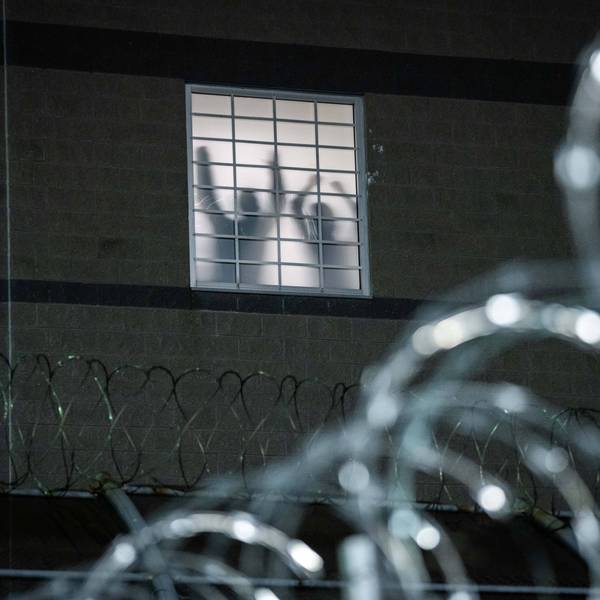
From forced hydration, feeding, and urinary catherization to involuntary blood draws and the use of restraints, hunger strikes over poor conditions at immigrant detention facilities across the United States have been met with "cruelty and coercion," according to a first-of-its-kind report published Wednesday.
The report, entitled Behind Closed Doors: Abuse and Retaliation Against Hunger Strikers in U.S. Immigration Detention (pdf), is based on over 10,000 pages of previously undisclosed documents obtained via public records request as well as interviews with formerly detained individuals who participated in such strikes during the Covid-19 pandemic last year.
First reported on by BuzzFeed News, the Behind Closed Doors investigation was conducted by the ACLU and Physicians for Human Rights (PHR). It focused on hunger strikes by at least 1,378 people in U.S. Immigration and Customs Enforcement (ICE) custody at private and public facilities under former Presidents Barack Obama and Donald Trump.
The groups' report begins with the story of John Otieno, an East African asylum-seeker who lost 28 pounds while hunger striking to protest pandemic-era detention conditions and seek his release. He now takes medication for post-traumatic stress disorder and depression.
"Rather than listen to his pleas, ICE retaliated by locking him in a freezing cold room, force-feeding him through a nasogastric tube against his will, and transferring him to three different facilities," the report says. "Only after subjecting him to all of this did ICE finally release him from detention in late 2020."
BuzzFeed reported that Otieno was force-fed "by staff at GEO Group, one of the largest private prison companies in the U.S. that ICE pays to detain immigrants."
"It was cruelty," Otieno told the outlet. "It's humiliating to me as a man when some other man can do as he wishes with my body."
Eunice Cho, a senior staff attorney at the ACLU's National Prison Project and one of the report's lead authors, told BuzzFeed that force-feeding is not necessarily illegal if ICE obtains a court order, even though medical experts and organizations argue the practice is unethical.
However, forced urinary catheterization, or inserting a tube into the urethra to collect vitals from hunger strikers, "is considered illegal under international law," explained Joanna Naples-Mitchell, a PHR researcher and another lead author of the report. "It's cruel, degrading treatment, or torture."
Along with those practices ACLU and PHR found instances of hunger strikers enduring solitary confinement without medical justification, use of excessive force, and denial of basic privileges. They also faced insufficient access to interpreter services, retaliatory deportations and transfers, coercive meetings with consular officials and religious leaders, and the threat of prosecution.
"Hunger striking is a form of protest that detained people may take because they see no other options," Cho said in a statement. "No one makes this decision lightly."
That point was emphasized by Joe Mejia, a hunger striker interviewed for the report whose protest took place during the pandemic in July 2020.
"There was no other relief, our last option was to hunger strike," he said. "No one wants to starve, to feel their intestines move inside their body because of hunger."
"The housing, conditions, clothing, food, hygiene--they try to make individuals in ICE detention miserable. We are not guaranteed legal representation," Mejia added. "They are using immigration detention as a form of punishment for immigrants... These are human lives."
According to Cho, "The fact that ICE systemically responds to these strikes--which are free speech protected by the First Amendment--with coercion and violence, instead of a good faith effort to respond to the needs raised by detained people, speaks to the inherently abusive and inhumane nature of immigration detention."
"These abuses have continued in the shadows, without transparency, like so much of what happens in ICE detention," she said. "We hope this report can shed light on the abuse that routinely takes place and underscore the need to end this dehumanizing detention system."
The report includes recommendations for U.S. Department of Homeland Security--which oversees ICE--as well as the Justice Department, Congress, offices of the Federal Public Defender, state medical boards, medical and health associations and individuals, the United Nations High Commissioner for Human Rights, U.N. special procedures and treaty bodies, and the Inter-American Commission on Human Rights.
Naples-Mitchell, in a statement Wednesday, highlighted that "these grave abuses against hunger strikers were not only a hallmark of the Trump years but were also routine under the Obama administration when Joe Biden served as vice president."
"Today, President Biden has both an obligation and an opportunity to acknowledge the abusive system that leads so many people to hunger strike," she said. "His administration should change course now by ending ICE's cruel response to hunger strikers, heeding their urgent calls for humane treatment and release, and starting to phase out the use of immigration detention entirely."
Dear Common Dreams reader, It’s been nearly 30 years since I co-founded Common Dreams with my late wife, Lina Newhouser. We had the radical notion that journalism should serve the public good, not corporate profits. It was clear to us from the outset what it would take to build such a project. No paid advertisements. No corporate sponsors. No millionaire publisher telling us what to think or do. Many people said we wouldn't last a year, but we proved those doubters wrong. Together with a tremendous team of journalists and dedicated staff, we built an independent media outlet free from the constraints of profits and corporate control. Our mission has always been simple: To inform. To inspire. To ignite change for the common good. Building Common Dreams was not easy. Our survival was never guaranteed. When you take on the most powerful forces—Wall Street greed, fossil fuel industry destruction, Big Tech lobbyists, and uber-rich oligarchs who have spent billions upon billions rigging the economy and democracy in their favor—the only bulwark you have is supporters who believe in your work. But here’s the urgent message from me today. It's never been this bad out there. And it's never been this hard to keep us going. At the very moment Common Dreams is most needed, the threats we face are intensifying. We need your support now more than ever. We don't accept corporate advertising and never will. We don't have a paywall because we don't think people should be blocked from critical news based on their ability to pay. Everything we do is funded by the donations of readers like you. When everyone does the little they can afford, we are strong. But if that support retreats or dries up, so do we. Will you donate now to make sure Common Dreams not only survives but thrives? —Craig Brown, Co-founder |
From forced hydration, feeding, and urinary catherization to involuntary blood draws and the use of restraints, hunger strikes over poor conditions at immigrant detention facilities across the United States have been met with "cruelty and coercion," according to a first-of-its-kind report published Wednesday.
The report, entitled Behind Closed Doors: Abuse and Retaliation Against Hunger Strikers in U.S. Immigration Detention (pdf), is based on over 10,000 pages of previously undisclosed documents obtained via public records request as well as interviews with formerly detained individuals who participated in such strikes during the Covid-19 pandemic last year.
First reported on by BuzzFeed News, the Behind Closed Doors investigation was conducted by the ACLU and Physicians for Human Rights (PHR). It focused on hunger strikes by at least 1,378 people in U.S. Immigration and Customs Enforcement (ICE) custody at private and public facilities under former Presidents Barack Obama and Donald Trump.
The groups' report begins with the story of John Otieno, an East African asylum-seeker who lost 28 pounds while hunger striking to protest pandemic-era detention conditions and seek his release. He now takes medication for post-traumatic stress disorder and depression.
"Rather than listen to his pleas, ICE retaliated by locking him in a freezing cold room, force-feeding him through a nasogastric tube against his will, and transferring him to three different facilities," the report says. "Only after subjecting him to all of this did ICE finally release him from detention in late 2020."
BuzzFeed reported that Otieno was force-fed "by staff at GEO Group, one of the largest private prison companies in the U.S. that ICE pays to detain immigrants."
"It was cruelty," Otieno told the outlet. "It's humiliating to me as a man when some other man can do as he wishes with my body."
Eunice Cho, a senior staff attorney at the ACLU's National Prison Project and one of the report's lead authors, told BuzzFeed that force-feeding is not necessarily illegal if ICE obtains a court order, even though medical experts and organizations argue the practice is unethical.
However, forced urinary catheterization, or inserting a tube into the urethra to collect vitals from hunger strikers, "is considered illegal under international law," explained Joanna Naples-Mitchell, a PHR researcher and another lead author of the report. "It's cruel, degrading treatment, or torture."
Along with those practices ACLU and PHR found instances of hunger strikers enduring solitary confinement without medical justification, use of excessive force, and denial of basic privileges. They also faced insufficient access to interpreter services, retaliatory deportations and transfers, coercive meetings with consular officials and religious leaders, and the threat of prosecution.
"Hunger striking is a form of protest that detained people may take because they see no other options," Cho said in a statement. "No one makes this decision lightly."
That point was emphasized by Joe Mejia, a hunger striker interviewed for the report whose protest took place during the pandemic in July 2020.
"There was no other relief, our last option was to hunger strike," he said. "No one wants to starve, to feel their intestines move inside their body because of hunger."
"The housing, conditions, clothing, food, hygiene--they try to make individuals in ICE detention miserable. We are not guaranteed legal representation," Mejia added. "They are using immigration detention as a form of punishment for immigrants... These are human lives."
According to Cho, "The fact that ICE systemically responds to these strikes--which are free speech protected by the First Amendment--with coercion and violence, instead of a good faith effort to respond to the needs raised by detained people, speaks to the inherently abusive and inhumane nature of immigration detention."
"These abuses have continued in the shadows, without transparency, like so much of what happens in ICE detention," she said. "We hope this report can shed light on the abuse that routinely takes place and underscore the need to end this dehumanizing detention system."
The report includes recommendations for U.S. Department of Homeland Security--which oversees ICE--as well as the Justice Department, Congress, offices of the Federal Public Defender, state medical boards, medical and health associations and individuals, the United Nations High Commissioner for Human Rights, U.N. special procedures and treaty bodies, and the Inter-American Commission on Human Rights.
Naples-Mitchell, in a statement Wednesday, highlighted that "these grave abuses against hunger strikers were not only a hallmark of the Trump years but were also routine under the Obama administration when Joe Biden served as vice president."
"Today, President Biden has both an obligation and an opportunity to acknowledge the abusive system that leads so many people to hunger strike," she said. "His administration should change course now by ending ICE's cruel response to hunger strikers, heeding their urgent calls for humane treatment and release, and starting to phase out the use of immigration detention entirely."
From forced hydration, feeding, and urinary catherization to involuntary blood draws and the use of restraints, hunger strikes over poor conditions at immigrant detention facilities across the United States have been met with "cruelty and coercion," according to a first-of-its-kind report published Wednesday.
The report, entitled Behind Closed Doors: Abuse and Retaliation Against Hunger Strikers in U.S. Immigration Detention (pdf), is based on over 10,000 pages of previously undisclosed documents obtained via public records request as well as interviews with formerly detained individuals who participated in such strikes during the Covid-19 pandemic last year.
First reported on by BuzzFeed News, the Behind Closed Doors investigation was conducted by the ACLU and Physicians for Human Rights (PHR). It focused on hunger strikes by at least 1,378 people in U.S. Immigration and Customs Enforcement (ICE) custody at private and public facilities under former Presidents Barack Obama and Donald Trump.
The groups' report begins with the story of John Otieno, an East African asylum-seeker who lost 28 pounds while hunger striking to protest pandemic-era detention conditions and seek his release. He now takes medication for post-traumatic stress disorder and depression.
"Rather than listen to his pleas, ICE retaliated by locking him in a freezing cold room, force-feeding him through a nasogastric tube against his will, and transferring him to three different facilities," the report says. "Only after subjecting him to all of this did ICE finally release him from detention in late 2020."
BuzzFeed reported that Otieno was force-fed "by staff at GEO Group, one of the largest private prison companies in the U.S. that ICE pays to detain immigrants."
"It was cruelty," Otieno told the outlet. "It's humiliating to me as a man when some other man can do as he wishes with my body."
Eunice Cho, a senior staff attorney at the ACLU's National Prison Project and one of the report's lead authors, told BuzzFeed that force-feeding is not necessarily illegal if ICE obtains a court order, even though medical experts and organizations argue the practice is unethical.
However, forced urinary catheterization, or inserting a tube into the urethra to collect vitals from hunger strikers, "is considered illegal under international law," explained Joanna Naples-Mitchell, a PHR researcher and another lead author of the report. "It's cruel, degrading treatment, or torture."
Along with those practices ACLU and PHR found instances of hunger strikers enduring solitary confinement without medical justification, use of excessive force, and denial of basic privileges. They also faced insufficient access to interpreter services, retaliatory deportations and transfers, coercive meetings with consular officials and religious leaders, and the threat of prosecution.
"Hunger striking is a form of protest that detained people may take because they see no other options," Cho said in a statement. "No one makes this decision lightly."
That point was emphasized by Joe Mejia, a hunger striker interviewed for the report whose protest took place during the pandemic in July 2020.
"There was no other relief, our last option was to hunger strike," he said. "No one wants to starve, to feel their intestines move inside their body because of hunger."
"The housing, conditions, clothing, food, hygiene--they try to make individuals in ICE detention miserable. We are not guaranteed legal representation," Mejia added. "They are using immigration detention as a form of punishment for immigrants... These are human lives."
According to Cho, "The fact that ICE systemically responds to these strikes--which are free speech protected by the First Amendment--with coercion and violence, instead of a good faith effort to respond to the needs raised by detained people, speaks to the inherently abusive and inhumane nature of immigration detention."
"These abuses have continued in the shadows, without transparency, like so much of what happens in ICE detention," she said. "We hope this report can shed light on the abuse that routinely takes place and underscore the need to end this dehumanizing detention system."
The report includes recommendations for U.S. Department of Homeland Security--which oversees ICE--as well as the Justice Department, Congress, offices of the Federal Public Defender, state medical boards, medical and health associations and individuals, the United Nations High Commissioner for Human Rights, U.N. special procedures and treaty bodies, and the Inter-American Commission on Human Rights.
Naples-Mitchell, in a statement Wednesday, highlighted that "these grave abuses against hunger strikers were not only a hallmark of the Trump years but were also routine under the Obama administration when Joe Biden served as vice president."
"Today, President Biden has both an obligation and an opportunity to acknowledge the abusive system that leads so many people to hunger strike," she said. "His administration should change course now by ending ICE's cruel response to hunger strikers, heeding their urgent calls for humane treatment and release, and starting to phase out the use of immigration detention entirely."