SUBSCRIBE TO OUR FREE NEWSLETTER
Daily news & progressive opinion—funded by the people, not the corporations—delivered straight to your inbox.
5
#000000
#FFFFFF
To donate by check, phone, or other method, see our More Ways to Give page.
Daily news & progressive opinion—funded by the people, not the corporations—delivered straight to your inbox.
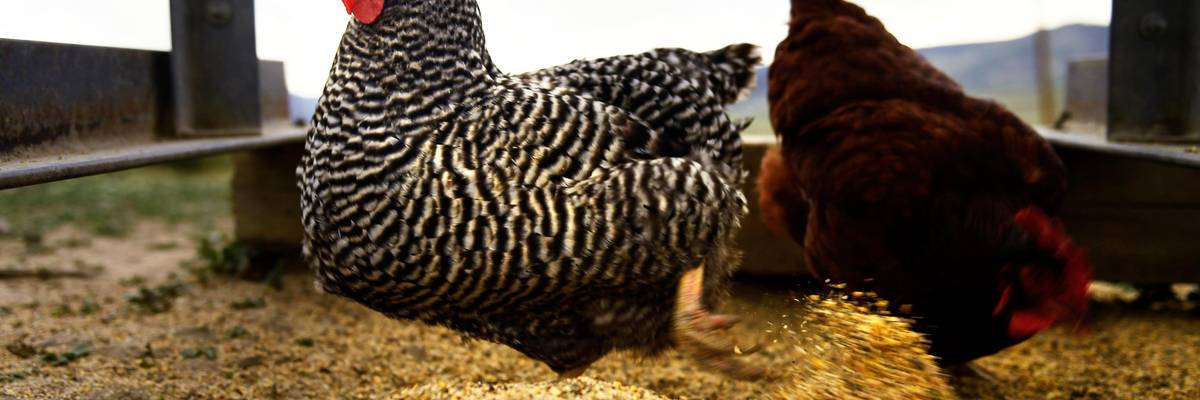
Free-ranging chickens on a farm in Longmont, Colorado. (Photo: Joe Amon/The Denver Post via Getty Images)
Moving to reverse one of the Trump administration's many corporate-friendly deregulatory actions, the U.S. Department of Agriculture on Thursday announced plans to revive a rule aimed at establishing specific animal welfare standards that food producers must meet to qualify for the USDA's organic seal.
"A major victory for all those who care about a meaningful organic label."
--Amy van Saun, Center for Food Safety
Finalized in the waning days of the Obama administration, the Organic Livestock and Poultry Practices (OLPP) rule would have required organic food producers to ensure adequate indoor and outdoor space for farm animals, spelling an end to the widespread industry practice of cramming thousands of hens and chickens into windowless barns. The rule also would have clarified previously murky standards for the humane treatment of poultry and livestock.
The rule was applauded by small farmers and activists as a key step toward preventing big corporations from attaining the "organic" label for their products despite raising animals in over-crowded and cruel conditions. But soon after taking power, the Trump administration stopped the rule from taking effect and withdrew it entirely in 2018--a boon for factory farms.
On Thursday, the Biden USDA said in a statement that it intends to "reconsider the prior administration's interpretation that the Organic Foods Production Act does not authorize USDA to regulate the practices that were the subject of the 2017 Organic Livestock and Poultry Practices (OLPP) final rule."
"I have directed the National Organic Program to begin a rulemaking to address this statutory interpretation and to include a proposal to disallow the use of porches as outdoor space in organic production over time and on other topics that were the subject of the OLPP final rule," said Agriculture Secretary Tom Vilsack. "We anticipate sending the proposed rule to OMB within six to nine months from the date of the remand."
Amy van Saun, senior attorney at Center for Food Safety (CFS)--a group that sued the Trump administration over its withdrawal of the OLPP rule--said that the USDA's announcement is "a major victory for all those who care about a meaningful organic label."
"After four years of hard-fought litigation, the Biden administration is recognizing that the Trump withdrawal decision was inconsistent with organic standards and principles," van Saun continued. "Finally, USDA will close the loophole allowing factory farms to produce 'organic' eggs and chicken, and level the playing field for real organic farmers already providing high welfare to their animals."
The National Organic Coalition's Abby Youngblood similarly applauded the USDA's move as "a huge victory in securing the trust of consumers and farmers alike who expect meaningful and consistent standards for animal welfare under the organic label."
"Consumer trust in the USDA Certified Organic label is vital and assures the success of the organic seal in the marketplace," Youngblood added.
Dear Common Dreams reader, It’s been nearly 30 years since I co-founded Common Dreams with my late wife, Lina Newhouser. We had the radical notion that journalism should serve the public good, not corporate profits. It was clear to us from the outset what it would take to build such a project. No paid advertisements. No corporate sponsors. No millionaire publisher telling us what to think or do. Many people said we wouldn't last a year, but we proved those doubters wrong. Together with a tremendous team of journalists and dedicated staff, we built an independent media outlet free from the constraints of profits and corporate control. Our mission has always been simple: To inform. To inspire. To ignite change for the common good. Building Common Dreams was not easy. Our survival was never guaranteed. When you take on the most powerful forces—Wall Street greed, fossil fuel industry destruction, Big Tech lobbyists, and uber-rich oligarchs who have spent billions upon billions rigging the economy and democracy in their favor—the only bulwark you have is supporters who believe in your work. But here’s the urgent message from me today. It's never been this bad out there. And it's never been this hard to keep us going. At the very moment Common Dreams is most needed, the threats we face are intensifying. We need your support now more than ever. We don't accept corporate advertising and never will. We don't have a paywall because we don't think people should be blocked from critical news based on their ability to pay. Everything we do is funded by the donations of readers like you. When everyone does the little they can afford, we are strong. But if that support retreats or dries up, so do we. Will you donate now to make sure Common Dreams not only survives but thrives? —Craig Brown, Co-founder |
Moving to reverse one of the Trump administration's many corporate-friendly deregulatory actions, the U.S. Department of Agriculture on Thursday announced plans to revive a rule aimed at establishing specific animal welfare standards that food producers must meet to qualify for the USDA's organic seal.
"A major victory for all those who care about a meaningful organic label."
--Amy van Saun, Center for Food Safety
Finalized in the waning days of the Obama administration, the Organic Livestock and Poultry Practices (OLPP) rule would have required organic food producers to ensure adequate indoor and outdoor space for farm animals, spelling an end to the widespread industry practice of cramming thousands of hens and chickens into windowless barns. The rule also would have clarified previously murky standards for the humane treatment of poultry and livestock.
The rule was applauded by small farmers and activists as a key step toward preventing big corporations from attaining the "organic" label for their products despite raising animals in over-crowded and cruel conditions. But soon after taking power, the Trump administration stopped the rule from taking effect and withdrew it entirely in 2018--a boon for factory farms.
On Thursday, the Biden USDA said in a statement that it intends to "reconsider the prior administration's interpretation that the Organic Foods Production Act does not authorize USDA to regulate the practices that were the subject of the 2017 Organic Livestock and Poultry Practices (OLPP) final rule."
"I have directed the National Organic Program to begin a rulemaking to address this statutory interpretation and to include a proposal to disallow the use of porches as outdoor space in organic production over time and on other topics that were the subject of the OLPP final rule," said Agriculture Secretary Tom Vilsack. "We anticipate sending the proposed rule to OMB within six to nine months from the date of the remand."
Amy van Saun, senior attorney at Center for Food Safety (CFS)--a group that sued the Trump administration over its withdrawal of the OLPP rule--said that the USDA's announcement is "a major victory for all those who care about a meaningful organic label."
"After four years of hard-fought litigation, the Biden administration is recognizing that the Trump withdrawal decision was inconsistent with organic standards and principles," van Saun continued. "Finally, USDA will close the loophole allowing factory farms to produce 'organic' eggs and chicken, and level the playing field for real organic farmers already providing high welfare to their animals."
The National Organic Coalition's Abby Youngblood similarly applauded the USDA's move as "a huge victory in securing the trust of consumers and farmers alike who expect meaningful and consistent standards for animal welfare under the organic label."
"Consumer trust in the USDA Certified Organic label is vital and assures the success of the organic seal in the marketplace," Youngblood added.
Moving to reverse one of the Trump administration's many corporate-friendly deregulatory actions, the U.S. Department of Agriculture on Thursday announced plans to revive a rule aimed at establishing specific animal welfare standards that food producers must meet to qualify for the USDA's organic seal.
"A major victory for all those who care about a meaningful organic label."
--Amy van Saun, Center for Food Safety
Finalized in the waning days of the Obama administration, the Organic Livestock and Poultry Practices (OLPP) rule would have required organic food producers to ensure adequate indoor and outdoor space for farm animals, spelling an end to the widespread industry practice of cramming thousands of hens and chickens into windowless barns. The rule also would have clarified previously murky standards for the humane treatment of poultry and livestock.
The rule was applauded by small farmers and activists as a key step toward preventing big corporations from attaining the "organic" label for their products despite raising animals in over-crowded and cruel conditions. But soon after taking power, the Trump administration stopped the rule from taking effect and withdrew it entirely in 2018--a boon for factory farms.
On Thursday, the Biden USDA said in a statement that it intends to "reconsider the prior administration's interpretation that the Organic Foods Production Act does not authorize USDA to regulate the practices that were the subject of the 2017 Organic Livestock and Poultry Practices (OLPP) final rule."
"I have directed the National Organic Program to begin a rulemaking to address this statutory interpretation and to include a proposal to disallow the use of porches as outdoor space in organic production over time and on other topics that were the subject of the OLPP final rule," said Agriculture Secretary Tom Vilsack. "We anticipate sending the proposed rule to OMB within six to nine months from the date of the remand."
Amy van Saun, senior attorney at Center for Food Safety (CFS)--a group that sued the Trump administration over its withdrawal of the OLPP rule--said that the USDA's announcement is "a major victory for all those who care about a meaningful organic label."
"After four years of hard-fought litigation, the Biden administration is recognizing that the Trump withdrawal decision was inconsistent with organic standards and principles," van Saun continued. "Finally, USDA will close the loophole allowing factory farms to produce 'organic' eggs and chicken, and level the playing field for real organic farmers already providing high welfare to their animals."
The National Organic Coalition's Abby Youngblood similarly applauded the USDA's move as "a huge victory in securing the trust of consumers and farmers alike who expect meaningful and consistent standards for animal welfare under the organic label."
"Consumer trust in the USDA Certified Organic label is vital and assures the success of the organic seal in the marketplace," Youngblood added.